Команда Aztec запустила приватный L2-протокол в мейннете Ethereum

cryptonews.ruPublished on 2025-01-19Last updated on 2025-11-20

Команда ориентированного на приватность L2-проекта Aztec Network объявила о запуске сети Ignition Chain в мейннете Ethereum. Разработчики назвали ее «первым полностью децентрализованным решением второго уровня».

BREAKING: Aztec just shipped the Ignition Chain, the first fully decentralized L2 on Ethereum.

This launches the decentralized consensus layer that powers the Aztec Network.https://t.co/nYyD7cykz2

🧵

— Aztec (@aztecnetwork) November 19, 2025

Производство блоков началось после того, как очередь из валидаторов достигла 500 участников. Развертыванию в основной сети предшествовал запуск публичного тестнета в мае.

Ignition Chain — основа для создания «приватного мирового компьютера», где можно создавать DeFi-приложения со сквозной конфиденциальностью. Технология использует доказательства с нулевым разглашением для решения проблемы прозрачности блокчейна, сохраняя возможность верификации данных.

На прошлой неделе стартовала регистрация на токенсейл нативного актива проекта — AZTEC. Токен используется для стейкинга, управления и выплаты вознаграждений за блоки. Для активации валидатору необходимо заблокировать 200 000 AZTEC.

На момент написания проект привлек около $2,7 млн от более чем 1960 участников кампании.
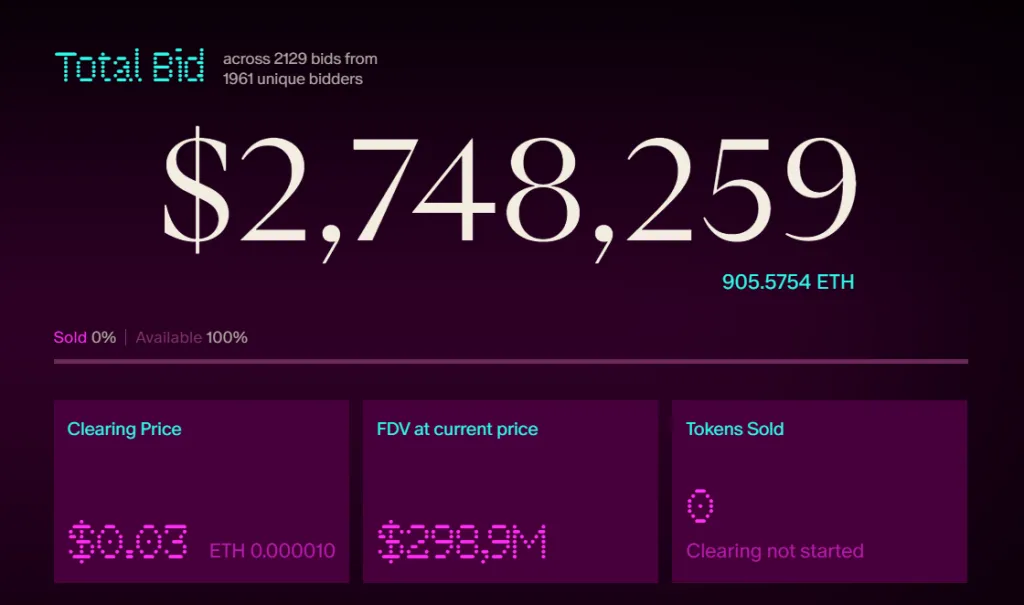
Источник: сайт Aztec.

Открытые торги начнутся 2 декабря.

Напомним, в 2023 году разработчики Aztec объявили о прекращении работы сети второго уровня Connect для масштабирования Ethereum.


Trending Cryptos

Related Reads

The Invisible Force in Bitcoin's Bear Market: Accelerating On-Chain Payments and Institutional Adoption

Amidst ongoing Bitcoin price volatility, the quiet acceleration of on-chain payments and tokenized trading holds significant importance for investors and policymakers, especially with legislation like the CLARITY Act on the horizon. Major traditional financial institutions adopting these technologies are driving crucial discussions on compliance, security, and transparency, which are vital for broader market adoption. Key developments are shaping this evolution. First, blockchain traceability is moving beyond a simple "public vs. private" debate. New frameworks aim to standardize how financial data from immutable ledgers is analyzed and interpreted, making it as crucial as standardized financial reporting for building institutional trust. Second, while traditional finance supports clear digital asset regulation, they emphasize that an asset's economic function should dictate its regulatory treatment, advocating for robust consumer protections over broad exemptions. Furthermore, the growth of on-chain deposits at regulated institutions signals a shift. Major banks are leveraging blockchain not to replace but to upgrade existing services—like deposits and cross-border settlements—with benefits like 24/7 operations and programmable treasury management. This trend focuses more on modernizing financial infrastructure than creating speculative assets. Despite market turbulence, these underlying advancements in on-chain infrastructure point toward a more robust foundation for the industry's future.

Foresight News49m ago

The Invisible Force in Bitcoin's Bear Market: Accelerating On-Chain Payments and Institutional Adoption

Foresight News49m ago

Crypto Payment Cards with $1.5 Billion Monthly Transaction Volume, Stuck in the 1990s

Monthly crypto payment card transaction volume has reached $15 billion, but the industry's development stage is comparable to debit cards in the 1990s, before they became a mainstream financial staple. A key limitation is the lack of established daily financial relationships, such as direct salary deposits and recurring bill payments, with crypto wallets. Despite annualized transaction volumes of approximately $18 billion, the market is concentrated and immature. The leading provider, RedotPay, commands over half the market share. User adoption is heavily skewed towards emerging markets like Bangladesh, India, and Nigeria, where access to USD and stable financial services is limited, rather than developed economies. The sector features four primary business models: 1) Card-issuing infrastructure providers, 2) Exchange-affiliated cards for user retention, 3) Decentralized wallet/DeFi cards with self-custody but high complexity, and 4) Stablecoin-focused digital banks, which dominate transaction volume by offering integrated financial services. The article argues that a pure payment functionality is insufficient for long-term success, mirroring the historical trajectory of traditional debit cards. Future winners will need to: 1) Control the upstream flow of funds, 2) Secure defensible niches in underserved markets, and 3) Most crucially, build core account relationships that integrate into users' daily financial lives. Without this evolution, crypto cards risk remaining niche prepaid tools rather than becoming universal financial infrastructure.

Foresight News1h ago

Crypto Payment Cards with $1.5 Billion Monthly Transaction Volume, Stuck in the 1990s

Foresight News1h ago

Trading

Spot

Hot Articles

Discussions

Welcome to the HTX Community. Here, you can stay informed about the latest platform developments and gain access to professional market insights. Users' opinions on the price of ETH (ETH) are presented below.

活动图片