Mastercard and Polygon Roll Out Email-Like Wallet IDs for Easier Crypto Transfers

bitcoinistPublished on 2025-11-20Last updated on 2025-11-20

Abstract

Mastercard is taking a major step toward simplifying how everyday users interact with digital assets by leveraging the Ethereum and...

Trusted Editorial content, reviewed by leading industry experts and seasoned editors. Ad Disclosure

Mastercard is taking a major step toward simplifying how everyday users interact with digital assets by leveraging the Ethereum and Polygon network.

Related Reading: Hoskinson Vs. Cardano Foundation: From Berlin Parties To ‘Useful Idiots’

Through a new collaboration with Polygon Labs and payments infrastructure firm Mercuryo, the global payments giant is rolling out email-style wallet aliases designed to make crypto transfers feel as intuitive as sending a message online.

The upgrade expands Mastercard’s Crypto Credential program to self-custody wallets, replacing long, technical wallet addresses with human-readable IDs. For millions of users intimidated by complex hexadecimal strings, this shift could mark a turning point in mainstream crypto adoption.
Ethereum ETH Polygon Mastercard

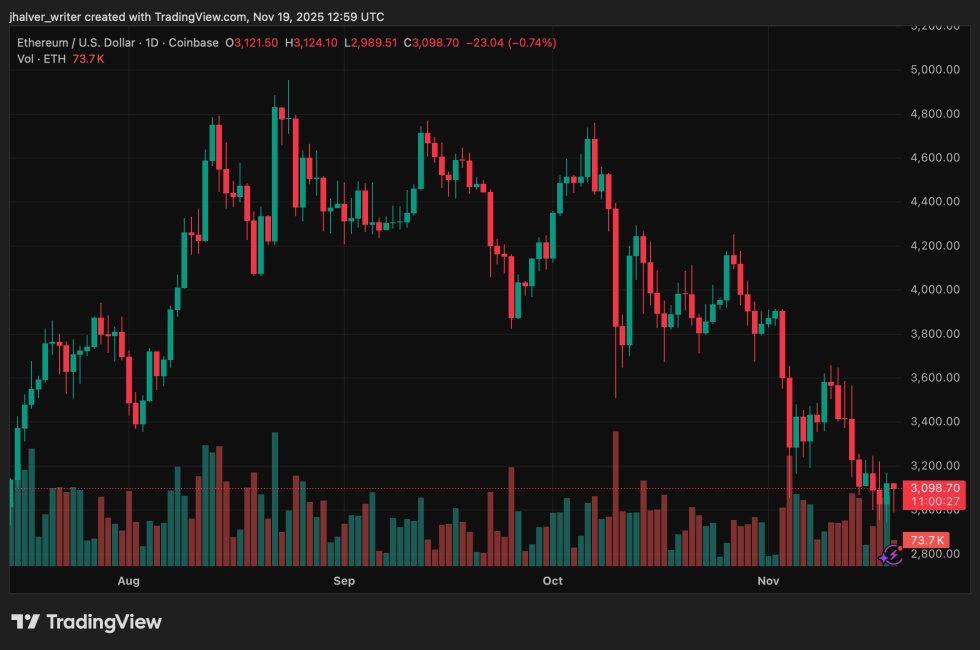
ETH's price trends to the downside on the daily chart. Source: ETHUSD on Tradingview

A New Identity Layer for Self-Custody Wallets

Under the new system, users can link wallets such as MetaMask to a verified alias issued through Mercuryo. After completing standard KYC checks, the user receives a simple username, similar to an email handle, that directs crypto to their self-custody wallet.

Polygon powers the underlying infrastructure, offering low-cost transactions and rapid settlement. Wallets can also mint a non-transferable “soulbound” credential on Polygon, publicly confirming that they belong to a verified user.

Mastercard states that this structure supports regulatory compliance, including Travel Rule requirements, without requiring users to relinquish control of their private keys.

Early access focuses on receiving funds through aliases, with outbound sending expected later. Mastercard notes that this framework is designed as a portable verification layer that can be moved across apps, wallets, and blockchains within the broader Crypto Credential network.

Why Mastercard Picked Polygon for the Rollout

Polygon’s selection as the first supported network reflects its growing reputation as a consumer-grade blockchain built for global-scale payments. Its upgrades, including the Rio and Heimdall v2 updates, have boosted throughput, improved finality, and reduced the risk of chain reorganizations.

With billions of dollars in stablecoin activity flowing through Polygon every month, analysts say the network offers the reliability and low operating costs that large institutions demand.

Polygon Labs CEO Marc Boiron called the initiative “the moment when self-custody becomes simple,” noting that alias-based transfers make blockchain interactions resemble familiar fintech experiences rather than technical workflows.

Shaping the Future of Identity-Driven Web3 Payments

For Mastercard, this rollout aligns with its broader strategy to bridge traditional finance and decentralized networks. The company has been expanding crypto services across 2024 and 2025, from debit card programs to on-chain settlement pilots.

By embedding identity, verification, and user-friendly interfaces into self-custody systems, Mastercard and Polygon are helping shape the next generation of digital payments.

Related Reading: What Happens To The Ethereum Price If It Replicates Bitcoin Supercycle?

If adopted widely, alias-based transfers could redefine how users engage with Web3, lowering barriers and accelerating mainstream participation in blockchain-based finance.

Cover image from ChatGPT, ETHUSD chart from Tradingview

Editorial Process for bitcoinist is centered on delivering thoroughly researched, accurate, and unbiased content. We uphold strict sourcing standards, and each page undergoes diligent review by our team of top technology experts and seasoned editors. This process ensures the integrity, relevance, and value of our content for our readers.

Related Reads

Circle Releases Arc Network Whitepaper: Can the New Economic Mechanism Drive It to Become the "Clearing Coordination Layer" for Institutional-Grade Stablecoin Payments?

Circle has released the whitepaper for its Arc Network, detailing plans for a new economic coordination layer using the proposed ARC token. Arc is a Layer 1 blockchain designed for enterprise-level stablecoin payments, featuring USDC as its native gas token, a high-performance consensus mechanism for instant transaction finality, and optional enterprise privacy features. Currently operating on a Proof-of-Authority (PoA) model, the network plans a future transition to a Proof-of-Stake (PoS) system. The ARC token is intended to serve as the network's native coordination asset, facilitating governance, enabling staking rewards, and managing fee mechanisms. User fees paid in stablecoins would be converted to ARC, with portions distributed as rewards and burned. The governance model will blend token-based voting with institutional oversight, especially for high-sensitivity matters like security and compliance. While positioning Arc as a potential settlement layer for institutional stablecoin payments, the whitepaper acknowledges challenges. These include the network's current centralization, the unfinished and potentially volatile ARC token economics, and the evolving global regulatory landscape for stablecoins. The development signals a broader industry trend where Web3 infrastructure competition is shifting from pure performance to factors like liquidity, compliance, and institutional-grade stability.

marsbit6m ago

Circle Releases Arc Network Whitepaper: Can the New Economic Mechanism Drive It to Become the "Clearing Coordination Layer" for Institutional-Grade Stablecoin Payments?

marsbit6m ago

18-Year-Old Hacker's Boastful Discord Display Leads to Uncovering of $19 Million Theft Case

An 18-year-old hacker from the U.S., Dritan Kapllani Jr., has been exposed by on-chain investigator ZachXBT for his alleged involvement in multiple cryptocurrency social engineering attacks, with total funds stolen estimated at $19 million. The case gained attention after Dritan inadvertently revealed his involvement during a Discord voice call in April 2026, where he screen-shared his Exodus wallet containing approximately $3.68 million to show off his wealth during a "Band 4 Band" argument. Tracing this wallet address led investigators to uncover its connection to a major theft from March 14, 2026, where 185 Bitcoin (worth around $13 million at the time) was stolen. Approximately $5.3 million from that heist was funneled into Dritan’s wallet. Further analysis linked the same wallet to over $5.85 million from other social engineering attacks dating back to 2025. While Dritan has not yet been formally charged, he is identified as "Co-Conspirator 1" in recently unsealed court documents related to the 185 Bitcoin theft case. Another individual, Meme coin KOL yelotree, is also implicated for allegedly assisting with money laundering through a car rental business. Dritan, who had been living a lavish lifestyle and was previously seen as untouchable within hacking circles, turned 18 recently, making him legally accountable. His previous "immunity" has ended as law enforcement closes in.

Odaily星球日报1h ago

18-Year-Old Hacker's Boastful Discord Display Leads to Uncovering of $19 Million Theft Case

Odaily星球日报1h ago

Behind Galaxy Digital and SharpLink's $125 Million DeFi Fund: Why Are Institutional Funds Embracing DeFi Again?

In May 2026, Galaxy Digital and SharpLink announced a $125 million Institutional Onchain Yield Fund, marking a significant pivot as institutional capital begins systematically integrating corporate ETH treasuries into DeFi. This move signals a shift from passive crypto holdings to active on-chain asset management. SharpLink is evolving into an "ETH Treasury Company," focusing on managing ETH's capital efficiency beyond simple staking, akin to a digital-age internet bond. Galaxy's role is to embed Wall Street-grade risk controls—managing exposure, volatility, and compliance—into DeFi, positioning itself as an "Onchain Asset Manager." This renewed institutional interest stems from DeFi's maturation into a "real yield" era with sustainable cash flows from stablecoin lending, on-chain treasuries, restaking, and RWA pools. Stablecoins have institutionalized into an on-chain dollar system, while restaking (e.g., EigenLayer) is reshaping ETH into a productive yield-bearing asset, forming an "internet benchmark rate." The collaboration reflects an upgrade to ETH's narrative: from a speculative asset to productive on-chain collateral and financial infrastructure. However, institutionalization amplifies systemic risks like liquidity crises and cross-protocol contagion, akin to traditional finance's pitfalls. Ultimately, this fund represents a foundational step toward building a native internet financial system—with stablecoins as digital dollars, ETH as reserve capital, and DeFi as banking—indicating that on-chain markets may become integral to the global financial architecture.

marsbit2h ago

Behind Galaxy Digital and SharpLink's $125 Million DeFi Fund: Why Are Institutional Funds Embracing DeFi Again?

marsbit2h ago

Trading

Spot
Futures
活动图片