Inside Washington’s crypto war – Senators, crypto CEOs clash over market structure bill

ambcryptoPublished on 2025-10-22Last updated on 2025-10-23

Key Takeaways

Who attended the meetings?

Executives from major crypto firms such as Coinbase, Ripple, Galaxy, Circle, and Solana Policy Institute joined lawmakers for the discussions.

What’s in the Senate’s version of the bill?

The draft seeks to define jurisdiction between the SEC and CFTC, introduce the term “ancillary assets,” and bring clarity to which digital assets are not securities.


In a significant move toward shaping U.S. digital asset regulation, Senate Democrats and Republicans wrapped up separate roundtable discussions this week centered on the long-debated Crypto Market Structure Bill.

Executives from Coinbase, Ripple, Galaxy, and Circle joined the talks to push for clear rules around digital assets.

Inside the closed-door talks

For context, the meeting followed the recent leak of a six-page draft proposal from Senate Democrats, which stirred backlash across the crypto community for its strict stance on decentralized finance (DeFi).

Source: X

The proposal, which sought to empower the Treasury Department and other financial regulators to define when an entity “exercises control or sufficient influence,” was criticized by industry participants as a potential DeFi ban.

According to Eleanor Terrett, the discussion opened with brief introductions from industry leaders who largely shared broad expectations for the bill.

Senators reportedly cautioned crypto executives against aligning too closely with Republican lawmakers, expressing frustration over the leak and public disputes that had emerged in recent weeks.

Sen. Gallego (D-Ariz) told the crypto CEOs,

“I’m really f**king pissed about what happened last week. Don’t be an arm of the Republican Party. They used you all and your megaphones to f**k us.” 

Does this bill appear to be approved anytime soon?

Yet, despite tensions, both Democrats and Republicans appeared committed to advancing the Crypto Market Structure Bill. In fact, with growing bipartisan engagement and mounting pressure, the bill appeared to be finalized by the legislation before year-end.

Democrats rejected any notion of “slow walking” the legislative process, emphasizing their intent to finalize the framework efficiently.

However, they also pointed out that Republicans continue to face internal disagreements over key provisions of the bill.

Lawmakers have issued a warning to industry representatives. They cautioned that any attempt to publicly undermine or politicize the negotiations could jeopardize progress. Such actions might also delay the bill’s passage even further.

Hiccups that raised eyebrows

Prominent industry leaders such as Coinbase’s Brian Armstrong, Galaxy’s Mike Novogratz, and Circle’s Dante Disparte participated in the recent discussions.

Yet, the absence of key figures like Senator Elizabeth Warren highlighted lingering ideological divides.

But, with figures like Senate Minority Leader Chuck Schumer engaging directly, the latest round of meetings signaled a renewed determination to deliver long-awaited clarity for the U.S. crypto industry. 

However, with Polymarket estimating only a 17% chance of becoming law by the end of 2025, a 60% drop since mid-July, uncertainty surrounding U.S. crypto regulation prevails.

Share

Trending Cryptos

Related Reads

190 Million: 688286 Completes Two Acquisitions Within Two Months

In August 2026, Suzhou MEMSIC Semiconductor Co., Ltd. (688286.SH), despite reporting a net loss of RMB 20.62 million for the first half of the year, announced two significant acquisitions within two months, totaling approximately RMB 189 million. The company first acquired a 51.82% stake in Suzhou Novosense Electronic Technology Co., Ltd., entering the industrial gas sensor market. Shortly after, it launched a fundraising plan to acquire a 54% stake in Beijing Pudan Optoelectronics Co., Ltd., targeting the fiber-optic gyroscope core components sector. These moves represent a strategic pivot for MEMSIC, historically reliant on the consumer electronics market (e.g., MEMS microphones, pressure sensors), which is facing slowing growth and intense price competition. By acquiring Novosense and Pudan, MEMSIC aims to diversify into higher-margin industrial (e.g., chemical safety, environmental monitoring) and high-reliability sectors (e.g., aerospace, defense), leveraging their respective expertise in chemical sensing and high-precision inertial navigation. The article details the background of founder Li Gang and MEMSIC's 19-year journey, from its pioneering role in China's MEMS industry to its 2020科创板 listing and subsequent financial struggles amidst market downturns. The recent acquisitions are framed as a critical attempt to transform from a consumer electronics-focused chipmaker into a "full-scenario sensing platform" company. However, risks are noted, including the challenge of integrating the acquired companies, Pudan Optoelectronics' current unprofitability, and the overall financial strain on MEMSIC as it navigates this transition. The success of this strategic shift remains uncertain.

marsbit12m ago

190 Million: 688286 Completes Two Acquisitions Within Two Months

marsbit12m ago

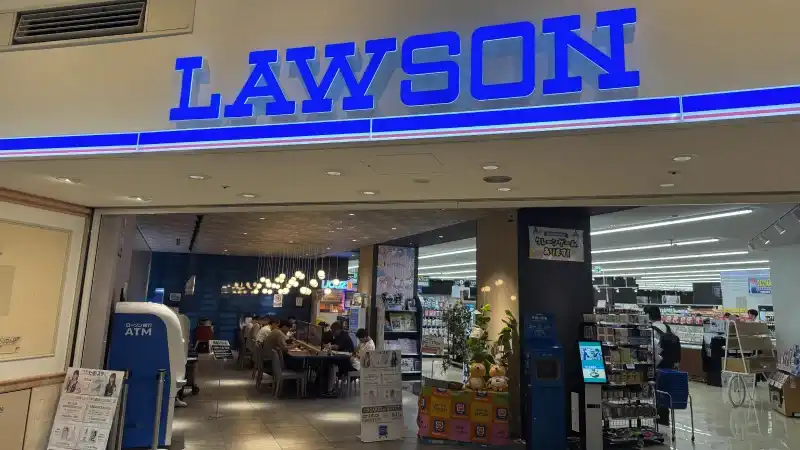
Lawson Convenience Store Tests Stablecoin Payments Again: Three Coins, Three Chains, But Japanese Regulators Haven't Given the Nod

Lawson convenience stores have conducted a second-phase pilot test of stablecoin payments in partnership with payment solution provider NetStars, moving stablecoins from exchanges to physical checkout counters. The experiment, conducted at a Tokyo store, tested payments using three stablecoins—USDC, USDT, and JPYC—across three blockchains: Solana, Morph, and Polygon. A key development was the inclusion of USDT, which is not currently on Japan's approved list of electronic payment assets. The test linked Lawson's existing POS system with NetStars' "Stablecoin Pay" service to verify that stablecoin payments could be processed without disrupting store operations. It assessed payment speed, user experience, and handling of various transaction scenarios. Payments were typically completed within five seconds. Users paid with stablecoins via MetaMask, while stores received yen settlements. NetStars covered the blockchain gas fees upfront, charging users a separate "processing fee" that also included potential foreign exchange costs for dollar-denominated stablecoins. Company executives stated the pilot was preparatory, aimed at understanding technical feasibility and challenges ahead of potential wider adoption. They highlighted the appeal of globally-traded stablecoins like USDC and USDT for foreign visitors to Japan, alongside the domestic use case for yen-pegged JPYC. However, the legal and operational framework for converting received USDT into yen remains under discussion with Japanese financial authorities. No timeline for a commercial rollout was given, pending further market demand, user needs, and final economic conditions like fee structures.

marsbit13m ago

Lawson Convenience Store Tests Stablecoin Payments Again: Three Coins, Three Chains, But Japanese Regulators Haven't Given the Nod

marsbit13m ago

Trading

Spot

Hot Articles

Discussions

Welcome to the HTX Community. Here, you can stay informed about the latest platform developments and gain access to professional market insights. Users' opinions on the price of S (S) are presented below.

活动图片