Никогда не поздно инвестировать в криптовалюты — Брайан Армстронг

cryptonews.ruPublished on 2025-01-19Last updated on 2025-10-20

Гендиректор криптобиржи Coinbase Брайан Армстронг (Brian Armstrong) заявил, что криптовалюты предназначены не только для богатых — любой человек может купить и хранить монеты, даже если у него всего несколько долларов.

Армстронг пояснил: чтобы присоединиться к растущему криптопространству, обычным людям не требуются большие суммы, поэтому никогда не поздно купить цифровые активы. Инвестируя в них, люди получают доступ к деньгам, отметил Армстронг. Миллиарды людей не имеют банковского счета, поэтому криптовалюта дает им шанс самостоятельно управлять своими деньгами, используя лишь телефон и интернет.

Децентрализованные финансы (DeFi) позволяют легко брать и давать в долг, хранить средства и совершать транзакции даже там, где люди лишены банковского обслуживания. Банки по-прежнему взимают высокие комиссии — от 2% до 3%, тогда как через блокчейн транзакции могут совершаться практически бесплатно.

Гендиректор Coinbase заявил, что благодаря инвестициям людей в криптовалюты, они могут защитить свои деньги от инфляции, неэффективной государственной политики и нестабильности банковских систем. С помощью цифровых активов, жители небольших поселков и стран с неблагополучной экономикой могут иметь такой же доступ к финансовому сектору, что и жители мегаполисов.

Армстронг верит, что в ближайшие годы криптовалюта станет настолько привычной и простой в использовании, что люди начнут воспринимать ее как обычные деньги. Когда-то интернет тоже казался слишком сложным и непонятным. Однако сейчас он стал обычным явлением — мало кто задумывается о том, как он работает. Криптовалюты пойдут по тому же пути: люди будут с их помощью хранить, тратить и переводить свои деньги, уверен Армстронг.

Бизнесмен считает, что криптоиндустрия нуждается в таком же строгом регулировании, что и обычные технологии. Долгие годы отрасль существовала без четких правил, поэтому компании и розничные инвесторы опасались вкладывать в нее средства, не зная, какие продукты считаются законными, и каким образом на них может отреагировать правительство. Армстронг похвалил США за принятие закона GENIUS о регулировании стейблкоинов, а Евросоюз — за внедрение Закона о регулировании криптовалют в ЕС (MiCA), которые позволят отраслевым компаниям легально вести свою деятельность.

Недавно Армстронг предположил, что к 2030 году курс биткоина сможет достичь отметки $1 млн. Этому должно поспособствовать внесение ясности в регулирование криптовалют в США.

Trending Cryptos

Related Reads

How Collector Crypt Uses 'Recirculating Buybacks' to Create an Illusion of Growth

Title: How Collector Crypt Creates a Growth Illusion with "Buyback Loops" Key Findings: Collector Crypt's (CC) net take rate has halved from 11.2% in Q3 2025 to 5.6% in Q2 2026, while GMV grew 4.7x. This growth is driven by higher-tier card packs ($250, $1,000, $2,500) which have lower platform dollar retention rates. The newly launched $2,500 Mythic tier captured 36.7% of June GMV within 13 days. Growth is fueled by a small cohort of high-spending, high-frequency wallets rather than broad user base expansion. The economic model faces pressure from three key areas: 1) **Shifting GMV Mix**: Pushing users towards larger, lower-retention card packs increases GMV but reduces overall profitability. 2) **Physical Redemptions**: Card redemptions for physical items remove reusable inventory from the system, creating costly replenishment needs. In May, redemptions consumed 41.6% of pre-redemption net income. Only 75 wallets drove redemptions in June. 3) **B2B/API Strategy**: Partner revenue remains negligible (cumulatively $1.83M) and dependent on CC for inventory, vaulting, and buyback services, failing to create a scalable, asset-light recurring revenue stream. The core product is a repetitive pack-buyback loop with limited secondary market activity and token value accrual. Sensitive modeling shows CC's economics turn negative when any two of the following pressures coincide: replenishment costs near market price, redemption rates exceeding 9%, or high-tier buyback rates around 93%. While CC operates in a large and growing collectibles market, its current growth levers—bigger packs, high buyback rates, and capital recycling by a few wallets—create a volume illusion without demonstrating sustainable collector engagement, deep secondary markets, or a viable path to improved margins. Future proof points include broadening collector participation, deepening secondary trading, and developing true asset-light B2B revenue channels.

Foresight News1m ago

How Collector Crypt Uses 'Recirculating Buybacks' to Create an Illusion of Growth

Foresight News1m ago

Grayscale's Latest Research: What is Solana's Next Growth Engine?

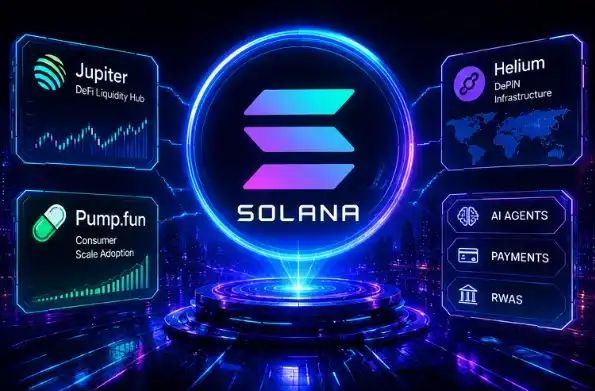
Grayscale's latest report, "Solana: Crypto's Financial Bazaar," signals a shift in how the market views Solana, moving beyond its high-performance and meme-centric reputation. The report frames Solana as an evolving application platform for large-scale economic activity, akin to a bustling digital marketplace. The analysis highlights that public chain competition has moved past raw throughput (TPS) to focus on genuine economic activity—daily users, transaction volume, and real revenue. Solana's metrics, such as over 1,000 dApps, 100M+ daily transactions, and ~4.3M daily active users, showcase this shift toward application-layer prosperity. The report identifies three key growth drivers: 1. **Jupiter**: Evolving from a DEX aggregator to a core liquidity hub and comprehensive financial platform for Solana's DeFi. 2. **Pump.fun**: Demonstrates Solana's capacity for consumer-scale applications, attracting millions of users and generating significant, sustainable revenue, validating network stability under high load. 3. **Helium & DePIN**: Represents expansion into real-world infrastructure, connecting blockchain to physical resources like wireless networks and positioning services, opening new long-term use cases. Solana Foundation's recent focus aligns with this broader vision, emphasizing AI Agents (for machine-to-machine transactions), payments, stablecoins, and Real-World Assets (RWA) to build a sustainable growth model beyond cyclical trends. While challenges remain—such as value capture for SOL and maintaining ecosystem sustainability beyond hot trends—institutional interest is growing due to Solana's maturing application business models, expanding payment/stablecoin ecosystem, and persistent developer activity. The competition is no longer about speed alone, but about which network can foster the most vibrant and valuable digital economy.

marsbit22m ago

Grayscale's Latest Research: What is Solana's Next Growth Engine?

marsbit22m ago

They Waited 7 Years for This Money

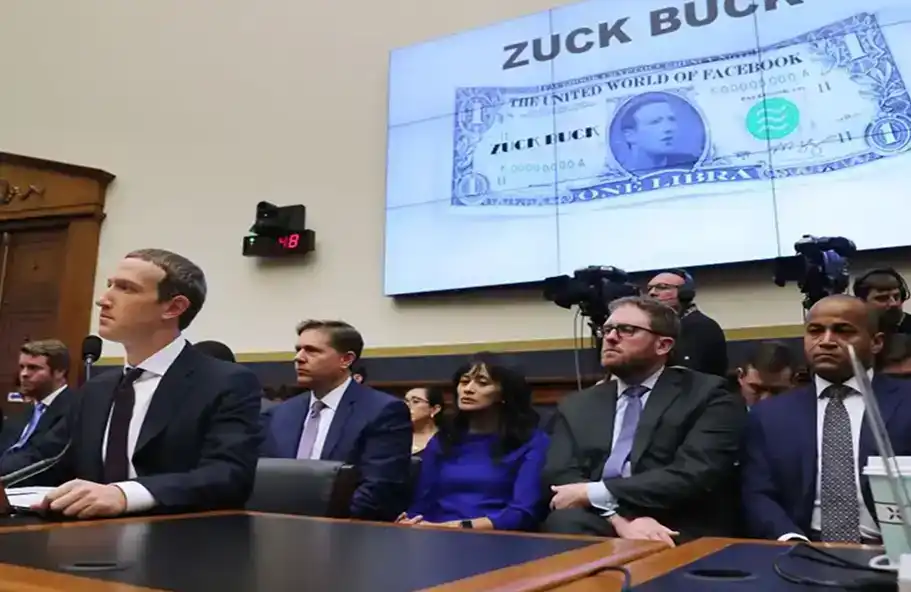
The article discusses the significant drop in share price of Circle, known as the "first stablecoin stock," triggered by the announcement of a new alliance including Visa, Stripe, Mastercard, Coinbase, BlackRock, Google, IBM, and Ripple. This alliance plans to launch Open USD, a USD stablecoin, later this year. Key to the market reaction is Open USD's plan to distribute reserve-generated profits to its adopters, directly challenging Circle's core revenue model from USDC's reserve interest. The piece draws a parallel to Facebook's 2019 Libra (later Diem) project, which involved many of the same companies. Libra failed due to regulatory pressure, its association with Facebook's controversial reputation, and overly ambitious global currency narratives. However, the underlying desire of these major financial and tech firms to create a new digital payment infrastructure persisted. Over seven years, the landscape changed: clearer US stablecoin regulations (GENIUS Act), mature blockchain infrastructure, and companies gaining practical experience with crypto payments. Open USD presents a more modest, compliance-focused narrative—a settlement tool and enterprise payment rail rather than a revolutionary global currency. While the new alliance poses a serious threat to Circle's profitability and exclusivity, it faces challenges typical of large consortia: slow decision-making and complex profit-sharing. USDC's established liquidity, trust, and integrations provide Circle with significant defenses. The market's reaction is seen partly as an emotional overreaction but also a necessary reevaluation of Circle's business model from a unique "stablecoin era ticket" to a "strong issuer" in a competitive commodity market. Ultimately, the core ambition from the Libra era remains: to digitize the movement of dollar value on the internet and capture the adjacent commercial opportunities. The lesson learned is to pursue this goal not as a high-profile, platform-led revolution, but as a quiet, utility-focused infrastructure play.

marsbit22m ago

They Waited 7 Years for This Money

marsbit22m ago

Trading

Spot

Hot Articles

What is G$

Understanding GoodDollar ($G$): A Blueprint for Decentralized Universal Basic Income Introduction In the ever-evolving landscape of cryptocurrency and blockchain technology, initiatives that seek to address pressing social issues have garnered increased attention. One such project is GoodDollar ($G$), a Web3-based universal basic income (UBI) solution. GoodDollar endeavors to tackle inequality and bridge the wealth gap by creating and distributing accessible economic resources to those most in need. Through its innovative use of decentralized finance (DeFi), GoodDollar presents a unique model that could potentially reshape the way financial assistance is perceived and delivered globally. What is GoodDollar ($G$)? GoodDollar is a cryptocurrency protocol that facilitates the issuance and distribution of digital tokens, referred to as $G$, to its registered users on a daily basis. These tokens function as a form of universal basic income, promoting financial empowerment for individuals from various backgrounds, especially those traditionally excluded from the financial system. Operating on the blockchain, GoodDollar utilizes multiple chains, including Ethereum, Celo, and Fuse, ensuring broad access and usability. The fundamental goal of GoodDollar is to make cryptocurrency accessible and beneficial to everyone, irrespective of their economic starting point. The Creator of GoodDollar ($G$) Details concerning the creator of GoodDollar remain somewhat obscure. However, it is notably highlighted that the project has strong backing from eToro, a widely recognized investment platform that provided the initial funding and foundational support for GoodDollar's development. The vision behind the project is not solely profit-driven but leans heavily towards social entrepreneurship, aiming for a systemic change in economic accessibility. Investors of GoodDollar ($G$) GoodDollar enjoys the financial backing and operational support of eToro. This partnership has played a significant role in launching the protocol and its subsequent developments. While eToro was instrumental in establishing the foundation of the project, GoodDollar envisions transitioning towards a model funded by its community in the long run. This shift to community funding is in line with GoodDollar's commitment to decentralization, allowing its users to have a direct stake in the project's future. How Does GoodDollar ($G$) Work? GoodDollar's operational framework relies heavily on DeFi principles to generate interest from staked cryptocurrencies. This mechanism allows the project to mint and distribute $G$ tokens as a digital basic income for users worldwide. Several key features contribute to GoodDollar's uniqueness and innovation: Universal Basic Income (UBI): Every day, registered users receive free tokens, establishing an automatic income stream intended to alleviate financial pressures. Sustainable Economic Model: The project’s tokenomics aim to balance supply and demand for $G$ tokens, ensuring that the value remains stable over time. Reserve-Backed Tokens: Each $G$ token is backed by a reserve of cryptocurrencies, providing it with inherent value and reliability, a crucial aspect for maintaining user trust. Decentralized Governance: GoodDollar incorporates a democratic approach to decision-making through token-powered decentralized governance. This allows community members to actively participate in the shaping of the project's trajectory, making it truly community-driven. Global Accessibility: GoodDollar has established a considerable community footprint, boasting over 640,000 members spanning 181 countries. Such widespread reach is instrumental in facilitating UBI on a global scale. Timeline of GoodDollar ($G$) The evolution of GoodDollar is marked by several significant milestones throughout its history: 2019: The launch of the GoodDollar wallet marked the first step in operationalizing its vision of delivering UBI through cryptocurrency. 2020: Following the successful wallet rollout, the GoodDollar protocol officially debuted. This marked a crucial phase in its mission to provide daily distributed income. 2021: The project advanced further with the introduction of its Decentralized Autonomous Organization (DAO), fostering a greater level of community involvement and governance. 2022: GoodDollar unveiled its DeFi-friendly version 2 (V2), striving for enhanced user engagement and operational efficiency. The same year also saw the transition to a decentralized governance structure via GoodDAO. 2022: A new roadmap was conceptualized, focusing on initiatives like a grant program designed to promote $G$-related entrepreneurial ventures and an upgraded GoodDollar Marketplace. Key Features of GoodDollar ($G$) The GoodDollar project introduces numerous critical features aimed at redefining the landscape of basic income: Universal Basic Income: Delivering daily free tokens to its users fundamentally underscores its mission to eliminate economic precarity. Multi-Chain Operation: Leveraging multiple blockchain networks enhances accessibility and scalability, ensuring broader participation. Engagement with Decentralized Finance: The use of DeFi allows for sustainable funding of the UBI model, reinforcing its viability as an economic solution. Community Engagement and Governance: GoodDollar envisions a model where the community influences operations through democratic participation, fostering transparency and accountability. Global Community: Boasting a diverse global community enables the project to implement UBI solutions tailored to various cultural and economic contexts. Conclusion GoodDollar represents a transformative leap towards incorporating the principles of universal basic income through the innovative lens of blockchain technology. By harnessing decentralized finance, the project not only provides a solution to financial inequality but also actively engages users in its governance and operations. With a growing community and evolving roadmap, GoodDollar stands as a significant player in the intersection of cryptocurrency and social good, paving the way for a more equitable financial future. As it continues to evolve, GoodDollar’s journey may ultimately inspire other initiatives to consider similar models, furthering the cause of economic empowerment for all.

1.1k Total ViewsPublished 2024.04.01Updated 2024.12.03

What is G$

How to Buy G

Welcome to HTX.com! We've made purchasing Gravity (G) simple and convenient. Follow our step-by-step guide to embark on your crypto journey.Step 1: Create Your HTX AccountUse your email or phone number to sign up for a free account on HTX. Experience a hassle-free registration journey and unlock all features.Get My AccountStep 2: Go to Buy Crypto and Choose Your Payment MethodCredit/Debit Card: Use your Visa or Mastercard to buy Gravity (G) instantly.Balance: Use funds from your HTX account balance to trade seamlessly.Third Parties: We've added popular payment methods such as Google Pay and Apple Pay to enhance convenience.P2P: Trade directly with other users on HTX.Over-the-Counter (OTC): We offer tailor-made services and competitive exchange rates for traders.Step 3: Store Your Gravity (G)After purchasing your Gravity (G), store it in your HTX account. Alternatively, you can send it elsewhere via blockchain transfer or use it to trade other cryptocurrencies.Step 4: Trade Gravity (G)Easily trade Gravity (G) on HTX's spot market. Simply access your account, select your trading pair, execute your trades, and monitor in real-time. We offer a user-friendly experience for both beginners and seasoned traders.

6.2k Total ViewsPublished 2024.07.18Updated 2026.06.02

How to Buy G

What is @G

Graphite Network, $@G: Bridging TradFi and Web3 Introduction to Graphite Network, $@G In the vibrant world of cryptocurrencies and web3 projects, Graphite Network emerges as a beacon of innovation. With its native token, $@G, this Layer-1, Proof-of-Authority (PoA) blockchain is tailored to bridge the gap between traditional finance (TradFi) and the rapidly evolving Web3 ecosystem. As digital currencies gain traction, Graphite Network strives to offer a blockchain platform that prioritizes security, compliance, and speed, presenting itself as a facilitator of trust and accountability. What is Graphite Network, $@G? Graphite Network is not merely another blockchain project; it aims to redefine how decentralization, security, and user accountability are perceived in the digital finance realm. The project boasts a series of distinctive features: Reputation-Based Blockchain: At its core, Graphite Network implements a one-user, one-account policy, fortified with integrated Know Your Customer (KYC) verification and scoring mechanisms. This design ensures a balance between user privacy and transparency—a critical aspect of financial operations in today’s digital world. Entry-Point Node Income: The network incentivizes users to set up entry-point nodes, allowing operators to earn rewards from network transactions. This income generation model not only boosts user engagement but also reinforces network health and decentralization. EVM Compatibility: With an Ethereum-compatible virtual machine (VM), Graphite Network enables seamless integration of existing Solidity decentralized applications (dApps) and smart contracts, thereby inviting developers to leverage its capabilities without extensive modifications. KYC Integration: In an era where compliance is paramount, the integrated KYC framework with multiple verification tiers enhances the control over financial operations without mandatory participation, setting a precedent for user autonomy. Who is the Creator of Graphite Network, $@G? The Graphite Network is borne out of the endeavors of the Graphite Foundation, a non-profit organization dedicated to the development, maintenance, and evolution of the Graphite Network. The foundation’s commitment underscores the project’s vision to create a secure and sustainable blockchain environment focused on genuine user engagement and compliance. Who are the Investors of Graphite Network, $@G? Currently, there is limited information available on the specific investors backing the Graphite Network initiative. The founding organization, the Graphite Foundation, functions independently in fostering the project’s growth while seeking partnerships that resonate with its vision of a compliant and accessible blockchain platform. How Does Graphite Network, $@G Work? Graphite Network’s operation is grounded in its unique Proof-of-Authority consensus mechanism, which strikes an impressive balance between high throughput and decentralization. Let's delve into the various components that define its operation: Transport Nodes: Serving as the entry-point nodes, these are critical to the ecosystem. Operators can earn revenue from transactions that traverse the network, which not only empowers individual users but also bolsters network decentralization. Authorized Nodes: At the heart of the Graphite Network are core validators who undergo rigorous compliance tests, encompassing robust KYC verification along with technical assessments. This layer of trust is essential for ensuring that transactions within the network maintain a high level of integrity. Ticker System: Graphite Network employs a distinctive ticker system for its wrapped tokens, denoted as @G. This feature enhances clarity in asset integration, making user transactions comprehensible and straightforward. Graphite Network’s innovative approach reflects a significant step in addressing the crucial issues of digital finance, positioning itself favorably for the future as more users transition from traditional forms of finance into the world of decentralized applications. Timeline of Graphite Network, $@G To understand the progression and milestones of Graphite Network, it is beneficial to overview key events in its timeline: 2021: The inception of Graphite Network by the Graphite Foundation marks the commencement of a new chapter in blockchain development, focusing on compliance and user empowerment. Key Developments: Following its launch, the introduction of entry-point node income, the establishment of a reputation-based model, integrated KYC verification, and the provision of EVM compatibility represent significant advancements in the project. Recent Activities: The continuous development and nurturing efforts of the Graphite Foundation have focused on augmenting network features while fostering the ecosystem's growth, demonstrating a long-term commitment to sustainability and innovation. Additional Key Points Beyond its foundational components, Graphite Network encompasses several tools and features that bolster its usability: Graphite Wallet: A user-friendly Chrome extension that facilitates access to various network features and applications across Ethereum-compatible chains, enhancing user convenience. Graphite Bridge: This utility allows seamless transfers of Graphite assets across different networks, fostering an integrated and interoperable ecosystem. Graphite Explorer: Serving as an essential tool within the ecosystem, this feature enables users to view and verify smart contract source code, track transactions, and explore other vital information in real-time. Graphite Testnet: The project provides a robust testing environment for developers, allowing them to ensure stability and scalability prior to mainnet deployment. This initiative not only empowers developers but also enhances the reliability of the entire network. Conclusion Graphite Network, with its native token $@G, represents a significant stride toward bridging traditional finance and cutting-edge blockchain technology. By focusing on security, compliance, and decentralization, this innovative platform is set to lead the transition into the Web3 era. As user engagement grows and more projects leverage its capabilities, Graphite Network is poised to make lasting contributions to the rapidly evolving digital landscape. In conclusion, Graphite Network stands as a testament to what can be achieved when innovative thinking meets the growing demands of modern finance and technology. As the world explores the potential of decentralized finance, Graphite Network will undoubtedly remain a noteworthy player in this arena.

580 Total ViewsPublished 2025.01.06Updated 2025.01.06

What is @G

Discussions

Welcome to the HTX Community. Here, you can stay informed about the latest platform developments and gain access to professional market insights. Users' opinions on the price of G (G) are presented below.

活动图片