从“绝不发币”到“正在探索”:Coinbase的Base代币将如何引爆L2新战事?

marsbitPubblicato 2025-09-15Pubblicato ultima volta 2025-09-16

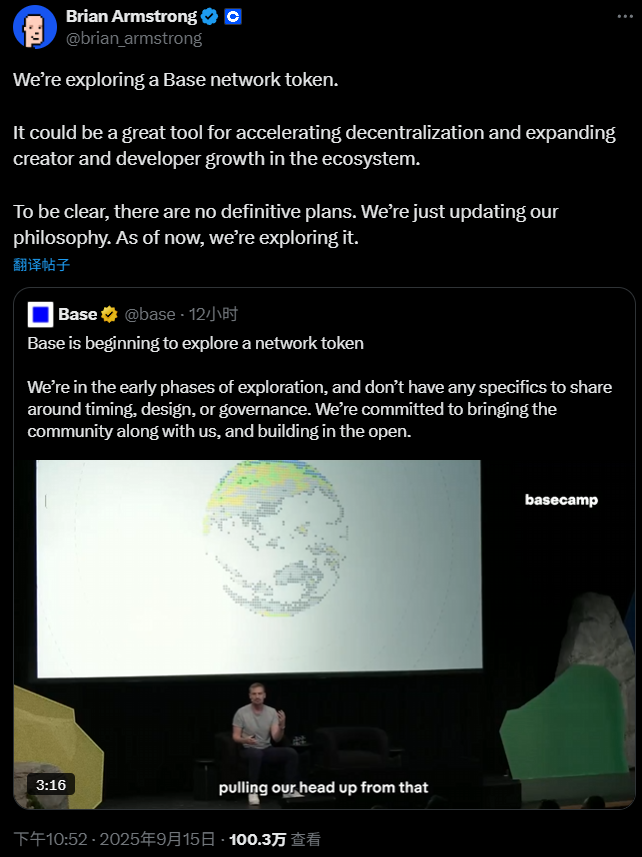
9月15日,一条消息在加密社区的电波中迅速传开,源头并非某场盛大的发布会,而是Coinbase协议负责人Jesse Pollack在社交平台X上的一句看似不经意的回复。当被问及Base网络的未来时,他首次公开承认,团队正在‘开始探索’发行原生网络代币。这句在数字世界里敲下的话,其分量却足以让整个加密世界感受到地壳的轻微震动。它标志着一个根本性的转变…
代币经济学

信号枪已响:生态代币的狂欢预演

话音未落,资本市场已经给出了最诚实的回答。就在消息公布后的24小时内,市场的热情被瞬间点燃,并直接传导至Base生态系统内的项目代币上。根据9月16日的行情数据,一场由预期驱动的狂欢已然上演:

  • NOICE 短时突破 0.5 美元,24 小时涨幅达 42.73%;
  • OPENX 24 小时涨幅更是高达 85.5%,报价 1.44 美元;
  • ZORAAVNT 也分别录得了 18.6% 和 34% 的显著涨幅。

这组飙升的数字背后,是一种被加密市场玩家熟知的逻辑——“生态Beta”策略。投资者们押注的不仅仅是Base未来可能发行的代币本身,更是整个生态系统可能因这一举动而迎来的价值重估。一个由Coinbase背书、并可能通过“史上最大规模空投”引入海量用户的L2网络,其生态项目的价值天花板被瞬间拉高。

这场集体的上涨,既是对未来的提前定价,也是一场争夺潜在空投资格的“预演”。交易者们涌入这些生态项目,不仅是看好其自身发展,更是为了增加与Base网络的交互深度,从而在未来的快照中占据有利位置。可以说,Jesse Pollack扣动的仅仅是探索的发令枪,但整个赛道的选手们已经开始了冲刺。

这究竟是Coinbase深思熟虑的战略转向,还是迫于竞争压力的无奈之举?要解开这个谜题,我们必须回到起点,探寻这一转变背后的深层逻辑,以及它将如何重塑我们所熟知的加密格局。


唯一的出路:去中心化的“阳谋”

时间拉回到2023年2月,当Coinbase高调发布其Layer 2网络Base时,官方公告中有一句斩钉截铁的声明:“我们没有发行新网络代币的计划。”在当时,这被解读为Coinbase作为一家美国上市合规巨头,规避监管风险的明智之举。然而,时隔一年半,当Base生态系统的总锁仓价值(TVL)突破50亿美元,成为L2赛道的关键力量时,曾经的承诺变得模糊。

那么,究竟是什么让Coinbase改变了主意?答案并非源于市场炒作的压力,而是一个更为根本的技术和哲学命题:排序器(Sequencer)的去中心化

我们可以将排序器通俗地理解为Layer 2网络的“空中交通管制员”。它负责接收用户的交易请求,将它们排序、打包,然后统一提交到以太坊主网上。目前,Base的“空管员”由Coinbase一家独掌。这种中心化模式在网络初期效率极高,但也埋下了巨大的隐患:单点故障风险、潜在的交易审查能力,以及无法杜绝的MEV(最大可提取价值)问题。Coinbase CEO Brian Armstrong曾坦言,这只是一个过渡阶段。

而要让“空管员”从一个集权机构变为一个由多方共同参与、无需许可的委员会,代币便成了不可或缺的粘合剂。一个精心设计的网络代币,可以作为质押资产,让任何人都有机会成为排序器节点,并通过经济激励(奖励与罚没机制)确保他们的诚实行为。同时,代币还能作为治理工具,让社区共同决定网络未来的升级和发展方向。

正如Jesse Pollack在后续的解释中所言,此举的目的是为了“加速去中心化”。这不仅仅是一句漂亮的口号,而是Base网络想要获得长期合法性和安全性的唯一路径。可以说,发币并非目的,而是实现其去中心化蓝图最有效的手段。


跨越雷池:SEC的“豪威测试”紧箍咒

然而,对于Coinbase这家时刻处在美国证券交易委员会(SEC)聚光灯下的上市公司而言,发行代币无异于在监管的雷池边缘试探。最大的挑战莫过于著名的“豪威测试”(Howey Test),这是SEC用来判断一项资产是否构成“投资合同”,即证券的核心标准。

根据SEC在2019年发布的《数字资产‘投资合同’分析框架》,一项资产如果满足“用金钱投资、投入一个共同事业、并期待通过他人的努力获得利润”这几个关键特征,就极有可能被认定为证券。

这意味着Coinbase的法务团队必须设计出一个能巧妙绕过这一定义的代币模型。其核心思路在于最大化代币的“效用性”(Utility)而非“投资属性”。代币的主要功能必须是参与网络治理、质押成为排序器节点等实际用途,而非让持有者被动地期待因Coinbase的运营而升值。

此外,SEC在其过往的指导方针和执法行动中曾多次暗示,“足够去中心化”的网络是其监管考量的关键。如果一个网络的运营和发展不再依赖于某个中心化的发起实体,那么其原生代币被视为证券的可能性就会大大降低。这恰好与Base的技术需求不谋而合。因此,Coinbase推动排序器去中心化的过程,既是技术上的升级,也是一场旨在满足监管要求的“去风险”操作。这场与SEC的无声博弈,其难度和重要性,丝毫不亚于技术本身的挑战。


巨人的剧本:从竞争对手身上学到了什么?

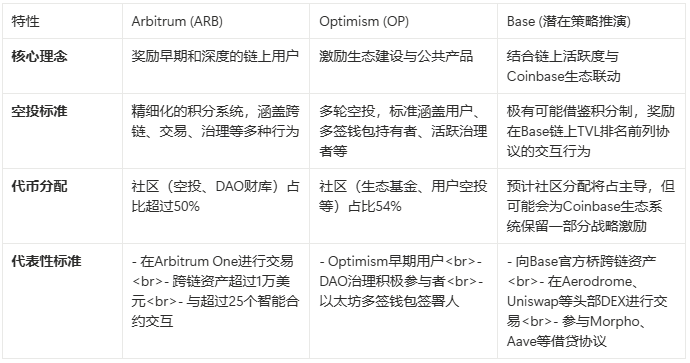
在探索发币之路上,Base并不孤单,它的主要竞争对手Arbitrum和Optimism早已提交了堪称教科书级别的答卷。通过分析它们的策略,我们或许能窥见Base未来的行动轨迹。

Arbitrum的空投堪称一场对链上活跃用户的精准激励。它设计了一套复杂的积分系统,用户的行为,如跨链资产、交易频率、与智能合约的交互次数等,都被量化为积分,最终决定了空投代币的数量。这种方式极大地激励了真实用户,并有效过滤了投机性的“羊毛党”。

Optimism则更侧重于生态的长期建设。在其代币OP的分配中,除了用户空投,还预留了大量份额用于生态系统基金和追溯性公共产品募资,持续为生态内的开发者和公共设施建设者提供资金支持。

主流Layer 2代币经济学与空投策略对比
代币经济学

目前,Base链上生态已初具规模,根据DefiLlama的数据,其TVL已超过50亿美元,头部协议如借贷协议Morpho、Aave和去中心化交易所Aerodrome Finance、Uniswap等锁定了大量资金和用户。可以预见,一旦Base决定启动空投,这些协议的深度参与者极有可能成为最大的受益者。更重要的是,Coinbase手握超过1亿的认证用户,这为Base提供了一个任何其他L2网络都无法比拟的潜在用户池。一场结合链上行为与Coinbase账户历史的“史上最大规模空投”并非天方夜谭。


连锁反应:一枚代币如何搅动整个江湖?

Base发行代币,绝非仅仅是自身生态的一件大事,它的涟漪效应将扩散至整个加密行业。

首先,这将深刻影响它与Optimism的关系。Base是基于Optimism的OP Stack技术栈构建的,并且是其“超级链(Superchain)”愿景的核心成员。双方签有收入共享协议,Base需将部分排序器收入上交给Optimism Collective。Optimism的治理论坛中,社区成员早已热议如何让Base更好地融入治理体系。一枚BASE代幣的出现,必然会引发新的问题:它将如何在超级链的全局治理中与OP代币共存?是形成类似“联邦制”的结构,还是会因利益冲突而产生摩擦?这考验着两个巨头团队的合作智慧。

其次,这将彻底激化Layer 2的竞争格局。根据加密分析媒体Cryptodnes的报告,Base在2025年已被视为L2领域的“主导力量”之一。如果Base通过空投将其母公司数千万的活跃用户直接转化为链上用户,其网络效应和流动性将呈现爆炸式增长,对Arbitrum、Starknet等其他L2网络构成巨大的竞争压力。一场争夺用户、开发者和流动性的“L2世界大战”或将全面升级。

最后,这对Coinbase自身也是一次商业模式的进化。发行并赋能一个成功的网络代币,意味着Coinbase的业务将从一个中心化的交易平台,延伸到一个去中心化生态系统的核心基础设施层。这不仅能创造新的收入来源(如通过持有代币参与质押和治理),更能构建起强大的护城河,将其用户深度绑定在自身的生态闭环内,这对于其在资本市场的估值(COIN)将产生深远的影响。


结语

从“绝不”到“探索”,Coinbase关于Base代币的立场转变,是一场在技术必然性、监管压力和市场竞争等多重力量交织下的战略演进。虽然官方措辞依然谨慎,但探索的阀门一旦开启,便很难再关上。

未来,我们看到的将不再是一个简单的代币发行事件,而是一场关乎技术路线、监管博弈和商业版图的宏大叙事。Base将如何设计其代币经济学以跨越SEC的雷池?它将如何通过一场史无前例的空投激活Coinbase的亿级用户?这枚小小的代币,又将如何在L2的激烈战事中,投下决定战局走向的关键砝码?

这一切问题的答案,仍在迷雾之中。但可以确定的是,加密世界的目光,已经再次聚焦在了Coinbase身上,静待它落下这枚足以改变游戏规则的棋子。

Letture associate

Xinhuo Research Institute: White House Meeting × CLARITY Act × AI Capital Diversion – The Triple Variables for Bitcoin

The market is undergoing a comprehensive reset from regulatory expectations to capital structure. New Huo Research Institute's latest analysis indicates Bitcoin faced pressure last week due to multiple factors: the SEC abruptly canceled a planned crypto regulatory meeting; spot Bitcoin ETFs saw outflows of approximately $390 million after two weeks of net inflows; and the Coinbase Bitcoin Price Index showed sustained negative premiums. These signals collectively suggest the market is awaiting the next point of certainty. This anchor point may arrive this week. On the policy front, a White House meeting with crypto industry executives is expected on August 19, with potential participation from SEC and CFTC officials, followed by a CFTC Innovation Advisory Committee meeting on August 20. Discussions around the CLARITY Act may also advance in September. The研究院 views these events as likely to release positive policy signals, potentially offering marginal support to market sentiment. Macro conditions are also turning accommodative. With cooling US inflation and weak retail data, market expectations for a September rate hike have significantly decreased. However, tensions in the Middle East affecting global oil supply warrant monitoring. A notable structural shift is the massive diversion of capital into the AI sector, tightening overall liquidity for crypto markets and contributing to the current subdued environment. Monitoring when AI investment cools and overall macro conditions ease will be crucial. On the technical front, Bitcoin is in a consolidation phase after a pullback from highs, with key resistance at $65,000/$65,800 and support at $62,500/$62,000. New Huo Research believes the current range could form a阶段性 bottom as regulatory catalysts gradually materialize.

marsbit10 min fa

Xinhuo Research Institute: White House Meeting × CLARITY Act × AI Capital Diversion – The Triple Variables for Bitcoin

marsbit10 min fa

Podcast Notes | Conversation with Bitwise CIO Matt: If You Have 0% Crypto Allocation Now, You Are Actively Bearish on the Market Outlook

Podcast Notes | Interview with Bitwise CIO Matt Hougan: "A 0% Crypto Allocation Today is an Active Bearish Bet" **Key Takeaways from Matt Hougan (CIO, Bitwise):** * **Market Sentiment:** Despite crypto being down ~50% from highs, Wall Street is "ALL-IN." Major institutions like BlackRock, Morgan Stanley, Wells Fargo, and UBS view crypto as a long-term asset class, continuing to build and launch products (e.g., tokenized funds, ETFs) regardless of short-term price or regulatory delays (like the CLARITY Act). * **BTC Resilience:** Bitcoin's recent price stability amid negative news (AI stock sell-off, MicroStrategy sales, fading regulatory odds) signals underlying strength. Hougan argues the "weak hands" have sold; remaining holders are long-term believers. * **Regulatory Outlook:** The CLARITY Act may remain in legislative limbo, but crypto development won't wait. Tokenization of real-world assets (RWA) is a major, irreversible trend backed by large traditional finance players. * **Investment Strategy:** Hougan advocates for a 5% crypto allocation in a traditional portfolio. He calls this the "magic number" for significantly boosting returns without materially increasing overall portfolio volatility. Critically, he states that a 0% allocation is not neutral but an **"active bearish bet"** against the asset class, given crypto's current ~2% share of global equity market cap. * **Ethereum & Altcoins:** Hougan is bullish on Ethereum (price target: $8000), citing its leading role in tokenization and stablecoins. For altcoins, he highlights assets tied to the tokenization narrative (e.g., Solana, Chainlink, Ondo) and those generating "real yield" (e.g., Hyperliquid). * **DCA vs. Lump Sum:** Both strategies have merit. Dollar-cost averaging (DCA) provides behavioral protection against volatility, while a lump sum investment may capture more upside if Bitcoin's suppressed volatility breaks upward.

marsbit28 min fa

Podcast Notes | Conversation with Bitwise CIO Matt: If You Have 0% Crypto Allocation Now, You Are Actively Bearish on the Market Outlook

marsbit28 min fa

Anthropic, Dario Amodei, and "The Last Private Company"

The article explores the contrasting narratives surrounding Anthropic and its founder, Dario Amodei. He is portrayed as both a cautious "watchman" warning of AI's existential dangers and an ambitious driver racing to build that very future. The core tension lies in Amodei's belief that since powerful AI is inevitable, Anthropic must lead its development to ensure it's done "responsibly." Driven by personal tragedy—his father's death before a cure arrived—Amodei is obsessed with accelerating science. He co-founded Anthropic after leaving OpenAI over governance concerns, aiming to build top models while establishing safety standards. Anthropic developed "Constitutional AI" to align models and proposed risk-based policies, positioning itself as both creator and regulator. Amodei envisions AI bringing immense benefits, like curing diseases within years. However, his roadmap reveals a geopolitical vision: he argues the US and its allies must secure a dominant, "unipolar" advantage in advanced AI to lock in strategic supremacy before sharing benefits. The article critiques this logic. While Amodei eloquently warns of concentrated corporate power and influence, his solutions consistently grant Anthropic more authority. He disqualifies other actors—markets, the public, rival nations—as unfit to steer the future, ultimately positioning Anthropic as the necessary custodian. This culminates in an alleged, unconfirmed internal vision where Anthropic becomes "the world's only private company." The piece concludes that Amodei, sincerely believing he sees the dangers most clearly, has authored his own justification to hold the wheel.

marsbit39 min fa

Anthropic, Dario Amodei, and "The Last Private Company"

marsbit39 min fa

Trading

Spot
活动图片