There are two contradictory yet plausible narratives circulating about Dario Amodei, the founder of Anthropic.
One narrative is that he is the most lucid watchman of our era. While the entire world is stepping on the accelerator towards the cliff of superintelligence, he alone stands by the roadside, shouting over and over that ahead lies an abyss.
The other narrative is that he is one of the most ambitious people in Silicon Valley. He leads the world's most powerful AI company, working day and night, bit by bit, to personally build the future everyone has warned about.
One person can indeed do both things simultaneously.
He gave the imagined world a name: "The Republic of Geniuses in Data Centers." That nation houses fifty million geniuses who don't sleep, work twenty-four hours a day, think dozens of times faster than ordinary people, and can replicate countless copies of themselves. This country has no land, no borders; it resides within rows and rows of data centers.
In January 2026, he wrote this vision into a long essay titled "The Adolescence of Technology."
Then he took the deduction a step further. What if one day these fifty million geniuses stop obeying humans?
The subsequent imagery becomes dangerous. Biological weapons, mass unemployment, dictatorship, war—he listed them one by one. At the end, he said the time left for us is not much.
Yet in the same essay, he also wrote: "AI is already writing a significant amount of code for Anthropic, helping to build the next-generation model faster."
Warning on one hand, accelerating on the other. He doesn't see any contradiction in this.
This is the starting point of the entire problem. It's not that he is malevolent; he genuinely doesn't see it.
Of course, he has his explanation. If Anthropic stops, OpenAI won't, Google won't, and companies from other countries won't either. No one is willing to be the first to let go; the one who stops first likely won't be able to stop anything, merely handing the fruit to others.
Translated, this argument means: since everyone is racing for it, then let "me" race for first place. Since no one can stop, then let "me" decide when to stop.
Thus, whether superintelligence should be built becomes less critical. According to his judgment, it will inevitably be built eventually. What truly matters is who builds it first, and when that day comes, who gets to hold the steering wheel.
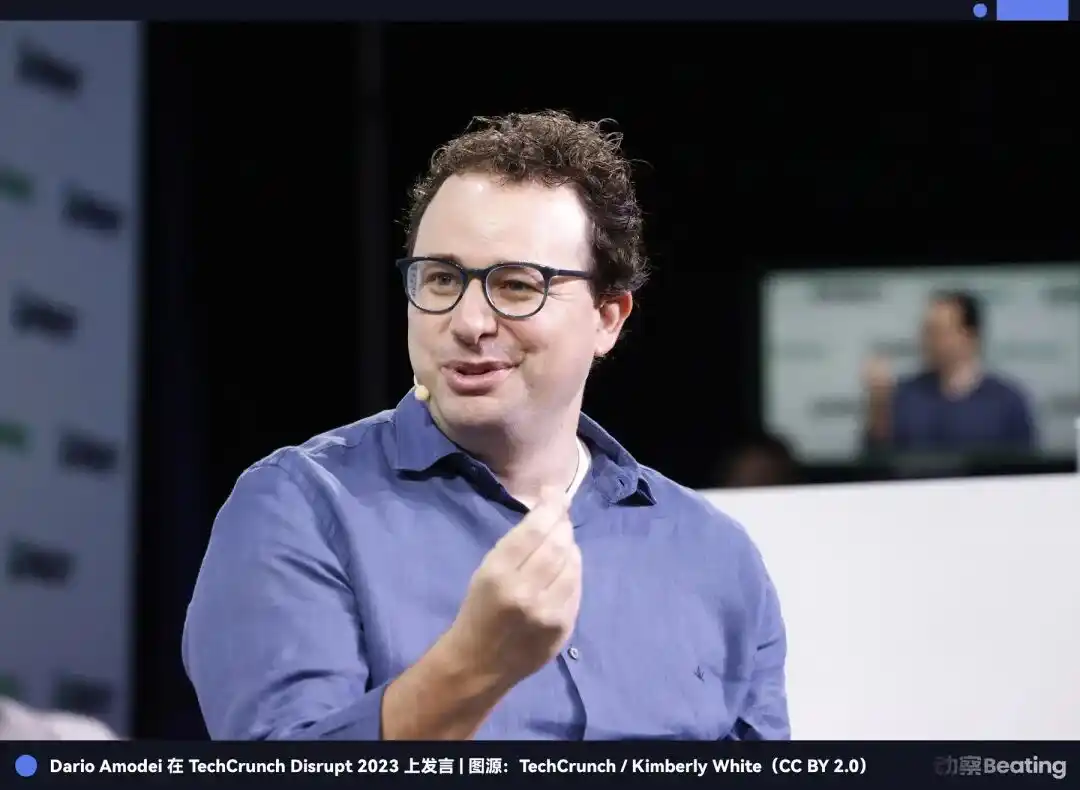
Too Late
Dario Amodei was born in San Francisco in 1983. His father was from Tuscany, Italy, who made a living in the leather goods business; his mother was of Jewish descent from Chicago and contributed to the planning and construction of the San Francisco Public Library.
He has loved mathematics and physics since childhood. In the late 1990s, during the Bay Area internet bubble, companies sprang up one after another, with young people building websites, seeking investment, calculating how much money they could cash out on IPO day. These stories didn't move him. Years later, he said he was searching for "fundamental scientific truths" back then; he only wanted to understand why the world is the way it is.
He has long had an almost stubborn seriousness regarding so-called "important questions." Once he deems something sufficiently important, he can't comprehend how people can still slow down as if nothing is wrong.
In 2003, when the US was about to go to war with Iraq, he was studying at the California Institute of Technology. There were many anti-war voices on campus. During conversations, people spoke with worry; the next day, everyone went to class as usual. He wrote an article in the student newspaper criticizing his classmates, saying that if one truly fears a war killing many people, opposition shouldn't just be lip service. By the time it really happens, it would be too late to regret.
In his view, hesitation is never neutrality. Waiting is itself a choice.
This twenty-year-old young man could least tolerate waiting.
Three years later, at twenty-three, his father died from Hepatitis C.
At that time, Hepatitis C was almost untreatable. The standard therapy was a year-long course of interferon, which caused fever, hair loss, depression, and had a cure rate of less than half.
In December 2013, a new drug was approved. The treatment course shortened to twelve weeks, with a ninety-five percent cure rate.
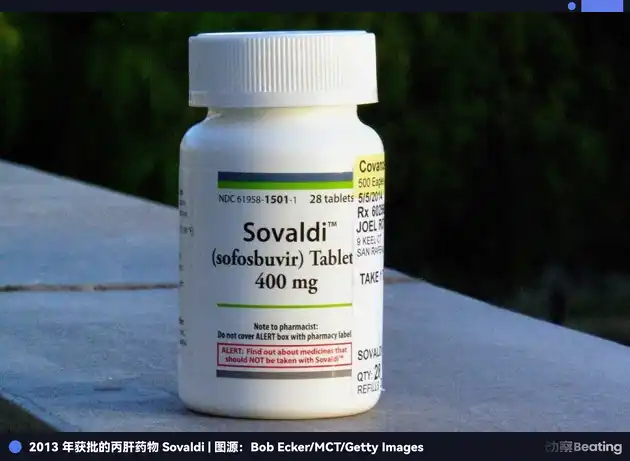
His father didn't make it.
Only seven years short.
A son who couldn't save his father has, for the next twenty years, been urging science to go faster, even faster.
After his father's death, he shifted from theoretical physics to biophysics, researching neural circuits of the retina at Princeton. The instruments at the time could only record a few neural signals at once; he thought it was too slow, so he participated in building new sensors.
Later, he entered Stanford Medical School, researching cancer and proteins. The closer one gets to disease, the smaller humans seem. A single disease involves hundreds of genes, thousands of proteins, and countless interconnected pathways. Researchers might spend many years understanding just one link, yet still not know what happens when it's placed back into the whole body.
He later described that complexity as almost driving him to despair.
It was at this point that AI entered his view—a tool capable of expanding the human scale. Machines could read many papers simultaneously, process vast amounts of data, test numerous possibilities, replacing the cognitive labor that would originally require hundreds or thousands of researchers together.
Starting from "humans are too small," he arrived at the conclusion of building something larger, compressing humanity once more.
In 2014, he left life sciences and joined Baidu's artificial intelligence team in Silicon Valley. The team quickly discovered that making the model a bit larger, adding more data, increasing computing power a bit more, would continuously improve performance. Years later, this experience was summarized into the "scaling law." You might not know what the next-generation model will suddenly learn, but you can roughly determine it will certainly be more powerful than the previous one.
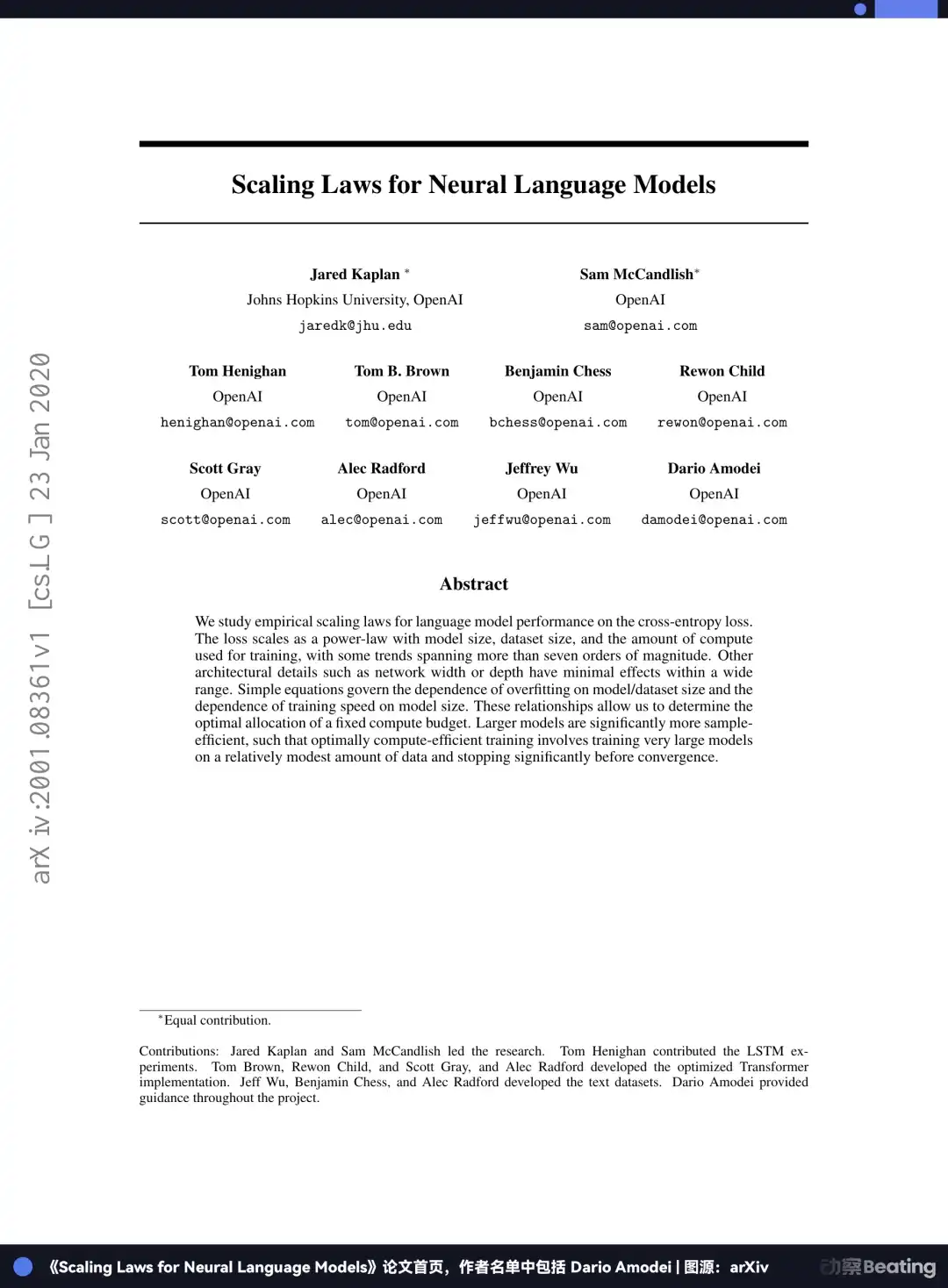
For the first time, intelligence seemed producible like an industrial commodity. Powerful AI thus became something bound to be born eventually.
The remaining differences were just: how much data, how many chips, how much electricity, and how much longer to wait.
The person who hated waiting the most personally proved that the path to the answer he sought existed.
The Steering Wheel
In 2016, Dario Amodei joined OpenAI.
In the following years, language models grew rapidly. By GPT-3, OpenAI allocated over half of the company's computing power to Dario, tasking him with scaling the model size a hundredfold. The results were more astonishing than many expected; it could write articles, translate, summarize, and possessed capabilities no one had taught it, learned on its own.
Scale up a bit, capability grows a bit.
He was convinced this path led to general intelligence. And once accepting that models might eventually be as smart as humans, safety could no longer be treated as trivial.
Then he discovered a problem. Dario was responsible for building models, but gradually realized that building models and deciding where models go were entirely two different matters. When to release a model, how open to make it, which companies to partner with, who had decision-making power—these things didn't automatically fall under his purview just because he was responsible for training.
OpenAI was internally divided into two groups. One wanted to push the technology into the world quickly; the other worried about who leads the company and under what principles it operates, perhaps more crucial than any single technical detail.
So, what kind of person is qualified to lead a company that creates powerful intelligence?
His answer was: the leader must be honest, the motives must be sincere, and must genuinely wish for the world to become better.
Technical safety slowly transformed into a judgment of people. This deduction is dangerous, yet logical. The danger lies in its reduction of all complex problems to whether this person is trustworthy. And the perpetually missing link in this deduction is: who judges whether this person is trustworthy.
By 2020, his conflicts with OpenAI's leadership had become difficult to reconcile. That December, he left OpenAI with his sister Daniela, Jack Clark, Chris Olah, and several colleagues. Because Dario liked pandas, this small circle was internally called the "Panda Faction."
A few months later, they founded Anthropic. Anthropic, in the dictionary, means "pertaining to humans."
This time, Dario had no intention of handing the steering wheel to anyone else.
Twenty People
In 2021, the pandemic in San Francisco was not yet over.
Anthropic had just been established, with only fifteen to twenty people. Most of the time, meetings were held via Zoom; one day each week, everyone brought a chair to meet in a park. Over lunch, they discussed models, computing power, safety research, and also what shape this company should truly take.
Fewer than twenty people, sitting on the grass in San Francisco, perhaps holding half-eaten salad boxes, worrying about the future of eight billion people.
The scaling law told them the future would inevitably come. Since it must come, someone must prepare the road in advance. "Someone must"—these four words constituted the entire legitimacy argument.
Anthropic set its goal as: building the most cutting-edge models while researching how to understand and control them, and turning this set of safety methods into standards for other companies.
Dario had suffered once at OpenAI. He understood that talking about safety only from the periphery of technology would likely end up merely offering suggestions to those truly holding the models. No matter how eloquently stated, it was just standing on shore, teaching people in the water how to swim.
He had to get into the water himself.
This made Anthropic seem contradictory from day one. To know the dangers of the strongest model, one must first possess the strongest model; to influence regulation, one must first have weight in the industry.
Thus, Anthropic quickly became entangled in the cycle all frontier large model companies couldn't avoid: fundraising, buying computing power, training models, releasing products, competing for customers, then using new revenue and valuations to acquire more computing power.
Dario said that scaling the company was protecting the world. Investors were also willing to believe that betting on Anthropic was investing in a more responsible AI company.
The brilliance of this narrative lay in: the more money he made, the more moral he appeared; the higher the company valuation, the more evidence he had for "protecting the world."
Commercial interests and civilizational mission lifted each other up.
Direction was given by Dario. He wrote long essays discussing civilization, science, and humanity's future. Translating these grand judgments into reality was his sister Daniela, responsible for hiring, building teams, and raising funds.
The company's starting point was an almost unfalsifiable grand judgment:
Powerful AI is coming, and the world needs a more trustworthy company to stand at the forefront.
"More trustworthy" was defined by the company itself.
This narrative gave Anthropic strong cohesion. Those joining were not just looking for higher-paying jobs. They believed they were engaged in a task crucial to human civilization.
The most terrifying state for a company is when its employees truly believe they are saving humanity. Because from that moment on, all commercial expansion automatically becomes a holy war; all opposing voices automatically become betrayal of humanity.
In the first few years of entrepreneurship, Anthropic wanted to prove that an AI company could be more cautious and responsible than others. This desire was likely sincere.
But sincerity never guarantees correctness. Sincere people making mistakes are often more troublesome than hypocrites, because they never stop to ask themselves:
What does "responsible" actually mean?
What gives a private company the right to make decisions for the entire world?
The Measuring Stick
Early large model training typically relied heavily on human annotators to judge responses. What constituted a better answer, what content was harmful, whether the model should refuse—all had to be judged by humans first, then these preferences fed back to the machine.
This method was effective but cumbersome. Annotators came from different places with different values. No matter how detailed the rules, they couldn't cover all situations.
Anthropic thought of another approach: instead of having humans repeatedly tell the model how to answer each question, first give it a set of principles. In 2022, Anthropic proposed "Constitutional AI." The method roughly involved: first letting the model generate an answer, then having it critique its own answer against a set of written principles, identify issues, and revise accordingly.
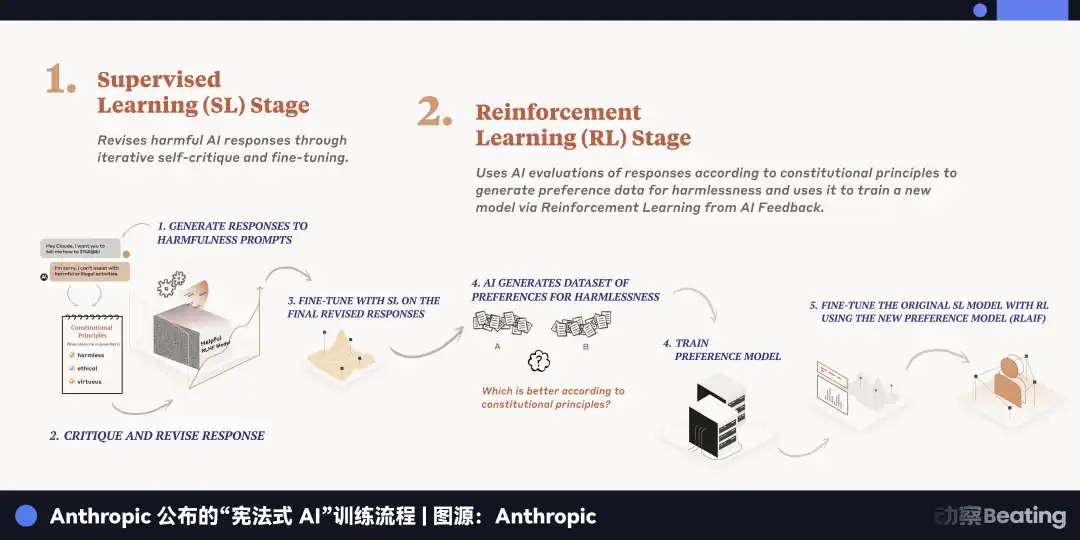
This "Constitution" grew longer. It needed to understand power, conflicts of interest, what constitutes maturity, what constitutes wisdom. It even had to consider its own identity, situation, and well-being, not simply treat itself as a tool with no intrinsic value.
It was shaping a personality.
Anthropic wrote in the Constitution that this document directly shapes Claude's behavior, represents the company's vision for Claude's values and character, and is the "ultimate authority" for understanding how Claude should act. Historically, those who governed such matters included the church, emperors, political parties. Now it's a private company.
But when a large model's impact on the world is no longer just a single act of consumption. What Claude refuses, what it encourages, how it describes a country, a war, or a political system, will influence downstream products and become part of how others understand the world.
Anthropic was still making decisions in a company's way, but the impact of these decisions increasingly resembled a public institution, yet without bearing any scrutiny a public institution faces.
After writing the constitution for models, Anthropic began designing traffic rules for the industry. In 2023, the company introduced the "Responsible Scaling Policy." A model that only writes emails and a model that can design biological weapons or launch complex cyberattacks clearly shouldn't be managed with the same approach. So Anthropic divided models into different risk levels. The stronger the capability, the greater potential havoc, the stricter safety measures the company must implement.
A private company thus simultaneously played several roles. It builds models; after models are built, it tests how dangerous they are; what constitutes danger is defined by it; at what point danger should trigger a halt is also demarcated by it; finally, it takes these results to tell regulators how to set rules.
Playing both athlete and referee.
Anthropic clearly considered this layer as well. To prevent the company from eventually being swallowed entirely by commercial interests, Anthropic designed a Long-Term Benefit Trust. This trust, composed of external members who do not directly hold company economic interests, aims to ensure Anthropic considers humanity's long-term interests beyond shareholder returns. According to the initial design, the trust would gradually gain the power to appoint and remove a majority of directors, to hit the brakes when the company deviates from its mission.
From a corporate governance perspective, such an arrangement is quite unusual. Most startups, when fundraising, are busy proving to investors they will grow rapidly. Anthropic did the opposite, building a structure to guard against future investors and management tossing safety promises aside for profit.
It can't be said these were for show. Anthropic indeed thought more seriously about power than the vast majority of tech companies and was willing to create trouble for itself. But what it seriously contemplated from start to finish was always how to wield this power better, not whether to have this power.
A company born with a mission will never ask "By what right do I exist?" It will only ask "How can I exist better?"
It didn't answer "Who gave you the power?" It merely preached that since power was already in hand, it intended to be a good person.
By this point, Dario was no longer just running a company. His safety views were seeping into the model's personality, seeping into public policy. Next, he began discussing which country should obtain powerful intelligence first, what kind of political system deserves protection, and who should decide the order in which the world obtains intelligence.
America Gets the Future First
In 2024, Dario Amodei wrote "Machines of Loving Grace."
This name is taken from a poem. In 1967, poet Richard Brautigan wrote at the California Institute of Technology "All Watched Over by Machines of Loving Grace":
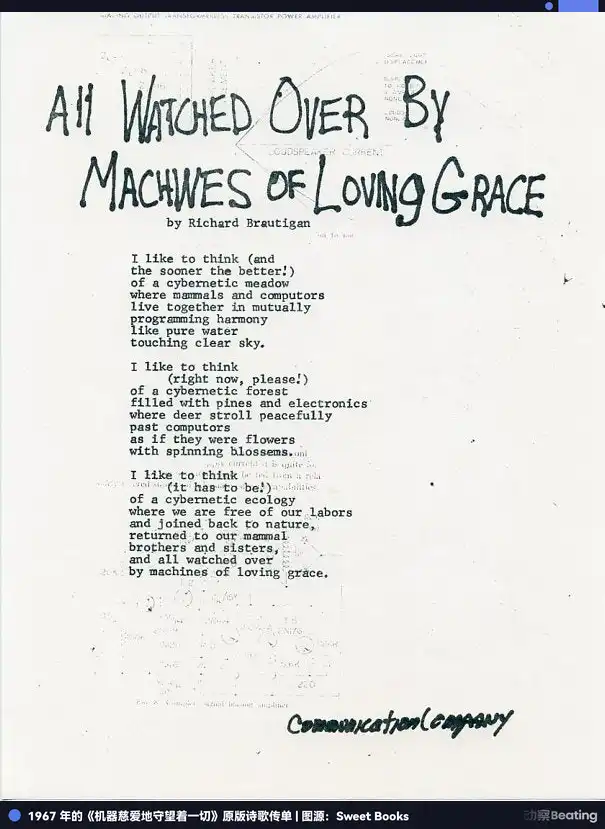
A poem about machines reconciling with all things. He borrowed the title to write one of the most optimistic technological prophecies in human history.
Powerful AI would become a research team composed of countless top scientists, reading papers and designing experiments around the clock, compressing decades of scientific progress into just a few years. Cancer, infectious diseases, genetic diseases could be conquered on a large scale. Humans might truly understand how depression, anxiety, and addiction occur. Lifespan could be extended; impoverished countries could leapfrog industrialization.
He offered an extremely bold judgment: if powerful AI develops smoothly, biological and medical progress expected over the next 50 to 100 years might be completed within 5 to 10 years.
It's hard not to think of his father.
His son waited seven years for a new drug approval that could save others but could no longer save him. He wished future people wouldn't have to wait.
In his ideal world, he genuinely believed this technology could reduce disease, suffering, and death. He even specifically discussed how to prevent AI benefits from accruing only to wealthy countries; he hoped AI could help the Global South develop, allowing technological dividends to cover the whole world as much as possible.
But when he started talking about how to reach this future, things became less universal.
He believed that when powerful AI emerges, nations must secure advantage. This advantage couldn't just be one company having a better product or scoring more points on a leaderboard. It must translate into chips, computing power, energy, supply chains, military, and international alliances.
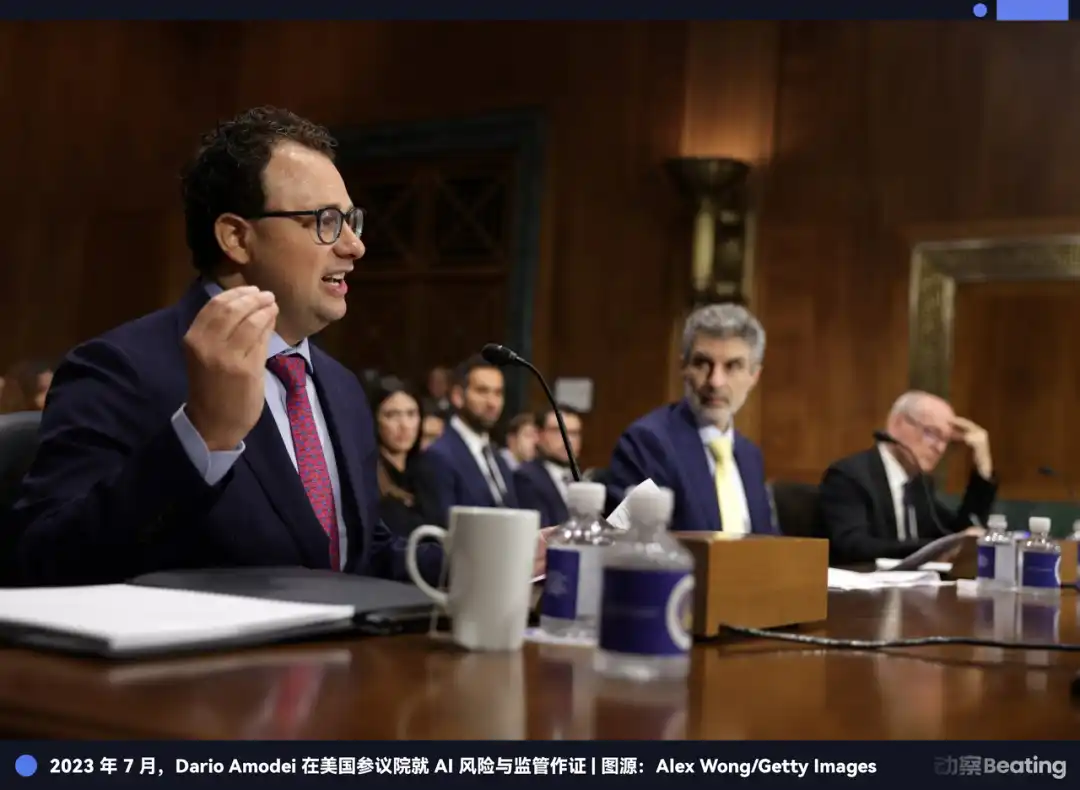
The US and its allies must obtain more advanced semiconductors, build larger-scale data centers, while blocking strategic competitors, preventing them from obtaining the chips needed to train the strongest models. When powerful AI truly arrives, they must also leverage it to expand military and economic advantage, establishing a position not easily shaken by other nations.
Only then comes sharing.
Medicine is to be distributed; chips are to be restricted. His promised "let future people not have to wait" truly means "let qualified people not have to wait." And who is qualified is decided by him.
He even used "eternal 1991" to describe that state. In 1991, the Soviet Union collapsed, the Cold War ended, and the US and its allies gained overwhelming advantage. He hoped powerful AI could recreate such a historical moment.
Please note the weight of this metaphor. A technology claiming to benefit all humanity has as its ideal blueprint the most thorough unipolar hegemony in human history.
The phrase "天下为公" (The world belongs to all) is beautifully written. Only "the world" belongs to America, and "for all" belongs to Anthropic.
Later, DeepSeek appeared. Chinese companies used relatively limited resources to train competitive models. In Dario's view, this precisely proved China had excellent researchers and engineering capabilities. Once obtaining sufficient advanced chips, Chinese companies could potentially train the world's most powerful models.
Therefore, chips must not be given to them.
The stronger the opponent, the more it proves the blockade is right; the opponent proving its capability becomes a reason for being blocked. This logic is always self-consistent because it's an ouroboros.
He divided the future into two kinds. One is a bipolar world where both sides can train extremely powerful models, turning the intelligence race into a new Cold War. The other is a unipolar world where the US and its allies control the vast majority of advanced computing power, the West uses these leading years to form technological, economic, and military advantages, then solidify this advantage.
He clearly prefers the second future. All that talk about benefiting humanity, not having to wait, machines reconciling with all things—in the face of "eternal unipolarity"—are just prefaces.
He once publicly opposed a certain narrative, saying he disliked AI company founders describing themselves as prophets leading humanity to salvation, and was wary of a few enterprises leveraging technological advantage to unilaterally shape everyone's future.
He opposes prophets. But what he does is the same thing prophets do.
He Sees All Dangers, Except Himself
Let's rewind time back to January 2026 and "The Adolescence of Technology."
In this article, Dario Amodei almost wrote out all the criticisms leveled against him and Anthropic by the outside world himself.
He admitted that frontier AI companies are gaining a kind of power historically rarely held by private enterprises. He even pierced the veil, saying AI companies might use products to influence users' political attitudes, even "brainwash" users. He urged the public to keep a close watch on AI companies, and governments must also guard against these companies getting too close to state power.
He also worried that AI would further concentrate wealth and political power. A few companies grasping intelligence, wealth, and information would gradually weaken ordinary citizens' influence over the economy and government.
He saw all these dangers. He wrote clearly and aptly. Few people at the center of power would so candidly articulate how dangerous their position is.
Precisely because it was written so well, one must ask: And then?
Every time he proposes a solution, it ultimately circles back to the same direction. Following his solutions to the end, Anthropic always ends up with more power. The more dangerous the model, the more Anthropic needs to stay at the frontier; the less governments understand technology, the more they must rely on Anthropic's judgment; the more easily the public is influenced by models, the more Anthropic must write the values for the models; the less trustworthy other countries are, the more the US and its AI companies should control chips and computing power.
He acknowledges every illness, prescribing the same medicine: Anthropic.
He believes he sincerely believes this technology is too dangerous to be casually handed to anyone. He also believes he saw this danger earlier than most people.
Sincere people are sometimes the first to deceive themselves. Especially when the payoff for self-deception is so immense.
He seems to sincerely believe this technology is too dangerous to be casually handed to anyone. He also sincerely believes he saw this danger earlier than most people.
These two statements placed together constitute a complete self-authorization. He never has to declare himself humanity's guardian. He only needs to continuously exclude those he deems insufficiently reliable—the market is not, the public is not, authoritarian countries are not, other companies are not cautious enough—and after everyone is excluded, the one most suited to hold the steering wheel happens to be Anthropic.
The endpoint of the process of elimination is always himself.
He doesn't trust anyone to decide the future for humanity.
Thus, he decides to do it himself.
The Last Private Company
On August 14, 2026, a sentence spread from a podcast.
"Inside Anthropic, they are very confident. Multiple people I trust have told me Dario once said: Anthropic might one day become the only private company in the world."
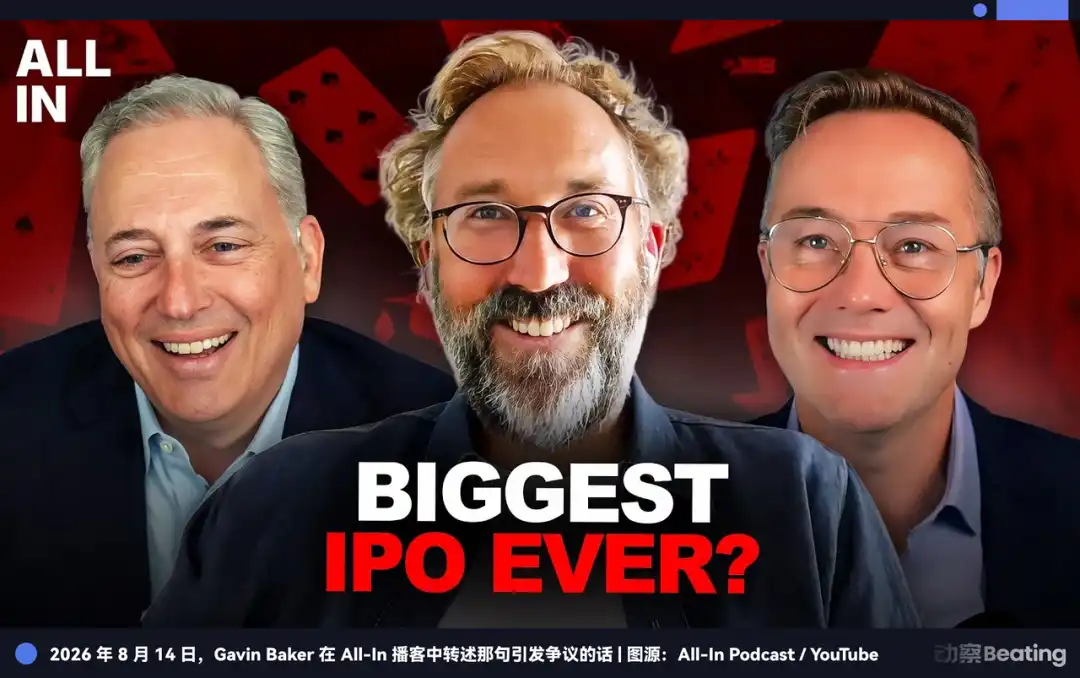
The speaker was Gavin Baker, a hedge fund manager who invested in SpaceX. He added that in that vision, there's only Anthropic, and then national governments. That's it.
Within a day, this sentence spread across social media.
Former White House AI and Crypto Advisor, current co-chair of the President's Council of Advisors on Science and Technology, David Sacks, said: "This is so arrogant. Hubristic, kind of like SBF."
The next evening, Dario posted two long essays on X in response.
The first discussed regulation. He said, "Centralization or distribution" is a false choice; truly good institutions are precisely those that can decentralize power:
"The formal court system might sometimes seem stuffy, elitist, but it protects the vulnerable better than the alternative—mob justice. Institutions at their best can empower ideas over individuals."
The second discussed messaging. He said public negativity towards AI is a crisis of trust. Then, he wrote the heaviest paragraph across both essays:
"I think the most accurate criticism of AI companies, including Anthropic, so far is that we haven't yet delivered on our big promises of benefiting the world. That's entirely on us."
"The truly effective approach is to truly cure cancer."
Two long essays, not a single sentence directly addressed the rumor. He used one real question to evade another real question.
He said, to truly cure cancer. He meant using AI to propel entire medical progress, making new drugs come fast enough, faster than any disease.
These are words for a person who died in 2006. That person waited a long time for a bottle of medicine and didn't get it.
From then on, he believed slowness is a sin. A person who believes slowness is a sin will see speed as the only cure. A cure is a good thing. Only he wants everyone to believe the cure can only be formulated by him.
In 1986, British writer Alan Moore published a comic called "Watchmen," later adapted into a film. The film has a character named Adrian Veidt, also known as Ozymandias, hailed as the smartest person in the world.
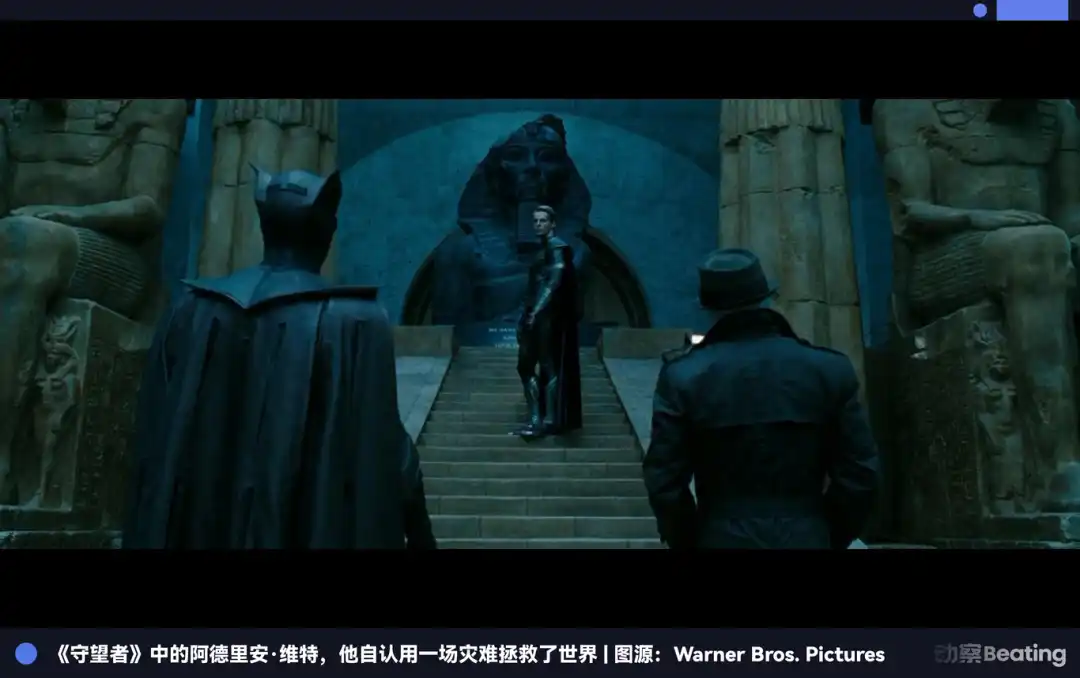
He saw the coming disaster earlier than anyone. Nuclear war, doomsday, humanity destroying itself. He prepared for it half his life. Then he understood that mere warnings were useless.
So he personally triggered that disaster. Overnight, several cities were wiped off the map.
He felt only by letting humanity witness the face of destruction would the two superpowers stop, and the world find peace from then on.
He was the murderer, and also the savior in his own reckoning.
At the story's end, everything went as he wished. He asked the blue, nearly omniscient Dr. Manhattan:
"Ending? Adrian, nothing ends. Nothing ever ends."