EU Grants Regulatory Bodies Authority to Block Crypto Platforms from Third Countries

cryptonews.ruPubblicato 2026-08-18Pubblicato ultima volta 2026-08-18

Introduzione

The European Union has expanded its sanctions targeting the use of cryptocurrencies to circumvent restrictions against Russia. The new measures, part of the 21st sanctions package, empower the EU to impose nationwide blocks on crypto platforms. A key provision allows the EU to blacklist entire third countries if their jurisdictions systematically fail to prevent sanctioned Russian and Belarusian individuals from using crypto asset services. This grants the sanctions an extraterritorial reach. The package also broadens existing prohibitions, banning Russians and Belarusians from holding positions or controlling crypto service providers within the EU, effective August 25. Experts note this shift represents a move toward secondary sanctions and could create legal conflicts in jurisdictions where local laws contradict EU measures.

The EU has taken steps to expand the scope of its cryptocurrency sanctions against Russia, introducing the possibility of nationwide blocks, which will facilitate the targeting of exchanges in countries that systematically allow Russian citizens to evade sanctions using crypto assets.

In the new 21st package of sanctions against Russia, approved on July 23, the EU added 4 entities related to the A7 "Ruble" network, which also became the target of sanctions by the UK government in May. The new EU provisions sever ties with African organizations, imposing a ban on transactions for 14 crypto services in Georgia, Panama, the UAE, the Marshall Islands, Kyrgyzstan, and Belarus.

These additions follow the radical measures introduced in the previous sanctions package, which targeted the entire Russian cryptocurrency industry.

However, beyond that, two new provisions aim to deprive Russians of the ability to use cryptocurrency to support military operations. The first, effective August 25, expands the ban on ownership, control, or holding positions by Russians and Belarusians in crypto services based in the EU.

These restrictions, first introduced on January 18, 2024, now extend to any other crypto-asset services described in the Markets in Crypto-Assets (MiCA) regulation, including advisory services, portfolio management, and services for transferring funds on behalf of clients, as stated in Article 5b of Council Regulation (EU) 2026/1848 of July 23, 2026, amending Regulation (EU) No 833/2014.

The second provision establishes a ban on cryptocurrency transactions with entire countries if service providers do not comply with these sanctions, giving them an extraterritorial status.

Article 5bc of the amendment to Regulation 833/2014 states that "it shall be prohibited to directly or indirectly carry out any transactions with a legal person, organization, or body that is a crypto-asset service provider or a platform facilitating the exchange or transfer of crypto-assets and is registered in a third country."

Furthermore, the regulation clarifies that this list of countries, currently empty, "shall include only those third countries that have been identified by the Council as systematically and persistently failing to prevent the provision of crypto-asset services or to stop the activities of platforms facilitating the exchange or transfer of crypto-assets."

According to Nick Turner, an economic sanctions expert, this shift means the EU is leaning towards imposing secondary sanctions after a long history of opposing them. He also emphasized that this could lead to legal conflicts in jurisdictions where national regulation contradicts EU sanctions.

"Under the new Article 5bc, regulatory authorities of a country are responsible for failing to stop activities subject to EU sanctions, regardless of the country's own legislation," he stressed. Turner believes this measure will initially be used as a diplomatic lever, explaining that "it's hard to say" whether these measures will directly affect any country.

Domande pertinenti

QWhat new enforcement power has the EU granted its regulatory bodies regarding crypto-asset service providers?

AThe EU has granted its regulatory bodies the authority to block crypto-asset platforms and service providers registered in third countries. This is stipulated in the newly added Article 5bc of the sanctions regulation amendments, allowing for national-level bans against platforms that facilitate transactions enabling sanctions evasion.

QWhich countries had crypto services added to the EU's sanctions list in the latest package?

AIn the latest sanctions package, the EU added 14 crypto-asset service providers in Georgia, Panama, the United Arab Emirates, the Marshall Islands, Kyrgyzstan, and Belarus to its prohibited transactions list.

QWhat specific new restriction for Russians and Belarusians comes into force on August 25, according to the article?

AA restriction coming into force on August 25 expands the ban on Russians and Belarusians owning, controlling, or holding management positions in EU-based crypto-asset service providers. This ban now extends to other crypto-asset services defined under the MiCA regulation, including advisory, portfolio management, and crypto-asset transfer services for clients.

QAccording to sanctions expert Nick Turner, what significant policy shift does the new measure (Article 5bc) represent for the EU?

AAccording to sanctions expert Nick Turner, the new Article 5bc represents a significant policy shift where the EU is leaning towards implementing secondary sanctions, after a long history of opposing such measures. This could potentially create legal conflicts in jurisdictions where national regulation contradicts EU sanctions.

QWhat criterion must a third country meet to be included on the list for EU crypto-platform blocking measures under Article 5bc?

AUnder Article 5bc, a third country will be included on the list only if the EU Council determines it has been systematically and persistently failing to prevent the provision of crypto-asset services or the operation of platforms that facilitate the exchange or transfer of crypto-assets in a way that circumvents sanctions. The list is currently empty.

Letture associate

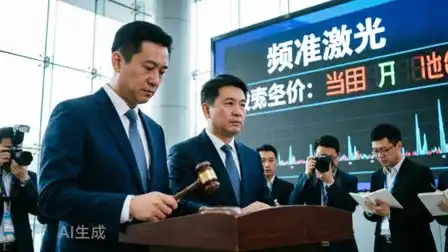
The Year's Most Expensive New Stock Hits the Market: Pinson Laser, Bright Prospects Amid Concerns

Annual Most Expensive IPO Debuts: Pinsun Laser's Bright Prospects Shadowed by Concerns Pinsun Laser, dubbed "A-share's first precision laser stock", has made its debut on the STAR Market with a record-high issue price of 186.88 yuan per share this year. Despite the hype, its journey is marked by challenges. The company's allure lies in its "small and beautiful" profile. It issued a small float of only 10 million new shares, boosting its price elasticity and retail investor appeal. Financially, it has shown strong performance with revenue growing at a 68.2% CAGR from 2023 to 2025 and gross margins consistently above 67%. As the domestic leader in precision lasers for quantum technology, it holds a 9.21% global and 16.85% domestic market share in 2024, offering a scarce A-share investment opportunity. Its P/E ratio of 49.42x at issuance was below the industry average, suggesting room for valuation growth. However, Pinsun's path is fraught with hurdles. Its core market—lasers for quantum tech (computing, sensing, communication)—remains a niche, research-driven sector. Global demand is projected to grow at a modest sub-8% CAGR through 2030, constrained by the distant commercialization timeline of quantum computing, which heavily relies on research funding cycles. The company's prestigious clientele, including top global universities, exposes it to funding volatility. It faces intense competition from entrenched giants like Germany's Toptica and the US's Coherent. While Pinsun employs a differentiated, cost-effective technical architecture, it still lags in brand recognition. To mitigate reliance on the quantum research market, Pinsun is cultivating semiconductor applications as a second growth engine, with related revenue surging from 25.15 million yuan in 2023 to 104 million yuan in 2025. Yet, breaking into the competitive semiconductor equipment market dominated by international players presents its own significant challenges. Furthermore, while its R&D spending (14-15% of revenue) is substantial relative to its size, it pales in comparison to the resources of global competitors. In summary, Pinsun Laser enters the market with impressive financials and a unique position in a futuristic field, but its near-term growth is tethered to a small, volatile research market. Its long-term success hinges on navigating fierce competition and successfully commercializing its technology in broader markets like semiconductors, all while the quantum industry's "moonshot" applications remain years away from maturity.

marsbit1 min fa

The Year's Most Expensive New Stock Hits the Market: Pinson Laser, Bright Prospects Amid Concerns

marsbit1 min fa

Anthropic Asked for It and Got It, Mythos 2 Reportedly Shelved, Mythos 3 Secretly in Development

In a revealing podcast, analysts Dylan Patel and Jordan Nanos disclosed that Anthropic has reportedly completed training its Mythos 2 AI model but is withholding its public release due to regulatory concerns. According to the report, Mythos 2 possesses capabilities—potentially including sophisticated coding, logical reasoning, and cyber offense/defense abilities—deemed too powerful and risky for public access. Consequently, Anthropic is said to be using a heavily restricted, downgraded version called Fable for public use. The situation is described as a self-inflicted setback for Anthropic, whose leaders previously advocated for stringent AI safety regulations, only to find their own advanced models now facing restrictions. With Mythos 2 effectively shelved, the company faces a critical challenge: the potential disruption of the vital feedback loop typically gained from widespread user interaction, which fuels model improvement. Despite this, Anthropic is reportedly redirecting its efforts internally. It is allegedly using Mythos 2 to generate synthetic data and code to accelerate the secretive development of its next-generation model, Mythos 3. This shift indicates a move towards a closed, recursive development cycle where AI models train and evaluate each other, potentially reducing reliance on human feedback over time. The report draws parallels to OpenAI, suggesting it may also be withholding its most advanced model, referred to as Astra, due to similar safety and controllability concerns. Speculation arises that Anthropic’s strategy might be a deliberate move to monopolize its most powerful AI for internal, high-stakes applications (e.g., biotech, automated coding) while avoiding the risks and responsibilities of a public release. Sources cited include posts from SemiAnalysis and related discussions on social media, painting a picture of a hidden AI arms race where the most capable models are being developed behind closed doors, away from public access and scrutiny.

marsbit13 min fa

Anthropic Asked for It and Got It, Mythos 2 Reportedly Shelved, Mythos 3 Secretly in Development

marsbit13 min fa

JPMorgan Research Report Analysis: Semiconductor Equipment and Materials Demand Broadly Revised Upwards, Price Increase Signal Clear

JPMorgan's research report indicates a simultaneous upward revision in both demand and pricing power for the semiconductor equipment and materials sector. Key chipmakers, including TSMC, Intel, and SK Hynix, are significantly raising their capital expenditure forecasts for 2026, driven by investments in advanced nodes like 2nm/3nm and HBM capacity expansion. This signals an accelerated global capacity build-out. Leading equipment suppliers Tokyo Electron and Screen Holdings have correspondingly raised their 2026-2027 Wafer Fab Equipment (WFE) market outlook, now anticipating stronger growth. Tokyo Electron also highlighted improving gross margins, supported in part by pricing actions, suggesting a shift from volume to value growth. Concurrently, major memory makers (Samsung, SK Hynix, SanDisk) are rapidly securing Long-Term Agreements (LTAs) with hyperscaler customers. These multi-year contracts, often with prepayments, aim to lock in capacity and reduce price volatility. The widespread adoption of LTAs is fundamentally altering the memory industry's pricing dynamics and profit stability. These converging trends—rising chipmaker capex, upgraded equipment forecasts, and the proliferation of memory LTAs—collectively point to a semiconductor cycle increasingly driven by both volume expansion and firming prices, with Japanese equipment and materials firms positioned as primary beneficiaries.

marsbit23 min fa

JPMorgan Research Report Analysis: Semiconductor Equipment and Materials Demand Broadly Revised Upwards, Price Increase Signal Clear

marsbit23 min fa

Trading

Spot
活动图片