Multicoin、Jump、Galaxy联手开大,史上最大规模的SOL财库来了

Odaily星球日报Published on 2025-09-08Last updated on 2025-09-08

原创 | Odaily 星球日报(@OdailyChina)

作者|Azuma(@azuma_eth)

北京时间 9 月 8 日下午,纳斯达克上市公司 Forward Industries(NASDAQ: FORD)正式宣布,已获得总额 16.5 亿美元的现金与稳定币承诺,将通过一项 PIPE 交易(公开上市公司私募融资)启动以 SOL 为核心的数字资产财库战略。本次融资由 Galaxy Digital(NASDAQ:GLXY)、Jump Crypto 和 Multicoin Capital领投,该公司现有最大股东之一 C/M Capital Partners 参投。

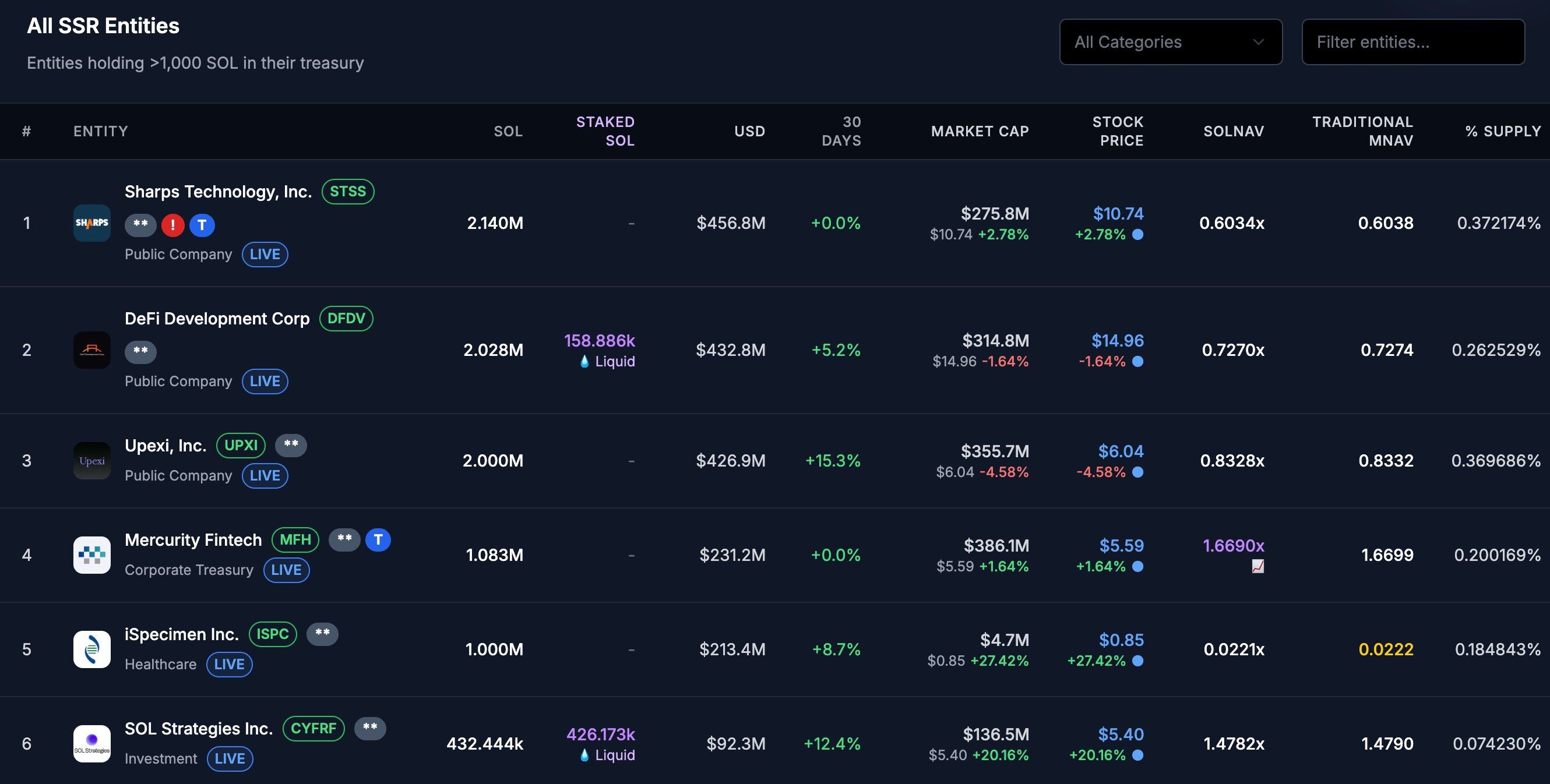
Strategic SOL Reserve 数据显示,目前 SOL 财库公司中,持仓规模最大的依次为 Sharps Technology(STSS)、DeFi Development Corp(DFDV)、Upexi(UPXI),分别持仓 214 万枚(4.57 亿美元)、203 万枚(4.33 亿美元)、200 万枚(4.27 亿美元)。以此计算,若Forward Industries 后续买入动作够快,其将凭借着 16.5 亿美元的筹码快速成为规模最大的 SOL 财库。
Forward Industries 在融资公告中指出, Galaxy、Jump Crypto 与 Multicoin 将同时提供资金与战略支持,帮助 Forward Industries 设计并执行其 SOL 财库战略,目标是使其成为 SOL 生态系统中领先的上市机构参与者。Forward Industries 将借助这些资方的资源,力求在 Solana 生态内获取差异化的链上收益,并通过积极参与生态发展为股东创造长期价值。

作为本次融资的三大领投方, Galaxy、Jump Crypto 与 Multicoin 在 Solana 生态内都有着举足轻重的地位,甚至可被视作当下 Solana 话语权最强的几大机构。

  • Galaxy:当前为 Solana 生态最大的验证者之一,运行着成熟的机构级数字资产服务系统。Galaxy 未来将为 Forward Industries 提供交易、借贷、结构设计、质押及区块链基础设施等服务,同时也将利用其全套产品与风控系统积极管理 Forward Industries 的财库战略。
  • Jump Crypto:长期致力于建设和维护支撑 Solana 增长的核心基础设施。Jump Crypto 目前正在开发 Firedancer,这是 Solana 的新一代高性能客户端,旨在提升 Solana 网络的吞吐量、韧性与效率;与此同时,Jump Crypto 也是 DoubleZero 和 Shelby 等关键基础设施项目的核心工程与网络贡献者。
  • Multicoin:成立于 2017 年的业界顶级 VC,专注于长周期、高信念的投资。Multicoin 是 Solana 的早期种子投资者,曾领投了 Solana 在 2018 年上线前的前三轮融资,并在 Solana 生态系统内投资了超过 25 个项目。

本次融资完成后,Multicoin 联合创始人兼管理合伙人 Kyle Samani 预计将出任 Forward Industries 的董事会主席。考虑到 Kyle Samani 多年来一直在高频输出对行业发展的各种理论思考及叙事畅想,其本人在整个加密货币领域都具备着极强的个人魅力及号召力,预计后续会成为 Solana 生态中 Tom Lee(ETH 最大财库公司 BitMine 董事会主席)那般的话事人角色。

受此利好影响,SOL 的价格短线得到了有效提振,截至发文暂报 215.3 USDT,24 小时涨幅 5.87%。展望远期,随着 Forward Industries 正式开始买入储备,预计 SOL 的价格在一定时间也均会得到较强的买盘支撑。


Trending Cryptos

Related Reads

"AI Burning Books" Is Actually a Misunderstanding

"AI Book-Burning" Is Actually a Misunderstanding Recent reports about AI companies purchasing used books, scanning them, and then destroying the physical copies have sparked widespread outrage. Terms like "AI is devouring human knowledge" have become common, fueled by dramatic visuals of books being cut and shredded. However, the actual facts reveal a more nuanced story. While companies like Anthropic have indeed spent millions to buy and "destructively scan" several million books for AI training, this volume is a small fraction of the global second-hand book market. The core act—digitizing content and then discarding the physical object—is the opposite of historical book-burning, which aimed to erase knowledge. A key point of contention is the purchase of rare or out-of-print books. Yet, if these books were legally for sale on the open market, the buyer (whether an AI firm or an individual) has the right to do with them as they wish. The real question is whether society has adequate systems to protect books of genuine cultural heritage *before* they are sold. Expecting profit-driven companies to self-regulate on this is unreliable; the solution lies in establishing public rules, such as protected lists for rare editions or granting libraries priority purchase rights. Much of the intense public reaction stems not from the scale of actual harm, but from the powerful symbolism. The image of books being fed into machines taps into deeper anxieties about AI: fears of job displacement, mistrust of tech giants, and the unsettling feeling that humanity is feeding its own cultural past to the systems that might replace it. The outrage over "AI book-burning" is thus less about the physical books and more a proxy for broader societal tensions surrounding artificial intelligence.

marsbit7m ago

"AI Burning Books" Is Actually a Misunderstanding

marsbit7m ago

Robinhood CEO named three benefits of tokenized stocks for American investors

Robinhood CEO Vlad Tenev advocates for the U.S. to allow trading of tokenized stocks domestically. He argues this model could modernize the financial system through three key benefits: **faster, near real-time settlements** reducing counterparty risk and broker capital requirements; **24/7 trading** enabling reaction to market events anytime; and **greater asset portability**, allowing tokens to be moved between platforms and held in self-custody wallets, increasing competition among services. Tenev emphasized tokenization is about rebuilding asset ownership infrastructure for freer movement, similar to information online. He highlighted potential integration with DeFi, where tokenized stocks could be used for lending or as collateral. Currently, Robinhood's stock tokens are not direct ownership of the underlying securities but are backed by them and provide access to economic value like dividends; their structure may evolve with future regulations. Tenev identified outdated securities laws and market infrastructure, developed over a century, as the main U.S. obstacle, urging regulators to adapt rules for blockchain while preserving investor protections. He warned it would be strange if the rest of the world could build the future of ownership around U.S. assets while Americans are left behind, suggesting tokenization could later expand to private company shares and other illiquid assets.

cryptonews.ru27m ago

Robinhood CEO named three benefits of tokenized stocks for American investors

cryptonews.ru27m ago

Trading

Spot

Hot Articles

Discussions

Welcome to the HTX Community. Here, you can stay informed about the latest platform developments and gain access to professional market insights. Users' opinions on the price of SOL (SOL) are presented below.

活动图片