As blockchain technology advances into an era of full-chain interoperability, Zero-Knowledge Proofs (ZKPs) have evolved from an esoteric cryptographic concept into the core engine driving industry-wide scaling, security, and interoperability. However, the generation of ZKPs has historically been plagued by high costs, complex expertise, and centralized bottlenecks.
Succinct (PROVE) has emerged to address these challenges. It is building a permissionless, decentralized prover network designed to democratize the power of ZKPs, making them as simple and efficient as calling a cloud service. Through its innovative SP1 Zero-Knowledge Virtual Machine (zkVM) and an economic model centered on the PROVE token, Succinct is providing a scalable, low-cost, and trustless computation verification layer for developers, blockchain protocols, and even Artificial Intelligence (AI) applications.
1. Succinct — Making Cryptographic Accessible to Web3
1.1 Project Overview: What is Succinct (PROVE)?
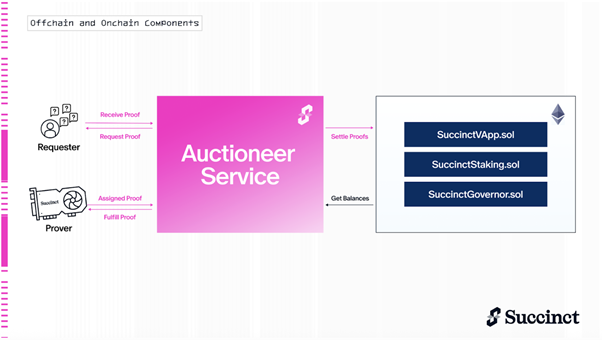
Succinct is a decentralized protocol built on Ethereum, with its core product being a prover network that coordinates global computing resources to generate zero-knowledge proofs. In simple terms, it creates a two-sided marketplace: on one side are applications that require ZKPs to verify computation (e.g., cross-chain bridges, Rollups, AI models), and on the other are provers who contribute idle computing power to generate proofs and earn rewards. The project's governance token is PROVE.
1.2 Value Proposition: What Core Problems Does Succinct Solve?
The worlds of traditional computing and blockchain have long faced the challenge of trust. Succinct leverages ZKP technology to replace reliance on centralized intermediaries with "cryptographic truth," primarily solving the following issues:
● High Technical Barriers: Traditional ZKP development requires deep cryptographic knowledge and complex circuit writing. Succinct's SP1 zkVM allows developers to write programs using general-purpose languages like Rust, dramatically lowering the development barrier and reducing development cycles from months to days.
● High Cost and Inefficiency of Proof Generation: Generating ZKPs by a single entity is expensive and inefficient. Succinct's decentralized prover network aggregates computing power from personal computers to professional data centers through a global competitive marketplace, effectively reducing proof costs and increasing generation speed.
● Centralization Risks: Relying on a single or a few entities for verification introduces single points of failure and censorship risks. Succinct's permissionless network ensures a high degree of decentralization and censorship resistance, providing a more solid security foundation for blockchain applications.
● Limited Application Scenarios: Due to the aforementioned obstacles, the application of ZKPs has been limited. By offering "ZK-as-a-Service," Succinct paves the way for the widespread adoption of cutting-edge applications such as blockchain scaling (ZK-Rollups), trustless cross-chain bridges, and verifiable off-chain computation (like AI inference).
1.3 Project Advantages: Why Does Succinct Stand Out?
● Revolutionary SP1 zkVM: As an industry-leading general-purpose zkVM, SP1's high performance and support for standard languages form its core technical moat.
● Innovative Economic Mechanism: The network employs a "Proof Contests" auction mechanism, ensuring both decentralization and price competitiveness in the proof market.
● Strong Ecosystem and Partnerships: Upon its mainnet launch, it had already been adopted by over 35 leading industry projects, including Polygon, Celestia, Lido, and Avail, validating its market demand and technical strength.
● Top-Tier Capital Backing: The project has completed two funding rounds totaling $55 million, led by Paradigm, and has gained recognition from top-tier venture capitalists and industry leaders.
2.Forging Ahead — Succinct's Current Progress and Roadmap
2.1 Existing Products and Ecosystem Progress
According to data from Binance and other research reports, Succinct has achieved remarkable results around its mainnet launch:
● Network Usage: Over 5 million ZK proofs were processed during the testnet phase, attracting more than 24,000 paying users and generating significant early revenue.
● Developer Ecosystem: Its core proving software, SP1, is highly popular on GitHub with over 1,400 stars, and the Rust SDK has been downloaded more than 170,000 times, with over a thousand daily active developers.
● Business Development: It has established partnerships with numerous well-known projects, including Polygon (for its AggLayer and Katana), Celestia (for its Blobstream bridge), Lido, Avail, and Mantle, providing them with core ZK proving services.
2.2 Future Roadmap: From Mainnet to a Global Computation Layer
Succinct's roadmap clearly outlines its ambitious vision:
● Phase 1 (Q3-Q4 2025): Mainnet Launch and Ecosystem Expansion
● Activate the payment, staking, and governance functions of the PROVE token on the mainnet.
● Attract more clients and world-class validators to the network.
● Continuously optimize developer tools to lower the barrier for ZK technology adoption.
● Phase 2 (Q1-Q2 2026): Cross-Chain and Infrastructure Deepening
● Deepen collaboration with the Ethereum Foundation to prepare for Ethereum's ZK scaling roadmap.
● Explore new crypto-native use cases, such as ZK exchanges.
● Investigate "real-world" applications of ZK in non-crypto domains like identity and machine learning (ZKML).
● Phase 3 (2026 and Beyond): Towards Global Verifiable Computation
● Release faster and more powerful versions of SP1.
● Establish a multi-chain proof marketplace and drive global enterprise adoption.
3.PROVE — The Economic Engine Driving the Trust Network
PROVE is the native ERC-20 token of the Succinct network, with a total supply of 1 billion. It plays an indispensable threefold role in the ecosystem:
● Payment Medium: Application requesters use PROVE tokens to pay the prover network for ZKP generation, which is the token's most direct utility.
● Economic Security: Provers are required to stake PROVE tokens as collateral to ensure they provide timely and honest proof services. Any malicious behavior or failure to deliver will result in their stake being slashed, thereby securing the network's safety and reliability.
● Decentralized Governance: Holders of PROVE tokens (through staking) can participate in the protocol's decentralized governance, voting on key decisions such as network parameters, technical upgrades, and fund allocation, collectively shaping the network's future.
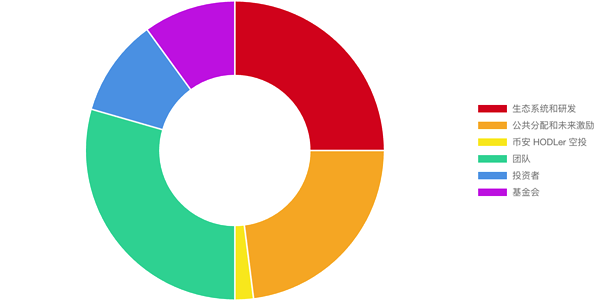
The token distribution is as follows:
● Core Contributors: 29.5%
● Ecosystem & R&D: 25%
● Public & Future Incentives: 25% (includes airdrops)
● Investors: 10.5%
● Foundation Ops: 10% (Source: Official
4.Conclusion — Ushering in a New Era of "Everything Verifiable"
Succinct (PROVE) is more than just another ZK project; it is an infrastructure aiming to become the "trustless computation layer" for Web3 and the entire digital world. Through its innovative SP1 zkVM and decentralized prover network, Succinct has successfully liberated the powerful technology of zero-knowledge proofs from its ivory tower, making it accessible to all.
It solves the cost and efficiency bottlenecks of ZKPs through a market-based approach and addresses the technical barriers with developer-friendly tools. As its ecosystem continues to grow and its roadmap steadily progresses, Succinct is on track to become the standard infrastructure for numerous cutting-edge fields, including blockchain scaling, cross-chain interoperability, and verifiable AI.
For the blockchain industry, the success of Succinct will signify a more secure, scalable, and trustless future. For investors and analysts, PROVE is not just a token but a core credential for participating in and capturing the value of this "trust revolution."