YZY全网首狙、TRUMP获利上亿,Naseem究竟是天才还是内鬼?

Odaily星球日报Published on 2025-08-22Last updated on 2025-08-22

原创 | Odaily 星球日报(@OdailyChina

作者|Azuma(@azuma_eth

北京时间 8 月 21 日,顶级巨星 Kanye 正式发布了个人 Meme 代币 YZY,并引发了市场的集体热潮 —— 详见《侃爷发币,“新 YZY”再掀名人 Meme 热潮 or 又是一场收割局?》。

GMGN 行情显示,YZY 昨日一度上冲至 3.0783 美元,对应市值约 30.78 亿美元,截至发文虽已大幅回落,但仍报 0.827 美元,对应市值约 8.27 亿美元。

在 YZY 造就了又一批暴富故事(当然也有更多人亏损)的同时,链上追迹协议 Bubblemaps 却发现了一些不一样的线索。

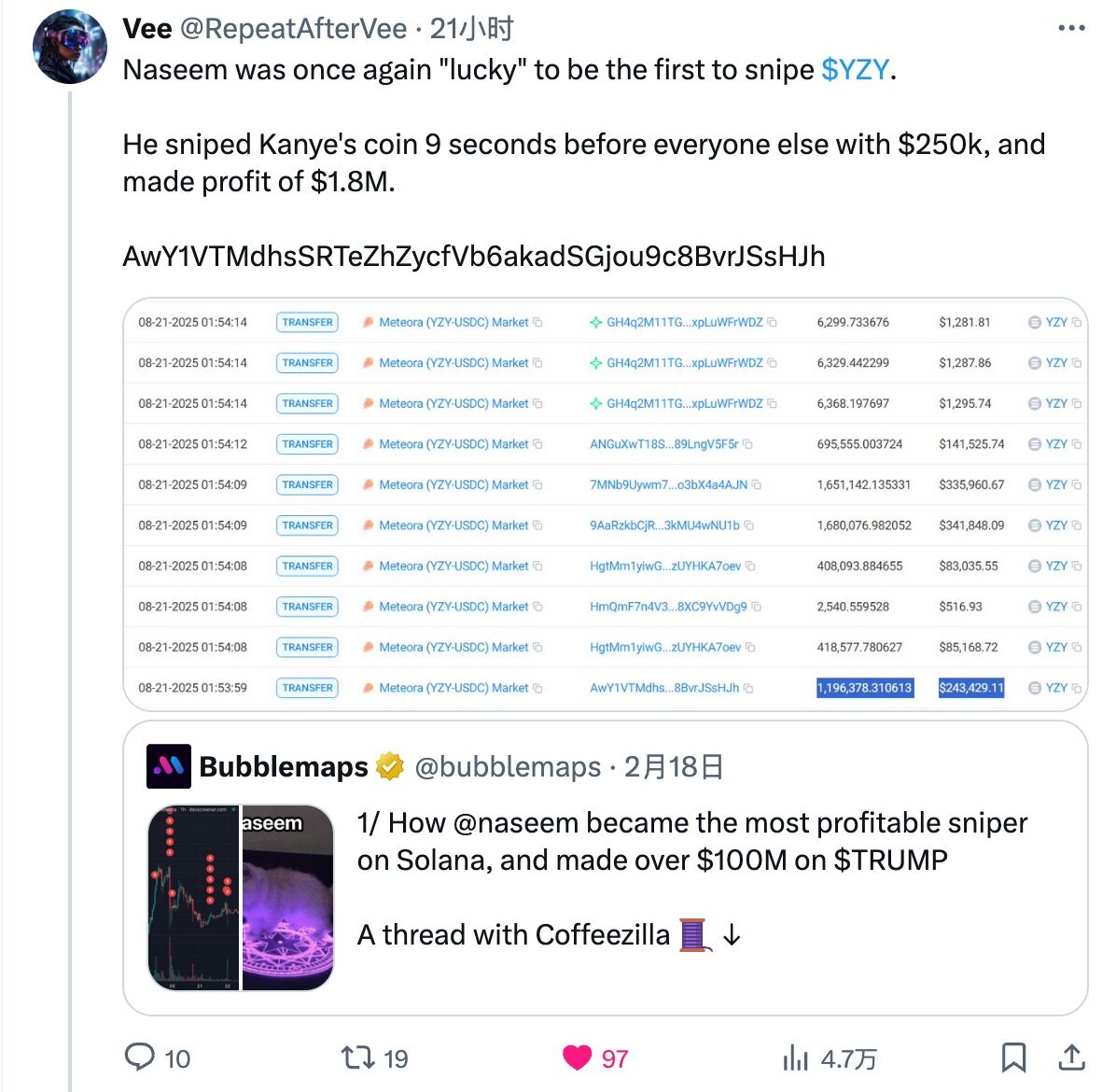
8 月 22 日早间,Bubblemaps 基于推特用户 Vee(@RepeatAfterVee)所贡献的线索披露,真正意义上首个交易 YZY 的用户极有可能是此前曾通过狙击 TRUMP 获利 1 亿美元的匿名交易员 Naseem,更令人惊异的是,除去 TRUMP、YZY 之外,Nassem 还曾通过狙击 LIBRA、HAWK 获利颇丰。
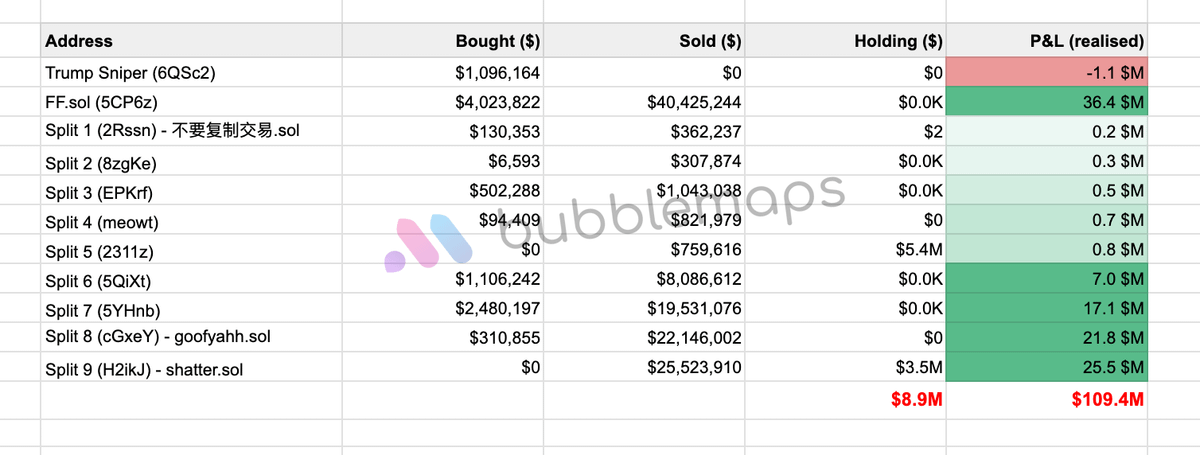
早在今年 2 月,Bubblemaps 就曾在调查 TRUMP 狙击情况是找到了 Naseem 的踪迹。

当时,Bubblemaps 发现某个 6QSc2 开头的地址在 TRUMP 上线之初便抢购了 109 万美元的代币,随后将仓位分散至多个地址,最终获利 1.09 亿美元。
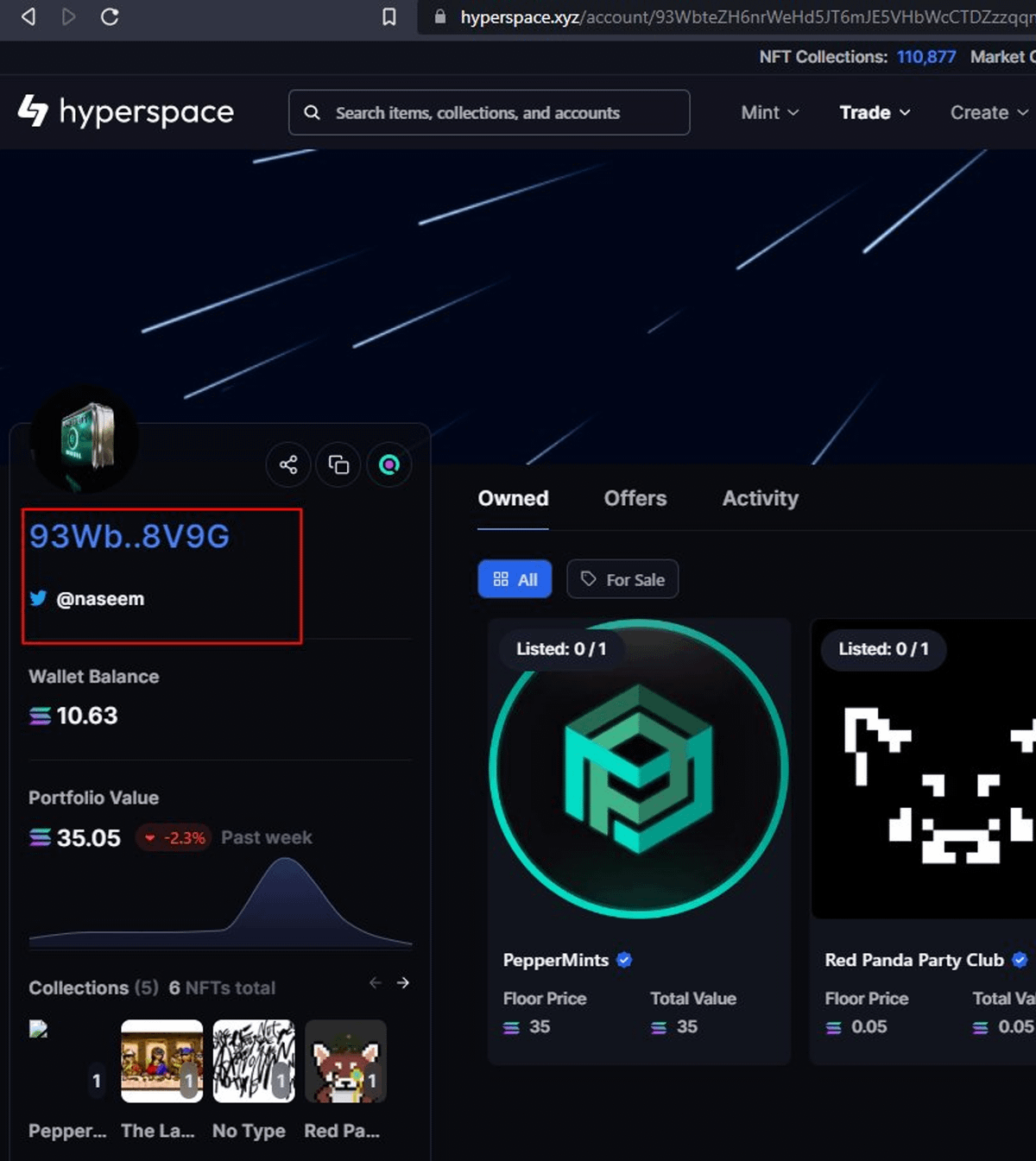
之后,Bubblemaps 又通过地址之间的资金关联发现了一个 93Wb 开头的地址,并通过 Hyperspace 将该地址定位到了推特账户 Naseem(@naseem)。
回到最新的时间线,YZY 最初创立于 8 月 17 日,随后的所有早期交易都来自团队地址,第一次真正的购买发生在 8 月 21 日,当时 AwY1V 开头的地址购买了 25 万美元。
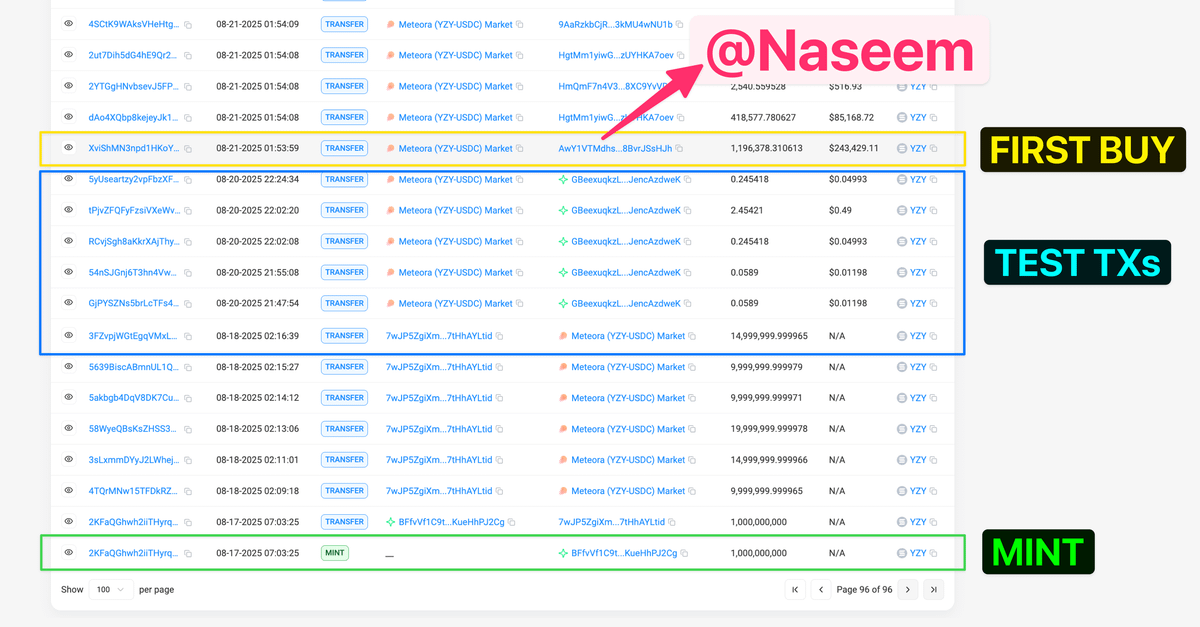
Bubblemaps 跟进调查发现,该地址与 Naseem 的相关地址之间存在极高的链上相关性,其中还包括直接狙击 LIBRA 和 TRUMP 的地址吗,因此确信 AwY1V 开头地址就属于 Naseem。
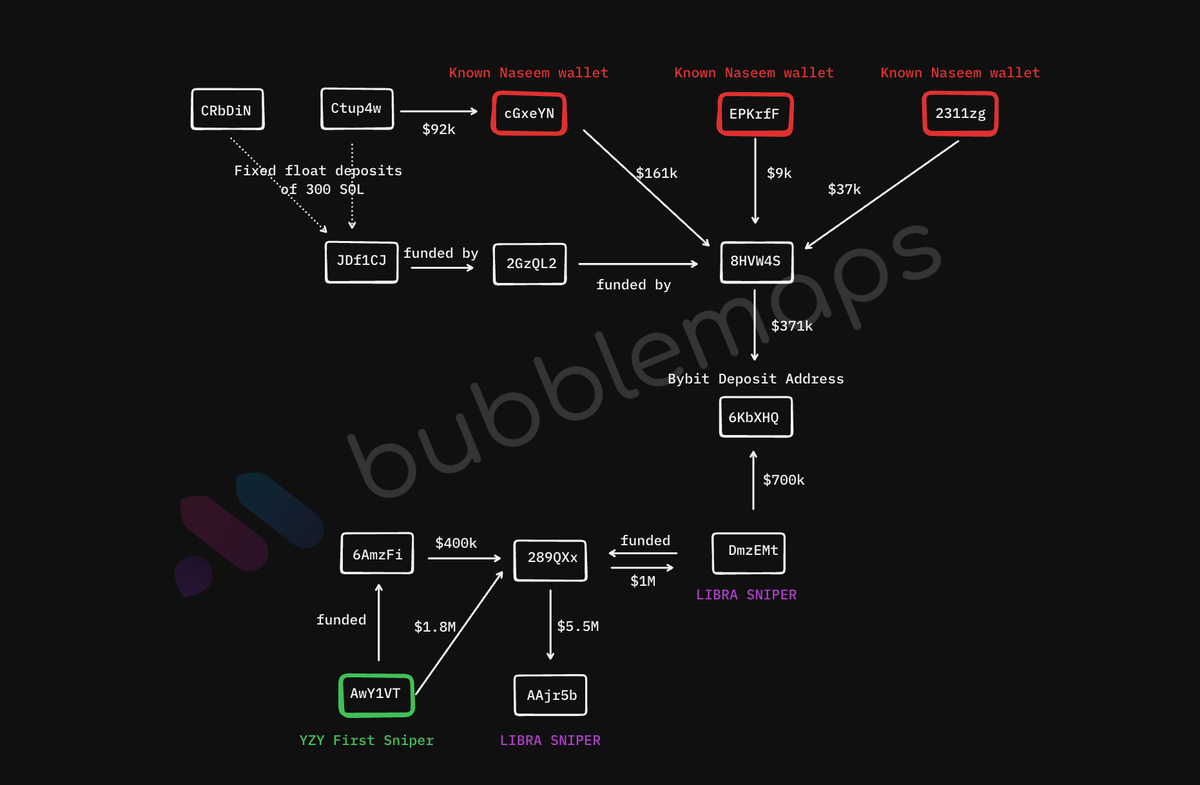
截至 Bubblemaps 发文,Naseem 已经卖掉了他最初购买的 25 万美元中的 80 万美元,目前仍然持有 60 万美元,但不排除他还使用了其他地址。

Bubblemaps 就此提出质疑表示,虽然从链上记录来看 Naseem 的狙击技巧无可否认,但这笔交易再次引发了社区疑问 —— 他是如何成为首个交易 YZY 的用户的?他为什么能连续狙击每一次重大代币的发射?这到底是技能优势,还是他知道一些其他事情?

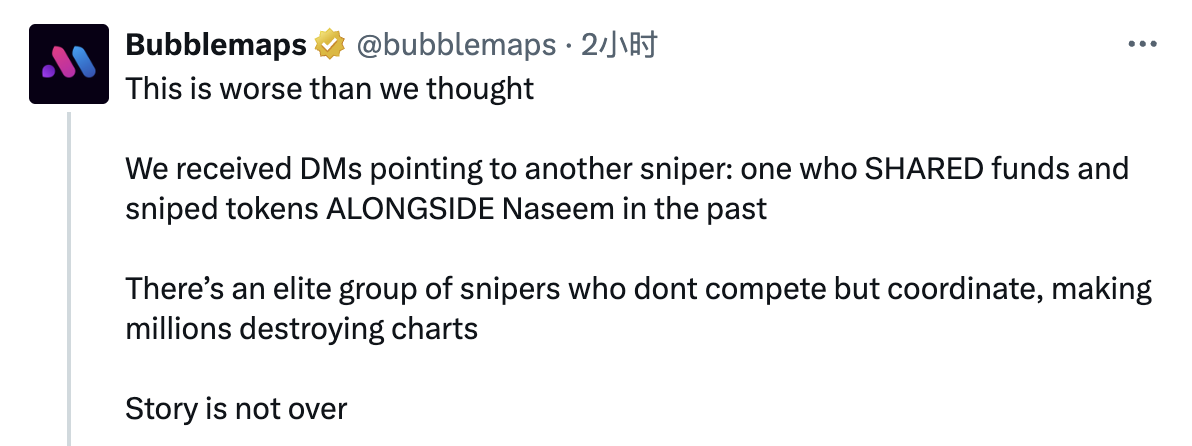
在发布了关于 Naseem 狙击 YZY 的调查情况后 5 个小时,Bubblemaps 再次发文表示:“情况可能比想象的更糟糕,我们收到了指向另一名狙击高手的私信,此人曾与 Naseem 共享资金并协同进行代币狙击 —— 存在一个精英狙击团伙,他们并非相互竞争而是协同作案,旨在破坏币价走势并从中获利。事件仍在持续发酵中。

在 Bubblemaps 相关调查的下方,也有一些用户贴出了其他一些与 YZY 相关的疑似内幕交易线索,比如某个叫作 Mikey Shelton 的疑似内幕人士曾公开吹嘘自己的交易“战绩”,但这些线索是否与 Nassem 存在关联仍未可知。
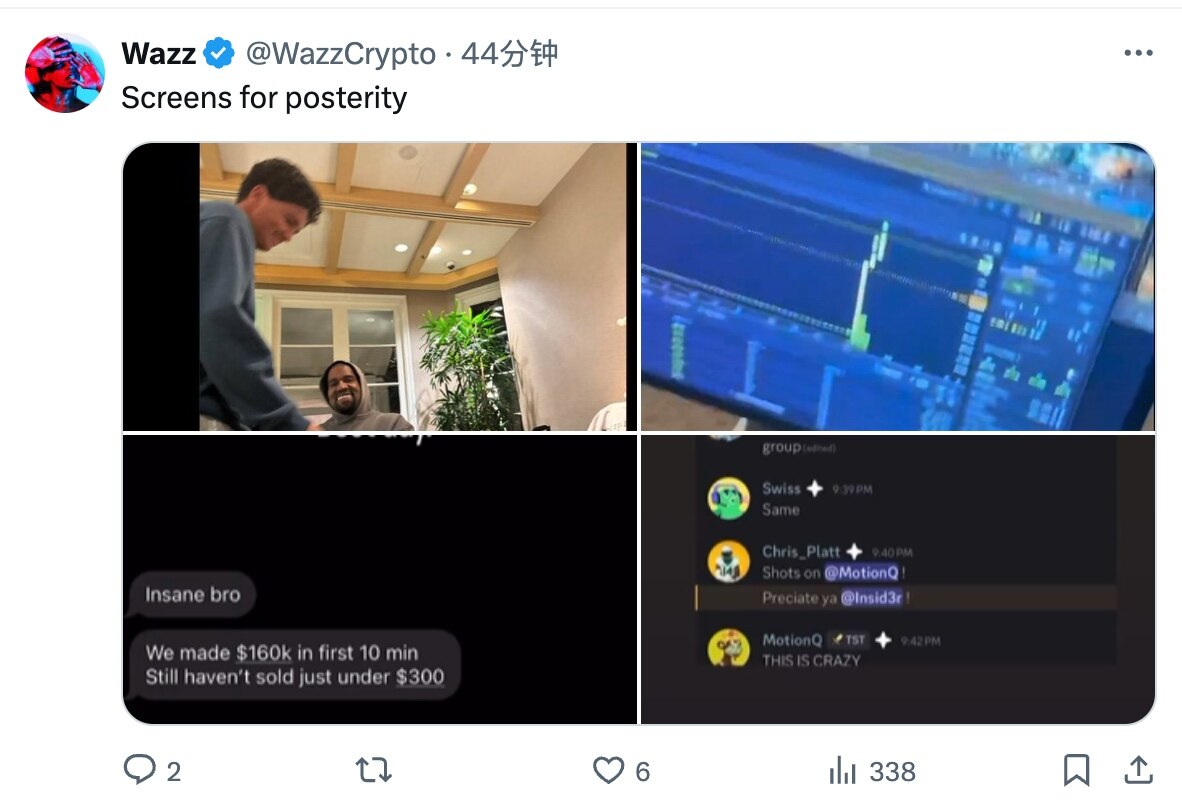
谜题暂时仍未解答,但随着线索的不断积累,或许时间很快就会告诉我们答案。


Related Reads

JPMorgan Research Report Analysis: Moderna's INT Trial Meets Endpoints, but Market Already Priced In

On August 19, J.P. Morgan (JPM) published a research report analyzing Moderna's recent Phase III trial success for its Individualized Neoantigen Therapy (INT), developed in partnership with Merck, in adjuvant melanoma. The trial met its primary endpoint of significantly improved recurrence-free survival and the key secondary endpoint of distant metastasis-free survival. While JPM acknowledged the strong clinical value of these results, particularly the prevention of distant metastasis, the bank stated that this success was widely anticipated, with an 85% prior probability of success, and is already reflected in Moderna's current market valuation. Following the announcement, Moderna's stock rose in pre-market trading. However, JPM maintained its Underweight rating and $40 price target, implying approximately 36% downside from the current price of ~$63. The core rationale is that the success in adjuvant melanoma, a relatively small market in immuno-oncology, is fully priced in. Moderna's future valuation hinges entirely on INT's ability to demonstrate similar efficacy across broader cancer indications. JPM's valuation model incorporates only a modest risk-adjusted value (~$3/share) for the melanoma approval. Approximately $15/share of its target price is attributed to INT's potential in other cancer types. The report identifies upcoming data readouts in non-melanoma cancers (e.g., lung, head & neck, renal) as the critical variable that will determine the platform's ultimate value. Upside risks include better-than-expected data in these new indications, while downside risks involve clinical failures, regulatory delays, or commercial underperformance. In conclusion, JPM views the pre-market stock move as driven by short covering and trading sentiment rather than a fundamental re-rating. The bank remains bearish, arguing that Moderna must now prove INT's efficacy as a platform technology beyond melanoma to justify its current market cap.

marsbit23m ago

JPMorgan Research Report Analysis: Moderna's INT Trial Meets Endpoints, but Market Already Priced In

marsbit23m ago

Treasury Department Directly Intervenes to Suppress Long-Term Interest Rates

The article discusses the U.S. Treasury's recent direct intervention to suppress long-term bond yields through buyback operations. While distinct from traditional Yield Curve Control (YCC), this move is interpreted as direct government intervention in its own financing costs. The author emphasizes the short-term tactical nature of this action and contrasts it with the Federal Reserve's upcoming, potentially divergent, policy stance at Jackson Hole. The core issue is framed as a long-term U.S. strategic dilemma: managing high deficit levels. The analysis argues that deficit reduction cannot realistically come from spending cuts or traditional industries, but must rely on achieving higher economic growth driven by technological breakthroughs. Current monetary tightening, while possibly curbing yields and inflation in the short term, is seen as potentially counterproductive to this necessary long-term investment in technology and supply chain resilience. The piece draws historical parallels, placing the current intervention between the 2000-2002 Treasury buybacks (for liquidity) and larger-scale Fed-led "Operation Twist" maneuvers. The effectiveness of the Treasury's action is deemed limited without Federal Reserve cooperation, which would signify a more significant policy shift. Ultimately, the author views such technical, bureaucratic interventions as treating symptoms rather than the underlying disease of the U.S. economy's structural challenges and "K-shaped" divergence. The conclusion suggests that sustained yield suppression by the Fed, combined with specific geopolitical outcomes, could serve as a catalyst for a more profound discussion on broader U.S. and dollar trajectory.

marsbit24m ago

Treasury Department Directly Intervenes to Suppress Long-Term Interest Rates

marsbit24m ago

Trading

Spot
活动图片