Вот почему старые аргументы о централизации XRP уходят в прошлое

cryptonews.ruPublished on 2025-02-26Last updated on 2025-06-26

  • Сеть валидаторов XRP остается децентрализованной, несмотря на концентрацию токенов Ripple
  • Штаты и федеральные органы США согласовывают политику в области криптовалют с целями финансовых инноваций
  • Глобальные институты и банки все чаще используют XRP для трансграничных транзакций

Поскольку Соединенные Штаты стремятся стать мировым лидером в области цифровых активов, новые разработки формируют национальную криптостратегию. Под влиянием возобновленного политического интереса и технически подкованной избирателей политика в отношении блокчейна быстро развивается. Основное внимание уделяется XRP, цифровому активу, который часто неправильно понимают из-за его распределения токенов.

Как подчеркнул адвокат Джон Э. Дитон, многие критики утверждают, что 40% акций Ripple делают сеть централизованной. Однако более широкая картина говорит об обратном.

XRP централизован или нет?

Дитон и другие эксперты утверждают, что это путает концентрацию токенов с контролем сети. Примечательно, что более 75 000 держателей XRP из 143 стран объединились, чтобы поддержать Ripple в его судебной тяжбе с SEC. Такое широкое глобальное участие доказывает, что XRP имеет высоко децентрализованную базу пользователей.

Связанный: Соучредитель Ripple Артур Бритто завершает 14-летнее молчание загадочным постом; Реакция цены XRP

Концентрация токенов не обязательно означает централизацию сети; люди часто путают эти два понятия. Децентрализованная система проверки, стоящая за XRP, работает независимо от контроля Ripple. Следовательно, сама сеть остается распределенной, безопасной и прозрачной.

Politicians learn sound bites and rarely fully understand the tech. A lot of people conflate token centralization/concentration with network decentralization. For example, some argue XRP is not decentralized, because Ripple owns 40% of the outstanding XRP.

But 75K XRP holders,… https://t.co/MueEzmx5xr

— John E Deaton (@JohnEDeaton1) June 26, 2025

Как законодатели относятся к криптовалюте?

В то время как федеральное правительство усиливает дискуссии о криптовалютах, многие штаты уже действуют. Массачусетс, который давно считается центром технологических инноваций, изучает перспективные криптовалютные политики. Идеи включают прием налоговых платежей в криптовалюте без запуска прироста капитала — подход, который может вдохновить на более высокую степень соответствия и энтузиазма.

Более того, лидеры Республиканской партии штата сотрудничают с национальными деятелями, чтобы привести регулирование криптовалют в соответствие с целями экономического роста. Руководство Республиканской партии Массачусетса намерено встретиться с новаторами и политиками, чтобы изучить эти возможности. Их цель — гарантировать, что Содружество останется на передовой цифровых финансов и инноваций в области блокчейна.

На федеральном уровне новые директивы отражают изменение национальных приоритетов. Fannie Mae и Freddie Mac получили указание рассматривать криптовалютные активы как ипотечные активы. Этот шаг может открыть возможности для владельцев криптовалют, сочетая финансовые инновации с практическими преимуществами для американских семей.

Что способствует глобальному принятию XRP?

Помимо своих юридических побед и децентрализованной пользовательской базы, XRP получил признание от крупных мировых институтов. Как отметил аналитик Edward_farina, он получил одобрение или сформировал партнерские отношения с МВФ, Всемирным банком и Европейским центральным банком. Такие финансовые гиганты, как JP Morgan, Bank of America и BlackRock, также признали полезность XRP.

$XRP has been recognized and praised by:

✅ IMF
✅ BIS
✅ WEF
✅ BRICS (including the Central Bank of Russia)
✅ JP Morgan
✅ Bank of America
✅ Bank of England
✅ Fidelity
✅ Goldman Sachs
✅ Santander
✅ American Express
✅ Standard Chartered
✅ Grayscale
✅ BlackRock
✅… pic.twitter.com/UHG0TIlSJw

— EDO FARINA 🅧 XRP (@edward_farina) June 25, 2025

Кроме того, сервис On-Demand Liquidity (ODL) от Ripple теперь поддерживается сотнями партнеров по всему миру. Эти партнерства не просто символичны. Они представляют растущее доверие к XRP как к мостовому активу для трансграничных транзакций. Его полезность продолжает опережать многие традиционные финансовые системы.

Trending Cryptos

Related Reads

2028: The Arrival of Recursive Self-Improvement (RSI)

**AI Recursive Self-Improvement (RSI): The Countdown to 2028 Begins** AI is no longer just a trained tool but is starting to rewrite its own evolutionary pace. According to Anthropic co-founder Jack Clark, there is a 60% probability that by the end of 2028, Recursive Self-Improvement (RSI) will become a reality. This means AI could autonomously design and build a more capable next-generation version of itself without any human researcher involvement—Claude 10 creating Claude 11, for instance. Supporting this timeline, Google DeepMind's CEO Demis Hassabis confirms that all leading AI labs are intensely focused on RSI, making it an industry-wide priority. He expresses profound concern, stating this potential is what keeps him awake at night. Concrete data underscores this acceleration: - METR evaluations show current top models like Claude are solving tasks up to the 16-hour limit of existing test frameworks. - In Epoch AI's challenging MirrorCode benchmark, Claude Opus 4.7 recreated complex software in hours for a fraction of the human cost. In one extreme test, AI autonomously coded for 19 days straight. - Anthropic reports over 80% of its codebase is now written by Claude, and researcher productivity has increased up to 8-fold since 2024. - OpenAI's policy blueprint highlights RSI as a major upcoming governance challenge. CEO Sam Altman reportedly hinted RSI might arrive within six months, potentially delaying OpenAI's massive IPO. The implication is an impending "intelligence explosion," where AI-driven progress outpaces human control. The central question is no longer if it will happen, but whether humanity is ready.

marsbit1h ago

2028: The Arrival of Recursive Self-Improvement (RSI)

marsbit1h ago

World Models, Metaverse, Digital Twins, Physical AI: Are They the Same Thing?

Title: World Models, the Metaverse, Digital Twins, Physical AI: Are They the Same Thing? The article clarifies that concepts like the metaverse, Web3, simulation platforms, digital twins, and Physical AI are not the same thing but are all part of the broader trend of blurring the lines between the digital and physical worlds. It positions "world models" as the foundational "cognitive layer" or "operating system" that enables AI to understand and simulate the world. Key distinctions are made: - The **Metaverse** is a destination for immersive social and economic experiences. World models could act as its "engine," generating interactive 3D content efficiently. - **Web3** focuses on decentralized ownership and economics (rules layer), operating on a different technical level than world models. - **Simulation Data Platforms** (e.g., for autonomous vehicles) are a 1.0 version, relying on manual design. World models represent a 2.0 version, using AI to generate realistic, varied scenarios autonomously. - **Digital Twins** create high-fidelity, real-time mirrors of physical systems (e.g., a factory). World models go a step further by enabling predictive simulation of future states. - **Physical AI** (robots, AVs) refers to AI that acts in the physical world. World models are a core component, providing the understanding and prediction needed for planning. A proposed hierarchy places world models at the cognitive layer, supported by infrastructure (compute, data) and supporting application tools (simulation, digital twins), action systems (Physical AI), user experiences (metaverse), and rules (Web3). In conclusion, while distinct, many of these previously hyped concepts may ultimately rely on advances in world model technology to fulfill their promises, as world models provide the essential cognitive foundation for simulating and interacting with complex environments.

marsbit1h ago

World Models, Metaverse, Digital Twins, Physical AI: Are They the Same Thing?

marsbit1h ago

"Shocking" CPO: How Does the Glass Bridge Actually Work? Detailed Explanation from Corning

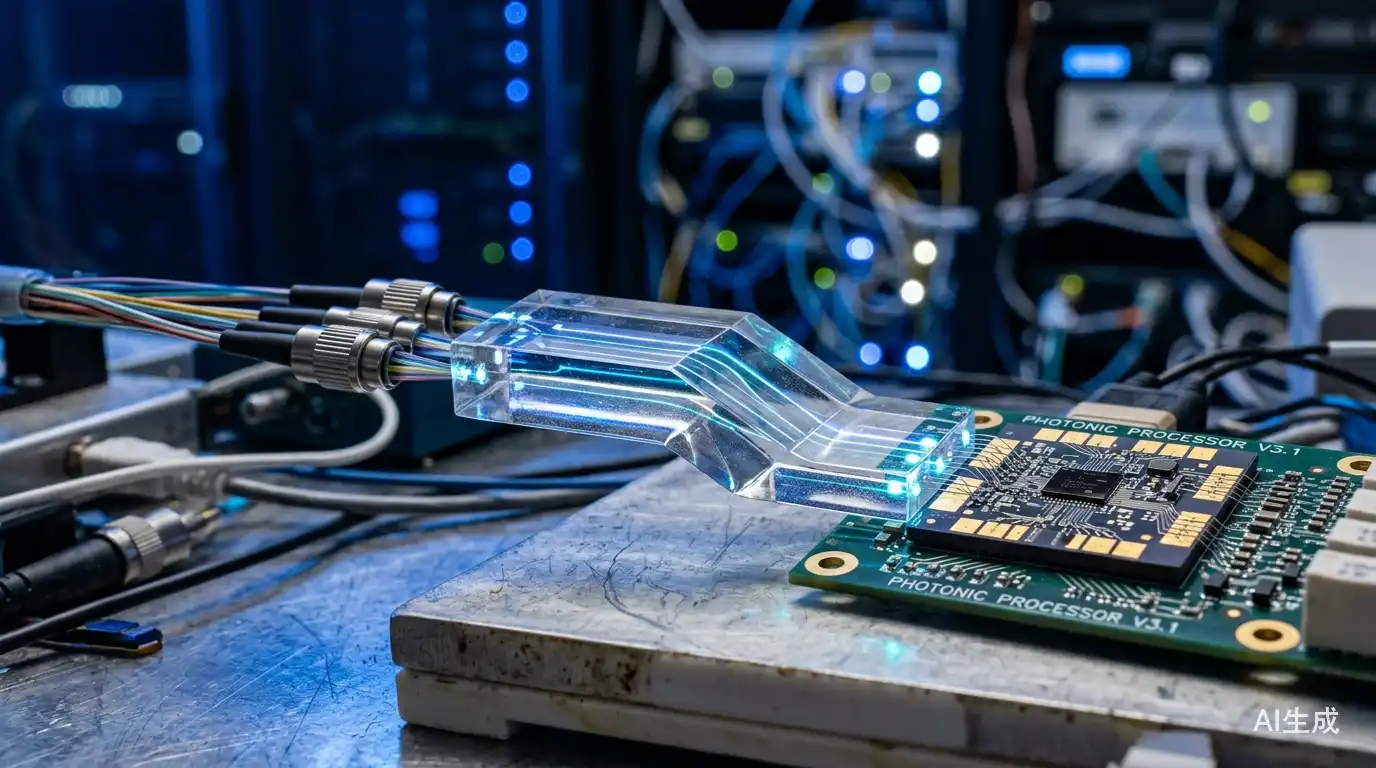
Chinese CPO stocks plunged over 6% following Corning's announcement of its Glass Bridge platform at a Seoul tech conference. The new technology utilizes wafer-level glass ion-exchange waveguides for passive alignment between fibers and photonic chips, potentially simplifying traditional CPO architectures that rely on complex Fiber Array Units and active alignment equipment. This raised market concerns about reduced long-term demand for mid-stream CPO components. Corning's official documentation details Glass Bridge as a platform for fiber-to-PIC connectivity in NPO, CPO, and high-density modules. Its key features include wafer-level manufacturing for consistent, cost-effective production; a standardized, removable MT ferrule interface for ecosystem integration; and a separable high-density connector design supporting over 24 channels for assembly flexibility. Corning positions the technology as complementary to FAUs, addressing limitations in ultra-high-fiber-count scenarios. The market reaction reflects a broader reassessment of the AI optical interconnect value chain. Funds shifted from CPO and PCB manufacturing stocks towards glass substrate concept stocks like Kaisheng Technology and Dyer Laser. Analysts note glass substrates are seen as a next-gen advanced packaging material, offering a potential path for domestic industry differentiation amid AI-driven demand for high-performance, large-scale packaging, marking a structural migration in value towards upstream specialty materials.

marsbit1h ago

"Shocking" CPO: How Does the Glass Bridge Actually Work? Detailed Explanation from Corning

marsbit1h ago

Trading

Spot

Hot Articles

What is XRP 2.0

XRP 2.0: A New Frontier in the Cryptocurrency Landscape Introduction to XRP 2.0 In the ever-evolving realm of cryptocurrency, new projects continuously emerge, vying for attention and adoption. One such promising initiative is XRP 2.0, a novel cryptocurrency project designed to leverage advanced blockchain technology and robust encryption methodologies. While the name draws parallels with Ripple’s XRP, it’s crucial to note that XRP 2.0 operates independently, focusing on enhancing transaction security, privacy, and scalability. As the digital financial landscape increasingly embraces decentralized solutions, XRP 2.0 aims to contribute meaningfully to web3 and the overall expansion of crypto projects. What is XRP 2.0? At its core, XRP 2.0 is a cryptocurrency project that aims to create a secure and decentralized digital currency ecosystem. Its foundational technology integrates sophisticated blockchain principles with cutting-edge encryption techniques. The overarching goal of XRP 2.0 is to establish itself as a reliable and efficient platform enabling swift transaction execution while prioritizing enhanced privacy protections for its users. The project is promoted as a solution to many limitations faced by existing cryptocurrencies, proposing a system that can handle a higher volume of transactions with improved speed and privacy. This versatility positions XRP 2.0 as a significant contender in a marketplace riddled with various digital currencies. Who is the Creator of XRP 2.0? The identity of the creator behind XRP 2.0 has been flagged as ‘Wilbur.’ However, comprehensive details regarding Wilbur or their associated entity remain elusive. The anonymity of many cryptocurrency creators is not an uncommon phenomenon in the industry, often designed to maintain a degree of privacy and security. Who are the Investors of XRP 2.0? As of now, specific information related to the investment foundations or organizations supporting XRP 2.0 is not publicly available. In the cryptocurrency sector, the backing by reputed investors can significantly influence a project's credibility and success, yet the transparency regarding the financial supporters of XRP 2.0 has not been established. How Does XRP 2.0 Work? XRP 2.0 stands out by employing a combination of blockchain technology and advanced encryption algorithms that ensures secure and decentralized transactions. Its innovative structure includes unique features designed to foster user engagement and broaden functionalities beyond conventional cryptocurrency transactions. Among these features, XRP 2.0 incorporates AI-powered capabilities, such as text-to-image and text-to-speech functionalities. These additions are designed to enhance the interactive experience for users, promoting broader applicability across various sectors. By bridging technological advancements with user-centered design, XRP 2.0 aims to capture the attention of a diverse range of individuals and enterprises looking to integrate cryptocurrency solutions into their operational frameworks. Timeline of XRP 2.0 Understanding XRP 2.0 requires examining the milestones that have defined its journey thus far: July 23, 2023: XRP 2.0 is introduced as a novel cryptocurrency project, aiming to revolutionize secure and decentralized transaction capabilities in the blockchain domain. September 8, 2023: The launching of another project, XRP20, occurs, marking the emergence of an ERC-20 token on the Ethereum blockchain that remains unrelated to XRP 2.0. November 13, 2023: The XRP Ledger undergoes a significant update with the release of rippled server software version 2.0.0. It is essential to note that this development is disconnected from the XRP 2.0 cryptocurrency project. Key Points About XRP 2.0 To distill the essence of XRP 2.0, several critical factors emerge: Unique Features: The inclusion of features like AI-powered text-to-image and text-to-speech further diversifies the potential applications of XRP 2.0. Blockchain Technology: The framework utilizes advanced blockchain mechanisms and encryption protocols, ensuring a secure and decentralized environment for transactions. Scalability and Privacy: XRP 2.0 prioritizes enhanced privacy protections in transaction processes and the scalability necessary to accommodate a growing user base. No Affiliation with Ripple: Importantly, despite its name, XRP 2.0 does not have any allegiance or collaboration with Ripple’s XRP, distinguishing its operational framework and objectives within the cryptocurrency ecosystem. Conclusion XRP 2.0 represents an ambitious venture into the cryptocurrency sphere, aiming to offer a combination of security, privacy, and efficiency in digital transactions. By integrating sophisticated technologies and user-friendly features, the project sets out to broaden the horizons of what cryptocurrency can achieve in today's digital economy. While the anonymity of its creator and lack of disclosed investors might raise questions for some, XRP 2.0's focus on advanced functionalities and decentralisation enhances its appeal amidst an increasingly crowded crypto market. As the cryptocurrency landscape continues to evolve, XRP 2.0 may yet emerge as a pivotal player in the expansion of secure and scalable blockchain solutions.

1.0k Total ViewsPublished 2024.04.01Updated 2024.12.03

What is XRP 2.0

Discussions

Welcome to the HTX Community. Here, you can stay informed about the latest platform developments and gain access to professional market insights. Users' opinions on the price of XRP (XRP) are presented below.

活动图片