以太坊RWA霸权争夺战:当"数字白银"遭遇16万亿美元风口

marsbitPublished on 2025-04-23Last updated on 2025-04-23

多年来,以太坊社区始终存在一个默认共识——它终将成为全球金融的清结算层。即便散户正纷纷转向Solana、Aptos等速度更快、费用更低的公链也无妨,传统金融界终将认识到以太坊是历经实战检验、可信中立且去中心化程度最高的网络。波士顿咨询集团预测,到2030年相关市场规模将达16.1万亿美元,而以太坊将是唯一可行的选择。

萨姆·卡泽米安(Everipedia与Frax Finance创始人)指出,这一预言正在应验的迹象:贝莱德、富达、智慧树投资、索尼、德意志银行、瑞银和Coinbase都已将以太坊作为其链上战略的核心。上周,基于以太坊的Blocksquare平台与Vera Capital达成10亿美元协议,将美国房地产代币化;Securitize与Ethena合作推出Converge L2网络,计划将价值数十亿美元的现实世界资产(RWA)代币化。

随着美国大选为加密新立法铺平道路,代币化资产规模已激增57%至210亿美元。2025年正成为以太坊能否主宰RWA领域的关键之年。但警告声也随之而来:若应对不当,以太坊恐将错失良机。

稳定币项目Frax Finance创始人卡泽米安认为,以太坊确实是机构发行RWA的最佳平台——但这并不意味着它终将胜出。"那种认为'以太坊足够优秀所以必然成功'的自满心态是错误的,"他指出,除非以太坊极端主义者开始将该区块链定位为代币化资产唯一可信的真相来源,否则其优势将逐渐流失。

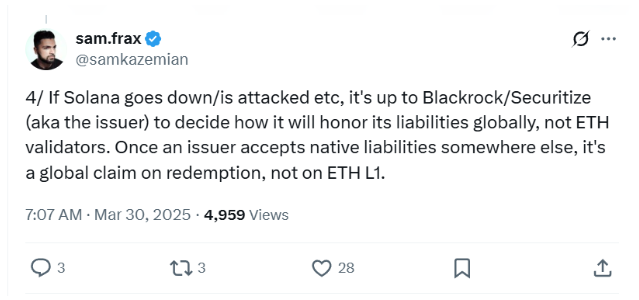
卡泽米安强调,贝莱德的BUIDL基金可在七条不同区块链上运行的事实,正在削弱以太坊的安全优势。

这是因为持有以太坊版本RWA代币的用户,会通过中心化发行方间接暴露于其他链上代币的风险。作为Frax稳定币(FrxUSD实际由BUIDL支持)的发行者,卡泽米安深知Frax需对币安智能链上其代币的任何问题负责——这可能会波及以太坊版本的持有者。
以太坊

(Sam Kazemian on X)

那么,如果代币化RWA存在中心化发行方,以太坊引以为傲的网络安全还那么重要吗?毕竟,尽管对波场去中心化程度的质疑不断,其链上USDT的规模已接近700亿美元。

尽管卡泽米安不喜欢比特币极端主义者,但他承认这些人通过将其他代币贬为"垃圾币",成功捍卫了比特币作为加密货币唯一价值存储的地位。他认为以太坊极端主义者也应该对其他链上发行的RWA采取同样态度。

那么,他们是否需要在传统金融代币化竞赛中表现得强硬些才能获胜?

"没错……他们太友善了,"他表示,"必须从社会共识层面明确划定界限:代币化必须基于以太坊L1。"

"如果我们真想将以太坊打造成真相账本,就必须在这个领域表现得有些尖锐、非常烦人甚至不讨喜,迫使机构真正兑现承诺,"他说道,

"如果在其他链上发行,那就是胡扯。"

4月14日以太坊基金会新任联合主管Tomasz Stanczak的帖子显示,这一理念可能正在获得认同。他写道,以太坊的重要优先事项将是坚持"始终在L1上铸造资产"的要求。

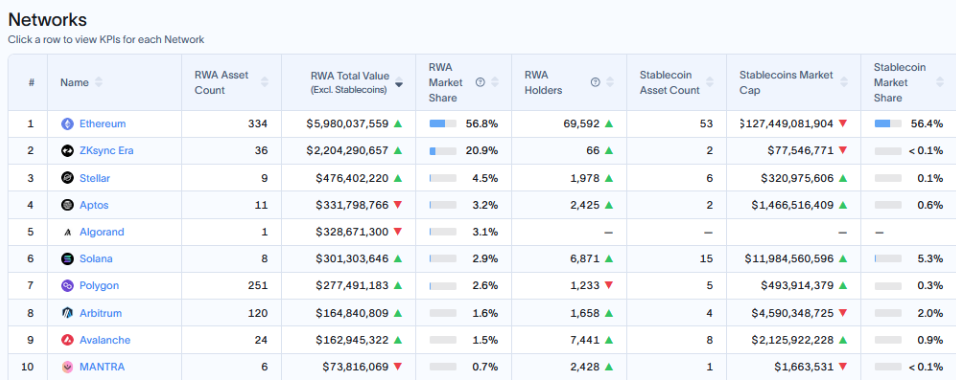
以太坊在所有RWA指标上都遥遥领先
以太坊

All your RWAs belong to Ethereum. (app.rwa.xyz)

"每一支股票、每一份债券、每一只基金——每一种资产——都能被代币化。如果实现,这将彻底改变投资行业,"贝莱德董事长拉里·芬克表示。
以太坊

BUIDL在各区块链上的分布(Token Terminal数据)

迄今为止,以太坊始终是大型金融机构及其客户的首选平台。

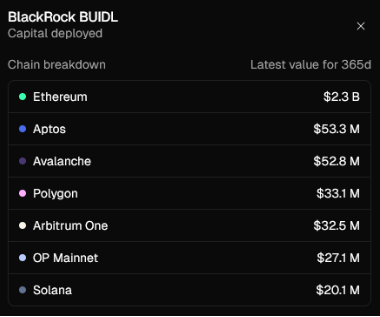
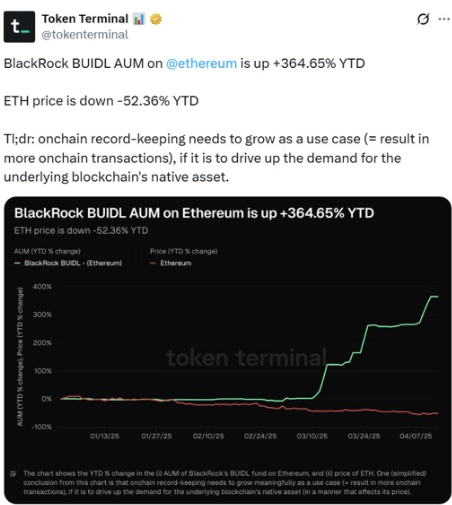
尽管贝莱德的BUIDL基金在Solana、Aptos等六条链上均有提供,但其24亿美元管理规模中93%集中在以太坊。过去六周资金加速流入之际,市场对ETH的看空情绪却创下新低。

BUIDL要求最低500万美元投资门槛,而投资者显然只愿在以太坊上配置此类大额资金。

"我们选择以太坊作为代币化起点毫无悬念——这不仅是贝莱德的选择,更是行业默认答案,"贝莱德数字资产主管罗比·米奇尼克三月表示,"客户明确表态他们真正看重去中心化、可信度与安全性,这正是以太坊持续拥有的巨大优势。"
以太坊

今年早些时候,在以太坊基金会和维塔利克·布特林支持下成立的Etherealize公司开始向华尔街推广这条公链。创始人维韦克·拉曼指出,传统金融公司与散户交易者的诉求存在本质差异:"你在加密推特上看到的那些交易 meme 币的用户,他们其实并不那么在乎去中心化——因为这些用例确实不需要这个特性。"

"资产价值越高、网络覆盖越全球化、机构监管需求越复杂,以太坊去中心化的全球价值主张就越凸显。"

以太坊主导着RWA、稳定币和DeFi领域

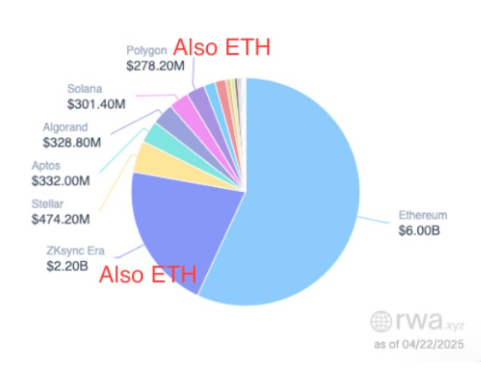
目前以太坊占据了所有代币化RWA的57%市场份额,另有21%在ZKsync Era上。其他竞争对手远远落后:恒星链(Stellar)以4.76亿美元(4.5%)位居第三,Aptos3.32亿美元(3.2%),Algorand3.29亿美元(3.1%),Solana则以3.01亿美元(2.9%)排名第六。

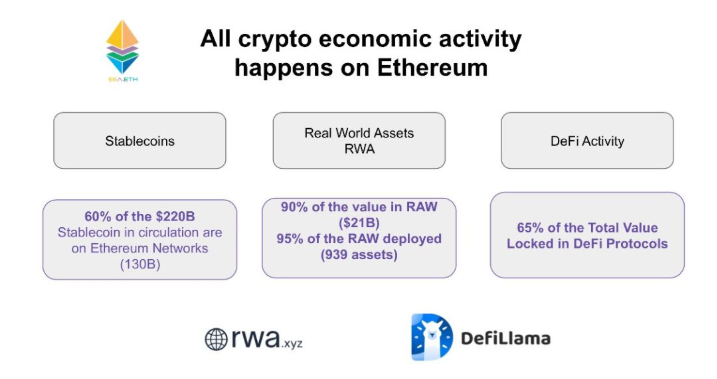
以太坊还拥有最高的经济安全性,处理着95%的稳定币结算量,其DeFi锁仓价值是Solana的七倍。
以太坊

Clearly not all crypto economic activity, but a lot happens on ETH. (RedoudouM)

加密货币基金Apollo Capital创始人亨里克·安德森表示,虽然去中心化和可信中立性很重要,但华尔街更关注网络效应、流动性和可组合性。

"我认为80%的稳定币和DeFi活动都发生在以太坊上——这正是我们认为以太坊将成为传统金融资产天然归宿的原因。说到底,如果在'幽灵链'上建立封闭生态,代币化就毫无意义。"

但就像社交媒体上的许多观点一样,加密货币教育家、YouTuber DBCrypto持相反看法。"它可能会赢得一些战役,但长期来看绝不可能成为真正的代币化主网络,"他在X平台上与杂志交流时表示,"其他公链将在去中心化方面迎头赶上,有些可以说已经达到或接近同等水平,同时在其他所有方面都有百倍改进。以太坊就是加密界的百视达(Blockbuster)或聚友网(MySpace)。"

以太坊的扩容困境会阻碍其RWA发展吗?

按现代区块链标准,以太坊基础层速度缓慢——这是为保持去中心化特性所做的妥协。

Tranchess联合创始人Danny Chong向杂志指出,他预见到未来会出现分化:欧洲投资银行、法国兴业银行等大型机构将继续使用以太坊作为"安全中立的基础层",而房地产、私人信贷等高流量、面向散户的RWA应用将迁移至Solana或Aptos。"传统金融机构最看重安全性、技术熟悉度和监管合规性,这些远比低成本和快速交易更重要,"他表示,

"以太坊很可能继续作为高价值机构资产的'主干道',而更快的公链或许会占据小额高频的交易市场。"

鉴于Solana对用户体验的极致追求及其在零售用户中的统治地位,这种情景确实可能成为现实。
以太坊

Ethereum L2s and RWAs (X, spareARE)

但拉曼强调,L2只需专注于执行层而无需担忧网络共识机制,"如果你追求最便宜、最快速的执行环境,L2就是答案"。目前这尚未成为现实——多数L2的TPS不足100,而Solana已达4000 TPS。不过MegaETH测试网近期实现了20000 TPS,基于Solana VM的Eclipse L2也达到8000 TPS。

拉曼补充说,对机构而言,自主运营定制化L2并获取手续费收入,远比向Solana验证节点付费更有吸引力。"运营自己的二层网络并接入全球以太坊体系能创造更大收益,"他分析道,"对于追求盈利最大化的机构,我想不出任何理由不选择这种方案而采用其他L1。"

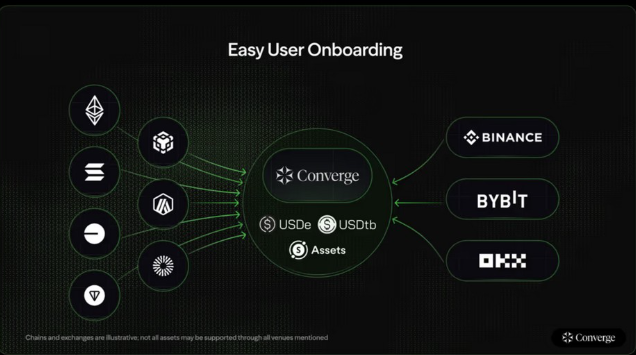
Tradable已在以太坊L2网络ZKsync上完成价值数十亿美元的私人信贷代币化。该Rollup正升级至基于Rust语言和STARK证明的BoojumVM,宣称2025年底将实现10000 TPS。无独有偶,最大RWA代币化机构Securitize刚推出Converge L2,结合Ethena的替代数据可用性方案与Arbitrum技术,目标吞吐量近5000 TPS。
以太坊

The new Converge L2 aims to onboard assets from other chains. (Converge)

新型安全代币标准也可能巩固以太坊的领先地位。ERC-3643和ERC-1400标准内置了KYC、AML及转账限制等合规机制。去年处理了3.7千万亿美元证券交易的美国存管信托和清算公司(DTCC),今年三月已通过其ComposerX套件支持ERC-3643代币的发行管理。4月23日当周,DTCC将演示其基于Besu开源以太坊客户端构建的数字抵押品管理平台AppChain。

以太坊正在赢得RWA竞赛 但一切才刚刚开始

尽管有上述种种优势,传统金融对区块链的探索仍处于初级阶段。虽然以太坊支持者为其在57.5亿美元代币化美国国债中占据41亿美元份额而欢呼,但这个数字与28.6万亿美元未偿美国国债总量相比仍显微不足道。

ZKsync基金会董事Marco Cora承认,这场竞赛才刚刚开始。"目前我们只占市场的0.1%,"他设想道,"假如摩根大通突然宣布'我们将把托管中的5000亿美元资产全部在Algorand上代币化',那么Algorand的RWA份额就会瞬间飙升至5000亿美元,其他平台加起来可能只有200亿——这样Algorand就占据了98%的市场。"

但Cora认为这种情况不太可能发生,因为可信中立性"对大型企业至关重要"。他指出,企业不愿在竞争对手控制的平台上建设,也不愿依赖可能单方面修改规则的中央化实体——就像Facebook和OpenAI曾对基于其生态的企业所做的那样。

"如果我是富达,为什么要使用摩根大通的平台?这对我来说是风险,"他反问道,"以太坊目前看起来——事实上也是——最中立的平台。这个优势非常强大。"

向华尔街布道以太坊RWA价值

尽管传统金融界理解以太坊网络的优势,但他们显然没有大举投资ETH。经历连续七周资金外流后,ETH ETF资产规模仅剩45.7亿美元,而比特币ETF则高达945亿美元。

卡泽米安指出,核心问题在于市场像科技股一样评估ETH价值——特别是在手续费收入已无法支撑估值的当下。他认为ETH应当被定位为"数字白银",与比特币的"数字黄金"形成互补。
以太坊

oken Terminal on X Token Terminal (X)

前银行从业者拉曼也认同,以太坊的叙事比比特币更为复杂。"其实可以简化理解:它是布局区块链普及的通道,是押注稳定币增长的载体,也是参与代币化浪潮的工具,"他分析道,"所有这些最终都会沉淀为ETH资产的价值。但确实,它的逻辑更复杂。"

比特币与以太坊ETF的资金流向对比表明,华尔街认为ETH是比BTC风险更高的投资。但今年以太坊ETF很可能获批的质押功能,或将成为一个关键差异点。

"传统金融将比特币视为数字黄金,"拉曼解释道,"如你所说,他们可能觉得以太坊是次一级的价值存储。我不认为所有人都直观了解ETH存在质押收益,但可以肯定的是——机构、传统金融界乃至全球投资者都热爱收益,都痴迷固定收益工具。"

拉曼提醒道,3%的收益率不太可能引发大规模新资金流入,但这有助于扭转叙事:"ETH与比特币的差异化就在于它具备收益属性,人们可以围绕这个收益做文章。他们可以分离收益、进行互换,还能基于收益开发各种金融工具——这正是华尔街最热衷的事情,这将构建起一个完整的经济生态。"


Trending Cryptos

Related Reads

Will There Be a Next Wave of Web3 Games? Veteran Player's Review: At the Peak of Hype, You Should at Least Sell Half

**Title: Is There Another Wave for Web3 Gaming? A Veteran Player's Review: When Hype Peaks, You Must Exit at Least Half** **Summary:** In an interview, veteran player "Earn Money Chicken" shares his journey and reflections on Web3 gaming. He transitioned from being a traditional in-game trader to a Web3 gamer, having profited from games like Mobox, StepN, and Seraph, but also experiencing significant losses. He defines himself primarily as a player, not an investor, attracted to Web3 games for the blend of earning potential, engaging gameplay, and the satisfaction of researching game mechanics. While he enjoys strategic "gambling" within games, he emphasizes it's not about zero-sum competition with other players. The interview explores the complex, often adversarial relationship between players, projects, and major investors (whales). The player's experience as a traditional game merchant helped develop his analytical mindset for spotting opportunities, but wasn't directly transferable. He identifies the core sources of profit in early Web3 gaming as **"era红利" (era-specific红利)** and strategic foresight, not just simple calculations. He warns that the biggest mistake ordinary players make is calculating their return-on-investment (ROI) period at peak hype, as asset and yield depreciation can trap them. Reflecting on his wins and losses, he now advocates for managing expectations. His most successful exit was from Seraph, where he sold at a relatively good time. The key problem with current Web3 games, he argues, is that most are not mature games first. A successful Web3 game must primarily be a **good, fun game** with a genuine player base willing to spend money for enjoyment, not just participants seeking profit. The blockchain element should solve problems within that context, not be the primary driver. While he believes the sector might see another speculative boom (possibly another strong "Ponzi" model attracting hype), a truly mature and sustainable Web3 game likely needs to come from a traditional major game studio. It would leverage a proven IP, mature content, a functional NFT trading system, and attract both traditional and crypto-native players, offering more normalized returns rather than extreme暴利. His final advice: Newcomers without prior experience should avoid the space now, as it's like searching for a diamond in the rough. For those remaining, the rule is: be brave when assets are low and overlooked, but **when everyone is talking about it (at peak hype), you must sell at least half your holdings.**

marsbit37m ago

Will There Be a Next Wave of Web3 Games? Veteran Player's Review: At the Peak of Hype, You Should at Least Sell Half

marsbit37m ago

The Most Hidden AI Winners

"The Most Under-the-Radar AI Winners" While core AI giants and their direct suppliers have dominated headlines, a group of seemingly unrelated, decades-old manufacturing companies have emerged as major beneficiaries. A key example is Japan's TOTO, famous for bathroom fixtures. Its stock soared 145% in a year, driven not by its mainstay toilet business but by its nearly 40-year-old semiconductor ceramic component unit. Specifically, TOTO manufactures electrostatic chucks—critical, hard-to-replace parts for advanced chip manufacturing processes like etching and EUV lithography. This segment, though only 9% of revenue, contributed over 54% of operating profit in FY2025 with a 43% margin. High barriers to entry, including deep know-how in high-purity ceramic sintering and long supplier certification cycles (5+ years), secure its position. This pattern repeats across industries. Nitto Boseki, a 128-year-old glass fiber maker, saw its stock rise 325% due to near-monopoly supply of T-glass, an essential low-expansion material for AI chip substrates. Similarly, Ajinomoto, the global MSG leader, commands 80-95% of the market for ABF film, a vital insulating layer in chip packaging. These "hidden" segments, often born from deep materials science expertise, are now bottleneck supplies in the AI hardware chain, enjoying pricing power and high margins. In China's A-share market, the theme combines this AI-driven demand with domestic substitution. Companies like Zhongci Electronic (advancing in electrostatic chucks) and Honghe Technology & Feilihua (in high-end electronic glass fabrics) are gaining traction. The investment thesis hinges on whether these domestic players can rapidly scale qualified capacity to capture the supply gap within the critical time window. Ultimately, these cases show that in the AI supply chain, high-profit concentrations exist not only at the cutting-edge tech frontier but also in indispensable, difficult-to-replicate materials and components. Market recognition often lags behind fundamental profit shifts, creating potential for significant re-ratings as traditional industrial firms are re-evaluated as key enablers of advanced semiconductor manufacturing.

marsbit1h ago

The Most Hidden AI Winners

marsbit1h ago

The Most Secretive Winners of the AI Boom

"The Most Hidden AI Winners" An unlikely group of companies are emerging as major beneficiaries of the AI boom, not from designing chips, but from supplying critical materials and components essential for advanced semiconductor manufacturing. These 'hidden winners' are traditional manufacturers whose deep expertise in materials science has become indispensable. Japanese companies are leading this trend. Toto, globally known for bathroom fixtures, has seen its stock surge 145% over the past year, driven by its 40-year-old semiconductor ceramics business, which now contributes over half of its operating profit. Its electrostatic chucks are vital for advanced chip production and require years of expertise to manufacture. Similarly, Nittobo, a 128-year-old textile firm, controls 90% of the market for T-glass, a low-expansion glass fiber essential for AI chip substrates. Ajinomoto, the world's largest MSG producer, dominates the market (80-95% share) for ABF insulating film used in chip packaging. The core insight is that chasing "advanced" chips paradoxically increases reliance on traditional, high-precision material science where supply cannot be quickly replicated. These materials are now critical bottlenecks in the AI supply chain. This trend is mirrored in China's A股 market, framed by the theme of 'import substitution'. Companies like Zhongci Dianzi (electrostatic chucks) and Honghe Technology (ultra-thin electronic cloth) are making progress, but face the test of scaling production and matching Japanese rivals' quality. The key tension lies in the slow change of market perception. While profit structures rapidly shift towards high-margin tech components, these firms retain their traditional industry classifications, creating a valuation gap that is gradually closing as their roles in the AI ecosystem become undeniable.

链捕手1h ago

The Most Secretive Winners of the AI Boom

链捕手1h ago

Trading

Spot

Hot Articles

Discussions

Welcome to the HTX Community. Here, you can stay informed about the latest platform developments and gain access to professional market insights. Users' opinions on the price of ETH (ETH) are presented below.

活动图片