Crypto Comeback? Germany’s Next Ruling Party Reverses Its Stance

bitcoinistPublished on 2025-04-16Last updated on 2025-04-16

Abstract

Germany's Christian Democratic Union (CDU) has radically altered its position on cryptocurrency from critic to advocate in the run-up to...

Trusted Editorial content, reviewed by leading industry experts and seasoned editors. Ad Disclosure

Germany’s Christian Democratic Union (CDU) has radically altered its position on cryptocurrency from critic to advocate in the run-up to the formation of the nation’s new government.

The political party, once a leader in advocating hardline regulations against digital assets, now seeks to transform Germany into a Bitcoin business hub, recent reports indicate.

CDU Unveils Pro-Crypto Plans Following Electoral Success

The CDU’s new path came following the victory of Germany’s February 23 elections. The CDU places high value on the issue of cryptocurrencies, a party representative said in an interview with BTC Echo, a German digital currency media platform.

In its Agenda 2030, which the representative said they introduced in January 2025, they “expressly commit” themselves to shaping Germany as an ideal destination for the crypto economy.

This represents a full turnaround from the early part of 2024, when the party—then opposition—suggested prohibiting some transactions and forcing registration for self-hosted crypto addresses. Such proposals upset numerous people in Germany’s bitcoin circles who perceived them as threats to financial freedom.

Proposed Scrapping Of Germany’s Crypto Tax Break

The official coalition treaty between the CDU, its Bavarian sister party CSU, and the Social Democratic Party (SPD) was signed on April 9. It contains only a brief mention of digital assets, vowing to “examine the regulation of crypto assets, the grey capital market and shadow banks for loopholes and close them if necessary.”

As per reports, the SPD had proposed eliminating Germany’s generous crypto tax break in March negotiations. German investors currently do not pay taxes on profits from Bitcoin, Ethereum, or other digital currencies if they keep them for over a year before selling them. This suggestion was excluded from the final deal.

Total market cap currently at $2.6 trillion. Chart: TradingView

Party Seeks ‘Balance’ Between Innovation And Security

The CDU’s spokesperson underlined that the party is now “fundamentally open to crypto assets” as part of the development of a new financial system.

“We see huge potential for innovation in the underlying blockchain technology,” they added, citing applications in cybersecurity and enhancing value chains.

Meanwhile, the party has not discarded all worries. The representative emphasized that any new legal framework should avoid money laundering and financing terrorism, something they say “still happen with some crypto assets.” The CDU’s reported aim is a “balanced approach to supporting innovation and security.”

New Gov’t Confronts Numerous Priorities Beyond Crypto

CDU chief Friedrich Merz is expected to be the chancellor when the new government is to be sworn in in the first week of May. Yet, crypto regulation might not be at the spotlight. According to reports, Berlin will have to tackle numerous urgent issues such as economic problems, migration policy, and defense issues.

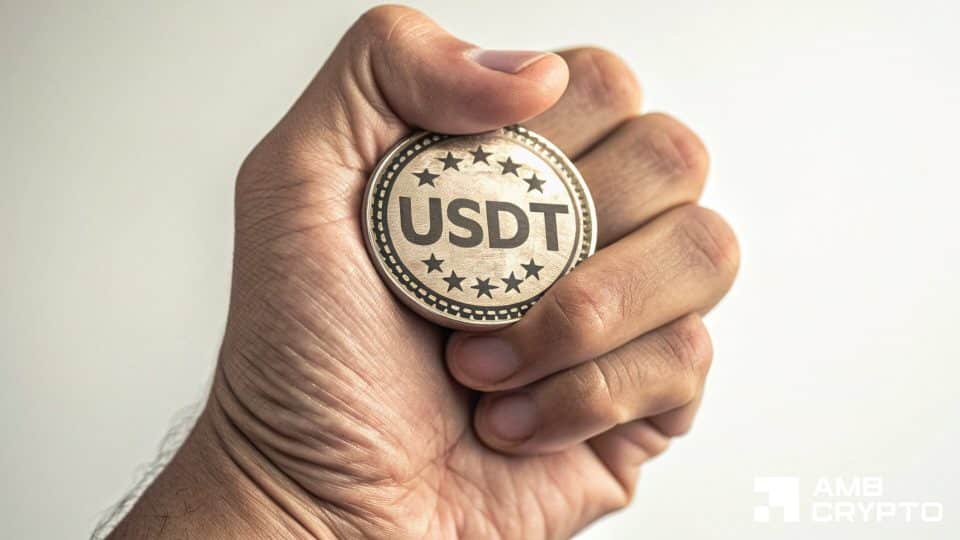
Featured image from Hashdex, chart from TradingView

Editorial Process for bitcoinist is centered on delivering thoroughly researched, accurate, and unbiased content. We uphold strict sourcing standards, and each page undergoes diligent review by our team of top technology experts and seasoned editors. This process ensures the integrity, relevance, and value of our content for our readers.

Christian, a journalist and editor with leadership roles in Philippine and Canadian media, is fueled by his love for writing and cryptocurrency. Off-screen, he's a cook and cinephile who's constantly intrigued by the size of the universe.

Trending Cryptos

Related Reads

Founder of Baixing.com: The Notion That Large Language Models Will Devour Everything, I Believe Half of It

Founder of Baixing.com: I Only Half-Believe the Saying “Large Language Models Will Devour Everything” Author: Wang Jianshuo, Founder of Baixing.com Many proclaim that large models are everything, but the author is skeptical. He argues that such sweeping claims often stem from a limited understanding of the future. Drawing parallels to past technologies like electricity and the internet—which were predicted to “devour everything” but didn’t—he suggests that large language models (LLMs) are better seen as a foundational base. Like electricity, this base is essential for modern development, but its real value emerges only when applied to specific scenarios through various “machines” or “tools” (e.g., Claude Code for programming, Claude Design for design). The author acknowledges that LLMs may indeed replace many existing software systems built on rigid rules, workflows, and forms (e.g., CRMs, SaaS tools), as these are precisely what LLMs excel at processing. However, he emphasizes that beyond software, elements like customer data, execution capabilities (e.g., booking a flight), trust, and physical-world interactions will not be “devoured.” Instead, he foresees that after streamlining existing software, LLMs will open up a larger space for innovative, next-generation applications. These new tools will likely feature fluid interfaces and rely less on fixed rules, unleashing greater creativity. The author cautions against short-sightedness, recalling how in 2004 many believed internet giants like Sina, Sohu, and NetEase would monopolize the market—only to be proven wrong by subsequent disruptions. In conclusion, while LLMs are a crucial foundation and a current focal point, the true mainstream of this wave lies in the diverse applications built atop them to solve concrete problems. The phrase “devour everything” is imprecise; the real opportunity lies in identifying and leveraging the areas where LLMs do bring transformative change.

marsbit2h ago

Founder of Baixing.com: The Notion That Large Language Models Will Devour Everything, I Believe Half of It

marsbit2h ago

Founder of Baixing.com: I Only Half Believe in the Notion that Large Language Models Devour Everything

The founder of Baixing Wang states that while large language models (LLMs) are an extremely important foundational technology—akin to electricity or the internet—he only "half believes" the notion that they will "consume everything." He argues that LLMs provide a base layer of intelligence, but real-world value and transformation come from integrating this intelligence into specific applications and devices designed for particular scenarios—like how electricity powers various appliances from washing machines to TVs. He agrees LLMs will likely consume or replace a significant portion of existing rule-based, workflow-driven software (e.g., many SaaS systems, CRMs), as these are precisely what LLMs excel at handling. However, numerous other elements—such as customer data, execution capabilities (e.g., booking a flight), trust, and physical-world interactions—will not be consumed. Wang emphasizes that after LLMs absorb certain software layers, they will open up a much larger space for innovation: new types of "streaming" software with less rigid interfaces, where fixed rules are managed by AI. This next wave of applications built on top of the stable LLM foundation is where the true mainstream opportunity lies. He cautions against the short-sightedness of declaring any technology as all-consuming, drawing parallels to past premature predictions about internet giants monopolizing the web. The key is to find opportunities within the areas LLMs do transform.

链捕手2h ago

Founder of Baixing.com: I Only Half Believe in the Notion that Large Language Models Devour Everything

链捕手2h ago

Trading

Spot

Hot Articles

Discussions

Welcome to the HTX Community. Here, you can stay informed about the latest platform developments and gain access to professional market insights. Users' opinions on the price of S (S) are presented below.

活动图片