Почему биткоин-майнеры переключаются на AI и какие у них проблемы

cryptonews.ruPublished on 2024-12-28Last updated on 2025-03-28

Майнинг битка становится всё жёстче – сложность растёт, награды режутся, и конкуренция душит. Чтобы не остаться без доходов, топовые майнеры начали коситься в сторону ИИ-центров обработки данных. Казалось бы, перспективная тема, но всё не так просто.

На конференции Mining Disrupt во Флориде лидеры индустрии обсудили, как бы запрыгнуть в этот хайповый поезд, но без серьезного ущерба в случае неудачи. По словам генерального директора Fog Hashing Пола Ли, ИИ – это глобальный тренд, который нельзя игнорить:

«Кому надо далеко пойти в этом году, пора задуматься, ведь спрос на вычислительные мощности огромный.»

После последнего халвинга, который урезал награды вдвое, и на фоне проседающего крипторынка, майнеры активно ищут, как снизить затраты. Многие давно присматривались к ИИ – оба сектора жрут тонны электричества и постоянно охотятся за дешёвой энергией. Сейчас биток торгуется около $86K – это, конечно, далеко от январского рекорда в $108K, но хотя бы без резких движений.
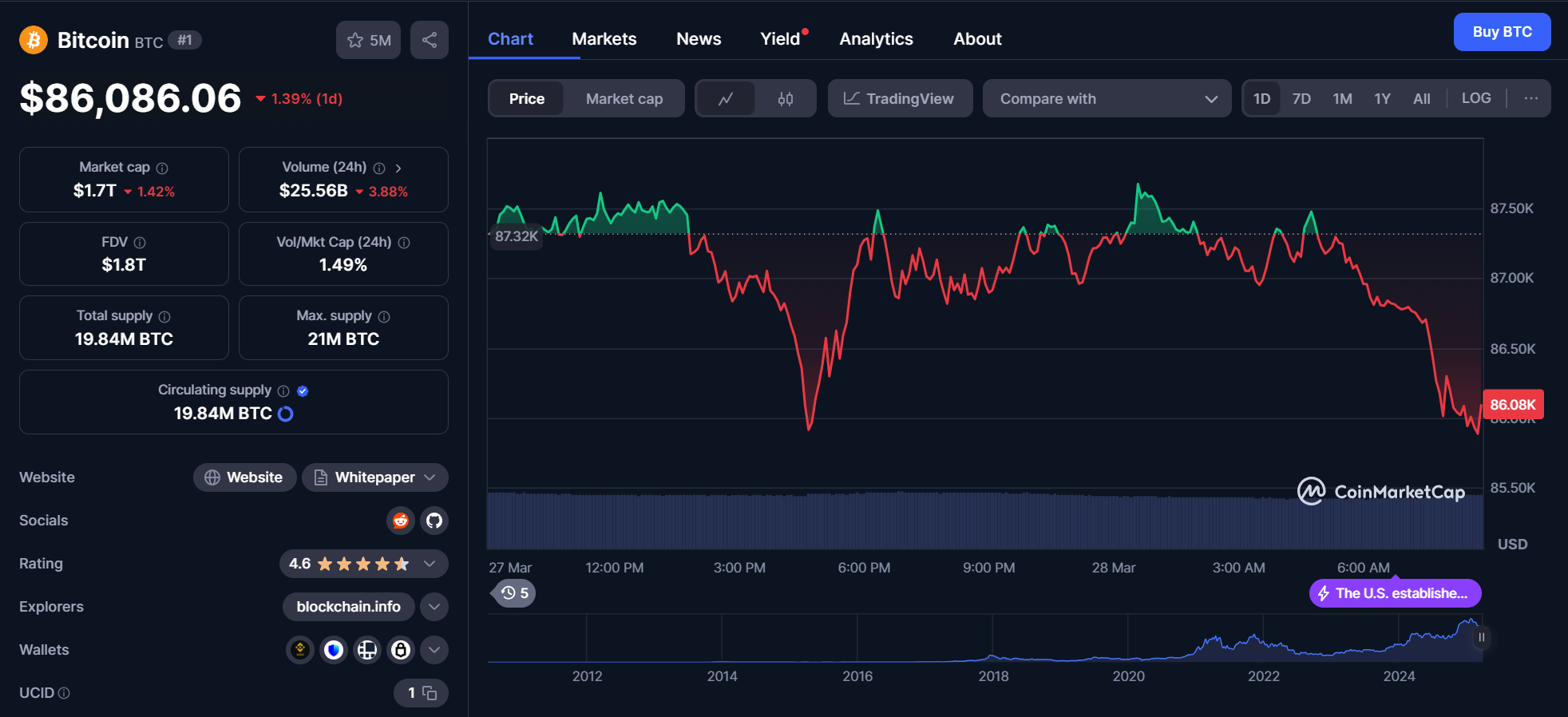
Когда цена биткоина падает и добыча перестаёт приносить нормальные деньги, часть майнеров перепрофилирует фермы под ИИ. Они уже знают, как управлять дата-центрами, а значит, могут быстрее и эффективнее заходить на этот рынок, чем традиционные игроки.

«В какой-то степени это похоже на майнинг, – говорит глава Hiveon Energy Андрей Гаранин. – Дата-центр – он и в Африке дата-центр.»

Но не всё так радужно. По словам Шэнона Сквайрса из Compass Mining, инфраструктура у ИИ-центров совсем другая.

«Ферма для майнинга – это как курятник рядом с топовым дата-центром третьего уровня. Вообще небо и земля. Здесь нужна сложная система охлаждения, вентиляции, кондиционирования – короче, затрат куда больше.»

К тому же у биткоин-майнеров есть одна фишка – они могут в любой момент отключить оборудование, если, например, надо снизить нагрузку на энергосистему. В крипте это не проблема, ведь сеть децентрализована. А вот с ИИ так не выйдет – там аптайм должен быть 100%.

«Мы как майнеры можем работать с перебоями, а у ИИ-центра нет такого люфта – он должен быть в онлайне 24/7, – объясняет Сквайрс. – А это уже другие затраты, причём ощутимые.»


Trending Cryptos

Related Reads

BIS Report Compliance Observations: The True Risks of Stablecoins Go Beyond 'De-pegging'

The BIS report, "Anchoring trust in money: innovation beyond stablecoins," highlights that the primary risks of stablecoins extend beyond potential de-pegging. It argues that the core challenge is whether stablecoins can be integrated into a financial system that is identifiable, monitorable, accountable, and regulatable. While acknowledging efficiency gains like faster payments and programmability, BIS emphasizes that money requires an institutional framework—including legal certainty, liquidity support, and financial integrity controls—which many stablecoins currently lack. The report details compliance risks, noting that while blockchain transactions are transparent, address visibility does not equate to identity or purpose clarity. This creates a systemic risk as pseudonymity, non-custodial wallets, and cross-chain bridges can undermine AML/CFT controls. Furthermore, these risks can spill over into the traditional financial system through on- and off-ramps. The future direction, per BIS, is not to prohibit innovation but to embed regulatory rules—such as identity verification and transaction screening—directly into the technological infrastructure of tokenized finance. The key takeaway for compliance is that any new financial instrument must clearly address questions of customer identification, transaction monitoring, accountability, and cross-border rule consistency to be viable as a mainstream payment tool.

marsbit1h ago

BIS Report Compliance Observations: The True Risks of Stablecoins Go Beyond 'De-pegging'

marsbit1h ago

When US Giants Collectively "Defect" to Chinese AI Models

When Silicon Valley Giants Turn to Chinese AI Models to Cut Costs A surprising trend is emerging: major U.S. tech companies are significantly reducing AI costs by switching to Chinese models. Coinbase, the largest U.S. cryptocurrency exchange, reportedly halved its AI spending after migrating to China's GLM-5.2 and Kimi 2.7 models, despite increasing usage. They achieved this through a sophisticated three-part strategy: implementing an automatic routing system to select the most cost-effective model per task, boosting cache hit rates from 5% to 60% to reuse computations, and employing "context engineering" to provide AI with more precise, less cluttered information. They are not alone. AI startup Lindy switched from Claude to DeepSeek, saving millions, while Snowflake's tests found GLM-5.2 solved 66% of coding tasks compared to Claude Opus's 67%—but at a fraction of the cost (output pricing is 5-7 times lower). While the top Western models may offer slightly better stability, the massive price differential is leading many businesses to reconsider their value proposition. This shift signals a deeper change in the AI industry, moving beyond pure performance benchmarks to a fierce cost competition. As pressure mounts, even OpenAI and Anthropic have begun slashing prices. For users, this means more choices, lower costs, and a crucial lesson: using multiple models based on task complexity, optimizing with caching, and keeping contexts lean are now key to leveraging AI efficiently and affordably.

marsbit1h ago

When US Giants Collectively "Defect" to Chinese AI Models

marsbit1h ago

BIS Report Compliance Watch: The Real Risks of Stablecoins Are Not Just 'De-pegging'

BIS Report Compliance Observations: The real risks of stablecoins go beyond "depegging" The BIS report "Anchoring trust in money: innovation beyond stablecoins" argues that while stablecoins and tokenization offer efficiency gains, their primary risk lies in fitting into an identifiable, monitorable, accountable, and regulatable financial system. Money's trust stems not just from technology but from institutional arrangements: a common unit of account, guaranteed redemption at par, liquidity support, regulatory frameworks, and financial integrity requirements. Stablecoins, operating on permissionless blockchains with pseudo-anonymity and non-custodial wallets, create systemic compliance gaps: unclear customer identity, incomplete fund origins, unexplained transaction purposes, fragmented cross-chain paths, and ambiguous liability. On-chain transparency does not equal compliance transparency. Public addresses don't reveal identity or intent. While blockchain analytics aid law enforcement, they cannot replace routine, large-scale AML/CFT controls. Effective compliance requires a closed-loop process encompassing customer onboarding, transaction monitoring, investigation, reporting, and audit. Stablecoin risks are not confined to the blockchain; they re-enter the traditional financial system via on/off-ramps, exchanges, and payment institutions. This forces banks to monitor client accounts for activity linked to virtual assets. The future direction is not to prohibit innovation but to embed rules into the technology. Tokenized finance should integrate with the existing two-tier monetary system, embedding compliance—like customer identification, pre-transaction screening, and auditable data trails—directly into the transaction flow. For compliance professionals, the key takeaway is that any new financial instrument must answer core questions: Who identifies the customer? Who monitors transactions? Who handles exceptions? Who is liable? Compliance is not the antithesis of innovation but the essential infrastructure for its sustainable growth.

链捕手1h ago

BIS Report Compliance Watch: The Real Risks of Stablecoins Are Not Just 'De-pegging'

链捕手1h ago

Trading

Spot

Hot Articles

Discussions

Welcome to the HTX Community. Here, you can stay informed about the latest platform developments and gain access to professional market insights. Users' opinions on the price of AI (AI) are presented below.

活动图片