小白看了也能上手的加池子赚钱方法

投研日志Published on 2025-02-28Last updated on 2026-06-17

Abstract

一文教会你到底该如何通过加池子在Ai16Z、Trump、Melania等MEME币上赚取起步30W刀的利润,以及彻底讲清”池子“和链上交易的本质运行规则和逻辑。

作者:推特@luckyrich333

饭饭小食堂第一课:一文教会你到底该如何通过加池子在Ai16Z、Trump、Melania等MEME币上赚取起步30W刀的利润,以及彻底讲清”池子“和链上交易的本质运行规则和逻辑。

前言:

熊市似乎是来了,行情不好的时候认真学习充电和耕耘,才能在牛市这样一个季节去收获到大结果。其实你所看到的所有在牛市赚麻了的人,在牛市之前的熊市都在认真的学习复盘,锻炼能力,增长认知。没有谁是只呆过一个牛市就财富自由的,不可能,只不过基本都不会提及而已。

如果你知晓池子等的逻辑,可以直接跳到后面看加池子赚钱的方法。

本文篇幅较长,但是讲的非常清晰明了,无需费心思理解,你只需花一些耐心读完。纯小白看了后也能直接理解透彻和上手。

我使用 http://Raydium.io 来加池子,同时通过数据看板信息(链接:https://t.me/GMGN_sol_bot?start=i_2QFFAxxO)来追踪市场情况。结合这两种方式,可以有效减少信息差,更好地做出逃顶判断。

本文预览:

一、彻底讲清楚并透彻“池子”以及链上交易的本质运行规则和逻辑。

二、如何通过加池子(添加流动性)这种相对更蓝海的方式去赚钱,为你在一级链上增加一个更暴力的赚钱方法,学会这个方法后,在下一次的比如Trump和Melania这种大热MEME上同样也可以轻松赚取几十W刀起步的利润。

三、揭露狗庄到底是如何具体的通过加池子来进行隐秘出货的手法。

一、“池子”及链上交易的本质

首先,想学会后面讲的方法,需要彻底理解“池子”这个词的意思,以及链上代币是如何进行交易的。

池子,顾名思义,他本质其实就是一个水池。以下以具体的MEME币:$PAIN举例。

注:本文的$PAIN仅作教学用例,不构成任何投资建议。

想象一下,你的面前有一个正方体水池,水池里被倒入了两种液体,分别是1000个$PAIN和100个SOL,正好将这个水池装的满满的,如图所示。
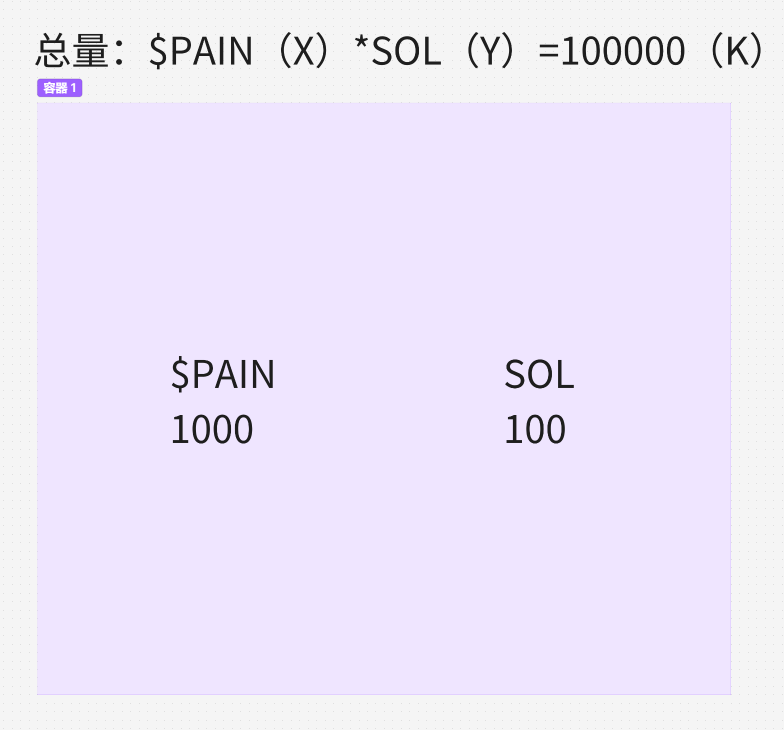
这两种液体的比例决定了初始价格。

1 $PAIN= 0.1 SOL(因为 1000 $PAIN/ 100 SOL = 10

那么现在池子有了,就可以开始交易了。

此时,有人想用 SOL 来换取一些 $PAIN。他带着 10 SOL 来到水池,想看看能换多少 $PAIN。

交易过程如下:

1. 他端着一个盆子,里面装着10SOL,跑到水池边,将这10SOL倒入了这个水池中。
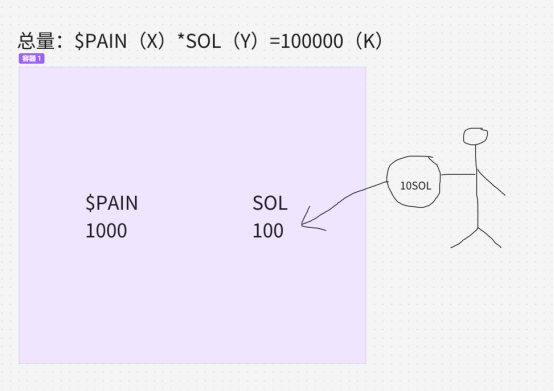
2. 前面讲过,这个水池是被装的满满当当的,倒入10个SOL后,会发生的事情就是水池里的水溢出来了,那么由于有自动的控制系统存在,此时就让他只溢出的是$PAIN这个液体。数量为90.91个$PAIN,这溢出来的90.91个$PAIN他再用他的盆子在旁边接着,

现在就完成了一次交易,倒入了10SOL,获得了90.91个$PAIN。
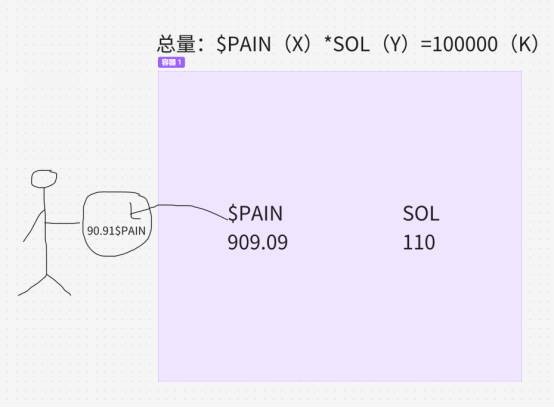
3.数量方面的计算过程:还是一样,前面说过,池子的总量(常数K)是固定不变的,而且一直遵循的是 X*Y=K这个公式。

$PAIN× SOL = 100,000 这个计算公式。

那么他在向水池里倒入10个SOL后,此时水池里的SOL变为110个,又由于池子的总量(100,000)是固定不变的,所以$PAIN的数量就必须调整为

$PAIN= 100,000 / 110 ≈ 909.09。

也就是说,水池里原来的 1000 $PAIN减少到了909.09 $PAIN

那此时通过计算后发现,水池多了10个SOL,少了1000 - 909.09 = 90.91 个$PAIN,那少了的 $PAIN去哪了?

刚刚说过,少了的 $PAIN从水池中自动溢出了,让那个跑来用10SOL买$PAIN的人用水盆接走了。

结果:

水池现在有:909.09 $PAIN和 110 SOL。

新价格:1 $PAIN≈ 0.121 SOL(110 / 909.09),或者 1 SOL ≈ 8.26 $PAIN。

水池里的 $PAIN变少,SOL 变多,所以 $PAIN的价格上升了,SOL 的价格相对下降。

以上,就是链上一笔交易的通俗易懂的全过程,当然反过来也是一样的。

水池的运作特点

1. 自动调节: 水池不需要人来管理价格。只要有人加入或拿走液体,池子会根据公式自动调整比例和价格。那么这,其实就是大名鼎鼎的“自动做市商”(AMM,全称为Automated Market Making)。

2. 交易费用: 每次交易,水池会留下一小部分“水滴”作为手续费(比如0.3%)。这些费用会积累起来,奖励给最初提供液体的流动性提供者。 比如刚才那次 10 SOL 的交易,可能会扣掉 0.03 SOL 作为手续费,水池实际收到 9.97 SOL。

以上,就是“池子”的最透彻清晰的解释。

同时,也能直接理解另一个名词:“流动性”的含义了。

所谓“流动性”,就是“东西能不能快速、方便地换成别的东西”的能力。

用池子比喻:

1.池子里的水量 = 流动性的多少: 水多(代币数量多),流动性高,交易容易,价格稳定。 水少,流动性低,交易一多价格就跳得厉害。

2.舀水的影响 = 交易成本: 池子浅,舀水(大额交易)会让水面波动,换到的东西变少(滑点大)。 池子深,舀多少水都影响不大,交易成本低。

3.加水的人 = 流动性提供者: 有人往池子里倒水(存入SOL和$PAIN),池子变深,流动性增加。 他们加水是为了赚“水费”(交易手续费),别人舀水时留点水滴给他们。

SOLANA进行交易的底层核心过程和逻辑,中央限价订单薄(Central Limit Order Book,简称CLOB):

在SOLANA上交易是如何发生的?

我们用一个具体的例子,想象一个菜市场,里面有很多摊贩在卖菜,同时也有很多人在买菜。买菜的人和卖菜的人通过喊价来交易。

假设市场里的菜只有$PAIN,的用于买菜的钞票是SOL。来看看这个“链上菜市场”怎么运转。

1. 摊贩摆摊:提交订单

在菜市场(中央限价订单簿)里,任何人都可以扮演“摊贩”或“买家”,通过提交订单来表达自己的交易意愿。这些订单叫限价订单,意思是你限定了一个价格。

卖家(卖单,Ask): 小明说:“我有100个$PAIN,想以1$PAIN= 0.1 SOL的价格卖,谁要买就来。” 这相当于他在“菜市场”里摆了个摊,标价牌写着“$PAIN,0.1 SOL一个”。

买家(买单,Bid): 小红说:“我想买100个$PAIN,愿意出0.09 SOL=1 $PAIN,有没有人卖?” 她在市场里喊了一嗓子,等着有人愿意按这个价格卖给她。

这些订单会被记录在Solana区块链上的一个“账本”里,这个账本就是中央订单簿,任何人都能看到。它就像菜市场里的一个大黑板,上面写满了所有摊贩和买家的报价。
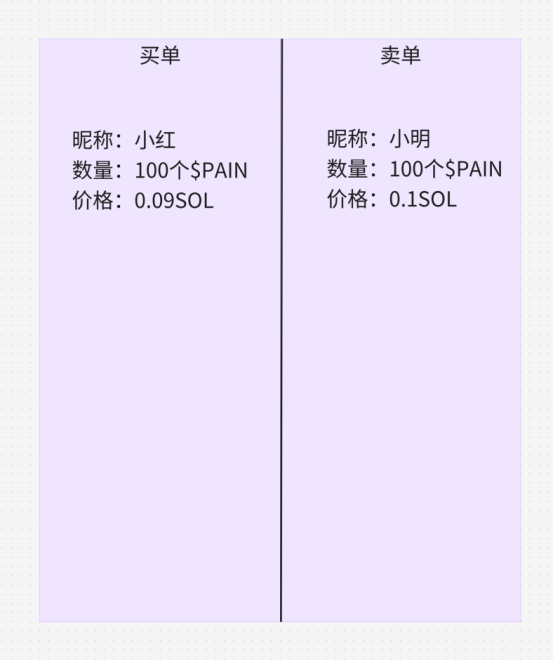
2. 撮合交易:买卖匹配

当买家和卖家的价格能对上,交易就自动发生:

假设小刚来了,说:“我愿意以0.1 SOL=1 $PAIN的价格买50个$PAIN。”

小明的摊上有100个$PAIN,标价正好是0.1 SOL一个,价格匹配上了!

结果: 小刚付给小明 50 × 0.1 = 5 SOL。 小明给小刚 50个$PAIN。 小明的摊位还剩50个$PAIN,继续等着下一个买家。
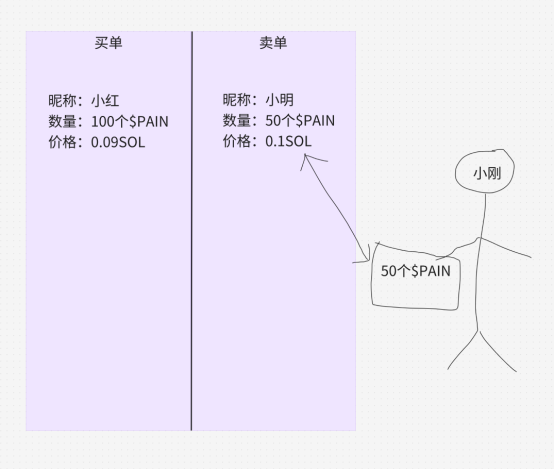
这个撮合过程Solana区块链负责记录交易细节,确保没人耍赖。

那么现在清楚了,这个大黑板,就是所谓的“中央限价订单薄”。

同时,另一个名词“深度”也就能理解了。

比如还是这个市场,里面只有两个信息,那你想以0.08SOL的价格买$PAIN,就得把价格挂大黑板那儿一直等着,直到有卖家愿意卖给你。

或者你忍一下,接受这个差价损失,咬咬牙,硬是以0.1SOL(高于你原本的心里预期价格0.08SOL)从小明手里买了$PAIN。

那发生了这样的情况,就是因为这个大黑板上的单子太少了,没有能够匹配你需求的单子所造成的。

所谓“深度”,就是这个大黑板上所列出的买卖信息的多少。

如果这个黑板上的信息很多很多,也就意味着各种价格,各种数量的单子都有,在交易时不管以什么样的价格和什么样的数量想跑去买卖东西,都能找到对应的单子来成交。那就是深度很深,深度好。

如果这个大黑板上的单子很少,就会因为没有你想购买的价格和数量而一直等待,或者忍受其中的差价损失去成交。那这就是“深度”不深,“深度”不好。

现在我们来思考一个问题:如果只采用“中央限价订单簿”的方式进行交易,是不是就时常会有刚刚提到的情况:你想买卖,没有匹配的订单,只能挂在大黑板那儿等。

老在这儿等也太难受了,所以在链上,本文最开始讲的“池子”(AMM,自动化做市)机制就应运而生了。

想一下,池子这种交易的方式是不是就根本不用等?你想用SOL去买$PAIN,就跑池子那儿把SOL倒进去就行,然后$PAIN就会自动地从水池中溢出到你手里。哦对了,这个池子越大越深,那他的“深度”也越好。

二、如何通过加池子(添加流动性)赚钱:

先来讲SOLANA上最大的流动性供应商“Raydium”是如何工作的。

“Raydium”的工作原理,就是将上文提到的两种“中央限价订单簿”和“自动化做市(也就是池子,AMM)”进行了结合。

他将两者进行了结合,具象化就是将大黑板和水池连在一起了。在进行交易时,Raydium会自动比较大黑板和水池里的价格,看相比之下哪一边的价格更优秀,就采用哪一边的方式进行交易。

举一个具体例子:你兜里有10个SOL,你想以1$PAIN=0.1SOL的价格进行买入。此时你的交易信息提交给了Raydium,Raydium接收到了你的交易需求,他开始了自动比较。

此时如果

水池里的价格为:1$PAIN=0.12SOL。

中央限价订单簿里的价格为:1$PAIN=0.11SOL。

那Raydium就会自动的帮你选择走中央限价订单簿这一条线路进行交易。而由于数学上的计算精度和流动性不够充裕的问题,交易过程中间产生的这0.01SOL的差价,也可以理解为“滑点”。

讲清楚了Raydium的工作原理,现在就来具体讲,如何通过加池子赚钱。

在SOLANA上,你想创建一个代币,就需要自己创建一个池子,并且放入SOL和你自己的代币,这样这个代币才能存在和交易。那么初始的池子就是由你自己创建的,给你这样一个角色冠以了一个名词:DEV。

如果使用http://PUMP.FUN呢,只用填写代币信息和花费SOL,他就会自动帮你创建池子,说简单点他就是个能自动帮你创建池子的东西。

为什么要加池子呢?

因为有时候,如果这个币的热度相对较高,跑来交易的人很多,那么初始池子有可能承受不住这样高频的交易从而产生诸多问题,比如人太多,会产生排队的问题。

为了解决这些问题,那么其他人就可以自己选择来帮忙扩大池子,前面有提到过,在池子中交易时,会有些水滴被扣留,这些水滴就是帮忙扩大水池的人的奖励,咱们要赚的就是这个钱。

在SOLANA上加池子,最常用的就是Raydium,网址:http://raydium.io

进入Raydium后,连接钱包,点击右上方的齿轮即可看到切换至中文的选项。然后点击上方菜单栏中的的流动性按钮进入添加流动性的页面。

在加池子的这个页面,被分成了两种方式,分别是“集中”和“标准”。

集中:集中这种方式意味着,在你加池子时,需要你自己选择你所添加的这个水池是适用于什么样的价格范围的。

标准:没有特定的价格范围限制,即0到无限制的价格范围,无论什么样的价格在交易,你都能获得手续费。相应的,所收取的手续费相较于集中会变少,优点是更加的方便容易,不用一直盯着价格。

一般使用集中这种方式,因为,假设$PAIN的价格不会涨到10000刀。所以都选择集中这种方式。

在搜索框输入你想添加池子的币的名字或者CA。
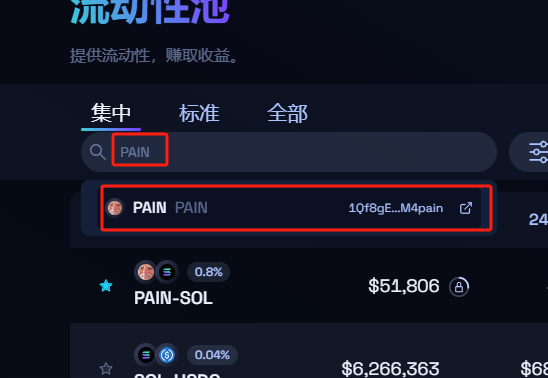
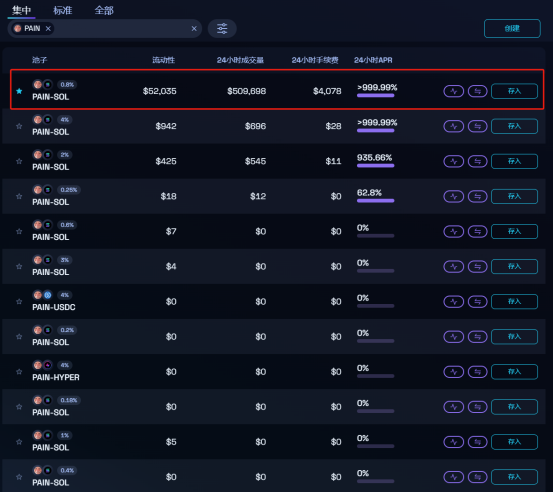
进入后能看到很多个池子,一般选择流动性和24小时成交量大的那一个。之所以有这么多不同个的池子,是因为这些是不同的人创建的,小池子就没必要去帮忙扩建了,有不小的风险。
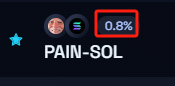
另外,池子旁写的这个百分比数字的意思是你所能够收取的交易费率。
点击存入,进去添加池子的页面
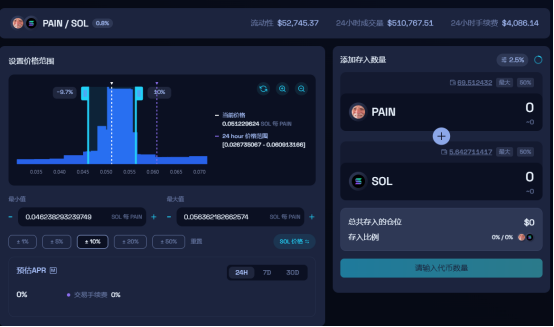
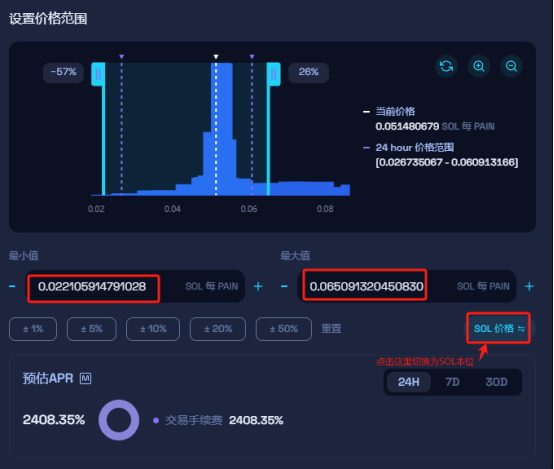
在左侧这里选择要添加的价格范围。

这个蓝色带手柄的,可以自由拖动去选择范围。

白色的虚线代表着当前的价格,紫色的虚线代表着24小时的价格波动范围,左侧的紫色虚线是24小时内的最低价,右侧的紫色虚线为24小时内的最高价。

而背景的蓝色柱状可以理解为,不同价位的交易活跃度,如图,正好白色虚线的价位附近,蓝色的柱状很高,就意味这个价格附近的交易额很高,交易次数很多,如图所示。
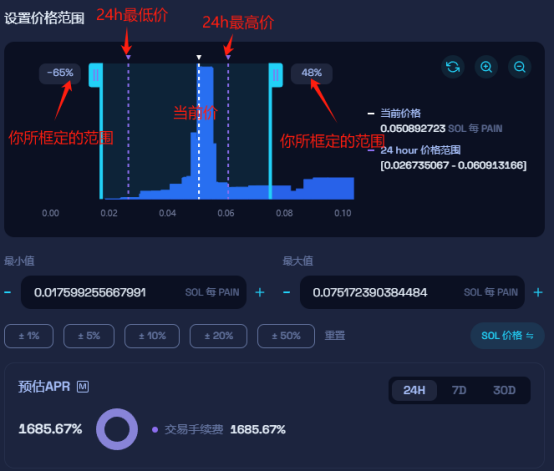
在右侧选择你所要添加进池子的$PAIN的数量和SOL。

这两者都是需要一起加入池子的,毕竟当前价格范围内的池子里是两种代币都有,加的话也一样。比如你选择加50个$PAIN,那就会自动的帮你调整,显示你同时也需要一起加入3.058个SOL。
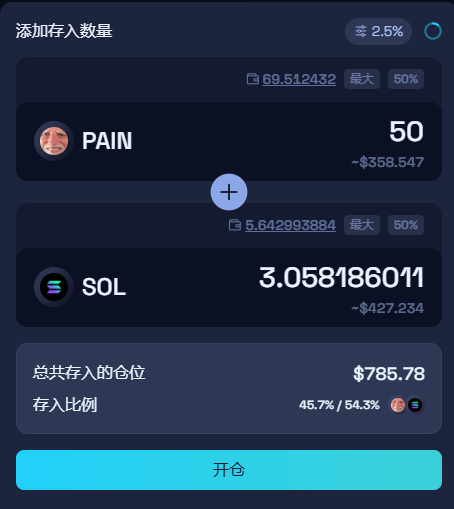
选择好之后,就点击开仓,确认存入金额后,就添加成功了。进入投资组合就能看到你当前所添加的池子信息。如果想撤池子,点击减号即可。
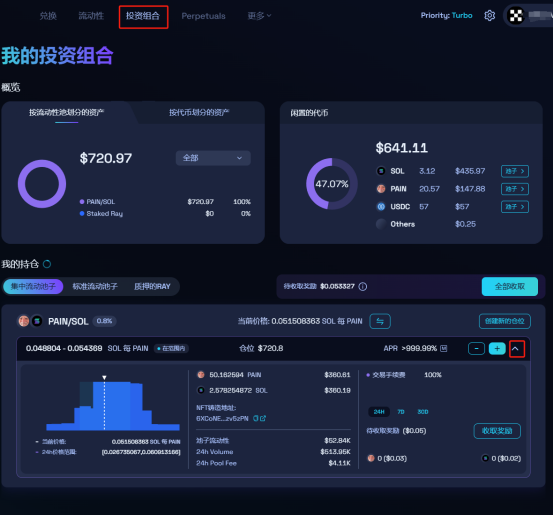
接下来就是具体的赚钱方法了。

在添加流动性时的特点:

你所选取的价格范围越窄,也就是越精准,那么你所获得的奖励就会越高

该代币的交易越活跃(交易额,交易次数)越高,你所获得的奖励就会越高

在知晓了这两个特点后,那么如果想获得更多的奖励,就要去找交易活跃的,最好是在一个区间震荡的币来加池子。

以$PAIN举例,首先要做的就是判断价格区间,打开K线图,又由于Raydium上输入价格时是以SOL本位的,所以需要在这里点击,切换为SOL本位的显示。
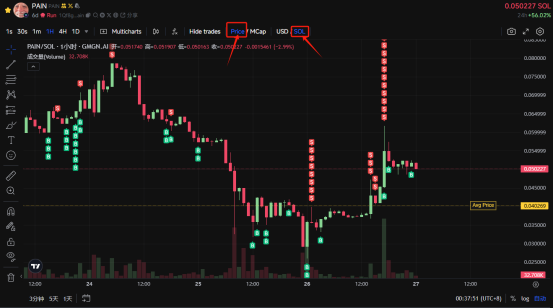
从图中我们可以看到,从25号到现在这两天的时间内,$PAIN的价格区间大约为0.025 SOL - 0.062 SOL之间波动,且交易额还算不错。
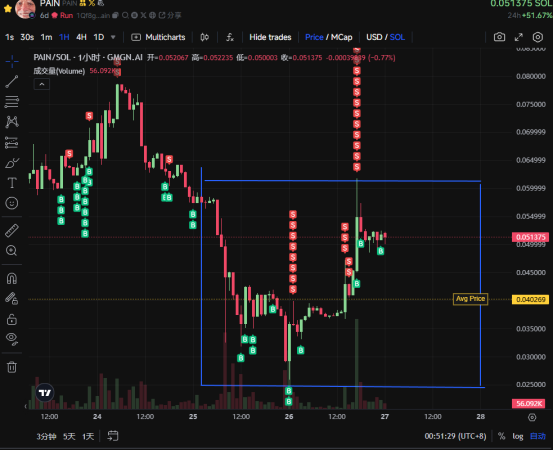
为了保险起见,我们就将区间调大一点,调整到0.022到0.065之间,然后去存入即可。
学会怎么加池子后,那如何放大我的收益,比如在Trump上赚取超额利润呢?

Trump那天,就当作是第一时间没看到或者没敢上,比如在下午13点开始,你想通过他去赚钱,但是你又不敢买,害怕跌,那就可以选择去加池子这种风险相对更小的方式去赚钱。

此时13点的价格是9.5刀左右,你买了Trump,然后如图,过了一会后发现一直在横盘,但是交易量又特别特别大,于是你跑去加池子了,价格区间保守的选择了8-18的区间范围。

然后Trump横盘了一下午,期间产生的天量的交易额,同时也产生了天量的手续费。
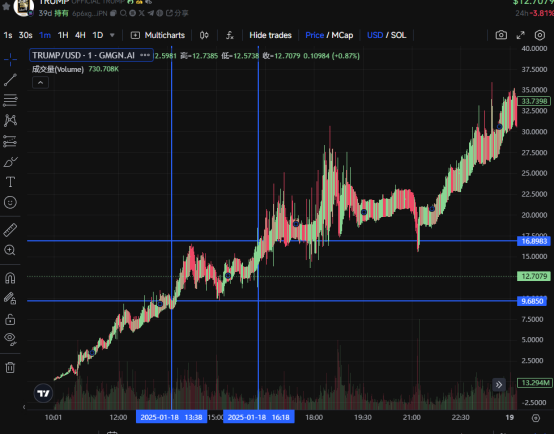
如果资金调配合适,仅仅这一个下午,就能赚到巨量的利润。因为你加了池子,既吃到了一点Trump的涨幅,也收取了巨额的手续费奖励。而如果一直拿着现货,则利润相较于加池子是根本不够看的。

然后你一直在盯盘,当看到Trump的价格即将突破你池子的区间时,你果断的撤了池子,拿着利润走人。

三、揭露狗庄到底是如何具体的通过加单边池子来进行隐秘出货的手法

上文讲的是在当前价格的左右进行加池子,也就是$PAIN和SOL都得存入到池子中。

当你选取的价格范围的最高价位,低于当前价时,就会出现如下的情况:
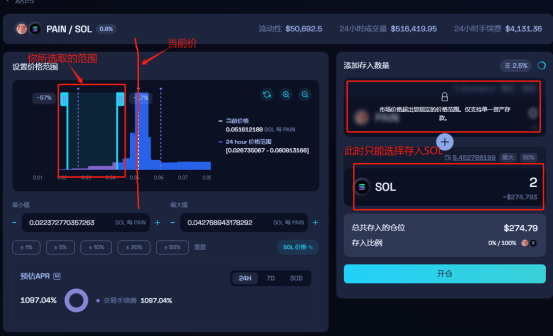
这种情况的意思是,你所要加的范围低于当前的价格,此时pain的价格为7.17,意思是现在市场上的人们都是以7.17的价格进行买入和卖出。

为了理解为何不能加pain,我举个例子:

就假设此时你的2-5区间的池子加成功了。此时,pain的价格为7.17,有个人想卖出pain获得SOL,如果跑来你的池子的话,你的池子设定的pain的价格是2-5,那他通过你的池子去兑换SOL,他岂不是亏肿了,他又不是傻子。

那如果有人想跑到你的池子里买pain,你的pain的价格是2-5,那他岂不是瞬间赚肿了,同时发现居然有这样的差价从而一瞬间将你池子里的pain都掏光,而你就会因此蒙受巨大的损失。

然后来讲正常情况,你这样设定了pain的2-5价格的池子范围,存入SOL这样的单一资产后,你的池子就会先晾在这,等待pain的价格跌倒你的区间内。

当pain的价格跌倒你的区间内后,比如跌到了4.9,那么此时你的池子就会允许手里持有4.9价格pain的人来你的池子里交易。此时就是他将4.9的pain倒入你的池子中,你的池子里溢出了SOL给他。这中间产生的手续费的一部分就会给到你当作奖励。

其实说白了,有点相当于是进行了一个低价挂单的操作,只不过区别是你有额外的手续费奖励。

高于当前价格范围的池子:

这就是一些狗庄用来偷摸出货的隐秘方法。当你设定的价格范围中的最低价高于当前市场价后,此时只允许你存入$PAIN。
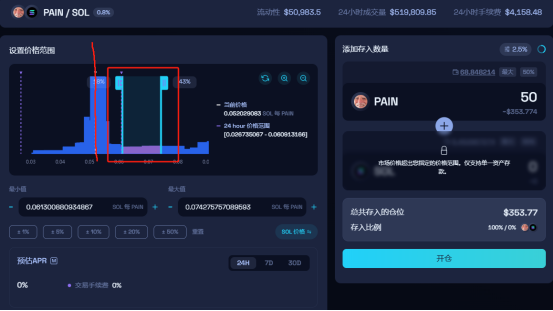
至于原因,和前面所说的一样,只不过是反过来的。

那么狗庄是如何通过这种方式出货的呢?

来举一个例子。假设此时pain的价格为6,狗庄手里有1W个pain,他想拉下盘,拉到10之后出货。如果他直接通过市场上出掉,会直接暴露出去,被大家很直观的看到。因为GMGN这种看板上会显示地址的交易和持仓情况。大家看到就会引起恐慌后抛售,砸低价格从而减少狗庄的利润。

那么狗庄就可以选择拿着自己手里的1w个pain跑到Raydium上加池子。

具体操作就是将价格范围设定为9-11这个区间,然后将手里的1W个pain存入池子中。

接下来第二步就是拉盘,将pain拉到10的价位。此时10这个价格进入了狗庄刚刚添加的池子的工作范围。在当前价格如果散户买入pain,实际上就相当于是将自己手里的SOL倒入了狗庄的这个池子里,然后狗庄池子里的pain就溢出给散户了。

那么狗庄只需要将价格一直稳在9-11这个价格,那么这期间产生的所有买单的SOL,就全进了狗庄的这个池子里,狗庄的pain就以这样隐秘的方式出给散户了。

这样做的好处呢,就是在一般的K线看板上是根本,一丁点都看不到的。散户根本不知道狗庄在出货了。事实上,Trump,MELANIA,AI16Z,等等等等吧,这些币95%的狗庄都会采用这种方法作为出货的方式之一。

此时如果你能看到狗庄的这个动作,那么你就知道该跑了,是可以做到十分精准的逃顶的,这也是很多链上高手能比较准确地逃顶的秘诀。

那么该如何知晓呢?

敬请期待下一篇,同样十分详细,易懂,以说人话的方式告诉大家。

Related Reads

Banking Giants Battle in the Tokenization Arena: Who Will Take the Lead?

**Banking Titans Battle in Tokenization: Who Leads the Pack?** Four major banks—JPMorgan Chase, Goldman Sachs, HSBC, and BNY Mellon—are heavily investing in tokenization infrastructure but have adopted distinct strategic paths. This analysis compares them across four key dimensions: verified transaction volume, product breadth, regulatory compliance, and underlying infrastructure model. JPMorgan's Onyx network stands out with over $1 trillion in cumulative cleared transaction volume, focusing deeply on niche areas like tokenized collateral management and intraday repo settlement. However, its closed private network limits market reach. Goldman Sachs Digital Assets Platform (GS DAP) leads in product diversity, having executed tokenized bond issuances for sovereign entities and supranational organizations, and launched tokenized money market funds. It is also a founding member of the Canton Network, a shared ledger for institutions, though its overall cleared volume is less publicly disclosed than JPMorgan's. HSBC's Orion platform carves a niche in cross-border tokenized securities and sustainable finance, exemplified by its tokenized gold product and its role in large-scale digital green bond issuances for the Hong Kong Monetary Authority. Its global network provides a unique advantage in Asia and emerging markets. BNY Mellon, as the world's largest custodian, plays a fundamentally different role by providing essential custody and asset servicing infrastructure for digital assets, notably supporting the Canton Network. It does not actively issue front-end tokenized products. In summary, no single bank dominates all fronts. JPMorgan leads in scale, Goldman in product breadth, HSBC in global cross-border positioning, and BNY Mellon in foundational custody services. The market is likely to see multiple parallel development paths. A key future challenge is avoiding fragmentation; the success of interoperability standards like those within Canton Network will be crucial to realizing blockchain's full efficiency gains across the entire financial ecosystem. The next 5-10 years will reveal which institution builds the most enduring competitive moat.

Foresight News7m ago

Banking Giants Battle in the Tokenization Arena: Who Will Take the Lead?

Foresight News7m ago

Focus: Five Leading AI Stocks on Nasdaq

The report analyzes five Nasdaq-listed AI infrastructure stocks—Micron (MU), MaxLinear (MXL), AMD, Lumentum (LITE), and Vicor (VICR)—as distinct plays within the AI capital expenditure chain, rather than a single "AI trade." While all benefit from AI data center spending, they differ in their specific roles (e.g., memory, computing, optics, power, connectivity), financial resilience, and risk profiles. The author argues that the key question is not whether the AI narrative remains intact, but whether capital expenditure translates into real orders, earnings justify valuations, and portfolios can withstand high volatility. Historical data shows these stocks have significantly outperformed benchmarks but also experienced deeper drawdowns (~28% to -32%), highlighting their high-beta, high-volatility nature. An investment framework is proposed: core positions (e.g., MU, AMD) for stocks with stronger fundamental evidence; satellite positions (e.g., LITE, VICR) for high-potential, high-volatility names; and cautious observation (e.g., MXL) for smaller-cap ideas with unproven financials. The emphasis is on disciplined, phased buying during pullbacks—only when price corrections align with intact fundamentals and available risk budget—rather than emotional "buy-the-dip" strategies. Overall, AI infrastructure offers long-term potential, but success requires strict position sizing, role definition for each holding, and preparedness for significant volatility.

marsbit1h ago

Focus: Five Leading AI Stocks on Nasdaq

marsbit1h ago

Will UNI Reach $100 in Four Years? Will Standard Chartered's Prediction Come True?

TL;DR: - According to reports, Standard Chartered Bank has published a research report on Uniswap, setting a 2030 price target of $100 for the UNI token. - The bank's core logic is that the tokenization of assets will drive demand for open DeFi liquidity, and Uniswap could capture significant trading volume and fee revenue. - However, most institutional-grade tokenized products are permissioned, and the example of BlackRock's BUIDL shows that DeFi still faces significant access barriers. Standard Chartered's $100 target for UNI by 2030 is based on the hypothesis that tokenized assets will grow massively and a significant portion will flow into open DeFi markets, requiring decentralized exchange platforms like Uniswap for liquidity. The bank forecasts tokenized assets could reach $4 trillion by 2028, with up to 30% in DeFi by 2030. The key question is whether tokenized assets like treasuries and funds will trade in open, decentralized markets or remain within closed, permissioned institutional systems. This directly impacts Uniswap's potential growth. A real-world example is BlackRock's BUIDL fund, which, while using UniswapX for trading, is strictly limited to pre-approved, whitelisted institutional participants. This highlights the current trend: institutions may leverage DeFi infrastructure but maintain strict control over access and transfers. Furthermore, for UNI's value to rise significantly, Uniswap must establish a clear value-capture mechanism, such as the approved fee switch and token burn proposal. Regulatory and interoperability hurdles also persist, as noted by bodies like the Financial Stability Board. In summary, Standard Chartered's bold prediction hinges on the future flow of tokenized asset liquidity. While it signals institutional recognition of DeFi's potential, the path to $100 depends on overcoming current permissioned models and enabling truly open, cross-asset liquidity pools on platforms like Uniswap.

Foresight News1h ago

Will UNI Reach $100 in Four Years? Will Standard Chartered's Prediction Come True?

Foresight News1h ago

Trading

Spot
Futures

Hot Articles

What is TRUMP CAT

Trump Cat Family, $Trump Cat: An Unraveled Mystery Introduction In the constantly evolving landscape of crypto projects and web3 innovations, a curious phenomenon has emerged—one that appears to straddle the line between cryptocurrency and internet meme culture. This is the enigmatic “Trump Cat Family”, also referred to as “$Trump Cat”. Though it might arouse curiosity among crypto enthusiasts, the reality appears far removed from the standard definition of a crypto project. This article aims to explore the concept of Trump Cat Family, bringing to light the context surrounding it and clarifying its status in the crypto realm. What is Trump Cat Family, $Trump Cat? At first glance, one might think that “Trump Cat Family” refers to a legitimate cryptocurrency or web3 project. However, upon deeper investigation, it becomes evident that the term lacks the trappings of a traditional crypto venture. Instead, “Trump Cat” seems to be predominantly associated with the viral meme culture that surged following controversial statements made by former U.S. President Donald Trump regarding Haitian immigrants. The media coverage sparked a myriad of memes, humoristic interpretations, and a wave of social commentary. These memes depict various forms of satire centered on Trump's dialogue, often utilizing cats in comedic and sometimes absurd scenarios. Rather than a structured project aimed at addressing technological advancements or financial transactions, the “Trump Cat Family” concept exists predominantly in the realm of internet humor. Who is the Creator of Trump Cat Family, $Trump Cat? In the investigation of who stands behind the “Trump Cat Family,” it becomes apparent that there exists no identifiable creator or founding figure. The phenomenon seems to have originated from collective internet expression, rather than from a singular visionary with a defined project goal. This anonymity further emphasizes its status as a meme rather than a structured initiative akin to most known crypto projects. Who are the Investors of Trump Cat Family, $Trump Cat? Given that “Trump Cat Family” does not conform to the characteristics of a reputable crypto project, the question of investment becomes moot. There have been no established foundations or organizations expressing support for a project by this name. Instead, what exists are individual contributors to meme culture—hobbyists, artists, and social media users who collectively populate the internet with their interpretations and humor surrounding the term “Trump Cat.” This organic growth within digital human communication reflects more of a social commentary than a financial investment landscape. How Does Trump Cat Family, $Trump Cat Work? If one seeks to establish how “Trump Cat Family” operates, the answer is vastly different from what might be expected of standard crypto projects. There are no operational mechanisms, technological innovations, or unique features inherent to this phenomenon. Instead, it exists through viral spread online, relying upon social media platforms for proliferation. The “how” lies in the realm of culture and communication—its essence derived from the dynamics of social interaction rather than from established crypto protocols or blockchain functionalities. What makes “Trump Cat” unique, if anything, is the way it dramatizes a political dialogue through humor. People utilize engaging visuals, inside jokes, and inventive storytelling to convey sentiments regarding political figures and societal issues. The power of memes transcends traditional communication, encapsulating complex thoughts in a form that resonates widely, yet remains elusive in terms of quantifiable success or structured goals. Timeline of Trump Cat Family, $Trump Cat September 2024: The discourse surrounding Donald Trump's comments about Haitian immigrants allegedly consuming pets gains traction online, leading to a blossoming of memes and parodic interpretations across various platforms. Continuing Impact: Following this period, the “Trump Cat” phenomenon sees continued life as social media users leverage humor to address, critique, or simply celebrate the absurdity of political conversations and events. It is essential to note that as “Trump Cat Family” lacks the formal structure of a traditional project, the timeline consists primarily of anecdotal observation rather than remarkable milestones commonly found in recognized crypto ventures. Key Points Meme Culture: Rather than a structured crypto initiative, “Trump Cat” aligns more with the evolving landscape of internet memes. Origin of the Term: The genesis of “Trump Cat” relates directly to commentary on President Trump's remarks about Haitian immigrants, sparking widespread humoristic representation. Absence of a Project Framework: The term fails to align with any defined project objectives, creators, or investors, marking it as a novel cultural experience rather than a crypto project. Conclusion In summary, the investigation into “Trump Cat Family, $Trump Cat” reveals a phenomenon entrenched in internet meme culture rather than a recognized project within the cryptocurrency or web3 sectors. The virality surrounding the term is birthed from collective user engagement, reflective of modern digital discourse rather than a formalized initiative with structure or strategic foresight. For all the curiosity it may invoke among those seeking the next big crypto project, “Trump Cat Family” serves as a testament to humanity's creativity, humor, and often absurd relationship with politics in the digital age.

2.9k Total ViewsPublished 2025.01.22Updated 2025.01.22

What is TRUMP CAT

TRUMP: Decoding Trump's Crypto "Game of Power"

This article analyzes the underlying mechanics and participation approaches within the $TRUMP ecosystem, examining its technical, narrative, and community aspects.

40.6k Total ViewsPublished 2025.04.23Updated 2025.04.29

TRUMP: Decoding Trump's Crypto "Game of Power"

Discussions

Welcome to the HTX Community. Here, you can stay informed about the latest platform developments and gain access to professional market insights. Users' opinions on the price of TRUMP (TRUMP) are presented below.

活动图片