Пользователи DEX Jupiter в сети Solana сообщили о потере средств после взлома X-аккаунта проекта

cryptonews.ruPublished on 2021-04-06Last updated on 2025-02-06

Что произошло? X-аккаунт агрегатора децентрализованных бирж (DEX) Jupiter в сети Solana был взломан для продвижения скам-токенов. В серии уже удаленных постов аккаунт рекламировал мошеннический мемкоин с тикером MEOW, отсылающим к псевдониму сооснователя Jupiter. Представители связанных с проектом аккаунтов призвали пользователей не переходить по ссылкам, предупреждения публиковали и другие представители криптосообщества.
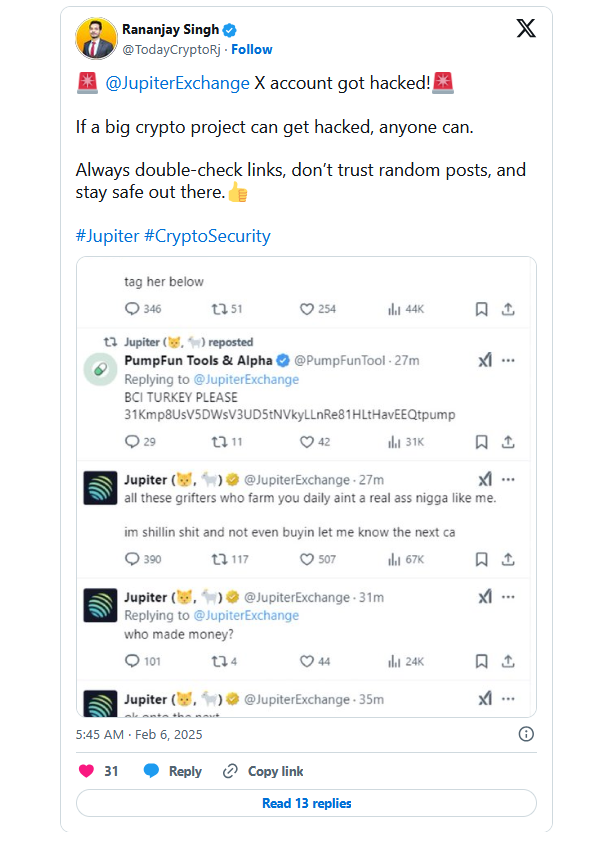
Источник: X.com

Что еще известно? Хакер разместил несколько постов о скам-токене MEOW, но спустя некоторое время удалил их и начал продвигать другую монету с тикером DCOIN, отсылающим к Dogecoin — крупнейшему мем-токену на крипторынке, существующему уже более 10 лет. Также взломщик успел запустить стрим в X Spaces, к которому присоединились свыше 3300 пользователей.

Под постами в X-аккаунтах Jupiter Mobile, JupiterDAO и Jupiter Uplink некоторые пользователи сообщили, что потеряли свои нативные токены JUP и монеты блокчейна Solana (SOL) в этой мошеннической схеме, и потребовали выплаты компенсаций.
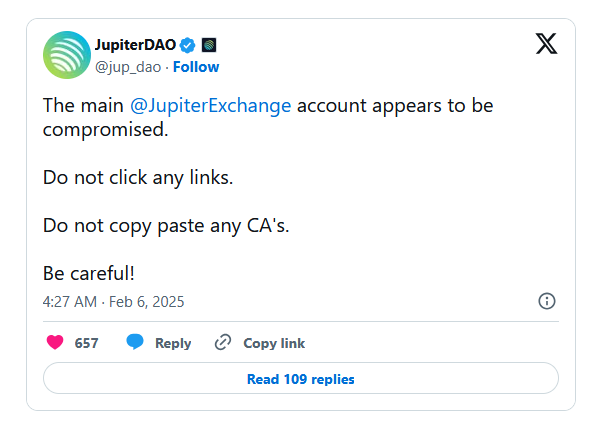
Источник: X.com

Среди прочих, ситуацию прокомментировал анонимный аналитик венчурной криптокомпании GM Capital под ником Beanie:

«Трейдеры мгновенно потеряли миллионы из-за взлома аккаунта Jupiter. Буквально за считанные минуты. Удивительно, как мы доверяем этим протоколам, которые обеспечивают ликвидность на миллиарды долларов, но они недостаточно компетентны, чтобы защитить свои социальные сети. Парадокс, с которым мы сталкиваемся слишком часто».
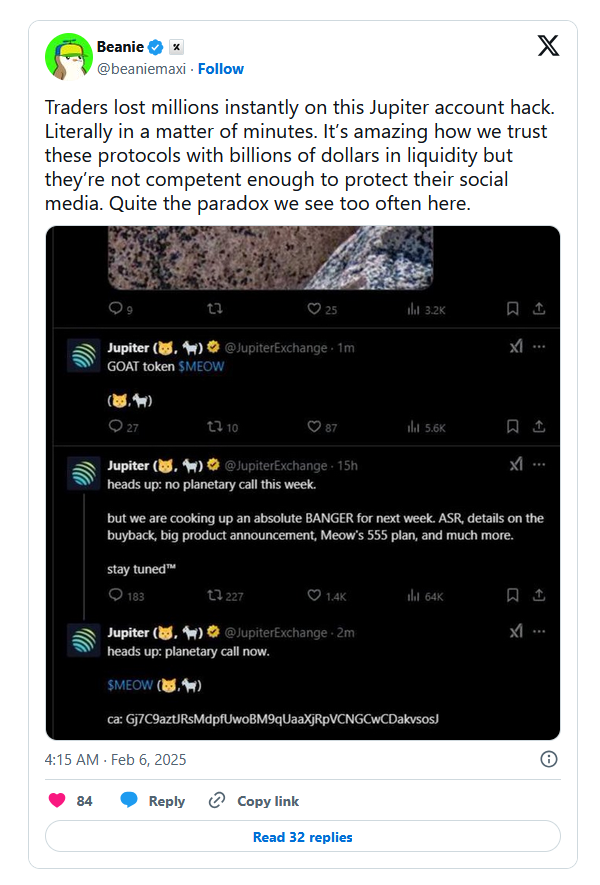
Источник: X.com

Позже на официальном аккаунте Jupiter появилось сообщение о том, что команда восстановила доступ. Разработчики уточнили, что другие каналы связи или средства казначейства проекта не были затронуты атакой.
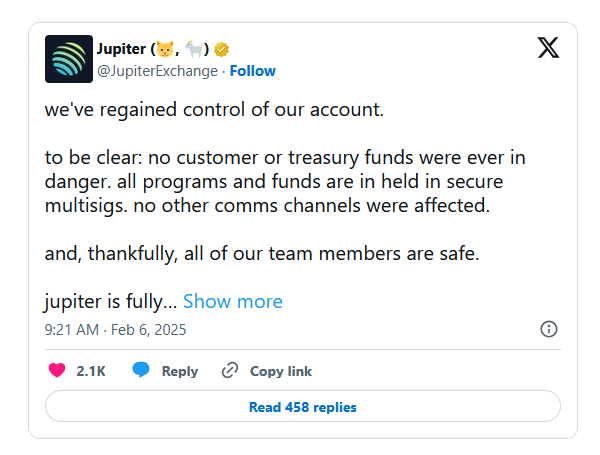
Источник: X.com

Сооснователь Jupiter под ником Meow пообещал опубликовать детали инцидента по итогам расследования.
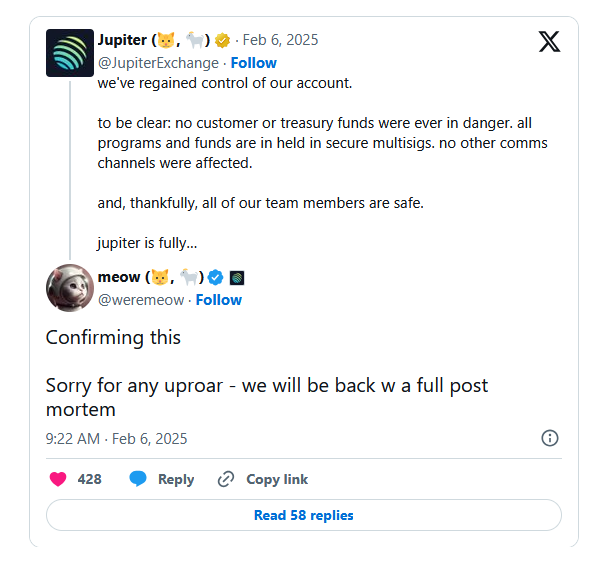
Источник: X.com

Пользователи вновь высказали недовольство и потребовали вернуть утерянные средства. Некоторые отмечают, что потеряли все свои SOL, доверившись информации с официального аккаунта проекта.

Jupiter является одной из ведущих DeFi-платформ в криптопространстве. За все время она провела свыше 1,3 млрд сделок на 2,24 трлн долларов, согласно данным Dune.

В конце января команда Jupiter провела первую персональную конференцию Catstanbul 2025, где сделала ряд важных объявлений. Она объявила о запуске омничейн-сети Jupnet, покупке лаунчпада мем-токенов Moonshot и трекера портфолио SonarWatch, а также представила новую лендинговую программу с токенами поставщиков ликвидности Jupiter (JLP) и стейблкоинами USDC от Circle.

В дополнение к этому 50% доходов от комиссий начнет направляться на обратных выкуп нативных токен JUP для поддержания стоимости актива. Тогда же разработчики сожгли JUP на 3,6 млрд долларов, что способствовало росту курса.

На фоне новости о взломе актив утратил 4,3% за сутки и на момент написания статьи торговался по $0,884. JUP занимает 55-е место общего рейтинга криптовалют по рыночной капитализации с показателем 2,34 млрд долларов. С начала года актив подорожал на 8,2%.


Trending Cryptos

Related Reads

CPU Makes a Comeback to the Table, A $170 Billion "Power Seizure" Drama Begins

A new era is dawning for the server CPU (Central Processing Unit), driven by the shift from AI model training to large-scale reasoning and the rise of Agentic AI. This article explores how the CPU is reclaiming a central role in the AI data center. For years, the focus has been on the GPU (Graphics Processing Unit) for AI training. However, as AI moves to the inference and Agent phase—where tasks involve complex, multi-step reasoning, tool calls, and data management—the workload balance is flipping. Studies show CPUs now handle over 70% of the workload in Agentic AI, up from 10-30% in training. This is because Agent tasks generate massive intermediate data (KV Cache) that exceeds GPU memory, forcing it to be offloaded to the CPU's larger, more scalable memory pools. This increased importance is translating into market changes. Major players are taking note: NVIDIA launched its first standalone CPU line, Vera, based on ARM architecture and optimized for Agent performance. AMD doubled its server CPU market forecast to over $1200 billion by 2030. Analyst reports project the total server CPU market could reach $1700 billion by 2030, with AI-driven demand being a primary driver. Furthermore, the classic ratio of CPUs to GPUs in AI servers is rapidly changing, converging from 1:8 toward 1:1 for Agent deployments. This surge in demand has led to a rare industry-wide price increase of 10-15% for server CPUs from Intel and AMD, breaking a decade-long trend of "more performance for the same price." Demand is bifurcating into high-core-count CPUs for in-rack GPU support and moderate-core CPUs for standalone Agent task orchestration. In China, this global trend presents an opportunity for domestic CPU manufacturers like Hygon (海光信息) and Huawei Kunpeng, who are bolstered by both growing AI infrastructure needs and national policies promoting technological self-reliance ("xin chuang"). The maturity of their software ecosystems is also accelerating, evidenced by faster adaptation to new AI models. In conclusion, the narrative is shifting from a GPU-centric view to one where CPU-GPU synergy is critical. The CPU is no longer a peripheral component but a performance-defining bottleneck and a key growth driver in the AI hardware stack, opening a massive new market estimated in the hundreds of billions of dollars.

marsbit10h ago

CPU Makes a Comeback to the Table, A $170 Billion "Power Seizure" Drama Begins

marsbit10h ago

TechFlow Intelligence: AMD AI Director Publicly Criticizes Claude Code for "Becoming Dumber and Lazier", Trump Claims Full Ceasefire in Hormuz But Strait Still Has 80 Unexploded Mines

TechFlow Intelligence Report: This daily digest covers key developments in AI, crypto, hardware, and geopolitics. In AI, SK Telecom faces US export control scrutiny over its partnership with Anthropic, while a Gemini user reports being misled in a scam scenario, sparking safety debates. China's Z.AI launches the GLM-5.2 model, rivaling Claude Opus without NVIDIA chips. In crypto, Bithumb lists ReProtocol, and Upbit delists KernelDAO. On the hardware front, MIT researchers build a custom OS to study chips, ASML denies US claims its advanced lithography machines are in China, and Amazon considers selling its in-house AI chips. Apple's future A21 Pro chip may use TSMC's latest N2P process. Major tech issues include 10,000 GitHub repositories distributing malware and Apple patching a critical eavesdropping flaw in Beats earbuds. US stocks rise, led by semiconductors, with Intel surging 10.6%, while SpaceX falls 3.5%. Geopolitically, despite a US-Iran deal, the Strait of Hormuz remains risky with ~80 uncleared mines, stalling 80M barrels of oil on standby tankers. Iran postpones Switzerland talks, and Trump calls the agreement an "unconditional surrender." The report highlights a contrast: temporary geopolitical calm versus the ongoing, fundamental restructuring of tech supply chains and chip independence.

marsbit10h ago

TechFlow Intelligence: AMD AI Director Publicly Criticizes Claude Code for "Becoming Dumber and Lazier", Trump Claims Full Ceasefire in Hormuz But Strait Still Has 80 Unexploded Mines

marsbit10h ago

Trading

Spot
Futures

Hot Articles

Discussions

Welcome to the HTX Community. Here, you can stay informed about the latest platform developments and gain access to professional market insights. Users' opinions on the price of SOL (SOL) are presented below.

活动图片