2024美国大选:币圈力量

marsbitPublished on 2024-09-14Last updated on 2024-09-14

Polymarket 推动了加密行业 12 亿美元的选举参与,政治捐款增长超过 10 倍

加密行业对2024年总统大选的总资金影响已超过12亿美元。

根据 Breadcrumbs 的最新报告,加密行业对 2024 年美国总统大选的资金参与已超过 12 亿美元,Polymarket 占据了其中的大部分。

报告概述了政治捐款、去中心化赌博、politifi 代币和 NFT 销售如何以前所未有的方式将加密与选举联系起来,标志着与之前选举周期相比的急剧增长。

捐款增长 10 倍

加密行业的政治捐款已激增至 1.9 亿美元,几乎是 2022 年周期捐赠的 9800 万美元的两倍,并且比 2020 年捐赠的 1500 万美元增长了 10 倍以上。

主要捐赠者包括风险投资家 Marc Andreessen 和 Ben Horowitz,他们每人向支持共和党和民主党候选人的各种政治行动委员会 (PAC) 捐赠了 2490 万美元。

温克莱沃斯兄弟贡献了 1010 万美元,主要支持亲加密的共和党候选人,包括前总统唐纳德·特朗普。

与此同时,Ripple 高管 Chris Larsen、Brad Garlinghouse 和 Stuart Alderoty 共同捐赠了超过 300 万美元,其中大部分捐款流向了民主党竞选活动。

支持加密的政治行动委员会在 2024 年选举周期中也获得了势头。支持使美国成为全球加密创新领导者的候选人的超级 PAC Fairshake PAC 已筹集了 1.61 亿美元,是所有与加密相关的 PAC 中筹资最多的。

其他 PAC,如“捍卫美国就业”和“保护进步”,已共同筹集了数百万美元,以支持两党中的亲加密候选人,进一步巩固了加密行业在美国政治中的影响力。

选举赌博

除了政治捐款,加密赌博也成为该行业选举参与的重要贡献者。去中心化赌博平台 Polymarket 已促成了超过 11 亿美元的 2024 年美国总统选举赌注。

该金额包括对总体胜者、州结果和普选票差距的赌注。Polymarket 的去中心化结构允许用户使用加密货币匿名投注,使其成为选举相关投机的关键平台。

报告强调,尽管 Polymarket 允许用户使用加密货币对政治事件进行投注,但由于监管限制,美国用户无法使用该平台。

尽管在美国没有开展业务,该平台仍然活跃,约 9 亿美元的赌注集中在美国总统竞选的总体胜者上,另外 2 亿美元用于投注谁将赢得普选票。

Politifi 代币和 NFT 销售

加密行业参与选举的另一个重要方面是 politifi 代币的兴起 —— 围绕政治人物创建的模因币。

这些代币虽然与任何竞选活动没有正式联系,但其市值已达 4.4 亿美元。然而,报告警告说,这些代币波动性极大,其中一些,如 Pepe Trump 和 DJT,被标记为骗局。

特朗普还通过发布 NFT 进入了加密领域,通过多个系列的销售生成了超过 900 万美元的收入。这些数字资产进一步将政治与加密世界联系起来,吸引了加密投资者和政治支持者的关注。

Related Reads

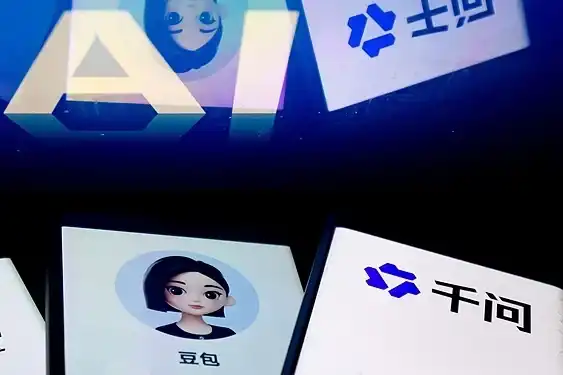
Doubao and Qwen Will Discontinue Agent Functionality on July 15

On July 4th, Doubao and Tongyi Qianwen announced the impending shutdown of their user-created "AI Agent" features. Doubao confirmed its agent feature will be taken offline on July 15, directing users to ByteDance's CatBox app for similar needs. On the same day, Tongyi Qianwen notified users, specifying that personalized interactive agents and user-built agent functions will cease on July 10, with all agent features and services completely deactivated by July 15. After this date, access to agent configurations and historical chat records will be lost. This adjustment impacts core user scenarios like role-playing, personal assistants, and vertical tool agents. The shutdown date coincides with the official implementation of China's "Interim Measures for the Administration of Artificial Intelligence Human-like Interactive Services" on July 15. The new regulations impose strict rules on "human-like emotional interaction services," requiring platforms to implement measures like anti-addiction systems, minor verification, and content moderation. This move is widely seen as a proactive step by the platforms to align with regulatory timelines and mitigate compliance risks. Additionally, commercial challenges are a key driver. Analysis suggests that casual, human-like chat agents generate high-frequency, low-value interactions, leading to high computational costs with poor monetization. As the AI application market shifts from user growth to proving value, sustaining such "high-cost, low-efficiency" user-generated content becomes difficult. Both platforms have outlined transition plans. Doubao will allow data viewing and self-backup for a period after shutdown, with data scheduled for permanent deletion by October 15. Tongyi Qianwen similarly advised users to save important content via copying or screenshots before the deadline. This strategic retreat from C-end agent features signals a broader market shift. Compliance capability and sustainable business models are replacing user scale and feature richness as the new core competitive dimensions. Tongyi Qianwen's recent move to fully open its Agent and Skill platforms to third-party enterprises and developers further underscores a strategic pivot from low-value C-end services to high-value B-end enterprise scenarios.

marsbit2h ago

Doubao and Qwen Will Discontinue Agent Functionality on July 15

marsbit2h ago

Why Did Codex and ChatGPT Merge? What's Next for Codex? OpenAI Core Leader Answers Everything

In 2026, OpenAI's Codex saw explosive growth, with weekly active users surging over 5x to 5 million since January, driven largely by the February launch of its desktop app. Codex desktop lead Andrew Ambrosino explains key shifts behind its evolution. A core change is the inversion of development costs: implementation is now cheap, while curation and taste—judging which of many AI-generated prototypes is valuable—have become the new scarcities. Ambrosino defines taste as a blend of aesthetics, systems thinking, direction, and semantic coherence in interaction. He notes AI still struggles with design because evaluating it requires human cultural context and abstract reasoning about how components relate—capabilities beyond current models. Timing is critical: the same Codex app would have failed months earlier; success hinges on the model's capabilities at launch. Roles are blurring within his team, with engineers, designers, and PMs overlapping significantly. However, Ambrosino cautions against eliminating specialized roles entirely, as each field retains deep expertise. On AI-assisted development, the focus has shifted from measuring code written by AI to distinguishing between supervised and unsupervised generation. A current challenge is teaching models to simplify code, not just add complexity. The merger of Codex and ChatGPT stems from observed user behavior: non-developers adopted Codex for general knowledge work despite its developer-centric interface. This revealed a collapsing boundary between specialized tools and universal assistants. The vision is a "home base" that orchestrates tasks across external professional tools (like Excel or Premiere Pro) via connectors, rather than rebuilding everything internally. An internal example showed Codex helping edit video by interacting with Premiere Pro's files and even writing a plugin for it. The future direction is a unified, extensible platform that serves as a central hub for automating and managing work across any specialized tool the user employs.

marsbit2h ago

Why Did Codex and ChatGPT Merge? What's Next for Codex? OpenAI Core Leader Answers Everything

marsbit2h ago

Trading

Spot
活动图片