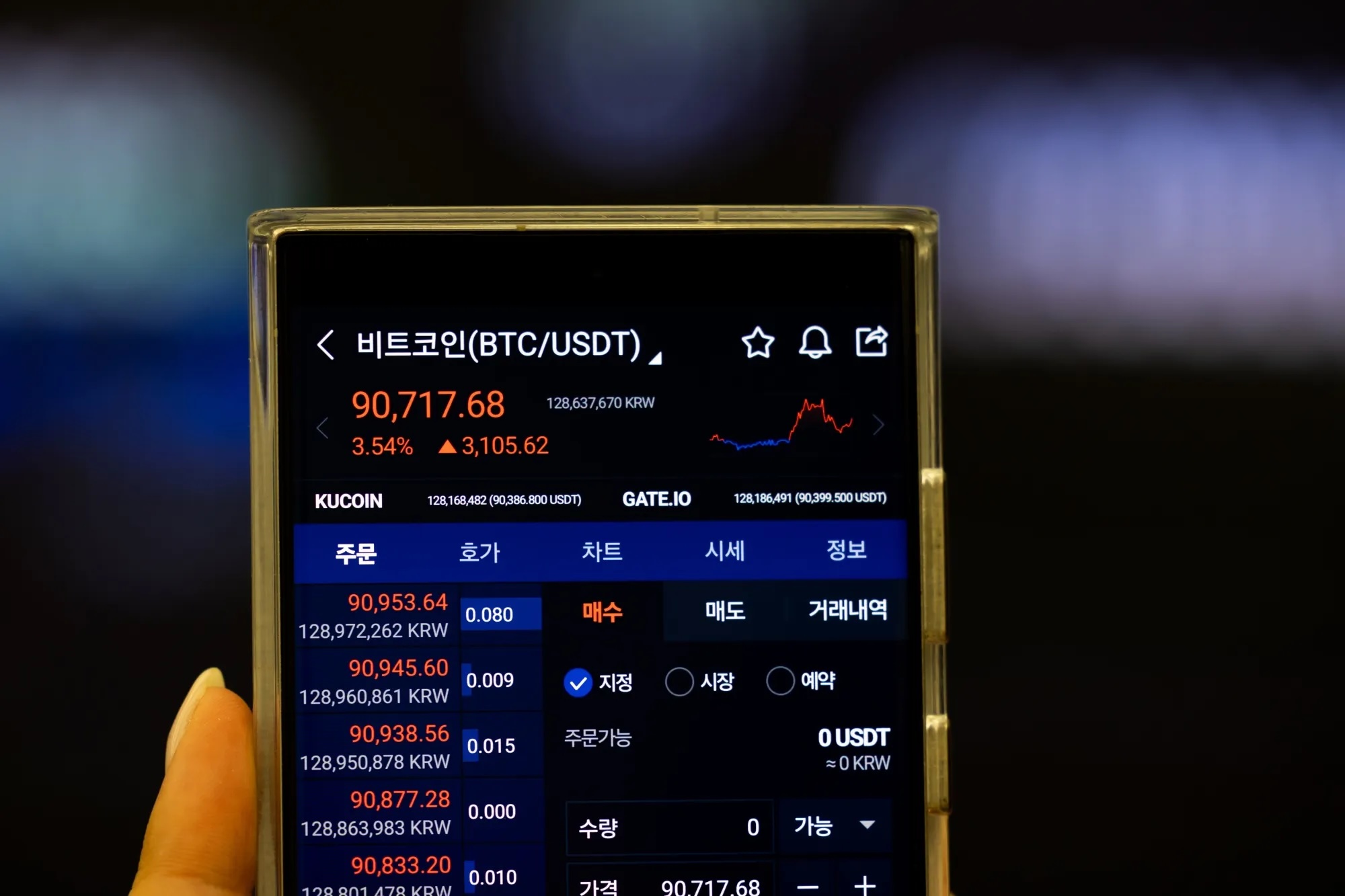
В QCP Capital допустили продолжение коррекции рынка в сентябре

cryptonews.ruPublished on 2023-01-02Last updated on 2024-09-02

Аналитики QCP Capital обратили внимание на существенное отставание Ethereum от первой криптовалюты в августе и предупредили, что в сентябре снижение рынка может продолжиться. Об этом пишет The Block.

«Биткоин завершил август падением на 8,6%. Мы начали месяц с “краха Банка Японии”, цифровое золото так и не смогло подняться выше $65 000. Результаты Ethereum оказались существенно хуже — спад на 22% на фоне предполагаемых продаж со стороны Jump Trading», — отметили эксперты.

В QCP Capital также указали на неудовлетворительные показатели спотовых ETF в США. Инструменты на основе биткоина показали относительно слабые результаты, а продукты на базе Ethereum после запуска большинство дней фиксировали оттоки.

Аналитики добавили, что в сентябре может продолжиться медвежий тренд на основные криптовалюты:

«Исторически сезонность сентября медвежья: шесть из последних семи периодов демонстрировали негатив, а средняя доходность составляла -4,5%, что выведет нас примерно на $55 000 [за биткоин], если мы увидим то же самое в этом месяце».

По мнению исследователей, уровень около $54 000 является поддержкой, когда актив отскочил от него в июле перед ростом.

«Мы ожидаем, что кривая волатильности станет еще круче, поскольку фронтальные показатели снижаются в условиях боковика. В то же время все больше лонг-коллов появляется на более поздний срок до марта как для биткоина, так и для эфира», — подчеркнули в QCP Capital.

На момент написания первая криптовалюта торгуется по $58 500 (-7,9% за неделю), а Ethereum — по $2500 (-7,1%).

Ранее аналитик Real Vision Джейми Коуттс спрогнозировал «безумный сезон» цифрового золота с целью в $150 000.

Напомним, в BiTBO отметили снижение дохода биткоин-майнеров до 11-месячного минимума.

Trending Cryptos

Related Reads

South Korean Institutions' Crypto Race: Dual Explosion of Stablecoins and RWA

**Summary: South Korea's Institutional Crypto Race: Stablecoins and RWA Take Off** South Korea is undergoing a structural shift in its crypto ecosystem, moving beyond its historical role as a major retail trading hub. Major financial institutions and internet platforms are now building institutional-grade blockchain infrastructure, with stablecoins and Real-World Asset (RWA) tokenization as the primary drivers. The push for a regulated Korean won stablecoin market is a major policy and corporate focus. This is driven partly by an estimated $115 billion outflow into dollar stablecoins like USDC, threatening the domestic financial system. Banks (e.g., KB Financial, Hana), payment giants (e.g., Shinhan Card, BC Card), and internet super-apps (KakaoPay, NAVER Pay) are all conducting pilots. The goal is to anchor future digital finance to the Korean won and local regulations. In RWA, South Korea is advancing rapidly within regulatory sandboxes, focusing on unique domestic assets beyond typical global templates like US Treasuries. Projects involve tokenizing ships (with Hyundai Heavy Industries), defense supply chain assets, and K-pop intellectual property, alongside more conventional assets. A legal framework is set for 2027, and platforms like NXT are preparing for regulated trading. Key opportunities for crypto-native projects lie in providing the underlying technology these traditional institutions lack: global distribution channels for tokenized assets, cross-chain liquidity solutions, and enabling infrastructure tools (e.g., for asset packaging and management). Partnerships, such as Solana with Shinhan Card or LayerZero with the Korea Gold Exchange, exemplify this proactive approach. Crucially, user access is being shaped by consumer platforms. NAVER's planned acquisition of Upbit's operator Dunamu and Kakao's development of a unified wallet aim to seamlessly integrate crypto with everyday payments for tens of millions of users. The race is now about which protocols and projects will become the foundational standards as regulation solidifies and institutional adoption accelerates.

Foresight News1h ago

South Korean Institutions' Crypto Race: Dual Explosion of Stablecoins and RWA

Foresight News1h ago

How to Detect AI-Generated Videos? A Review of Dynamic, Traceable, and Explainable Detection Systems

**How to Detect AI-Generated Videos: A Survey on Dynamic, Traceable, and Explainable Detection Systems** With rapid advances in AI video generation (e.g., Sora, Veo), creating highly realistic, multi-minute videos is now possible, widening the gap with detection research. Current AI video detection, often limited to unreliable binary classifications, is insufficient. This survey, accepted at ACL 2026, reframes the goal as **"factual fidelity verification"**—checking if a video's content (who, when, where, what) aligns with the real world perceptually and cognitively. It categorizes AI-generated videos into three paradigms: **Local Manipulation Videos (LMV**, e.g., face swaps), **Audio-Visual Editing (AVE**, e.g., lip-syncing), and **Generative Video Synthesis (GVS**, fully synthetic videos like Sora's). Detection challenges evolve from visual artifacts in LMV to multi-modal inconsistencies in AVE and higher-level world knowledge violations in GVS. The core proposal is a **Vision-Language Dual-View framework** with four hierarchical layers: 1. **Layer 1 (Intrinsic Visual Cues):** Analyzes low-level signal statistics, noise patterns, and physiological signals. 2. **Layer 2 (Spatiotemporal Consistency):** Checks for temporal coherence in object motion and scene dynamics. 3. **Layer 3 (Cross-Modal Consistency):** Verifies alignment between video, audio, and text within the video. 4. **Layer 4 (Language-Guided World-Level Reasoning):** Uses external knowledge, facts, and physical laws to judge semantic plausibility and factual correctness. The survey traces a shift in detection focus from lower layers (1 & 2) toward higher, language-involved layers (3 & 4). It also reviews evolving evaluation metrics and datasets tailored for each video paradigm. The conclusion advocates for a **dynamic, evidence-first detection system** that moves beyond simple classification. Future trustworthy detection requires combining visual evidence (from CV) with semantic reasoning and explanation (from NLP & multimodal AI), ultimately creating traceable and explainable judgments about a video's adherence to real-world constraints.

marsbit1h ago

How to Detect AI-Generated Videos? A Review of Dynamic, Traceable, and Explainable Detection Systems

marsbit1h ago

Trading

Spot

Hot Articles

Discussions

Welcome to the HTX Community. Here, you can stay informed about the latest platform developments and gain access to professional market insights. Users' opinions on the price of ETH (ETH) are presented below.

活动图片