分析师表示,Base Dawgz可能是下一个布雷特人

币界网Pubblicato 2024-08-10Pubblicato ultima volta 2024-08-10

币界网报道:

看起来布雷特可能会有一些竞争。

每个人都在谈论Base Layer-2网络上的新Base Dawgz(Dawgz)模因币。

一位顶级分析师甚至表示,一旦今年晚些时候在交易所上市,它可能会追随布雷特的脚步。

Base Dawgz——具有多链能力的新型Meme币

那么,为什么围绕着Dawgz基地大肆宣传呢?

这不仅仅是关于它的可爱狗主题——这个项目背后有一些真正的实质。

首先,DAWGZ托管在Base区块链上,最近引起了巨大的轰动。

然而,该代币并不局限于一条链。

开发人员正在采取多链方法,这意味着DAWGZ可以轻松地跨多个区块链移动。

想象一下,您可以在几秒钟内将DAWGZ代币从Base转移到Solana、Avalanche或以太坊。

这就是开发商提供的。

这种多链设置是Base Dawgz的关键特性,但还有其他因素增加了代币的吸引力。

例如,它有一个质押协议,提供924%的APY。

已经质押了超过1.82亿DAWGZ代币,占预售代币总数的33%。

Base Dawgz还有一个“分享赚钱”功能,可以奖励社区成员在社交媒体上分享病毒式内容的更多Dawgz代币。

最终,这是一个独特的生态系统,将模因和效用结合在一起,产生了巨大的效果。

DAWGZ在高调分析师的支持下获得关注

Base Dawgz在预售阶段筹集了280多万美元。

该团队对未来有着雄心勃勃的计划,包括从一开始就在DEX上市,并暗示在CEX上市。

此外,他们还将代币总供应量的20%用于流动性,这对价格稳定来说是一个好兆头。

但这就是事情变得有趣的地方。

加密货币分析师Matthew Perry最近在YouTube上发布了一段关于Base Dawgz的视频,引起了所有人的关注。

佩里拥有超过225000名订阅者,所以当他讲话时,人们会倾听。

佩里在视频中称DAWGZ为“下一个BRETT硬币”

他看到了一些主要的相似之处:这两种硬币都托管在Base上,它们都有值得模因的能量,而且它们的社区正在快速增长。

佩里的支持对道兹基地来说是一个巨大的推动。

BRETT今年的成功证明了Base上模因币的潜力,如果DAWGZ能够抓住这一势头的一小部分,预售投资者可能会获得一些可观的收益。

坚实的令牌组学和路线图定位基础,为长期成功奠定基础

Base Dawgz的代币经济学结构也很好。

该团队为预售投资者和质押奖励留出了20%的资金。

其余的代币专门用于营销、社区奖励和上市——这种设置表明了一种长期愿景,而不是快速的现金掠夺。

Base Dawgz的路线图同样令人印象深刻,其中包括营销活动、CMC列表和额外奖励的计划。

围绕该项目路线图的兴奋已经蔓延到社交媒体上。

Base Dawgz现在在推特和一个拥有8000名成员的Telegram频道上拥有5500多名粉丝。

重要的是,DAWGZ的智能合约已经过SolidProof的审计,并收到了一份清洁健康法案。

这是模因币领域的关键,在这个领域,拉地毯很常见。

考虑到这一切,Matthew Perry说DAWGZ可能是下一个BRETT是对的吗?

鉴于DAWGZ的预售资金、不断增长的社区和多链功能,这些迹象是有希望的。

此外,它是在Base而不是以太坊或Solana上托管的少数模因币之一。

如果团队能够保持这种势头,DAWGZ可能会成功结束到2024年。

参观Dawgz预售基地

免责声明:以上文章为赞助内容;它是由第三方写的。CryptoPotato不对本页面上的内容、广告、产品、质量、准确性或其他材料进行背书或承担责任。其中的任何内容都不应被解释为财务建议。强烈建议读者在参与任何提及的公司或项目之前,独立、仔细地核实信息,并进行自己的研究。投资加密货币存在资金损失的风险,建议读者在做出任何可能基于或可能不基于上述赞助内容的决定之前咨询专业人士。

建议读者阅读CryptoPotato的完整免责声明。

Letture associate

The Unaffordable Failure of Yushu's IPO

Yushu Robotics' IPO is not just a typical public offering; it represents a pivotal moment for China's humanoid robot industry. With a staggering 219x P/E ratio at issuance and immense market enthusiasm, the company's listing is seen as a critical test case for the entire sector. The IPO reveals Yushu's rapid transition from quadruped consumer robots to humanoid robots, which now account for over 50% of its revenue, alongside a shift to profitability. The offering was massively oversubscribed, with retail investors scrambling for scarce shares, while the majority of the stock is held by locked-up strategic investors like DeepSeek. The core tension lies in the market's valuation. Investors are not buying Yushu's current profits but its future potential as a leader in general-purpose humanoid hardware. However, challenges are evident: revenue heavily depends on research/education clients rather than industrial applications, selling prices are falling faster than costs, and the company is still developing its own AI "brain" for true autonomous decision-making. As the first major humanoid robot company on China's A-share market, Yushu's post-listing performance will set a valuation benchmark for the industry. A wide range of stakeholders, from venture capitalists to strategic partners, have a vested interest in its success. The real test, however, will be Yushu's ability to transition its sales to core industrial clients, maintain margins amid price competition, and successfully integrate advanced AI, thereby justifying its premium valuation.

marsbit17 min fa

The Unaffordable Failure of Yushu's IPO

marsbit17 min fa

Indices Strong, Natural Gas Soars | TradeXYZ Weekend Market Watch

Weekend Market Observations: Indices Show Strength, Natural Gas Surges Key regional developments centered on Iran. Iran and Oman indicated negotiations over reopening a key shipping channel are nearing completion, with Oman calling for a halt to military actions to facilitate an agreement. However, talks are stalled as Iran has raised its demands, linking Strait reopening to conditions like US sanctions relief, troop withdrawal, and war reparations—terms previously associated with nuclear talks. Iran's Revolutionary Guard stated it will maintain control until all demands are met. In response, the US administration has adopted a lower-key approach, describing a state of "semi-negotiations" while observing Iran's economic pressures. Amid this, reported attacks on a Saudi refinery and an Emirati vessel added to regional tensions. **Crude Oil & Indices:** Crude oil (CL) experienced volatility, initially dipping on comments from Iran's president before recovering. Prices later rose toward $79 after the US signaled a shift toward economic pressure over military escalation. Major equity indices (SP500, XYZ100) posted modest gains (0.13%, 0.22% respectively), demonstrating resilience despite rising oil prices. **Individual Stocks:** The market saw mixed sector performance. Memory stocks were divided (Micron up, SK Hynix down). The optical communications sector was strongest, with MRVL and LITE both gaining around 2.4%. Crypto-related stocks rebounded in pre-market trading after an early dip, closing higher. **Commodity Futures:** Precious and industrial metals (gold, silver, copper) advanced over the weekend, with futures showing V-shaped recoveries. The standout performer was natural gas, surging 3.10% at the open. The primary driver is a forecast for sustained hotter weather into mid-August across the southern and eastern US, boosting power generation demand. This is compounded by tighter supply margins due to pipeline maintenance, a slight dip in dry gas production, and high utilization of LNG export terminals.

marsbit23 min fa

Indices Strong, Natural Gas Soars | TradeXYZ Weekend Market Watch

marsbit23 min fa

Bitcoin Withstood 10 Bearish Blows in 2026, Yet Experienced Its Mildest Bear Market

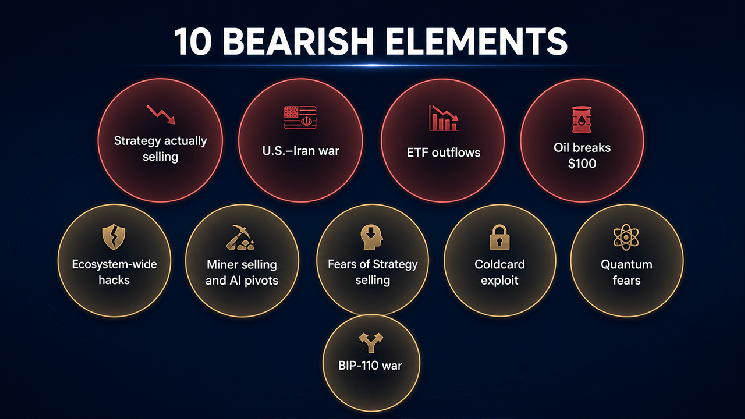
Bitcoin, the leading cryptocurrency by market cap, peaked above $126,000 in early October before entering a prolonged decline. By August, it was mainly trading between $63,000 and $65,400, inflicting losses on late buyers but resulting in what is, historically for Bitcoin, an unusually shallow bear market—down about 49% from its peak, compared to typical 75-80% plunges. Throughout 2026, Bitcoin faced multiple headwinds yet demonstrated notable resilience. Geopolitical tensions in the Middle East and volatile oil prices revived inflation concerns but failed to trigger the panic-driven sell-offs seen in prior cycles. A significant psychological blow came from corporate seller MicroStrategy, a longtime accumulator, which began strategic sales to bolster its cash position, reducing its holdings. U.S. spot Bitcoin ETFs also faced sustained outflows, though a late-week inflow hinted at potential relief. Pressure also came from within the ecosystem. A contentious blockchain proposal, BIP-110, failed after a minority chain stalled. Miners, facing tighter economics, sold reserves and pivoted infrastructure toward AI. A major security breach involving Coldcard hardware wallets saw an estimated 2,000 BTC stolen, shaking confidence in self-custody. Long-term threats like quantum computing resurfaced in discussions. Despite this confluence of corporate selling, ETF outflows, miner capitulation, geopolitical shocks, internal conflict, and security issues—any one of which could historically cause sharp declines—Bitcoin stubbornly held above a key $60,000 support level. Deeper market liquidity, regulated products, and long-term holders appear to be absorbing selling pressure that once would have caused deeper crashes. This resilience suggests a maturing market structure, though risks remain. Another shock could still push Bitcoin toward $50,000. For now, its 49% decline, severe for most assets, is relatively moderate by Bitcoin's own volatile standards. The remaining months of 2026 will test whether $60,000 is a durable floor or merely the next major line of defense.

cryptonews.ru1 h fa

Bitcoin Withstood 10 Bearish Blows in 2026, Yet Experienced Its Mildest Bear Market

cryptonews.ru1 h fa

Trading

Spot
活动图片