ETF 推出后 ETH 短期走跌,但质押获批和 UX 升级将成为长期催化剂

深潮Published on 2024-07-26Last updated on 2024-07-26

以太坊即将迎来的两个重要催化剂:质押标准公布和下一个硬分叉。

作者:The DeFi Investor

编译:深潮TechFlow

以太坊的未来展望

现货以太坊 ETF 终于面世了。

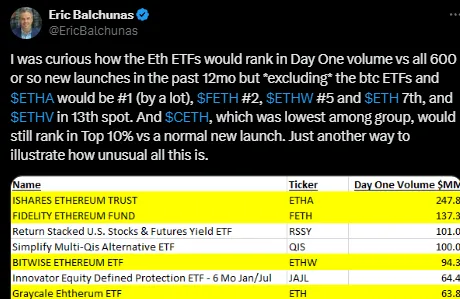
从初期的交易量来看,这次推出相当成功。

然而,正如我们所见,ETH 在推出后开始下跌。

在本期文章中,我将讨论这背后的原因,ETH 价格的未来走势,以及以太坊即将迎来的两个重要催化剂。

我对 ETH 价格走势的预期

我认为,ETH 目前表现不如 BTC 的主要有两个原因:

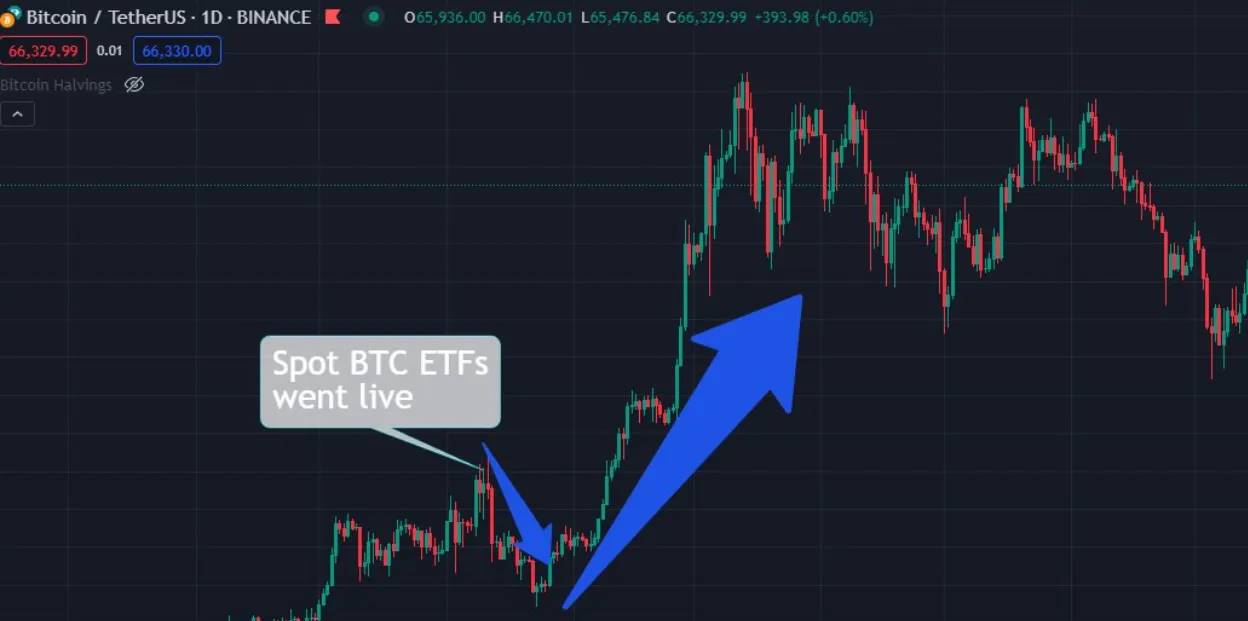
  • 现货 ETH ETF 的推出是一个“卖消息”事件:这种现象在现货 BTC ETF 推出后短期内也发生过。

由于现货 ETH ETF 几个月前就获得批准,所有想要购买 ETH 的人都有足够的时间这样做。因此,提前知道的催化剂往往会成为“卖消息”事件。

  • ETH ETF 的推出解锁了 Grayscale 以太坊信托基金中的 90 亿美元 ETH:这些 ETH 被锁定了多年,现在持有者终于可以出售,因此很多人正在抛售。

那么这次下跌需要多长时间才能结束呢?

在 BTC 的案例中,现货 BTC ETF 推出后约两周触底。之后,价格横盘几天,然后创下历史新高。

如果未来几周对现货以太坊 ETF 的需求很高,ETH 也可能会出现类似情况。但要实现这一点,ETH ETF 的净流量需要转正。

例如,昨天由于 Grayscale 以太坊信托基金的抛售压力,ETH ETF 出现了 1.33 亿美元的流出

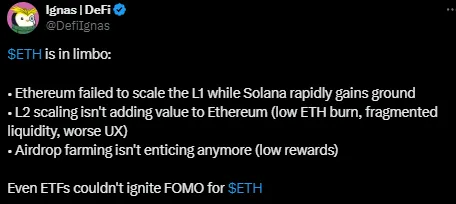
短期内对 ETH 也有一些合理的担忧:

以太坊即将迎来的催化剂

我还想谈谈以太坊即将迎来的两个重要催化剂。

第一个是以太坊 ETF 质押的批准。这可能会显著增加对现货以太坊 ETF 的需求。虽然每年约 3.2% 的 ETH 质押收益率看起来不多,但由于 ETH 的年通胀率较低,并且质押可以获得收益,这可能会使 ETH 比 BTC 对某些机构更具吸引力。

根据 SEC 委员的说法,以太坊 ETF 质押“始终可以重新考虑”,因此其批准只是时间问题。

第二个催化剂是 Pectra 的发布,这是以太坊的下一个硬分叉。这一重大升级预计将在今年第四季度末或 2024 年第一季度进行。Pectra 将引入几个重大变化:

  • 使以太坊账户地址更加可编程

  • 将 ETH 验证者的最大质押从 32 增加到 2048 ETH

通过使以太坊账户地址更加可编程,Pectra 将带来显著的链上用户体验改进。

例如,它将支持批量发送交易、开发钱包的社交恢复功能,并允许 dApp 支付用户的 gas 费用。这样的用户体验升级是加密货币实现大规模采用所需要的。

Trending Cryptos

Related Reads

South Korean Institutions' Crypto Race: Dual Explosion of Stablecoins and RWA

**Summary: South Korea's Institutional Crypto Race: Stablecoins and RWA Take Off** South Korea is undergoing a structural shift in its crypto ecosystem, moving beyond its historical role as a major retail trading hub. Major financial institutions and internet platforms are now building institutional-grade blockchain infrastructure, with stablecoins and Real-World Asset (RWA) tokenization as the primary drivers. The push for a regulated Korean won stablecoin market is a major policy and corporate focus. This is driven partly by an estimated $115 billion outflow into dollar stablecoins like USDC, threatening the domestic financial system. Banks (e.g., KB Financial, Hana), payment giants (e.g., Shinhan Card, BC Card), and internet super-apps (KakaoPay, NAVER Pay) are all conducting pilots. The goal is to anchor future digital finance to the Korean won and local regulations. In RWA, South Korea is advancing rapidly within regulatory sandboxes, focusing on unique domestic assets beyond typical global templates like US Treasuries. Projects involve tokenizing ships (with Hyundai Heavy Industries), defense supply chain assets, and K-pop intellectual property, alongside more conventional assets. A legal framework is set for 2027, and platforms like NXT are preparing for regulated trading. Key opportunities for crypto-native projects lie in providing the underlying technology these traditional institutions lack: global distribution channels for tokenized assets, cross-chain liquidity solutions, and enabling infrastructure tools (e.g., for asset packaging and management). Partnerships, such as Solana with Shinhan Card or LayerZero with the Korea Gold Exchange, exemplify this proactive approach. Crucially, user access is being shaped by consumer platforms. NAVER's planned acquisition of Upbit's operator Dunamu and Kakao's development of a unified wallet aim to seamlessly integrate crypto with everyday payments for tens of millions of users. The race is now about which protocols and projects will become the foundational standards as regulation solidifies and institutional adoption accelerates.

Foresight News18m ago

South Korean Institutions' Crypto Race: Dual Explosion of Stablecoins and RWA

Foresight News18m ago

How to Detect AI-Generated Videos? A Review of Dynamic, Traceable, and Explainable Detection Systems

**How to Detect AI-Generated Videos: A Survey on Dynamic, Traceable, and Explainable Detection Systems** With rapid advances in AI video generation (e.g., Sora, Veo), creating highly realistic, multi-minute videos is now possible, widening the gap with detection research. Current AI video detection, often limited to unreliable binary classifications, is insufficient. This survey, accepted at ACL 2026, reframes the goal as **"factual fidelity verification"**—checking if a video's content (who, when, where, what) aligns with the real world perceptually and cognitively. It categorizes AI-generated videos into three paradigms: **Local Manipulation Videos (LMV**, e.g., face swaps), **Audio-Visual Editing (AVE**, e.g., lip-syncing), and **Generative Video Synthesis (GVS**, fully synthetic videos like Sora's). Detection challenges evolve from visual artifacts in LMV to multi-modal inconsistencies in AVE and higher-level world knowledge violations in GVS. The core proposal is a **Vision-Language Dual-View framework** with four hierarchical layers: 1. **Layer 1 (Intrinsic Visual Cues):** Analyzes low-level signal statistics, noise patterns, and physiological signals. 2. **Layer 2 (Spatiotemporal Consistency):** Checks for temporal coherence in object motion and scene dynamics. 3. **Layer 3 (Cross-Modal Consistency):** Verifies alignment between video, audio, and text within the video. 4. **Layer 4 (Language-Guided World-Level Reasoning):** Uses external knowledge, facts, and physical laws to judge semantic plausibility and factual correctness. The survey traces a shift in detection focus from lower layers (1 & 2) toward higher, language-involved layers (3 & 4). It also reviews evolving evaluation metrics and datasets tailored for each video paradigm. The conclusion advocates for a **dynamic, evidence-first detection system** that moves beyond simple classification. Future trustworthy detection requires combining visual evidence (from CV) with semantic reasoning and explanation (from NLP & multimodal AI), ultimately creating traceable and explainable judgments about a video's adherence to real-world constraints.

marsbit55m ago
How to Detect AI-Generated Videos? A Review of Dynamic, Traceable, and Explainable Detection Systems

marsbit55m ago

It Turns Out the First Real-World Application of AI x Crypto is in Security Auditing

The article explores the surprising trend where AI's first major impact on crypto has been in security auditing, not in areas like trading or analytics. It details how AI-powered tools are dramatically lowering the barrier to finding smart contract vulnerabilities, enabling attackers to scan thousands of contracts and execute exploits within minutes. This has rendered traditional, manually-produced audit reports with their month-long validity periods increasingly obsolete, creating a critical "structural crack" in the old security model. Cases like Drift Protocol and KelpDAO show that even extensively audited protocols can be hacked through social engineering, operational flaws, or infrastructure misconfigurations beyond pure code review. Attackers are also using AI to find and exploit vulnerabilities in years-old, deployed contracts. Notably, OpenZeppelin's co-founder has expressed a grim view that "all DeFi is insecure" due to AI's asymmetric advantage. In response, the audit industry is undergoing a fundamental shift. While there's a short-term spike in defensive re-audits, the long-term business model is changing. Firms are developing AI-assisted systems and moving from one-time report deliveries towards embedded, continuous services like real-time monitoring and formal verification. Examples include AI tools uncovering critical, previously missed vulnerabilities in heavily audited protocols like Curve Finance and Zcash. The conclusion is that security must become a continuous investment, not a one-time checkbox, and audit firms must rapidly evolve their tools and service models to survive.

marsbit1h ago

It Turns Out the First Real-World Application of AI x Crypto is in Security Auditing

marsbit1h ago

Trading

Spot

Hot Articles

Discussions

Welcome to the HTX Community. Here, you can stay informed about the latest platform developments and gain access to professional market insights. Users' opinions on the price of ETH (ETH) are presented below.

活动图片