Author: Deep Tide TechFlow
While Xiaohongshu (Little Red Book) continues to glorify the "get-rich-quick myths" and "six-figure annual salaries" of Web3, what is the true state of the crypto industry?
Through 506 survey questionnaires, we engaged in a candid conversation with industry practitioners. The results were surprising, even somewhat brutal: This is not a land paved with gold. Over 70% of respondents earn less than $4,000 per month, a figure generally lower than in developed regions like Europe and the US. Even a quarter of respondents are in a state of "paying to work," experiencing overall losses. There is also a lack of proper safeguards; nearly half have experienced layoffs, and most did not receive N+1 severance compensation.
Yet, despite this, over 80% choose to stay. Is it because of the freedom of remote work enjoyed by 70%? Or is it because of the shared dream of "retiring with $5 million"?
In this report, we attempt to look beyond the cold data to reveal the most authentic anxieties, desires, and survival strategies of Web3 workers.
This content is the questionnaire results section of the "Web3 Recruitment & Job Hunting 2025 Year-End Review: Who's Making Money, Who's Paying to Work?" Full report available at:
https://www.techflowpost.com/article/detail_29702.html
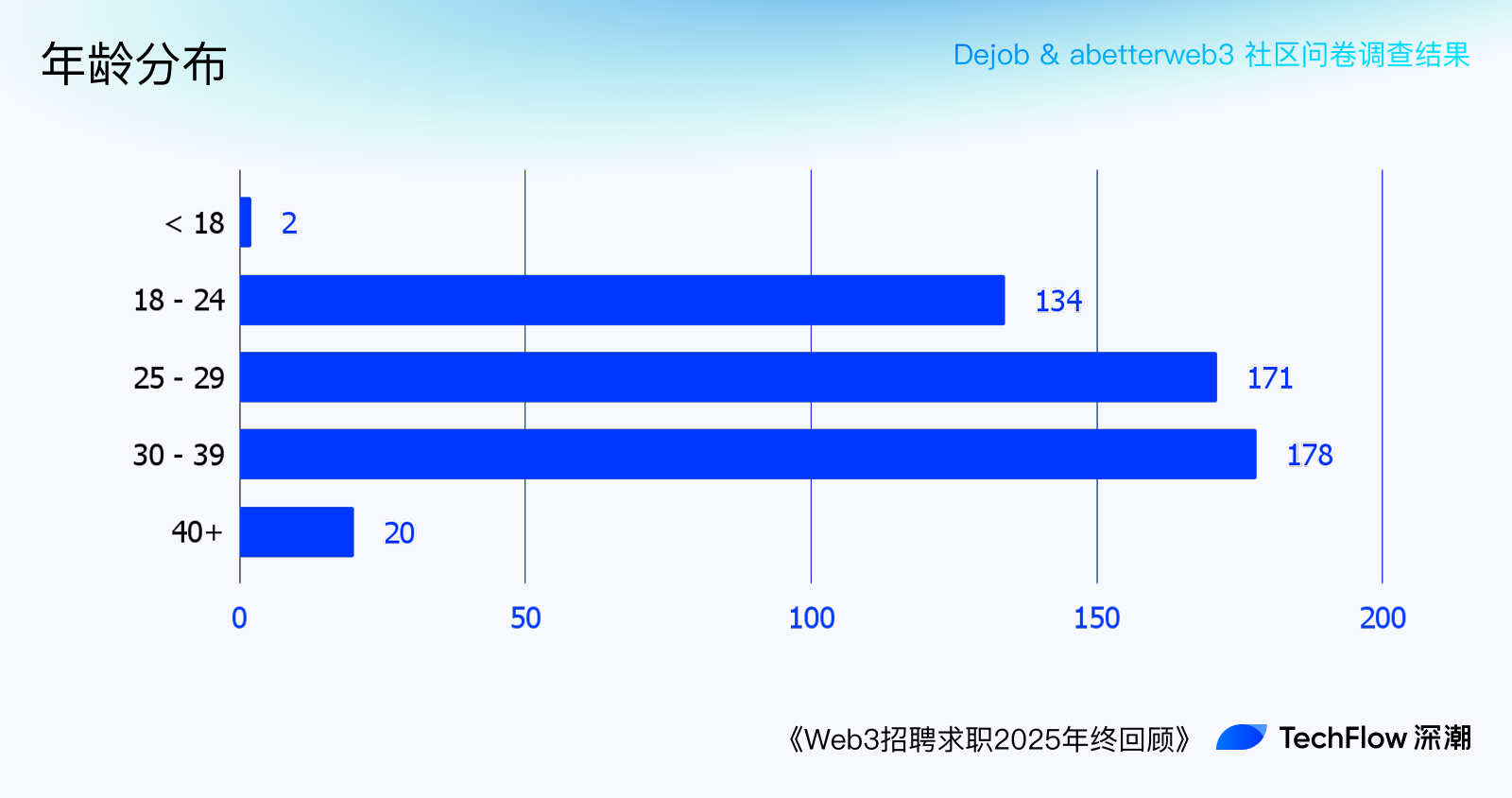
Regarding age distribution, the main workforce aged 18-29 is indeed the majority, but middle-aged practitioners (>30 years old) are also quite numerous. This might be related to the less severe "age 35 ceiling" in the Web3 industry. Compared to internet companies, Web3 companies value experience, capability, and efficiency more, with many hoping that seasoned professionals can quickly build products "ready to use."
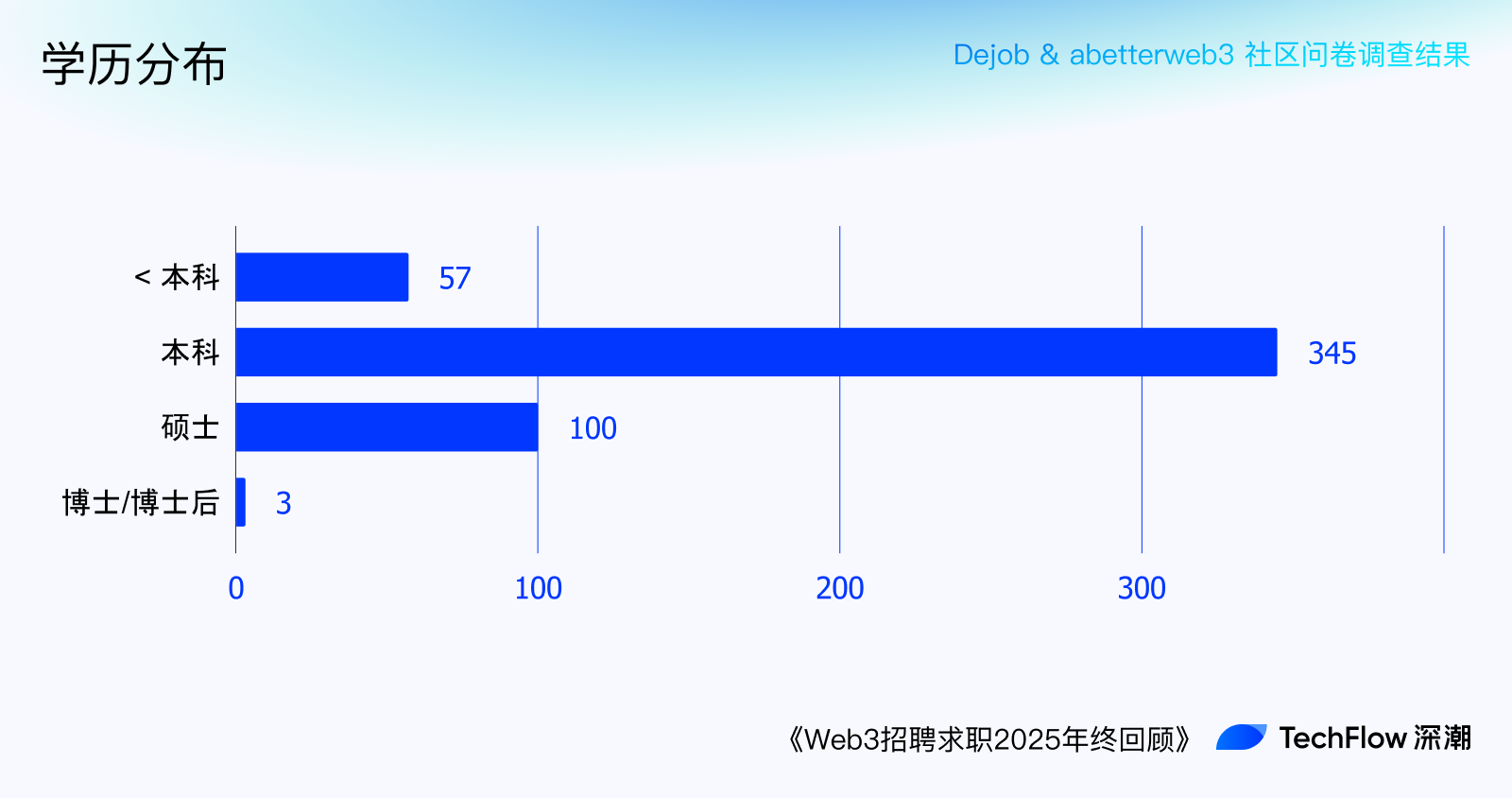
The distribution of educational backgrounds is largely consistent with the earlier talent data statistics, predominantly undergraduate degrees. There are individuals with less than a bachelor's degree as well as master's and PhD holders, though the proportion of postgraduates is not high.
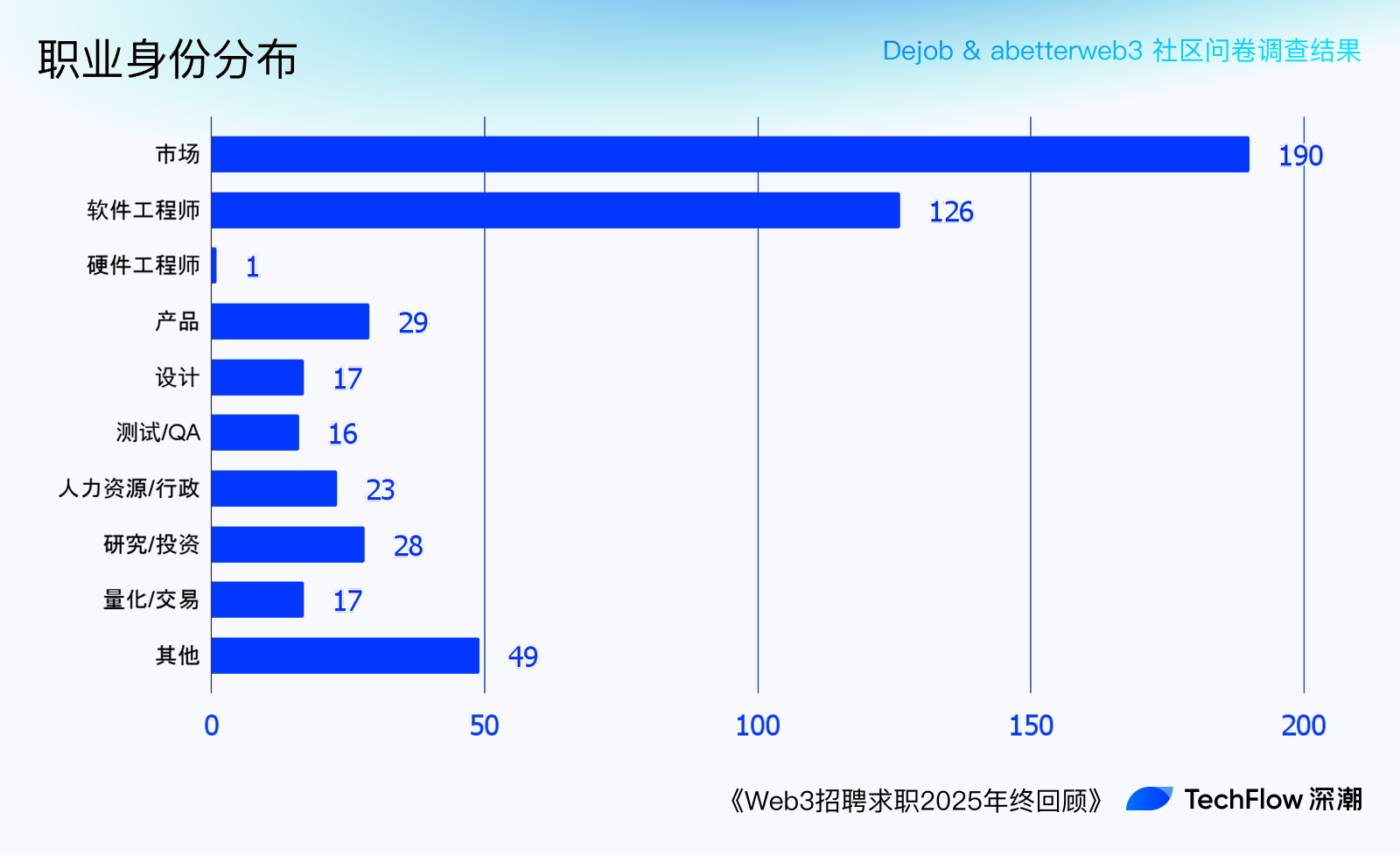
In terms of professional roles, the largest group is in market-related functions (Operations/BD/Customer Service, etc.), followed by developers (Frontend/Backend/Smart Contracts/Blockchain, etc.). These are followed by Product, Human Resources, Investment Research, Design, Trading, etc. Among the "Other" submissions, common entries were Risk Control & Security, KOLs, etc.
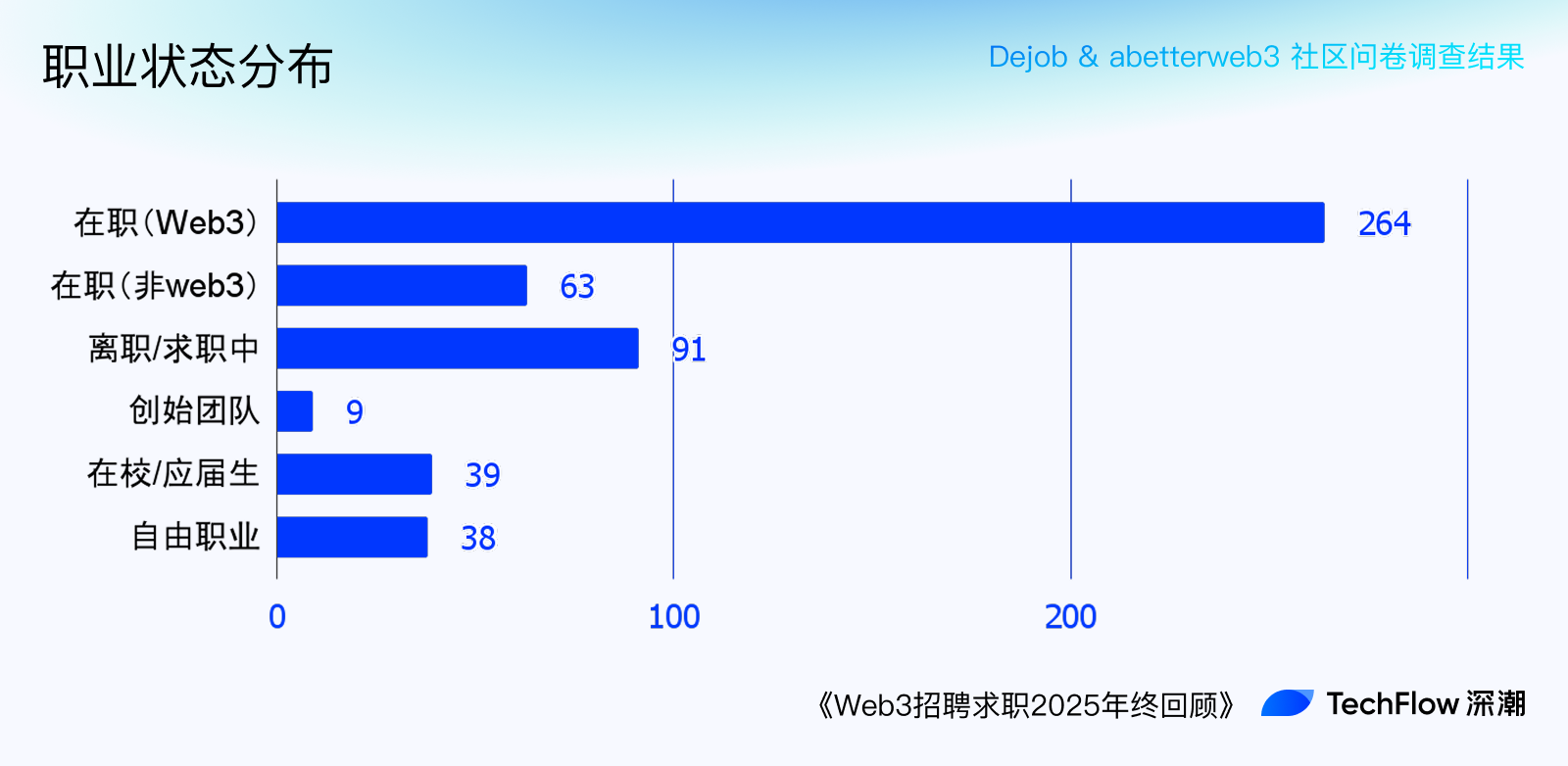
Regarding employment status, only 52% of respondents are employed in Web3. Over 30% are in a more flexible life situation. This indicates, on one hand, that market conditions affecting company headcount (HC) have impacted many; on the other hand, it might be because certain unique business models in Web3 (like being a KOL or trader) have made a regular job less necessary for generating cash flow for some individuals.
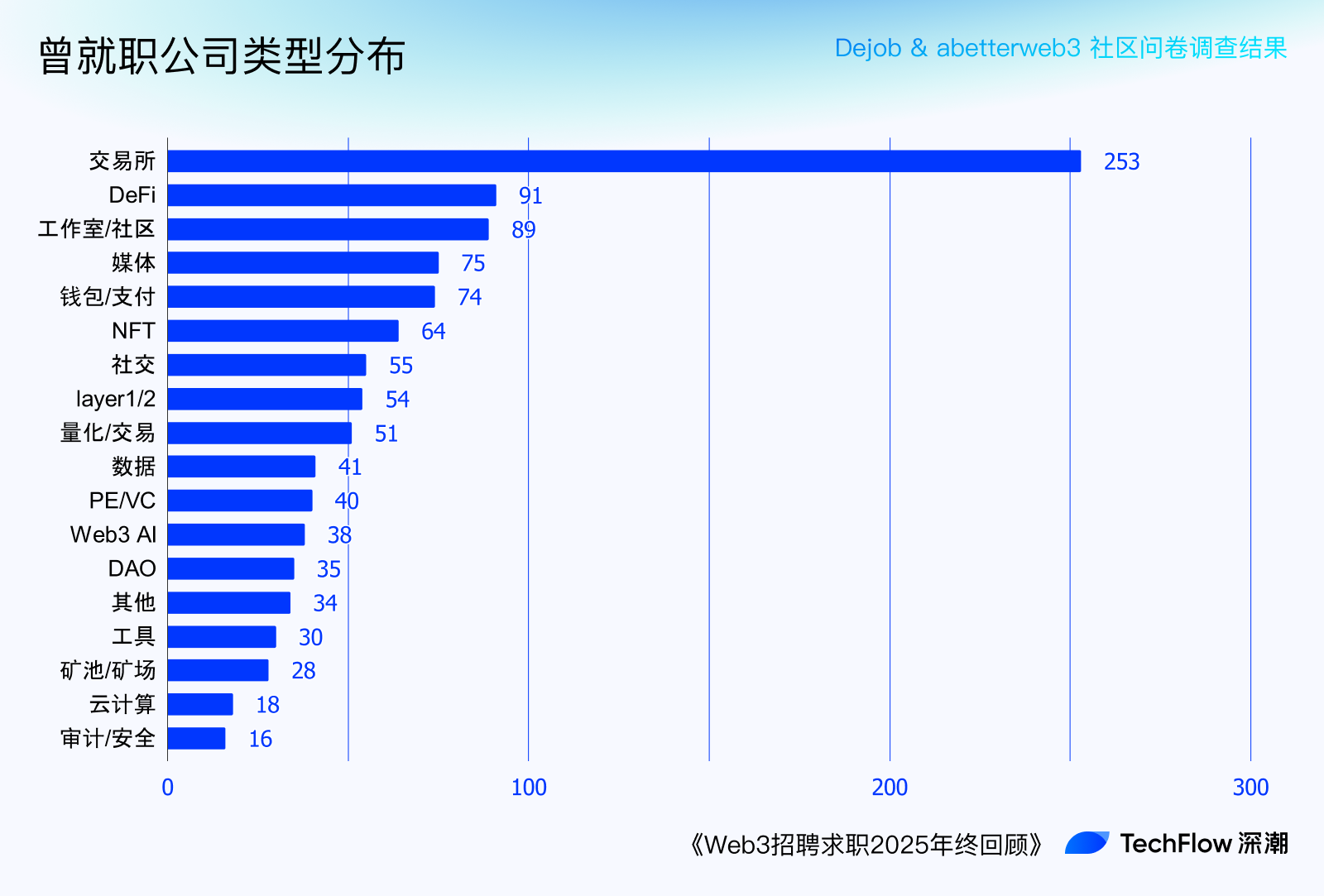
Over half of the submissions indicated having worked at an exchange, followed by studios/communities, DeFi, media, wallets, and other common business types. Both talent and job providers converge with absolute Matthew Effect intensity towards exchanges. This also reflects, to some extent, the current industry dilemma: apart from exchanges, the revenue-generating capabilities of most other business models generally decrease from C-end -> tools -> infrastructure.
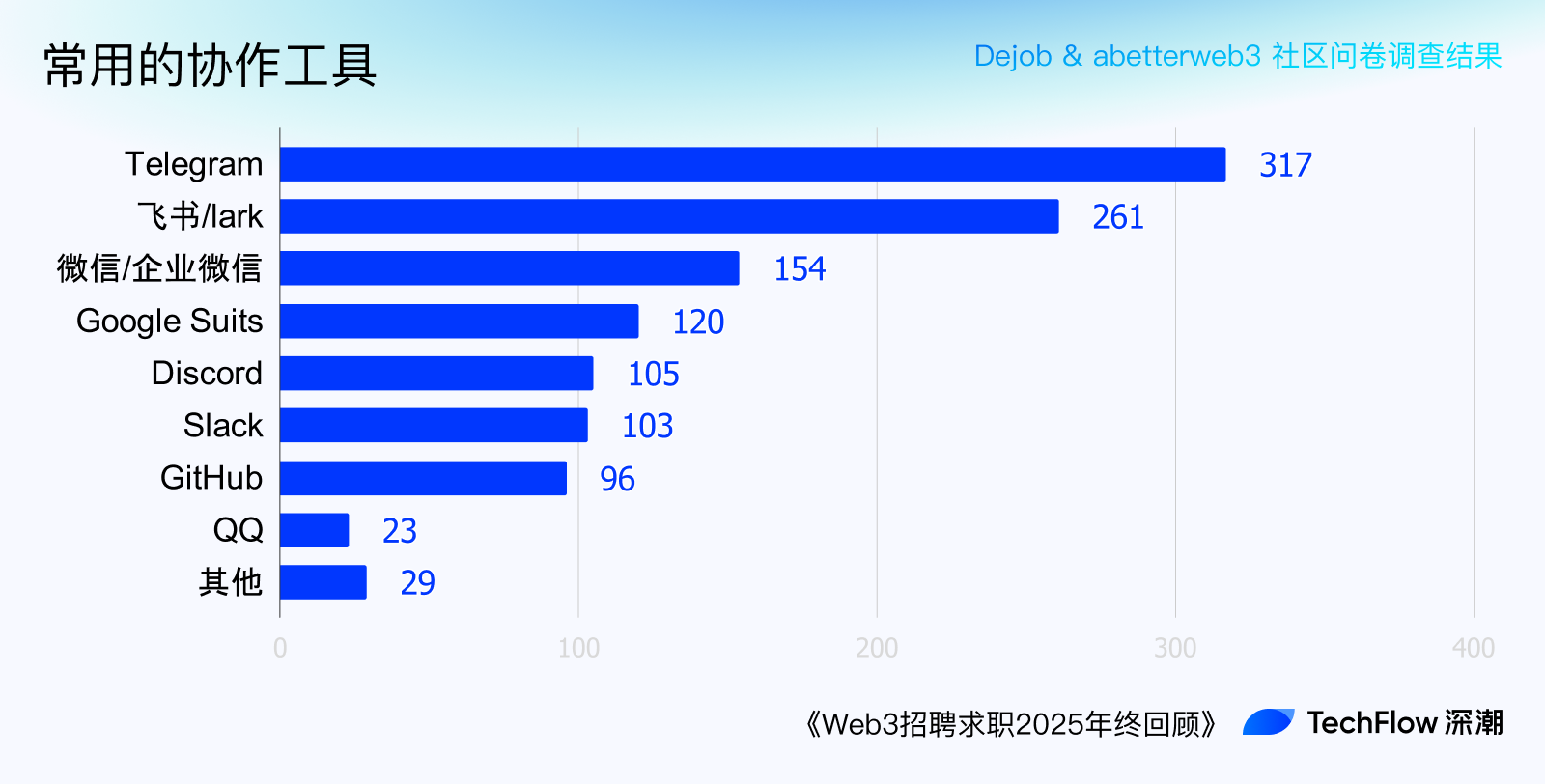
Regarding remote collaboration tools, as this survey took place within a Chinese-language vertical Web3 recruitment community, Telegram is favored by most companies for its confidentiality and usability, followed by mainstream domestic tools like Feishu and WeChat, and finally tools commonly used by foreign companies like Google Suites, Discord, Slack, etc.
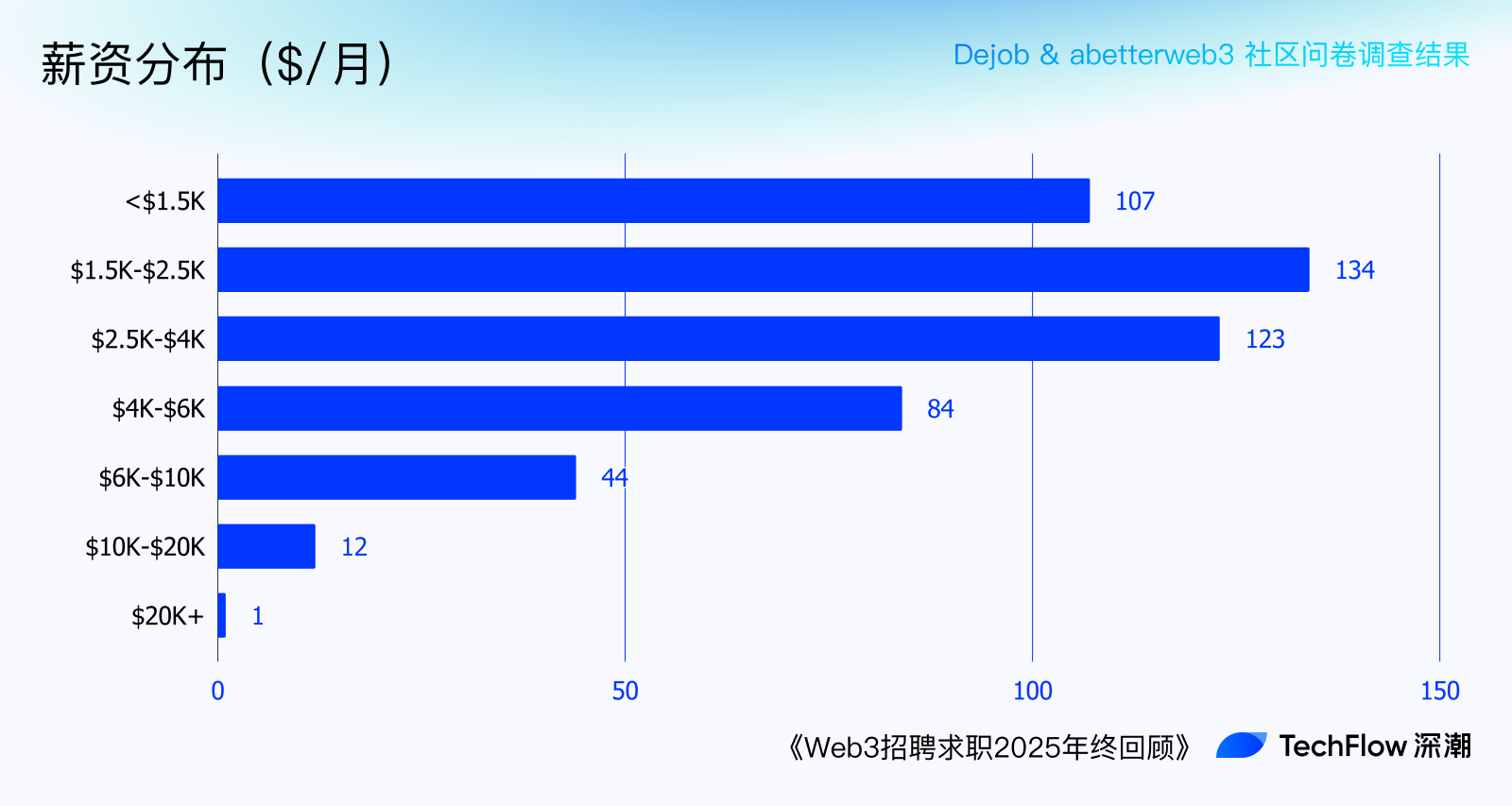
In terms of income levels, contrary to the external myths of immense wealth, most Web3 workers' incomes are not only lower than those in most top internet companies but also severely lacking in long-term incentives (tokens/equity), year-end bonuses, and layoff compensation.
Over 70% have a monthly salary of less than $4,000 (approx. RMB 28,000). The frequently mentioned monthly salary of $10,000 on Xiaohongshu is a rarity.
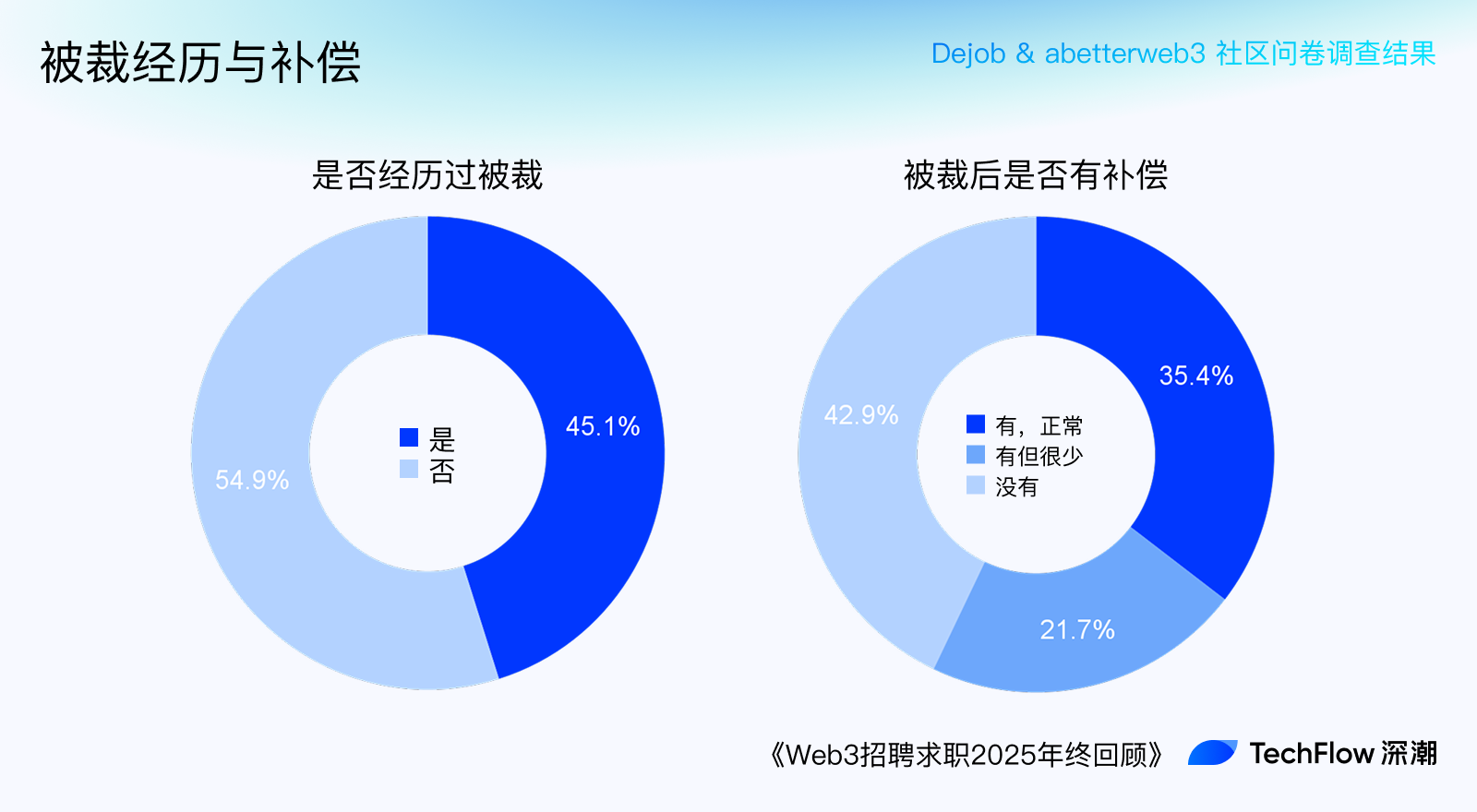
Close to half have experienced layoffs, and 40% of those laid off reported receiving no compensation. 21% said that even if they received compensation, it fell far short of the legal standard (e.g., N+1).
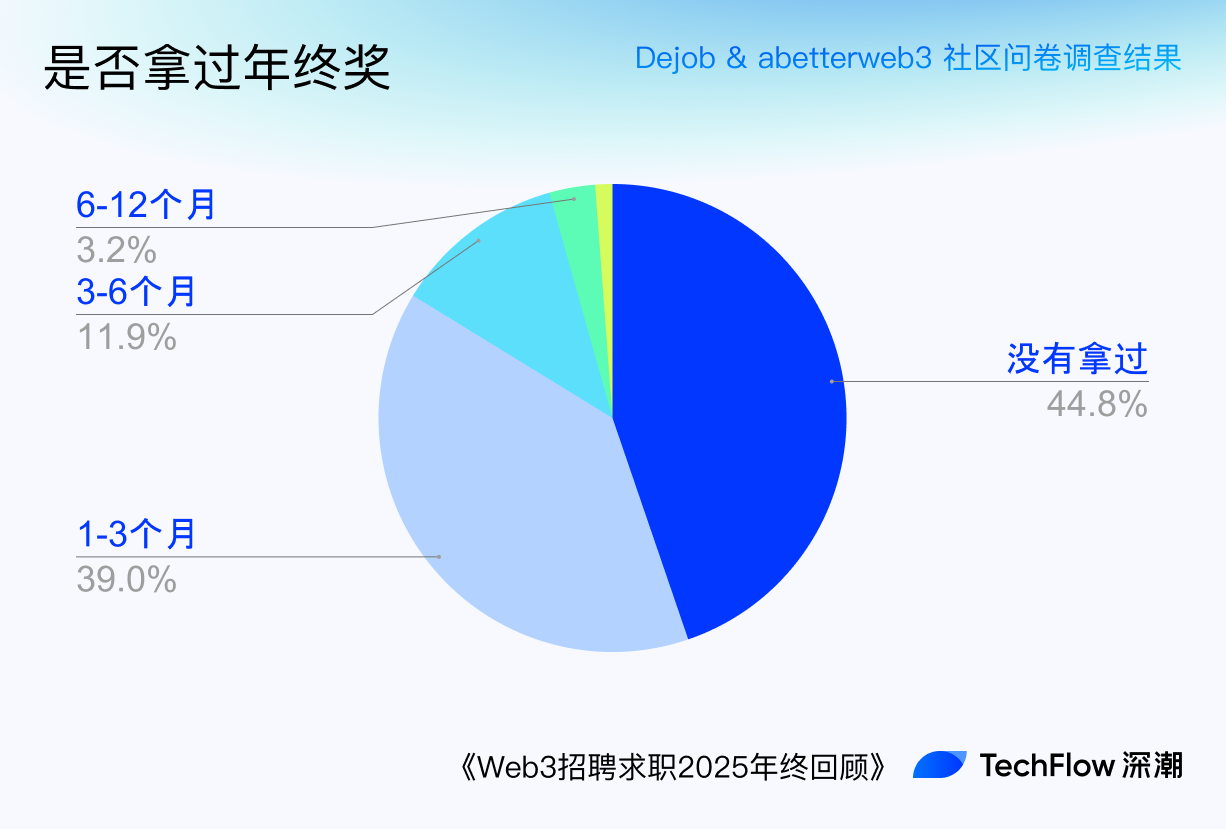
Nearly half reported not receiving a year-end bonus; even among those who did, it was generally 1-3 months' salary, basically on par with most internet companies outside the Web3 industry.
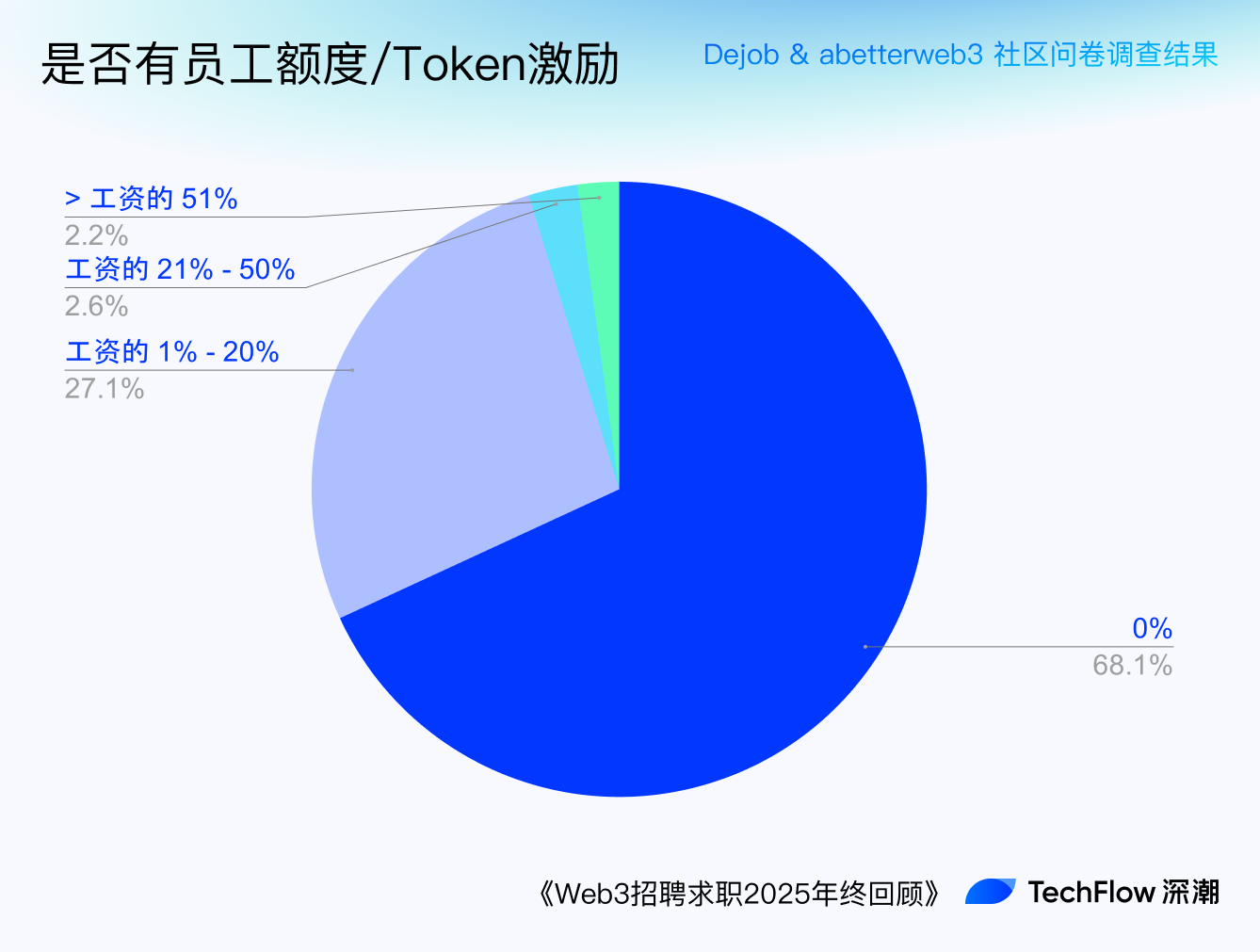
Regarding the well-known "upward channel" of token/equity incentives, nearly 70% of practitioners reported never having received any. Even among those who did, very few received incentives exceeding 20% of their salary.
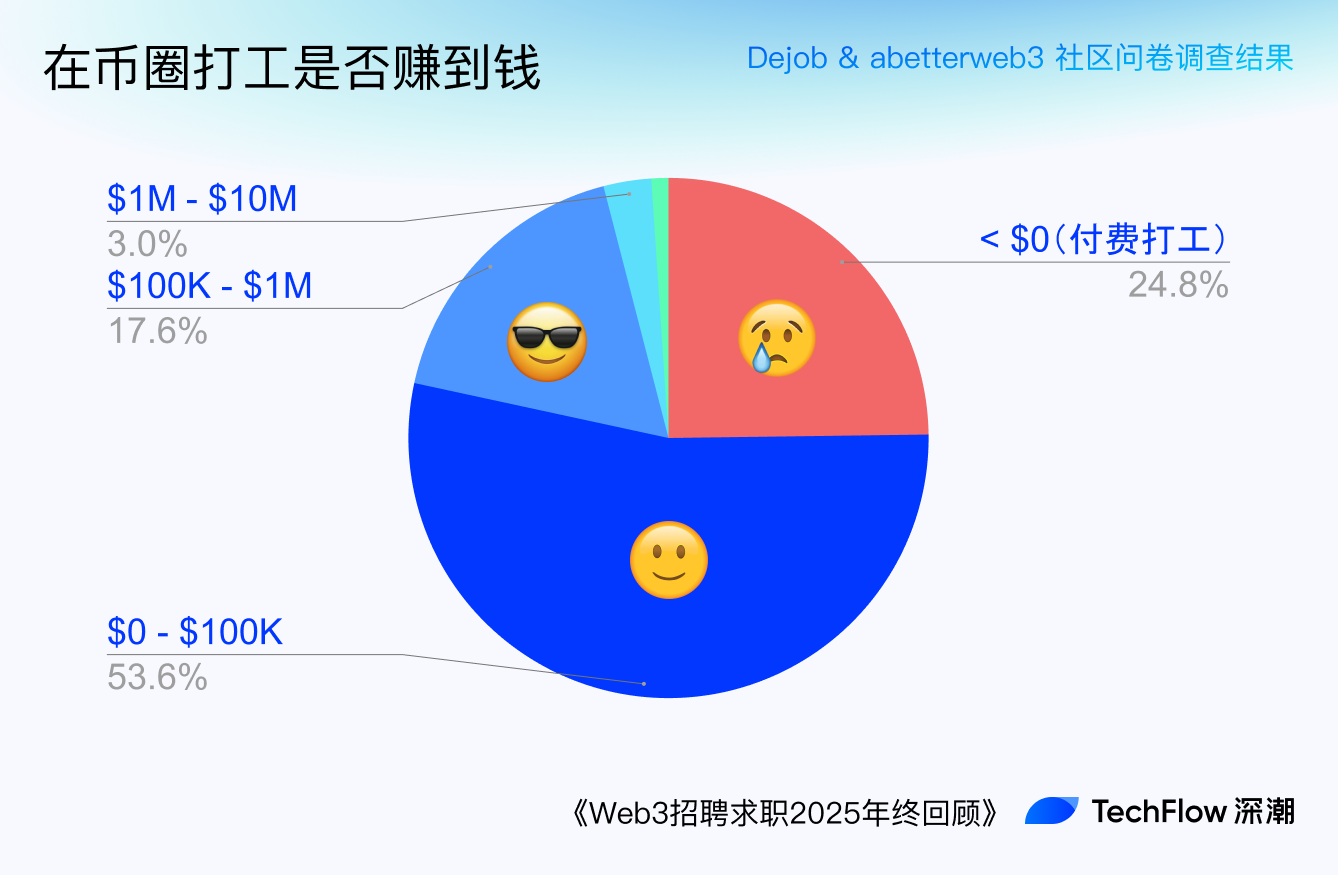
Remarkably, a quarter of respondents reported an overall net wealth loss since entering the crypto space, effectively "paying to work." Other respondents mostly accumulated wealth around $100K (approx. RMB 700,000).
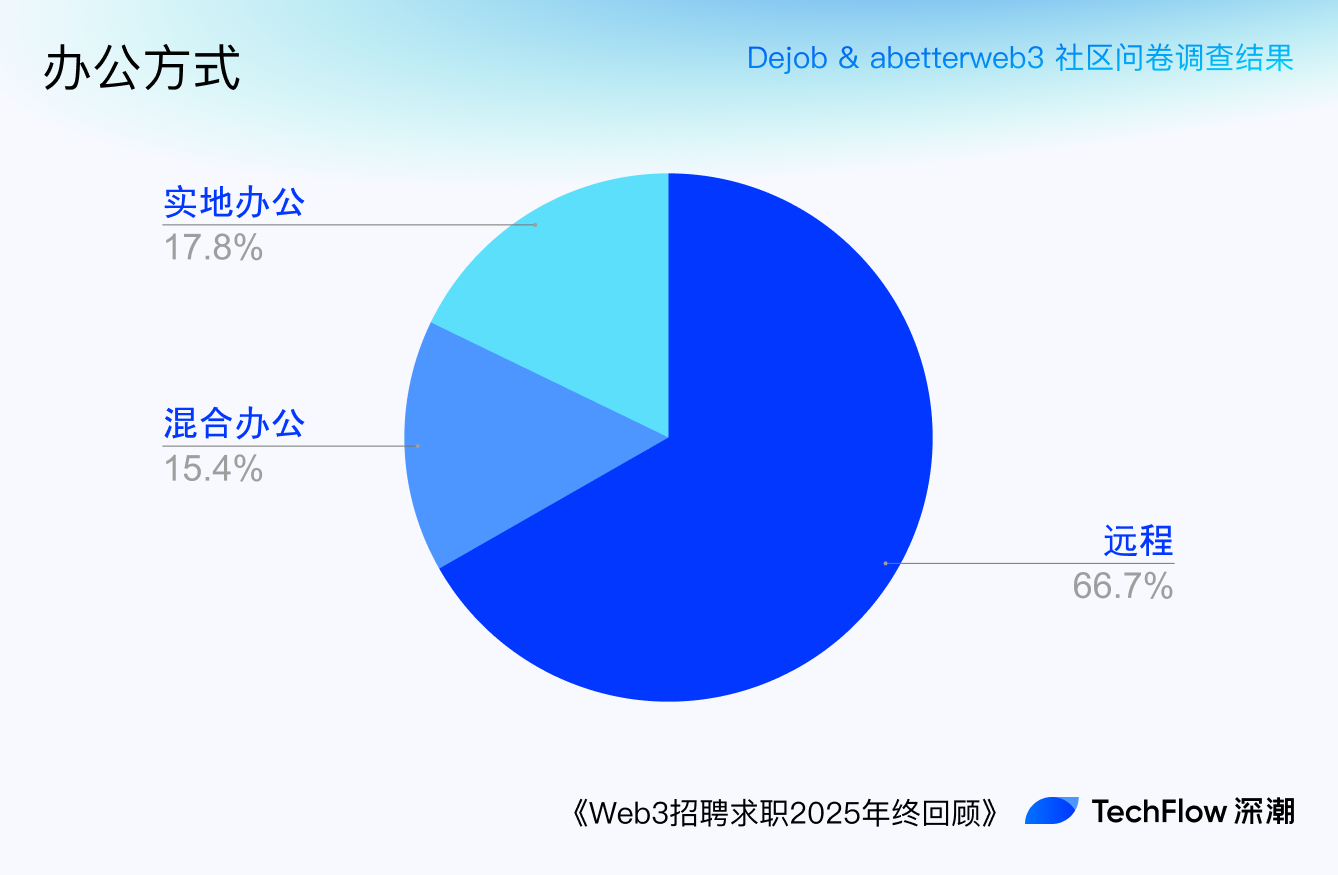
However, on the flip side of this seemingly hopeless income landscape, Web3's strong remote work culture offers a significant breath of fresh air for many workers. Nearly 70% of respondents indicated their company supports remote work, with another 15% supporting hybrid work (i.e.,虽然有办公室 but not mandatory attendance, or work-from-home allowed several days a week).
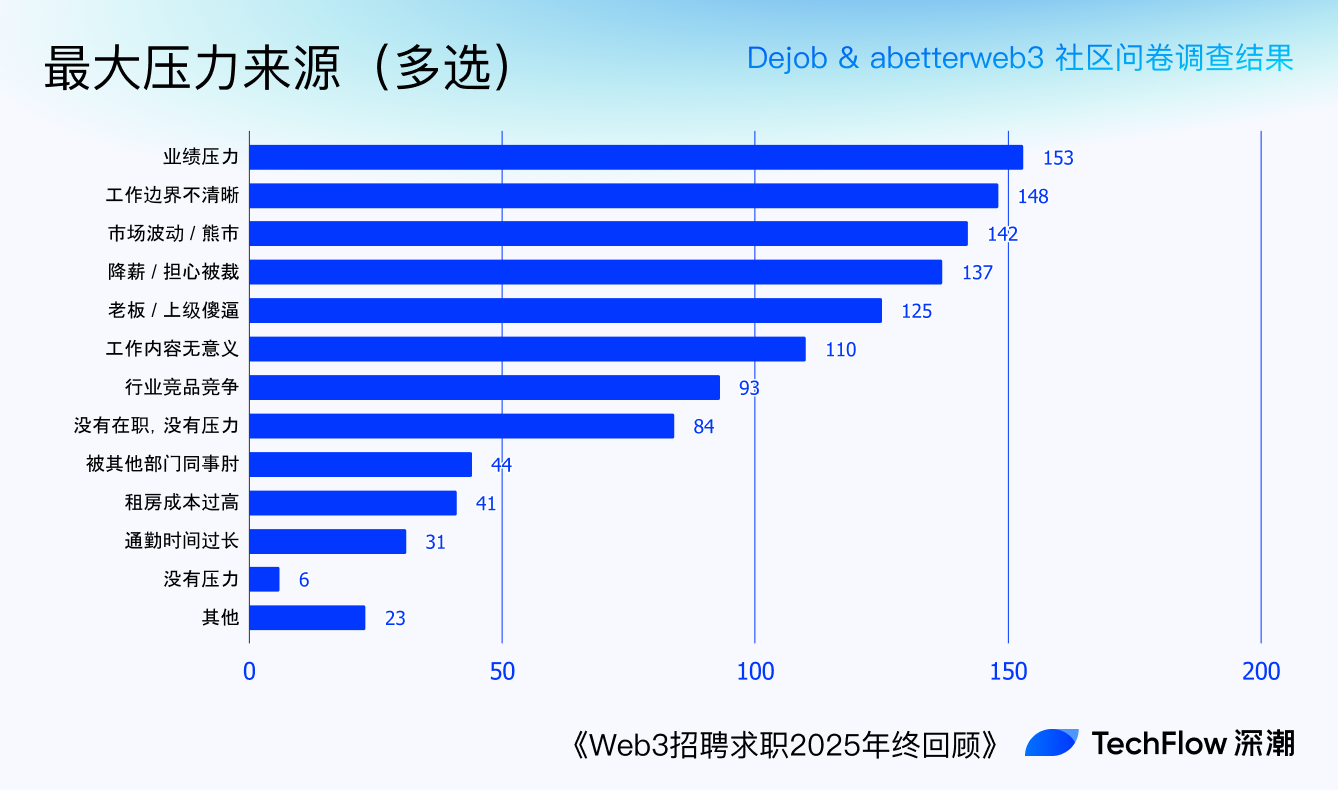
Remote work does alleviate some of the pain of being an employee. In the "biggest source of stress" question, 31 submissions chose "excessively long commute." Other top stress sources were product growth, work boundaries, market volatility, fear of being laid off, and having a foolish boss (老板傻逼).
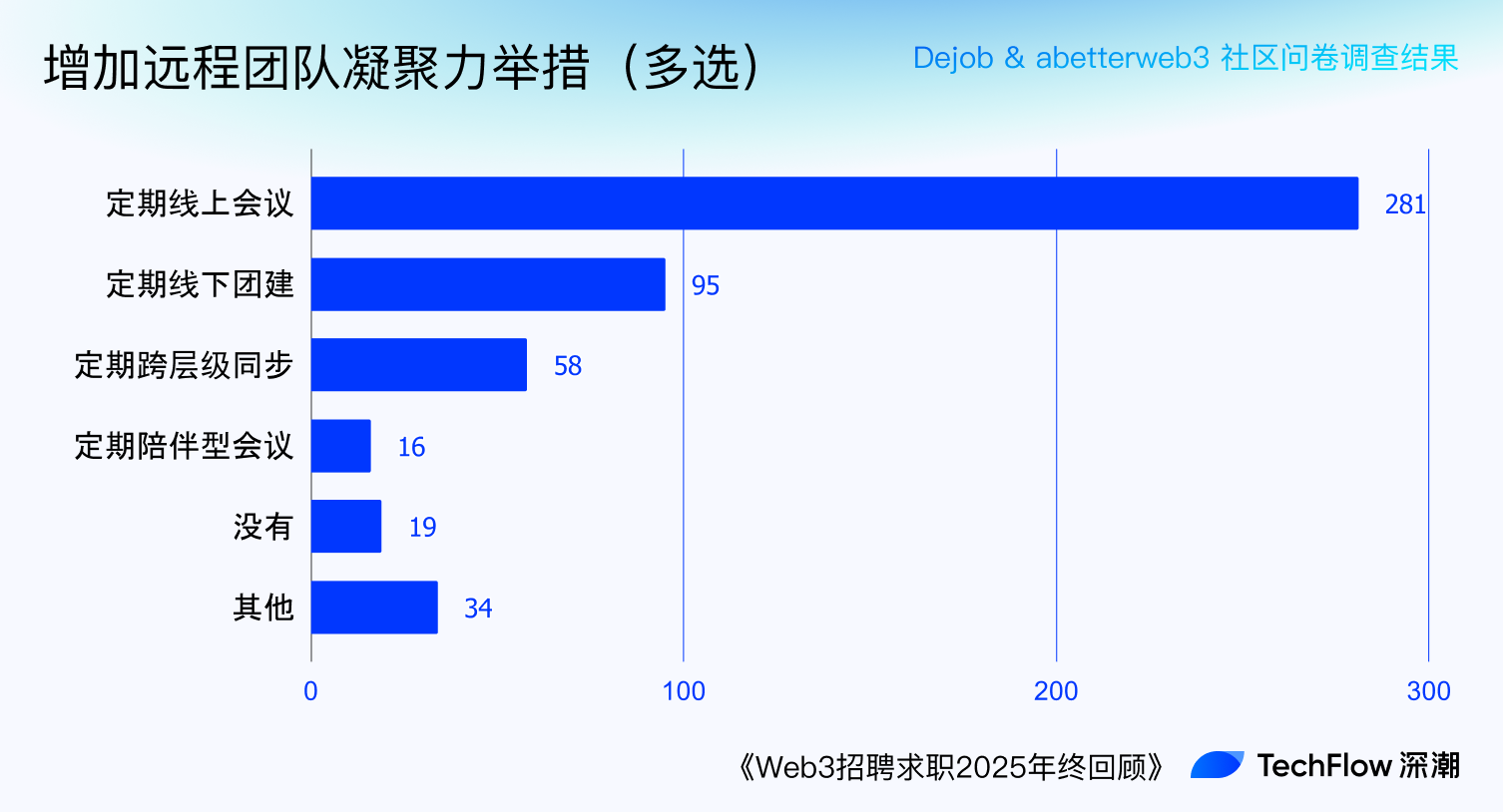
To maintain employees' mental health as social creatures, many companies have adopted measures to maintain team cohesion.
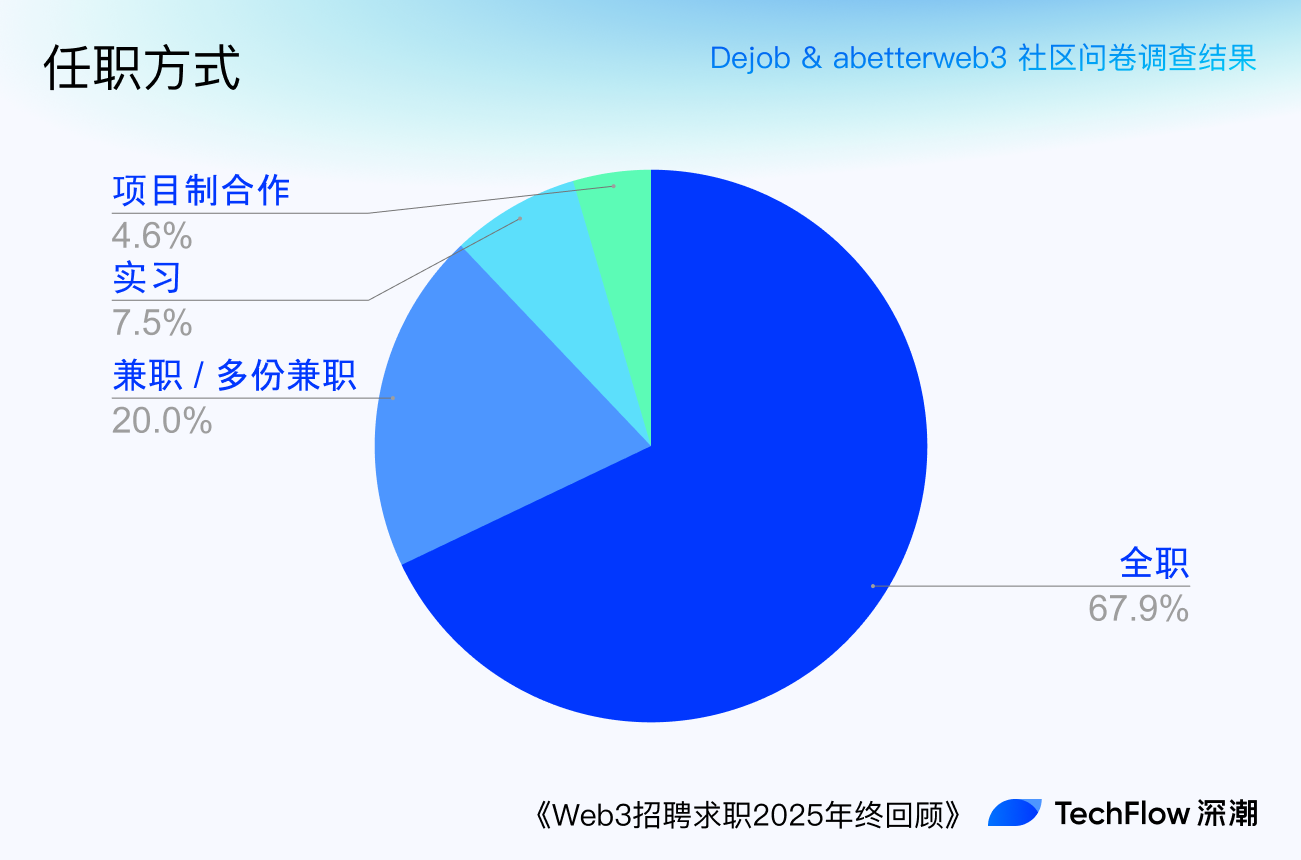
Under the combined effect of low income and instability, many choose to hold multiple jobs. 20% of respondents reported having side hustles. This also indirectly reflects the tech-oriented culture of most Web3 companies: as long as problems are solved and capabilities are sufficient, they generally do not interfere with employees' lifestyles or income sources.
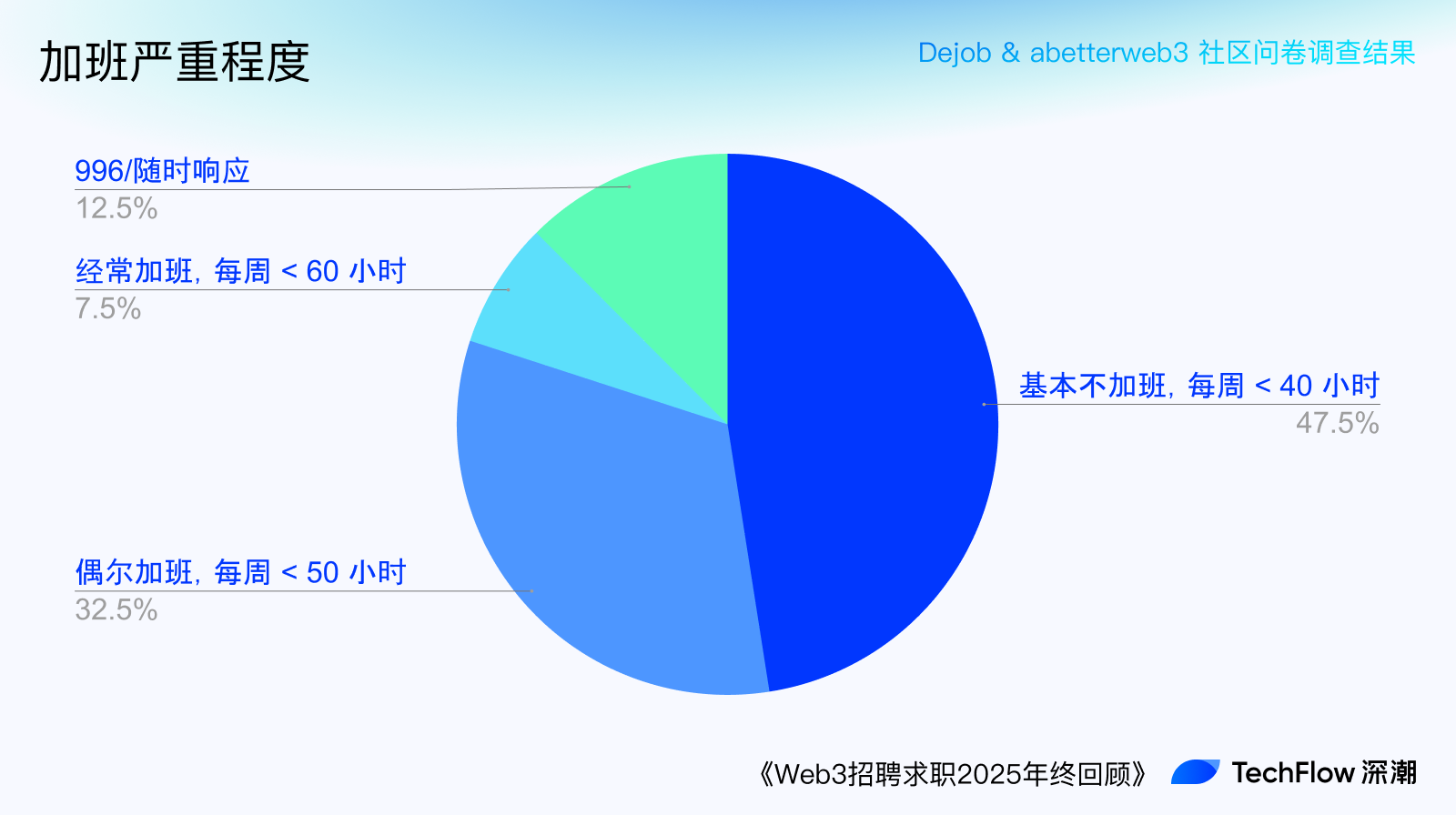
Regarding overtime intensity, 80% work approximately 40-50 hours per week. Thus, Web3 overtime seems less intense than many 996/007 sweatshops in web2.
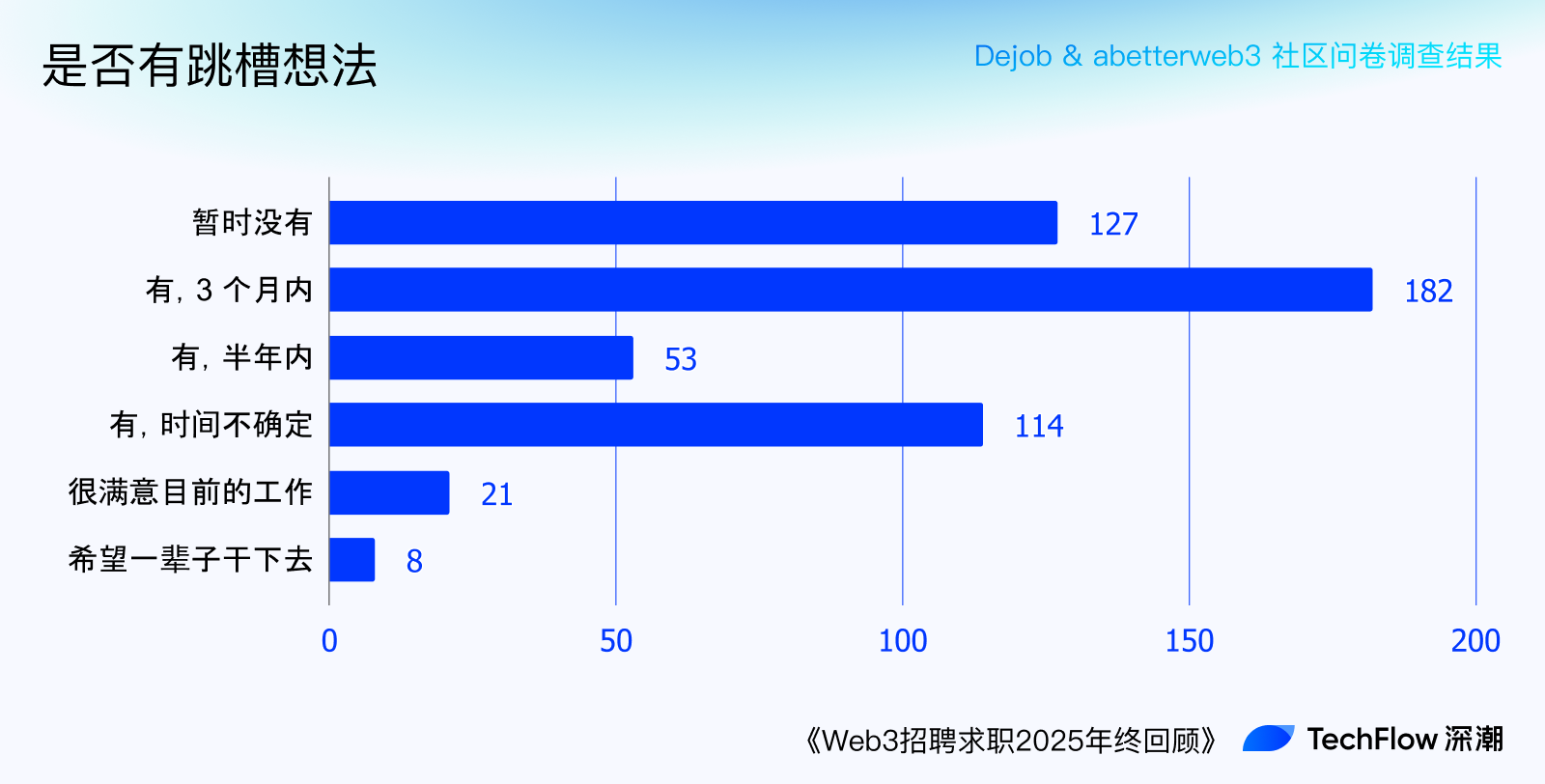
Regarding job hopping, over half want to change companies, with 30% planning to do so within 3-6 months. But about a quarter are satisfied with their current situation, and 8 respondents even identified a "dream company they hope to work for forever."
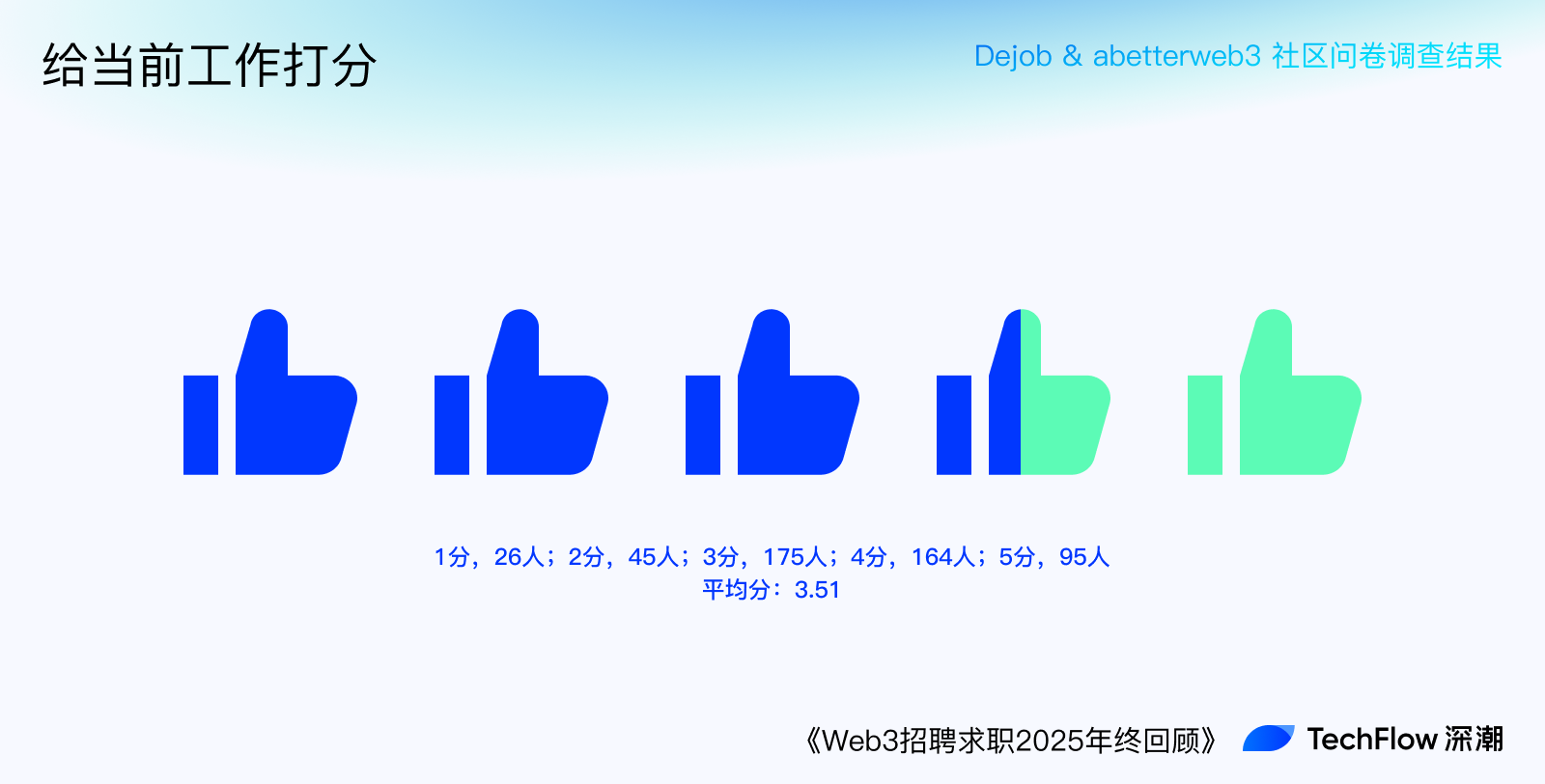
Considering factors like reasonable hours, remote work options, and side hustle tolerance, many rate their current job positively. The average score given in the job rating section was 3.51.
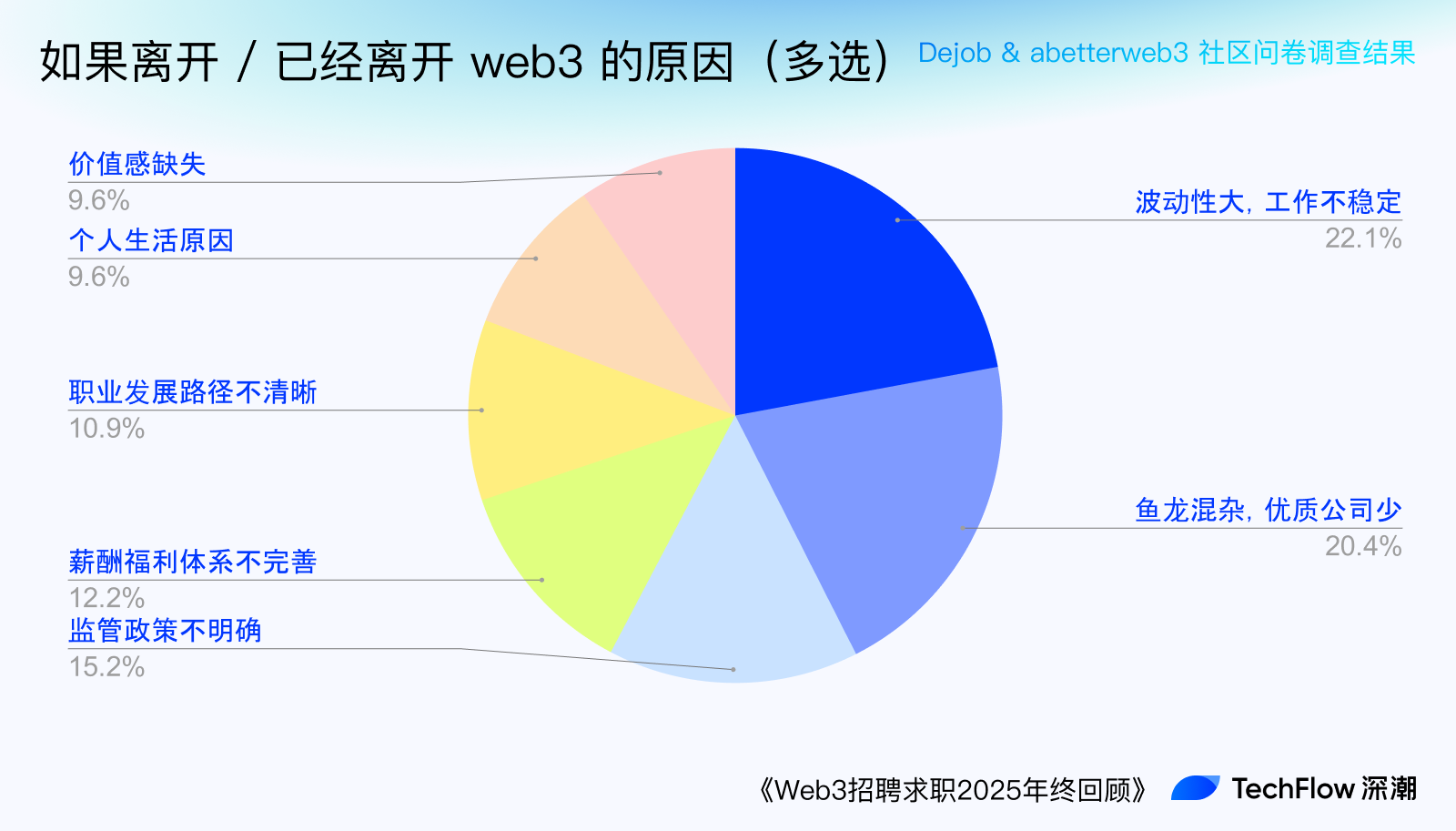
When asked if their next job would still be in the crypto space, over 80% chose to stay, while 7% chose to leave.
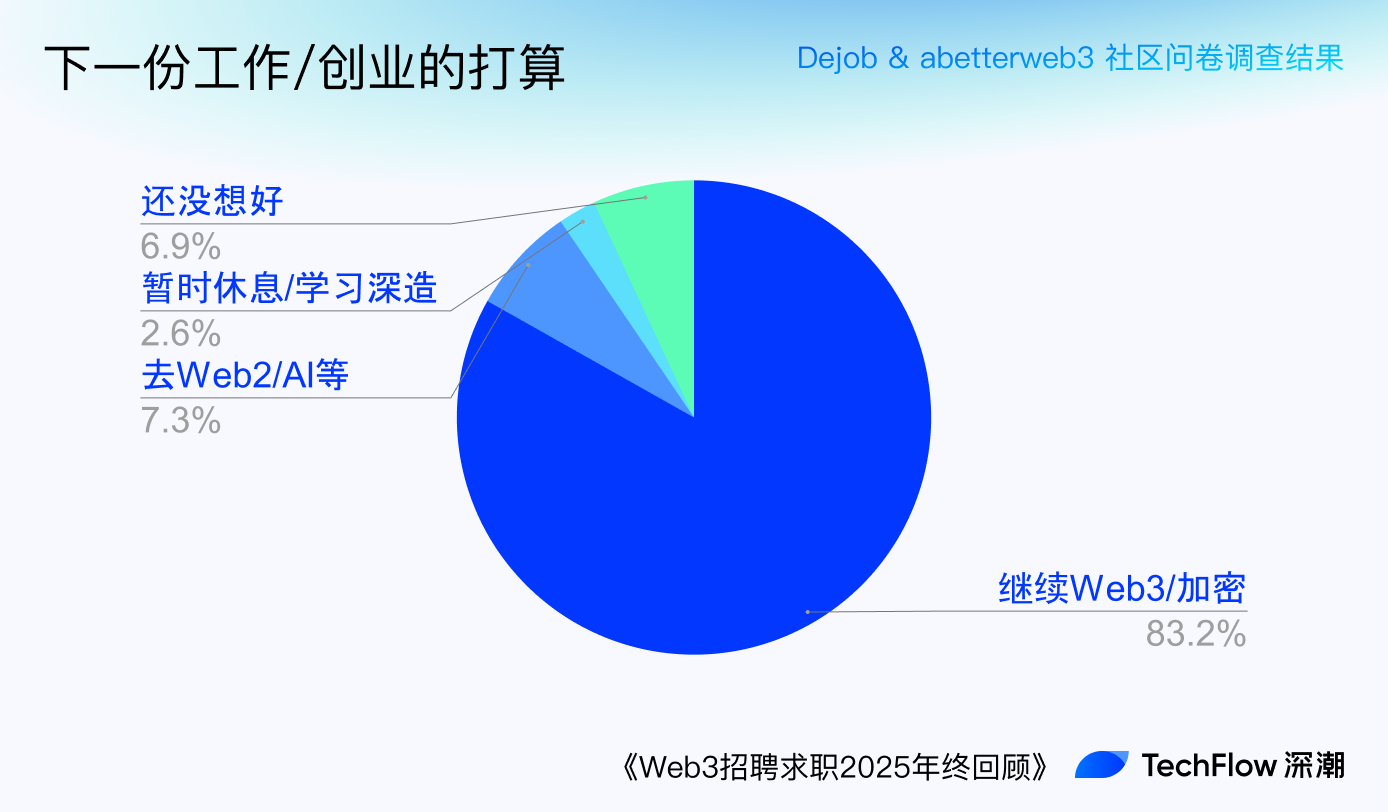
The choices for reasons to leave reflect the cold, harsh reality at the industry's core.
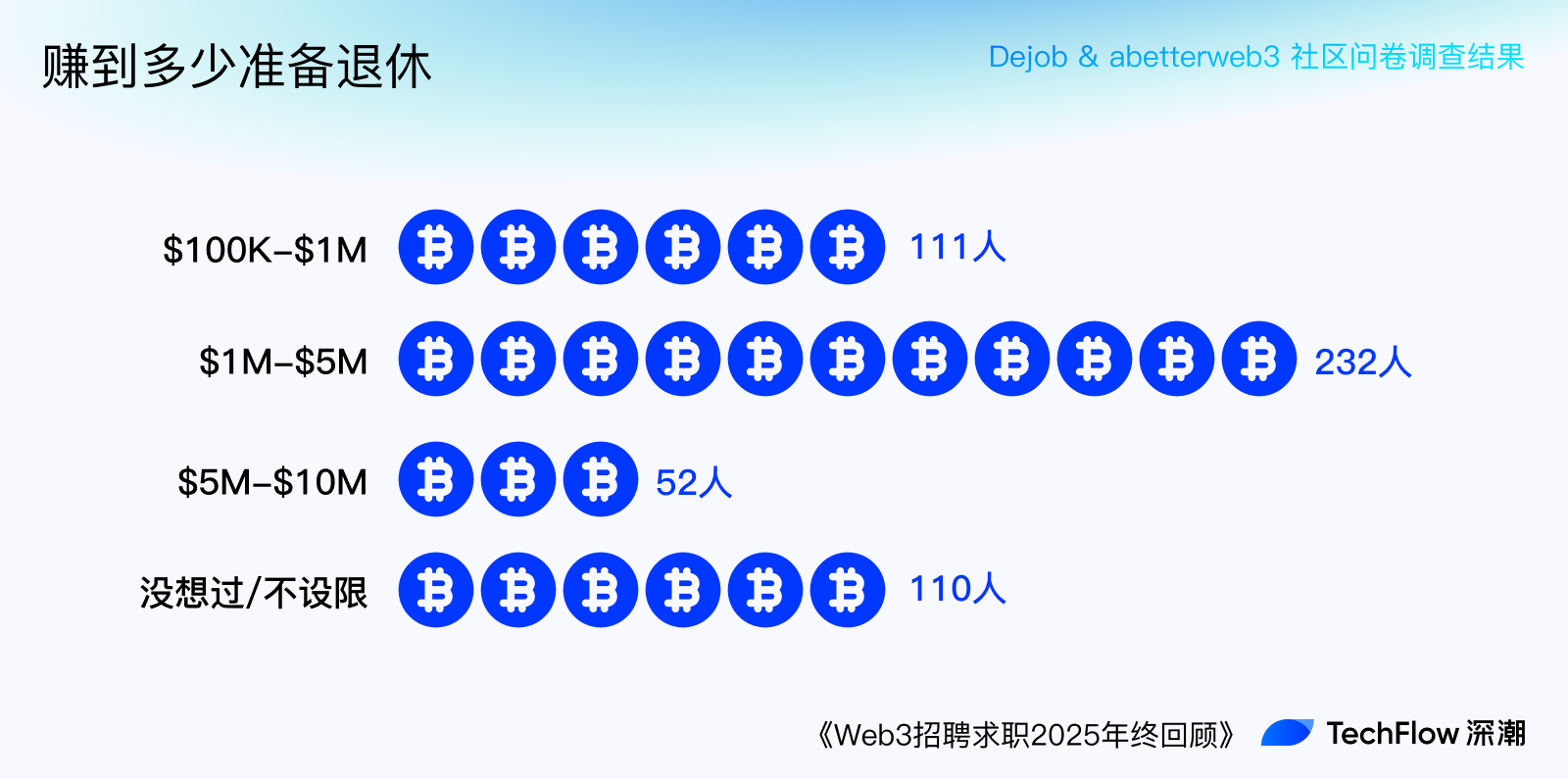
But all this preparation is for early retirement. When asked "What level of wealth would make you consider resigning?", the vast majority chose $1M - $5M (approx. RMB 7 million ~ 35 million). This might indeed be the upper limit of wealth attainable through salaried work for one person. However, 20% chose "no limit," reflecting confidence in their own abilities.
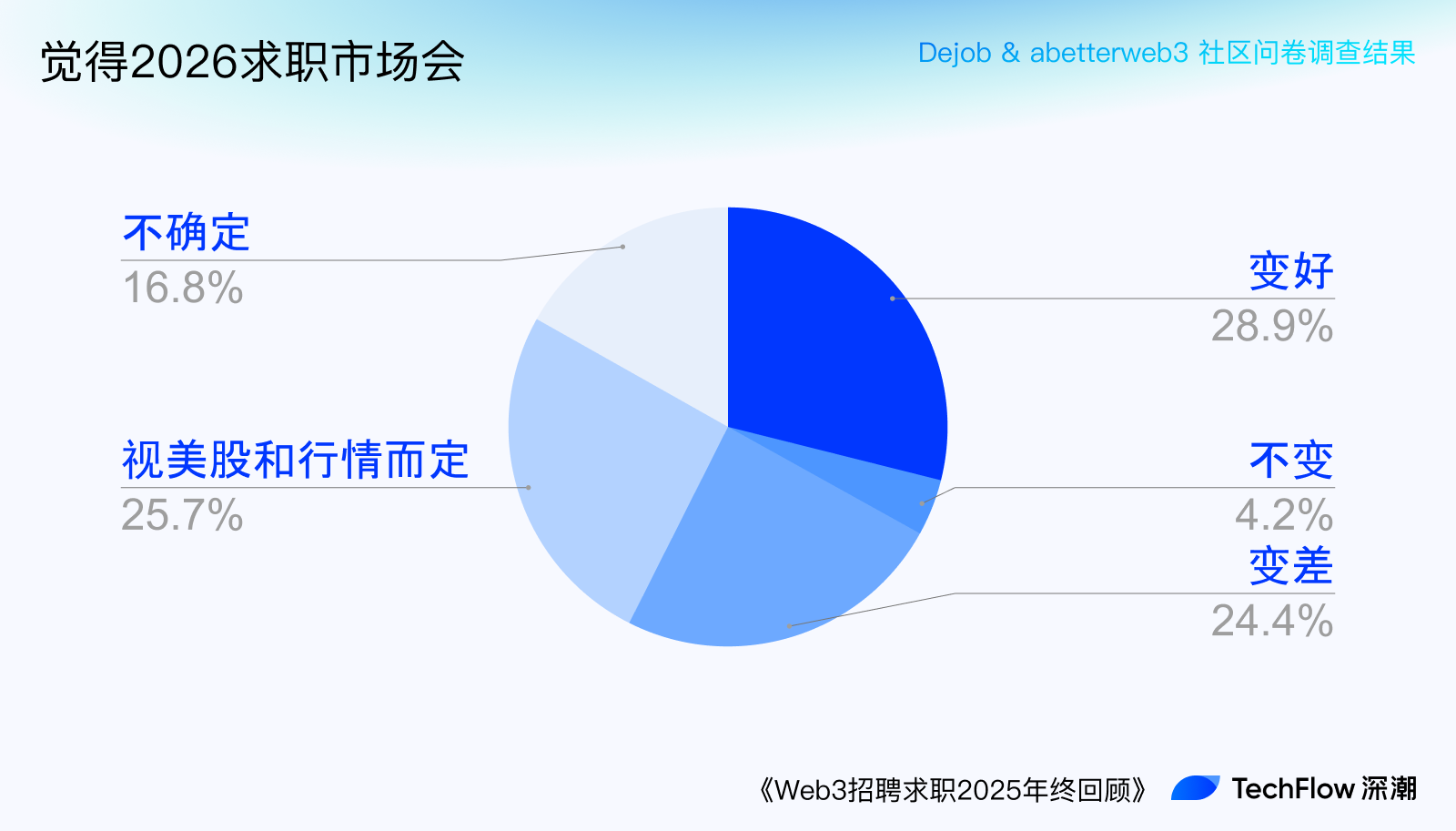
Regarding optimism about the 2026 job market, only 28% believe it will improve, with most being pessimistic or taking a wait-and-see attitude.
Truth Session 👀
Beyond the above questions, we added a few optional ones to gather some practitioners' most candid views on current industry companies (for entertainment purposes only).
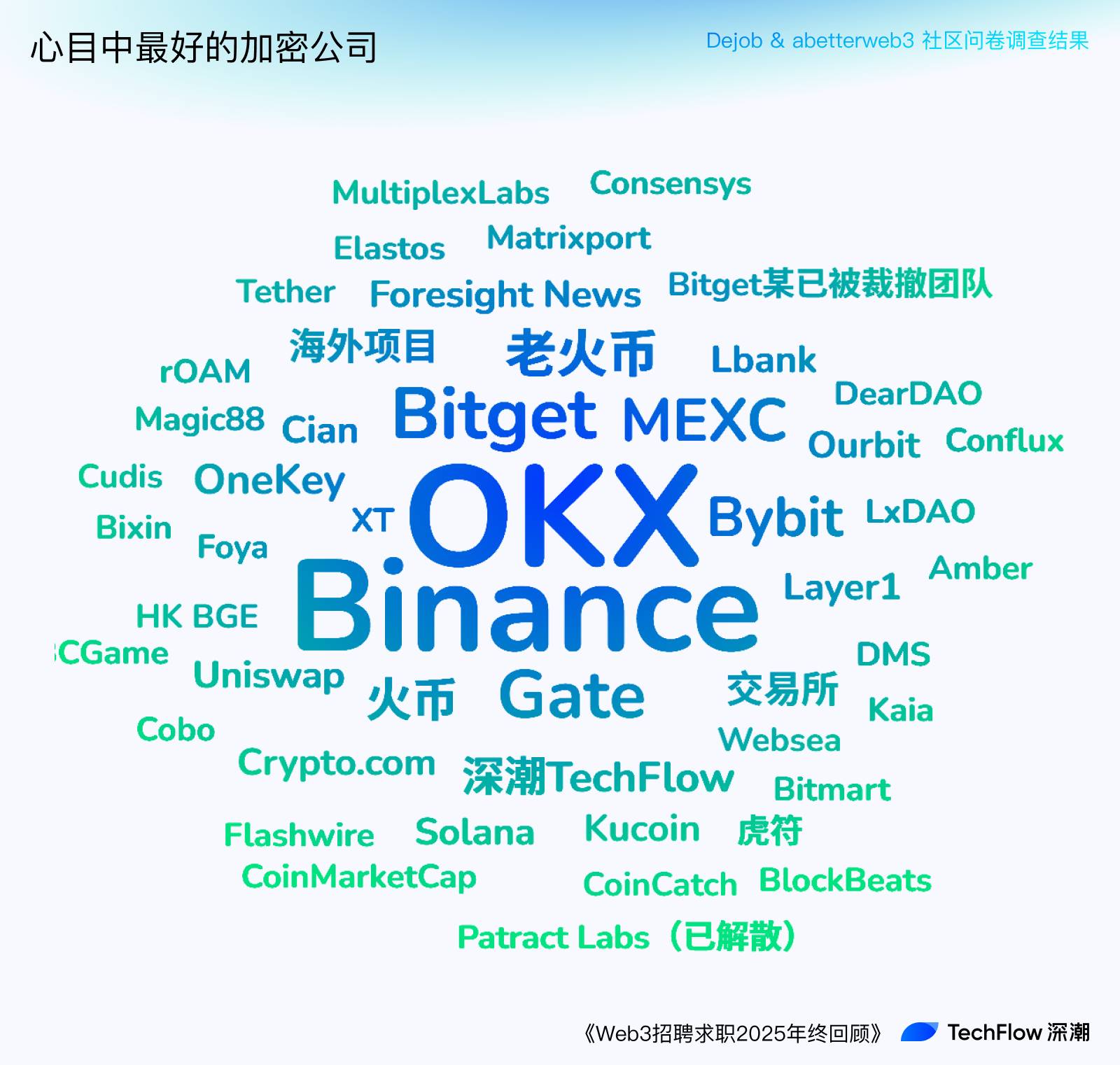
In the question "The best crypto company in your opinion", the top ten companies were:
-
OKX (26), Binance (23), Bitget (10), Gate (9), MEXC (7), Bybit (6), Old Huobi (5), Huobi (4), Deep Tide TechFlow (3), OneKey (3)
Surprisingly, some already dissolved teams were mentioned, like Huobi from the Li Lin era, a since-disbanded team at Bitget, the dissolved Consensus Lab, etc. Perhaps dream companies are worth remembering for a lifetime.
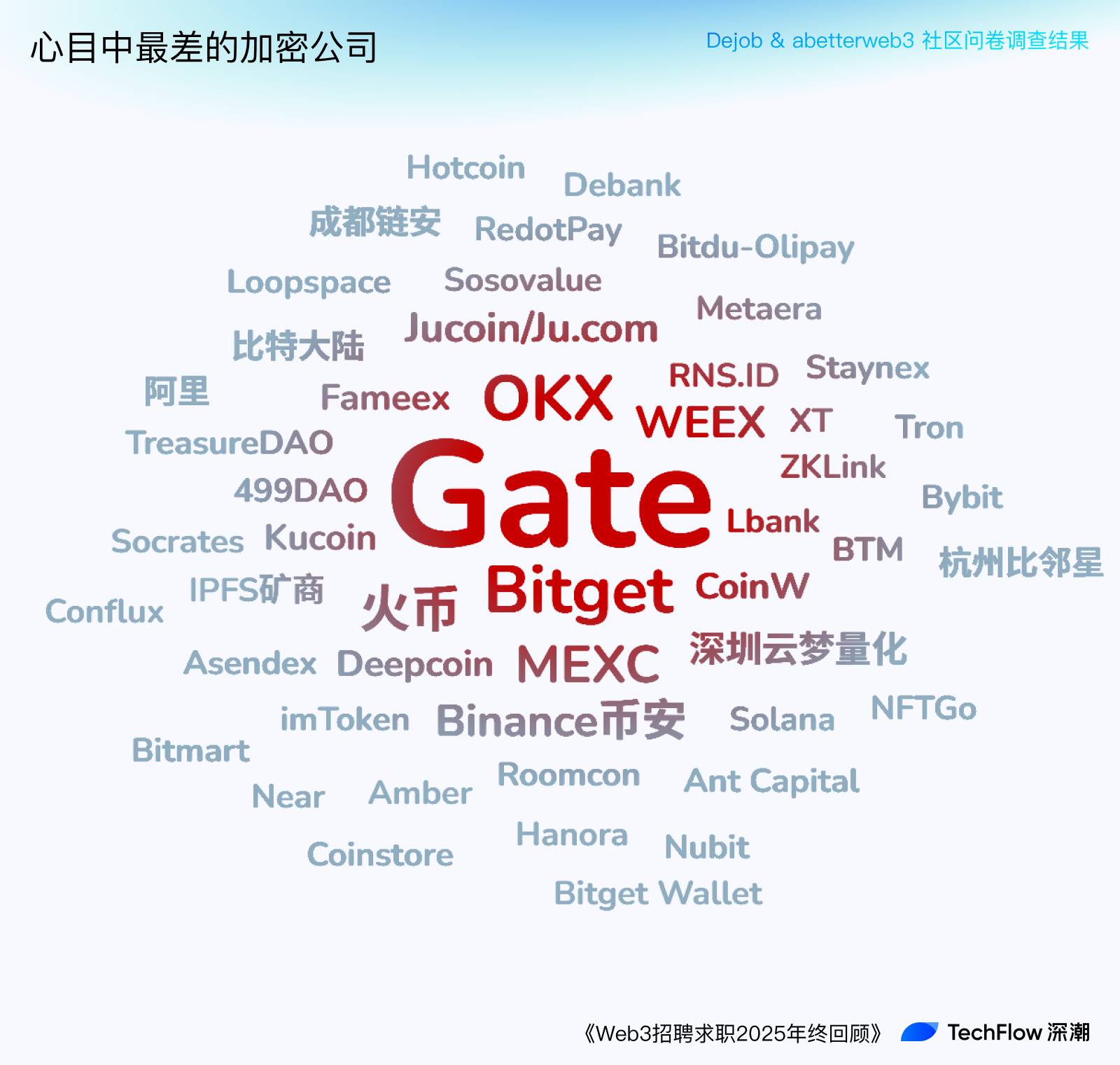
In the question "The worst crypto company in your opinion", the top ten companies were:
-
Gate (43), Bitget (13), OKX (12), MEXC (8), Huobi (7), Binance (5), WEEX (5), CoinW (2), Kucoin (2), Lbank (1)
Some exchanges appear on both the best and worst lists. This might indicate that exchanges are vast entities with complex structures, and the experience of working in different departments under different leaders can be worlds apart.
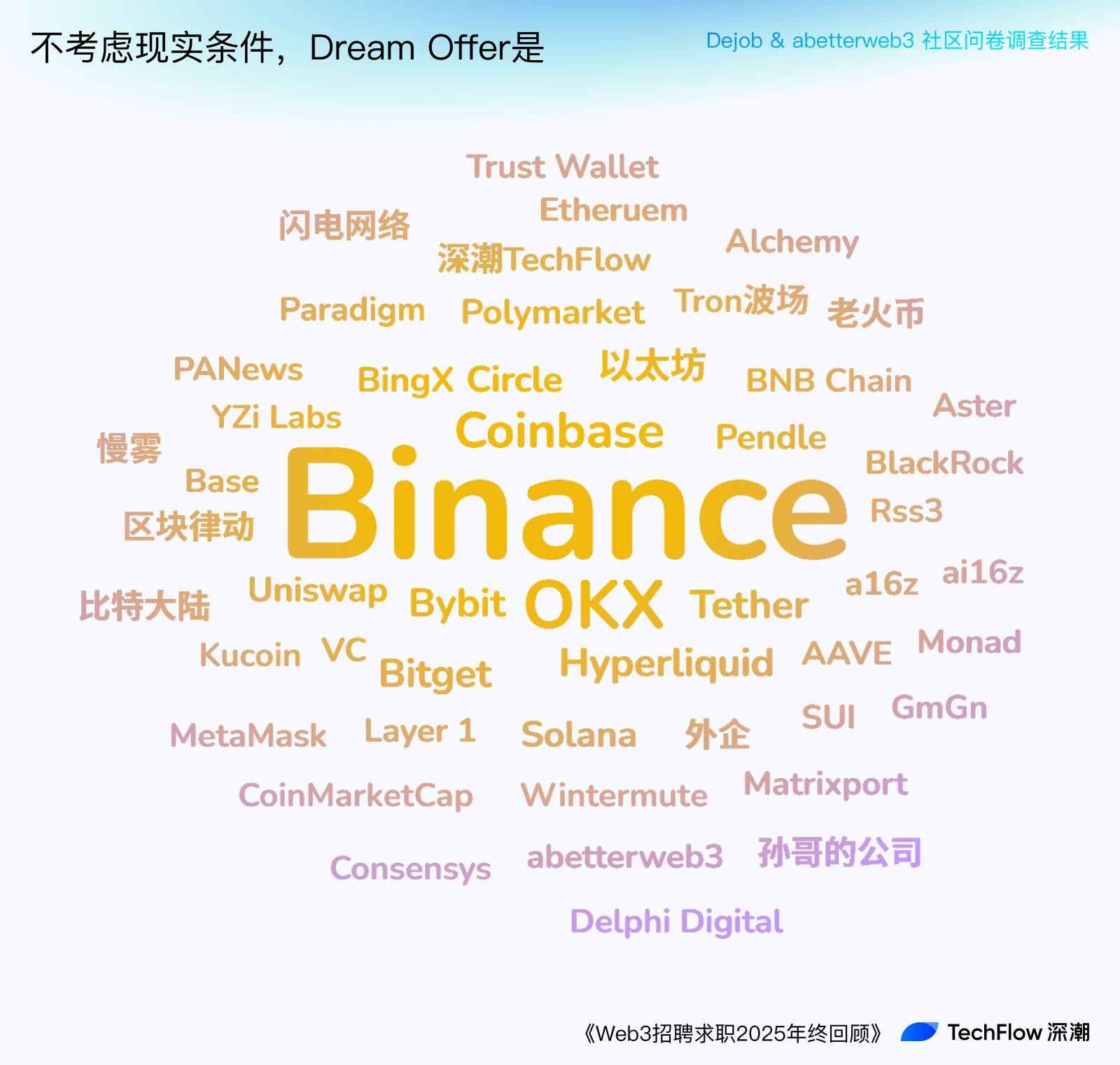
In the question "Disregarding practical constraints, which company would you most want to work for?", the top ten companies were:
-
Binance (177), OKX (50), Coinbase (25), Hyperliquid (11), Bybit (11), Bitget (10), Tether (10), Circle (6), Solana (5), Ethereum (5)
Binance, as the industry leader, unsurprisingly tops the list. As the "Tencent of the crypto circle," Binance holds prestige both externally and as a golden resume booster within the industry,名副其实地扶持个人职业生涯 (living up to its name in fostering personal careers). The chain's new star Hyperliquid, as a non-exchange entity, made the top 10, reflecting its strong community and people's desire for non-exchange products. Besides top exchanges, names of foreign companies/overseas infrastructure significantly increased in these answers, also reflecting, in a way, most job seekers' positive view of foreign companies and disappointment with Chinese teams.
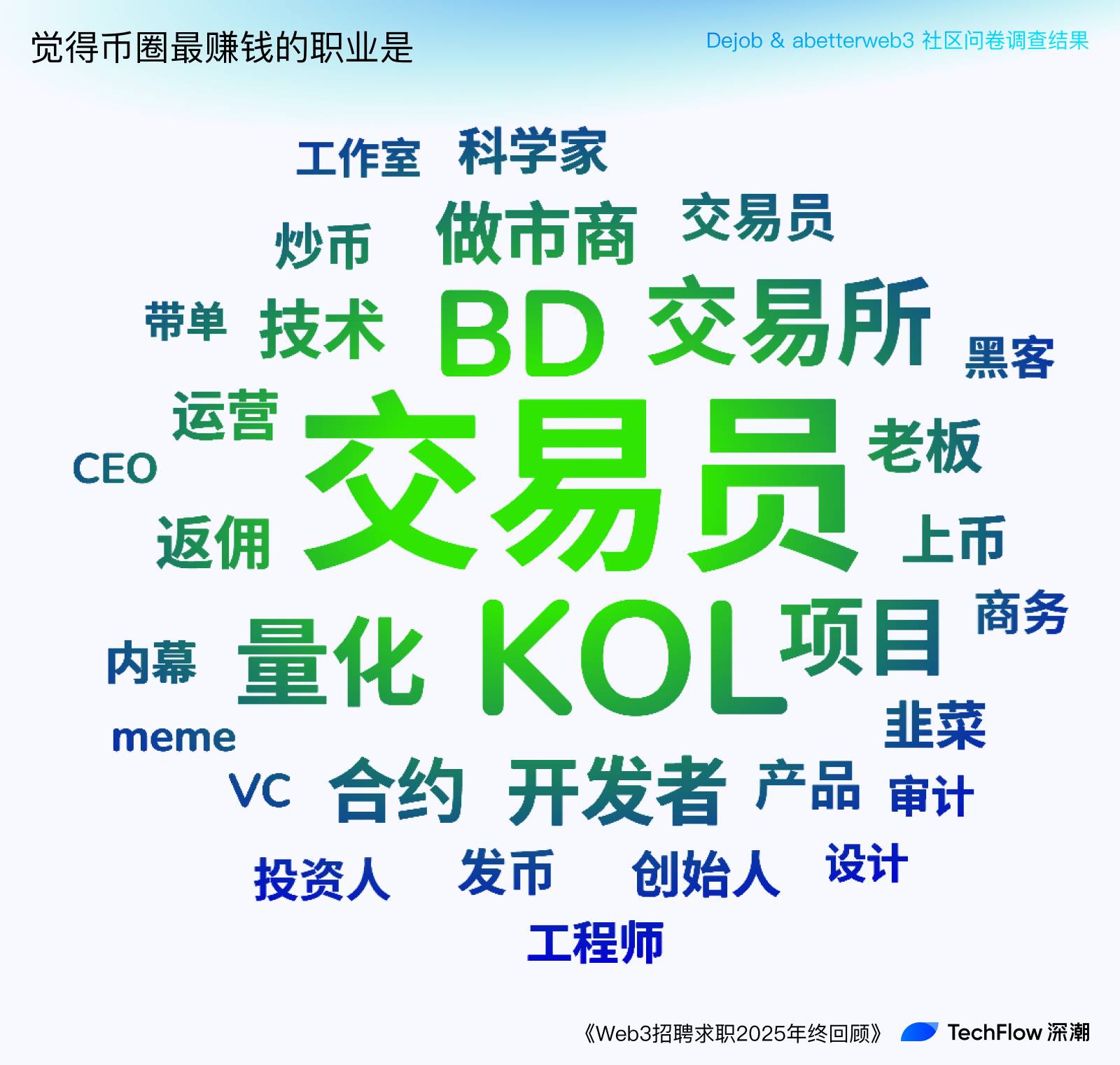
In the question "Which profession do you think is the most profitable in crypto?", high-frequency keywords included:
-
Trader (85), KOL (68), BD (Business Development) (47), Exchange (32), Quant (Quantitative Trading) (32), Project (方) (27), Developer (20), Futures (合约) (17), Market Maker (16), Technology (14)
Traders rank first, likely because the erratic market of recent years made many realize that no matter the company or role, it might not compare to directly participating in the market博弈 (gaming); KOLs follow closely, likely because they have the opportunity to access project tokens, possess informational advantages, or can directly influence specific assets for profit. Pure technical roles远离市场 (away from the market) were also mentioned, perhaps because in the eyes of most non-developers, "technology" is an indispensable part for a "super individual" to achieve a breakthrough.