2024为何是以太坊发展史上关键时期?

Odaily星球日报Published on 2024-02-26Last updated on 2024-02-26

Abstract

2024年将成为以太坊区块链发展史上的关键时期,标志着自2022年合并以来的新发展周期。

 链上活跃度上升,通缩趋势增强

以太坊完成合并之后,ETH 在网络使用率较高的时期具有通缩的特性。自 2022 年 9 月份合并至今,ETH 的供应量减少了下降了 369, 814 枚,占总量的 0.21 %;以太坊质押者获得的奖励超过 106 万枚,但销毁机制在同一时期永久销毁的 ETH 超过 143 万枚。

近期,得益于加密货币市场的看涨势头,去中心化交易所(DEX)交易量上升,NFT 销售额增加,L2网络活动也明显活跃起来。过去两周,超过 21000 枚 ETH 被销毁,价值 6280 万美元。

Defi Llama 数据显示,DEX 在 2 月 19 日的交易量超过 50 亿美元,对比 2 月 4 日的数据增长了 134 %。Dune Analytics 数据显示, 2 月 19 日 NFT 的销售额上升到 3300 万美元,对比 2 月 2 日的数据增长了 114 %。L2 BEAT 数据显示, 2 月 18 日所有L2区块链平均每秒处理超过 92.4 笔交易,创下史上第二高的记录。

值得注意的是, 2 月初 ERC-404 代币标准的推出也是导致 gas 费上升的原因之一。ERC-404 允许多个钱包同时拥有单个 NFT 的所有权,将 NFT 的所有权碎片化。ERC-404 使用 ERC-20 和 ERC-721 代币,便利了 NFT 碎片化,从而导致 gas 密集型交易。随着加密市场的活跃以及链上活跃度的上升,以太坊通缩的趋势有望在未来几个月内进一步增强。

以太坊网络即将迎来重要升级

 下一个以太坊网络重要更新(EIP-4844)将于今年 3 月份执行,旨在提高以太坊区块链的效率、可扩展性和安全性。该更新将使围绕以太坊建造的L2生态系统的成本降低 10 倍,这将使以太坊和L2的采用率大幅提升。

Dencun 升级标志着以太坊路线图中“the Surge”时代的开始,成为这个周期的主要转折点。以太坊需要借助L2进行扩展,而L2的子链和专业的业务开发团队也正在推动L2迅速增长。此外,以太坊区块链上的 Verkle 树的整合也备受期待,预计它将降低磁盘空间需求,增强质押节点的功能并改善整体用户体验。

现货以太坊 ETF 批准预期

2 月 17 日,VanEck 为其现货以太坊 ETF 备案递交了修订版的 S-1 A 文件。而 ARK/21 Shares 也就其现货以太坊 ETF 递交了新的 19 b-4 文件以及一系列新的分析说明。此前 BlackRock、Fidelity、Grayscale、Invesco、Galaxy 以及 Hashdex 等都已提交相关申请。Grayscale ETF 负责人 Dave LaValle 表示,今年 5 月份 SEC 批准将其以太坊信托转换为现货 ETF 的机率为 50% 。

美国投行 Bernstein 在 2 月 19 日的研究报告中,就质押奖励、潜在的机构资金流入和现货 ETF 的批准讨论了以太坊在未来几个月的前景。报告认为,以太坊凭借其质押的收益动力、环保设计和建立新金融市场的机构实用性,已经做好了被主流机构采用的准备。根据该报告,以太坊可能会成为在比特币之后获得现货 ETF 批准的加密货币,今年 5 月份以太坊现货 ETF 有 50 %的概率获得批准,而到今年年底,这个概率几乎可以达到 100% 。

Web3项目开发进入新阶段

与比特币不同,以太坊不仅仅只是一种资产,其内在价值与其区块链的功能高度相关。以太坊更加符合共享和可编程数据库或 DApp 开发平台的目标。因此,为了使以太坊网络具有价值,其网络上必须存在有价值的应用程序。

目前,已经有一些程序从Web3发展中脱颖而出,但是绝大多数应用程序将来自传统公司调整其系统并与区块链进行集成。从链上现存的非原生主流Web3杀手应用程序来看,上一个牛市周期后,认真维护其链上应用的项目方为数不多。

在此前周期中,由于区块链广泛而不可知的本质,大多数区块链的参与者,甚至连区块链团队本身或其他Web3公司业务开发团队都缺乏足够的指导,而且还要与 meme token 和 NFT 炒作争夺发展空间,因此某些技术操作是不可行的。

而团队的业务发展细分通常是按地区进行的,导致这些团队必须迎合数十个不同领域,各个部门都有不同的需求和复杂的应用程序。最终的结果是多而不精,使大多数项目无法成功。

但是,在 2024 年,游戏规则将会改变。关于如何在链上进行建设这个方面,区块链生态系统正在进入专业化时期。当前最大的L2区块链正在将特定的配置以及专门的团队和结构进行细分。

区块链开发套件

 以 Polygon 为例,它并不是为所有应用程序配置一条通用区块链以及一个区域业务开发团队,而是采用多条适用于特定场景的子链。Polygon 正在为市场提供区块链开发套件(CDK)在上面建造子链,而所有流动性均通过聚合层进行连接。

目前,Polygon 宣布采用的子链包括:

B2 (专注于为比特币建造 rollup 的 CDK 区块链);

OEV 网络(旨在捕获预言机可提取价值 OEV 的 CDK 区块链);

Hypr(专注于游戏的 CDK 区块链);

Libre(一款致力于为机构发行代币化资产的 CDK 区块链);

FireDrops(一款为印度最大的电子商务 Flipkart 的忠诚度行为设计的 CDK 区块链)。
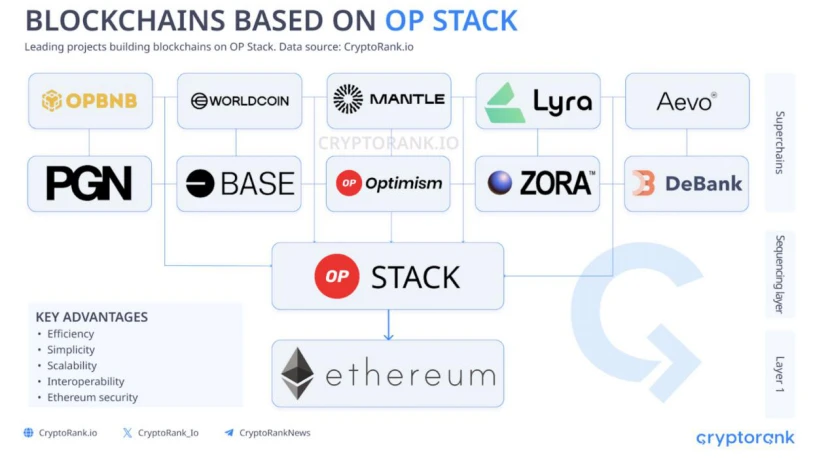
2024为何是以太坊发展史上关键时期?此外,其他主流L2区块链也在遵循相同的路径。例如,和 Polygon 的 CDK 类似的还有 Optimism 的“OP-Stack”。范式转变正在进行中,几乎所有主流L2区块链的许多专业子链和业务发展团队都将在同一领域进行竞争。

得益于以太坊的L2计划,构建一条安全的链变得非常简单。因此, 2024 年可能将成为Web2杀手级应用程序在Web3中出现的一年,众多公司和用户将尝试把区块链纳入其日常生活。

小结

2024 年将成为以太坊区块链发展史上的关键时期,标志着自 2022 年合并以来的新发展周期。链上活跃度上升推动以太坊通缩趋势。Dencun 升级将提高以太坊区块链的效率、可扩展性和安全性。以太坊现货 ETF 获批的预期将继续推动机构采用的兴趣。区块链开发套件(CDK)正在为以太坊网络上的开发人员创造更多的可能性,更多有价值的应用程序反过来将继续推动以太坊网络的繁荣。

Related Reads

Snap, Unprofitable for Nine Years, and a Decade-Long AR Obsession Without Return

Snap's AR Obsession: A Decade of Betting Against the Odds On June 16, Snap CEO Evan Spiegel unveiled the new AR glasses, Specs, priced at $2,195, causing the company's stock (SNAP) to plummet nearly 10%. The launch was met with intense criticism online, with investors questioning why a consistently unprofitable company would stake its future on an expensive product its core young user base can't afford. Snapchat, known for pioneering features like ephemeral Stories and popular AR lenses (like the iconic dog filter), has a history of innovation often copied by rivals like Instagram and Meta. Despite this, it has struggled to translate first-mover advantage into commercial success. Since its 2017 IPO, Snap has reported annual net losses, with a Q1 2026 loss of $89 million. Its stock is down 94% from its 2021 peak, hampered by iOS privacy changes, competition, and a young demographic less attractive to major advertisers. In this challenging context, Spiegel is doubling down on AR. He calls 2026 a "crucible moment," having recently laid off 16% of staff while reportedly investing over $3.5 billion cumulatively in its AR glasses line over nearly a decade. The new Specs represent a significant leap from the 2016 camera-focused Spectacles, offering true AR overlays, gesture control, and standalone operation. However, at $2,195, it faces tough comparisons. While more advanced than Meta's $799 Ray-Ban smart glasses, critics point to its heavier weight, short battery life, and features largely replicable by a smartphone. Facing pressure from investors to cut losses on the Specs project, Spiegel has refused, framing it as essential to Snap's long-term vision. The company finds itself in a paradoxical position: cutting costs while heavily funding a decade-long, unproven bet. Some see Specs as an awkward but necessary step in AR's evolution, akin to early mobile phones. Whether Spiegel is a visionary outlier or a gambler destined to fail remains an open question, highlighting the tension between long-term ambition and short-term market demands.

marsbit4m ago

Snap, Unprofitable for Nine Years, and a Decade-Long AR Obsession Without Return

marsbit4m ago

Annualized Revenue Exceeds $20 Billion, Kalshi Aims to Become the First Prediction Platform IPO?

Kalshi, a leading U.S. prediction markets platform, is reportedly in early, informal discussions for an Initial Public Offering (IPO). The company's annualized revenue now exceeds $2 billion, fueled by its dominance of over 90% of the domestic prediction market activity. This growth stems from a surge in trading volume—reaching a total of $52.7 billion—and an increase in fee rates, largely driven by sports event contracts like the NBA playoffs and the 2026 FIFA World Cup. Monthly active users are approximately 2 million. Kalshi recently raised $1 billion in a funding round led by Coatue Management, valuing the company at $22 billion. It has also expanded its offerings to include Bitcoin perpetual contracts and plans to launch a dedicated trading platform, Kalshi Pro. However, Kalshi's path to an IPO faces significant regulatory hurdles. The core risk involves jurisdictional conflicts, as multiple U.S. states are challenging its operations under local gambling laws. For instance, Arizona has filed criminal charges against the platform, while states like Kentucky have filed lawsuits. Kalshi and the Commodity Futures Trading Commission (CFTC) argue that its event contracts fall under exclusive federal jurisdiction as "swaps." The outcomes of these ongoing legal battles could critically impact Kalshi's core revenue and its IPO timeline. Analysts suggest that while an IPO could theoretically occur by late 2026, a more likely timeframe is late 2027 or 2028, contingent on resolving legal issues and favorable market conditions. If successful, its fundraising could significantly exceed $1 billion, given its current valuation and revenue multiple.

Foresight News22m ago

Annualized Revenue Exceeds $20 Billion, Kalshi Aims to Become the First Prediction Platform IPO?

Foresight News22m ago

Financing Weekly Report | 11 Public Financing Events, Stablecoin Payment Infrastructure Company Trace Finance Completes $32 Million Series A Round Led by CoinFund

Financing Weekly Report | 11 public funding events recorded, with a total scale exceeding $264 million. The stablecoin payment infrastructure sector remains a hot spot. Key Deals: - Trace Finance, a stablecoin payment infrastructure firm, raised $32 million in a Series A round led by CoinFund to expand in Latin America and Asia-Pacific. - Galaxy Ventures co-led a $140 million Series A round for Karta, a US credit card provider for global travelers without requiring an SSN. - Instant payment platform Interchecks completed a $50 million Series C round. - Paradigm led a $9 million Series A for Latin American cross-border payment app El Dorado. - Range, a stablecoin compliance startup, raised $8.3 million in an oversubscribed Series A. - RWA infrastructure project Renaiss raised $1.5 million to expand its on-chain collectibles platform. Sector Breakdown: - Infrastructure & Tools: 6 deals, including the above-mentioned Trace Finance, Range, and Renaiss. - Centralized Finance (CeFi): 3 deals, led by Karta's $140 million round. - DeFi: 1 deal – reinsurance protocol Re secured strategic investment from Coinbase Ventures. - Prediction Markets: 1 deal – K25.ai completed a $10 million Pre-A round from NewGen. Other notable transactions include digital asset depository RDC raising $7 million, ad-tech startup EarnOS securing $6 million, and a $1 million strategic investment in LitVM, a ZK Layer 2 for Litecoin. The report highlights sustained investor interest in stablecoin payment infrastructure, compliant on-chain finance, and real-world asset (RWA) tokenization.

marsbit1h ago

Financing Weekly Report | 11 Public Financing Events, Stablecoin Payment Infrastructure Company Trace Finance Completes $32 Million Series A Round Led by CoinFund

marsbit1h ago

When Transfers Become Truly Frictionless: How Sui Uses 'Zero Gas' to Become the Underlying Infrastructure for Stablecoin Payments

Title: Sui Launches Zero-Gas Stablecoin Transfers to Become the Foundation for Stablecoin Payments Sui has introduced a zero-gas fee feature for peer-to-peer stablecoin transfers, eliminating the need for users or businesses to hold separate SUI tokens to pay transaction costs. This innovation, built on a new underlying account architecture called Address Balances, significantly reduces validator processing costs for eligible transactions. Currently, the feature applies to a whitelist of stablecoins for transfers meeting a minimum amount, effectively preventing spam. This development aims to unlock mainstream payment use cases for stablecoins—such as everyday purchases, remittances, and subscriptions—by removing cost and complexity barriers. It is also positioned to benefit high-frequency micro-payments for AI agents and institutional B2B payments, reducing operational friction. Major custody provider Fireblocks has already announced support. The move follows Sui processing over $1 trillion in stablecoin transfer volume since August 2025. Looking ahead, Sui plans to enhance this infrastructure with protocol-level confidential transactions later in 2026, aiming to provide scalable, free, and privacy-preserving payments. Together, these advancements strengthen Sui's goal of becoming the default settlement layer for stablecoin payments.

marsbit1h ago

When Transfers Become Truly Frictionless: How Sui Uses 'Zero Gas' to Become the Underlying Infrastructure for Stablecoin Payments

marsbit1h ago

Trading

Spot
Futures
活动图片