SignalPlus宏观分析(20240126):GBTC资金持续流出

Odaily星球日报Pubblicato 2024-01-26Pubblicato ultima volta 2024-01-26

Introduzione

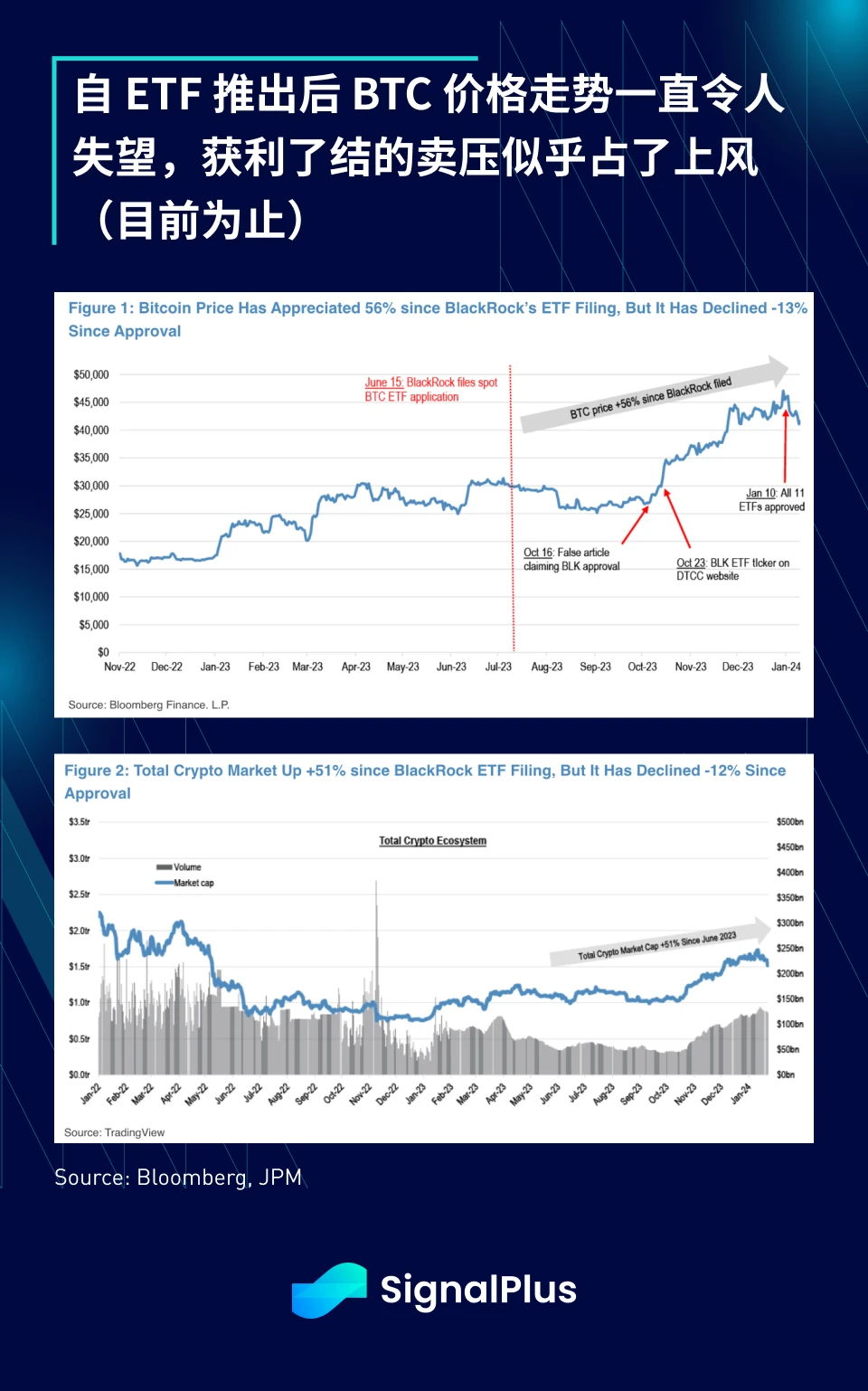
随著BTC现货ETF的批准尘埃落定,市场观点变得更加负面,后续价格走势令人失望,BTC难以维持在4万美元以上。

SignalPlus宏观分析(20240126):GBTC资金持续流出

SignalPlus宏观分析(20240126):GBTC资金持续流出

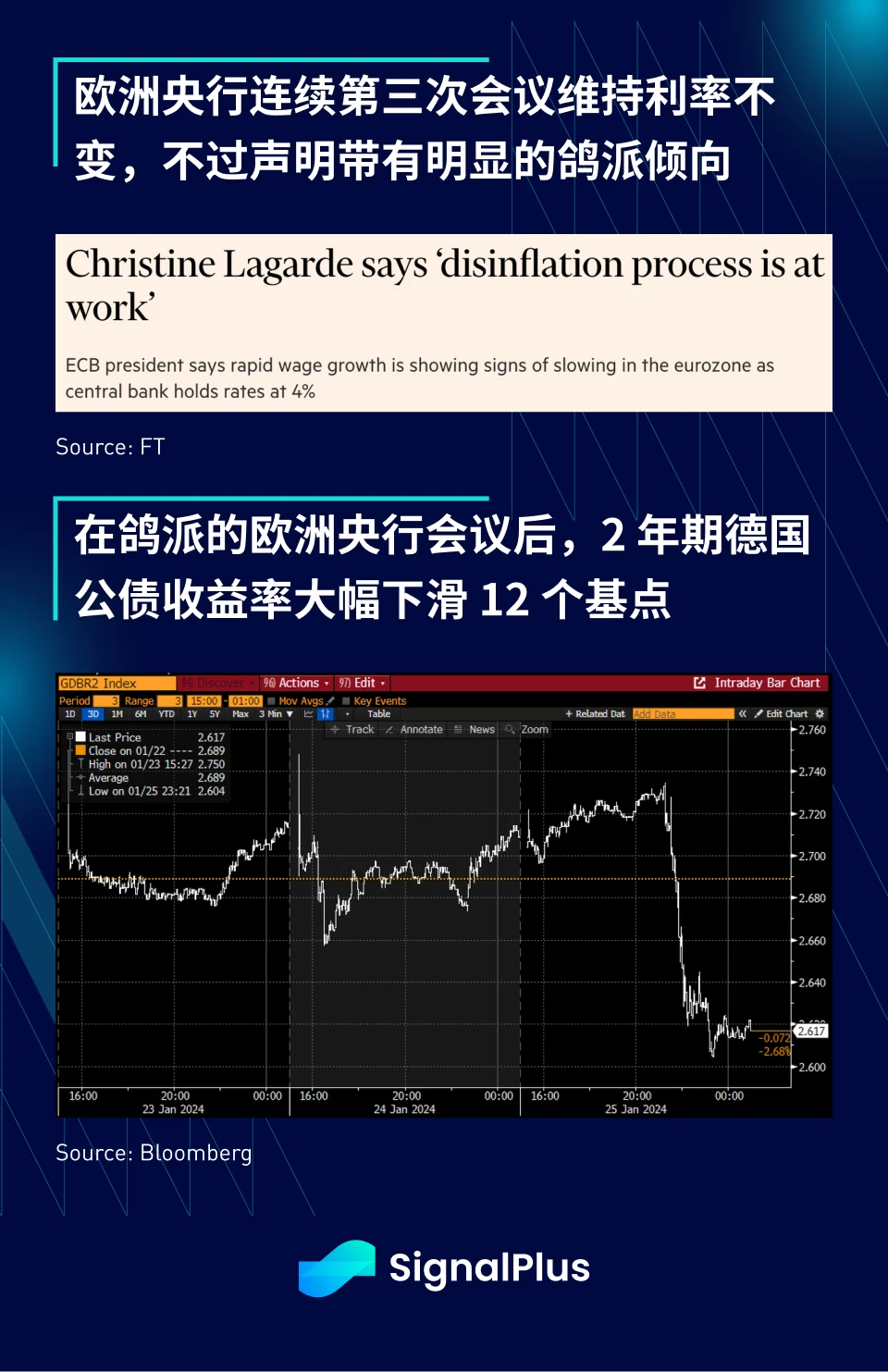
欧洲央行连续第三次维持利率不变,不过行长 Lagarde 通过声明和评论表达了鸽派转向的立场;先前声明中的评论“由于劳动单位成本持续增长,价格压力仍然居高不下”在这次欧洲央行声明中被省略,同时 Lagarde 在记者会上表示“通胀放缓正在进行中”,且价格压力将“在这一年中进一步缓解”,此外,虽然她重申委员会认为“讨论降息还为时过早”,但她对这一评论也有所保留,表示如果通胀放缓取得更多进展,降息“有可能”在夏季或夏季前发生。
SignalPlus宏观分析(20240126):GBTC资金持续流出

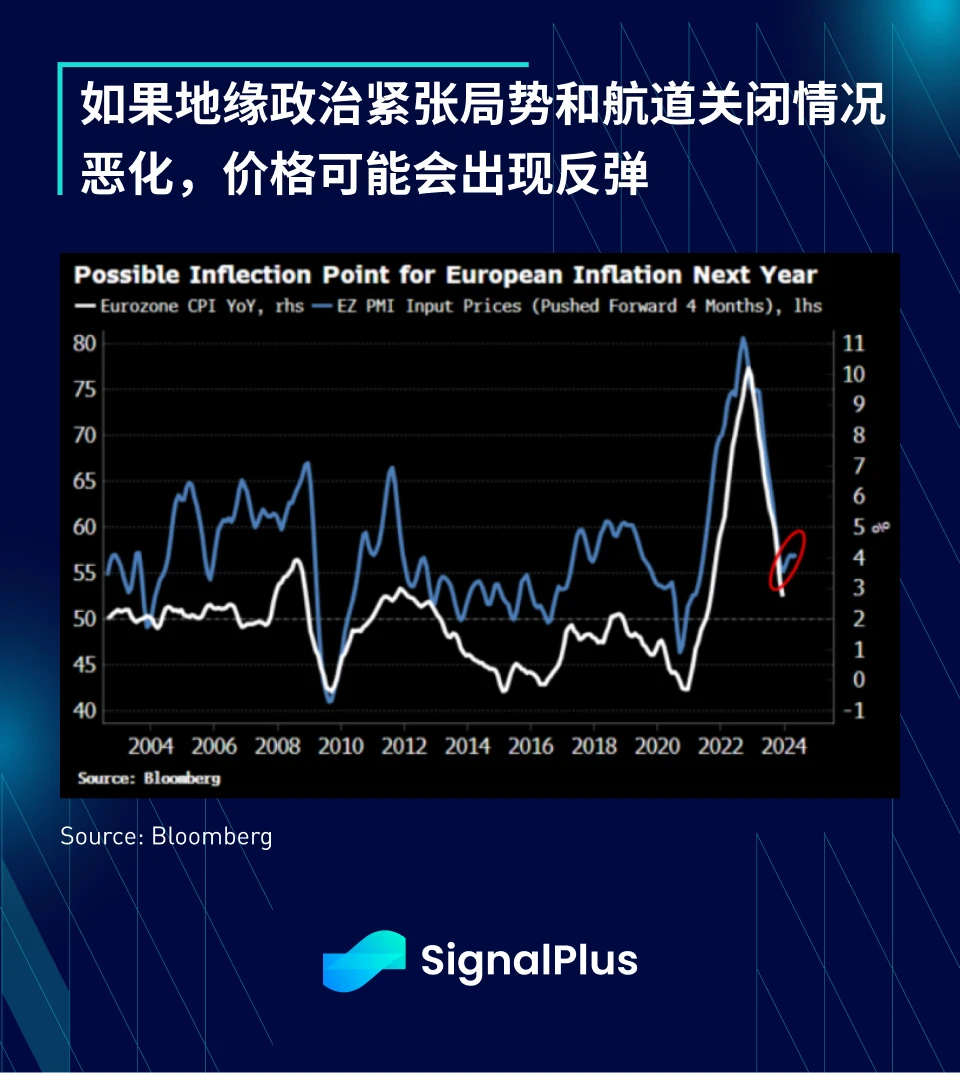
与美国类似,政策制定者已经明确转向,并提前宣布对抗通胀的胜利,但有迹象表明投入价格可能已达短期底部,我们可能很快就会需要应对价格的反弹,特别是如果航道关闭和油价上涨的情况继续恶化。
SignalPlus宏观分析(20240126):GBTC资金持续流出

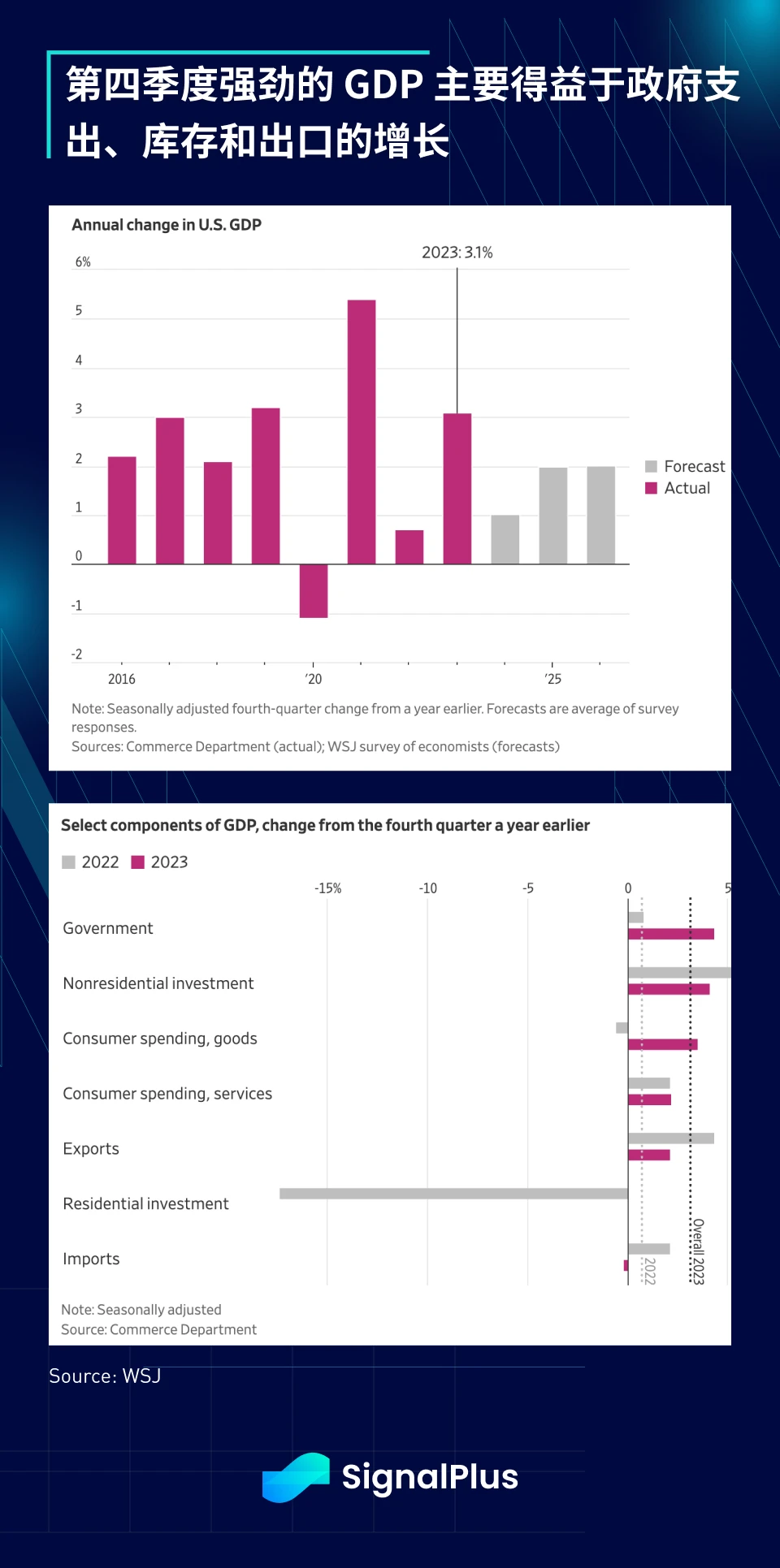
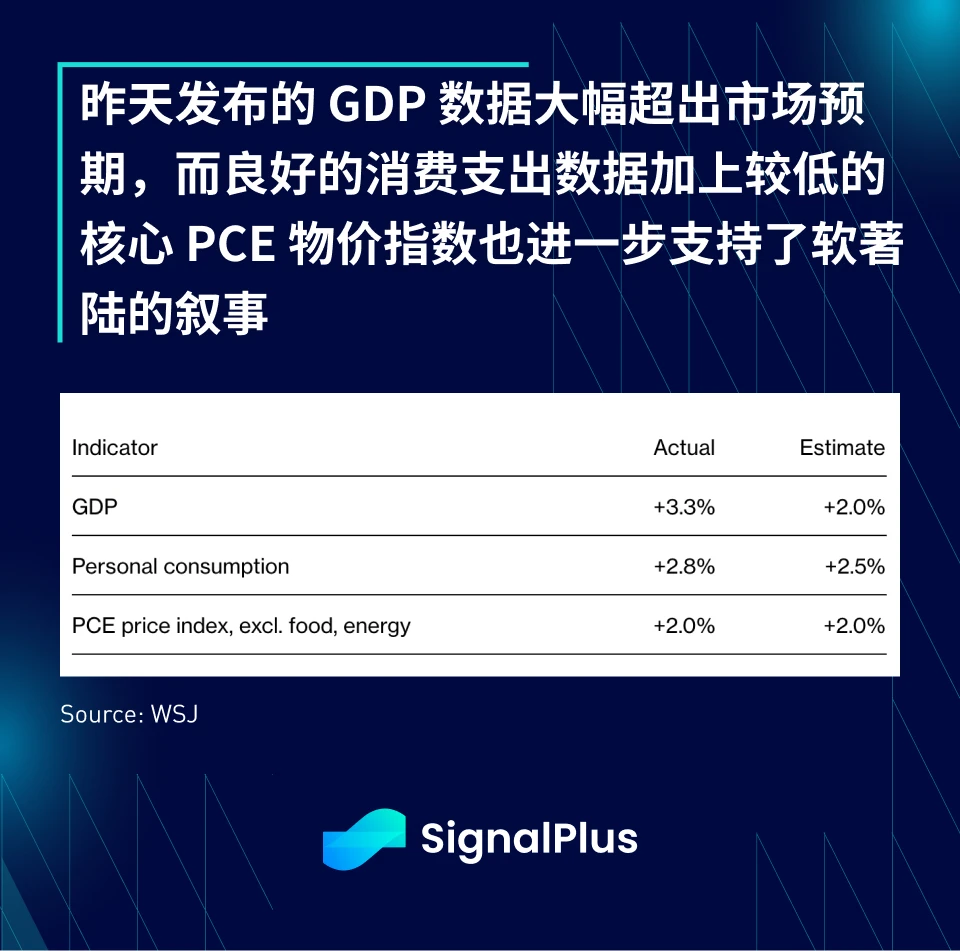
美国方面,第四季度经济数据显示美国经济情况仍十分强劲,GDP 增长 3.3% ,大幅超出预期的 2.0% ,个人消费支出也优于预期,强劲的政府支出、库存增加和正面的净出口构成了增长的主要因素,最终需求也保持在目标水平。
SignalPlus宏观分析(20240126):GBTC资金持续流出

SignalPlus宏观分析(20240126):GBTC资金持续流出

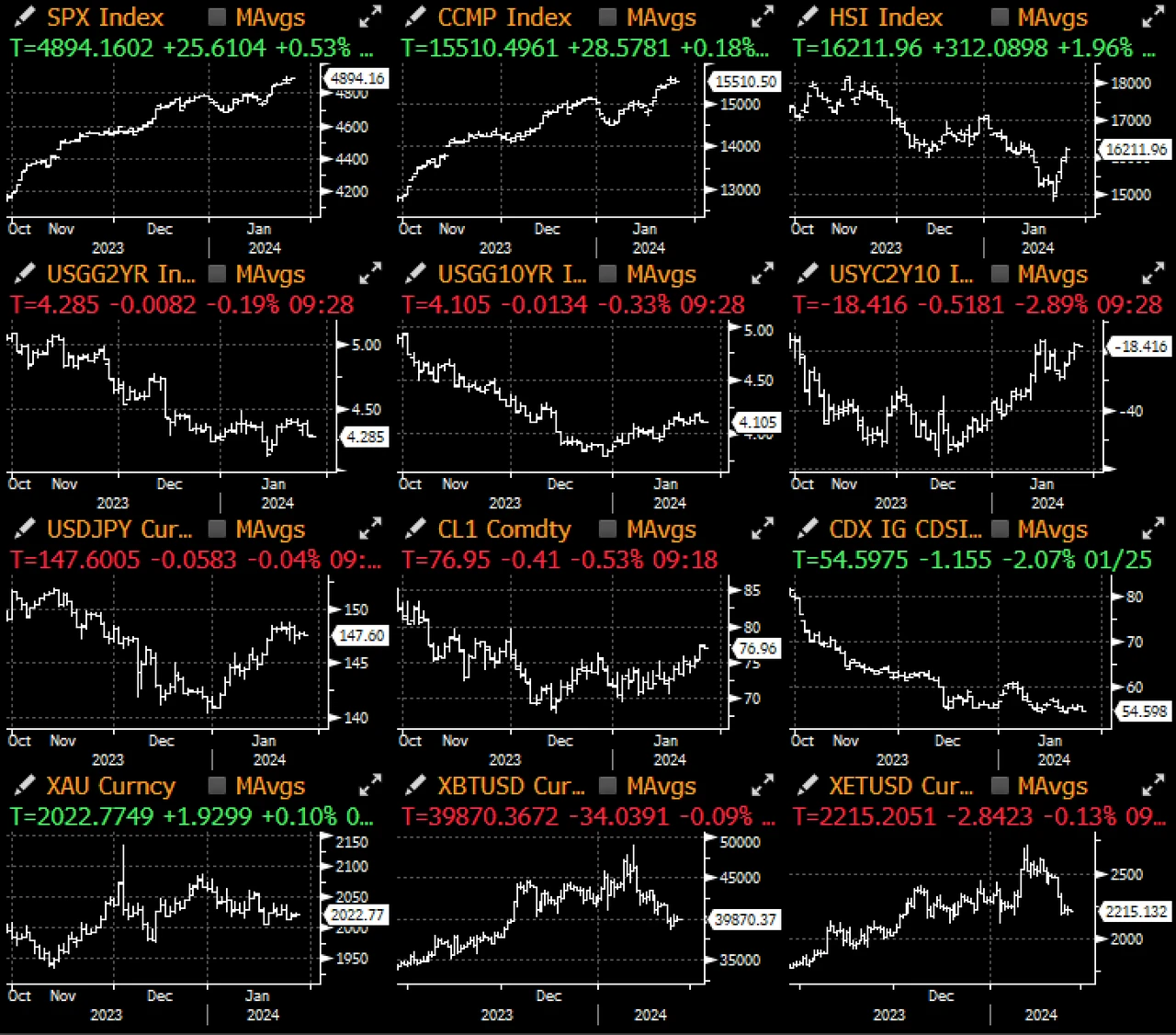
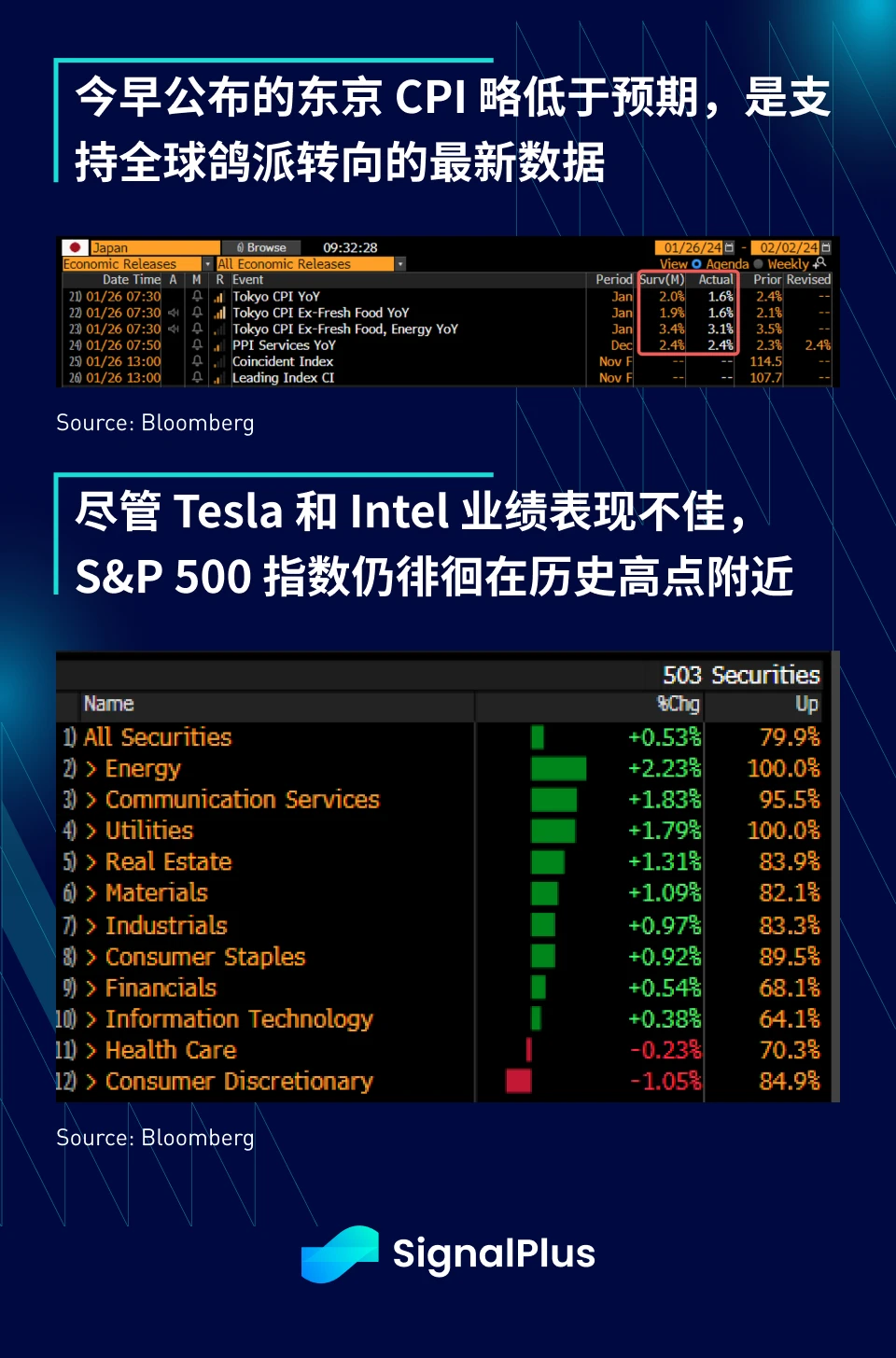
美联储和债券市场在软著陆的叙事中再次取得胜利,GDP 走强、消费支出保持稳健、价格压力持续放缓以及就业市场逐渐降温(初请失业金人数 + 2.7 万)推动收益率在牛陡走势中走低;此外,欧洲央行的鸽派立场、中国的救市计划以及略低于预期的东京 CPI 也帮助维持资产价格,虽然 Tesla 股价大跌 11% ,Intel 业绩预测惨淡,但 S&P 500 指数仍徘徊在历史高点附近。
SignalPlus宏观分析(20240126):GBTC资金持续流出

随著 BTC 现货 ETF 的批准尘埃落定,市场观点变得更加负面,后续价格走势令人失望,BTC 难以维持在 4 万美元以上。
SignalPlus宏观分析(20240126):GBTC资金持续流出

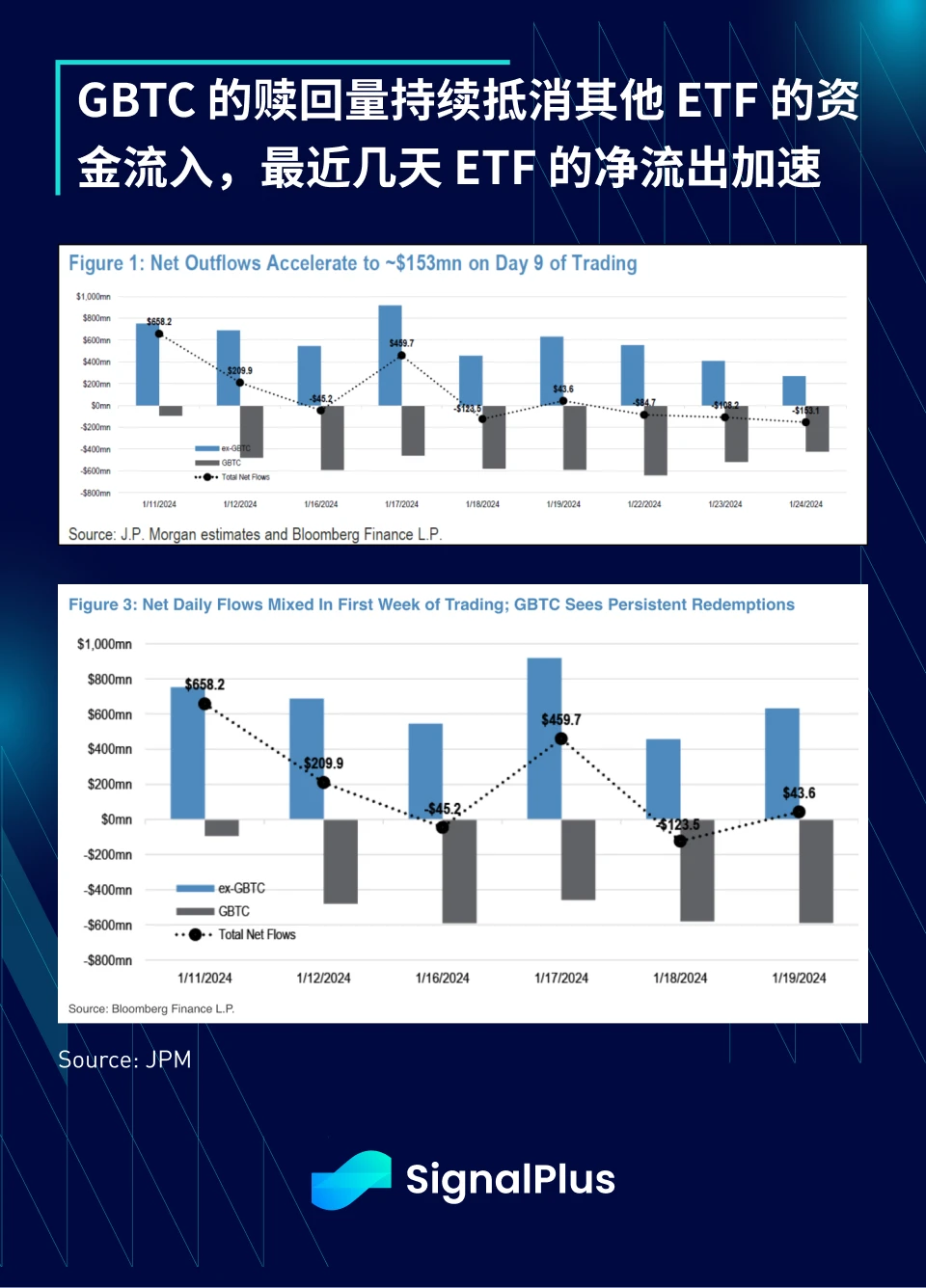
ETF 推出的 9 天后,净流出加速至约 1.53 亿美元,与第一周 12 亿美元的流入形成鲜明对比。JPM 比较了 BTC 现货 ETF 和 GLD(黄金 ETF),后者在推出一年后仅吸引了 35 亿美元的资金流入,远低于各界预测的 100-500 亿美元,迄今为止,BTC 现货 ETF 推出一周后的资金流入表现也落后于 GLD,主要是受到 GBTC 持续赎回的影响。

考虑到长期 GBTC 持有者仍有巨额收益未实现,加上 Grayscale 相比于新 ETF 费用较高,短期内 GBTC 的资金流出很可能会持续,当前的市场防守情绪也将持续较长一段时间。
SignalPlus宏观分析(20240126):GBTC资金持续流出

SignalPlus宏观分析(20240126):GBTC资金持续流出

您可在 ChatGPT 4.0 的 Plugin Store 搜索 SignalPlus ,获取实时加密资讯。如果想即时收到我们的更新,欢迎关注我们的推特账号@SignalPlus_Web3 ,或者加入我们的微信群(添加小助手微信:SignalPlus 123)、Telegram 群以及 Discord 社群,和更多朋友一起交流互动。

SignalPlus Official Website:https://www.signalplus.com

Letture associate

Analysis of the Latest Portfolio Adjustment by the "Top Player" in the U.S. Stock Market: $9 Billion Short on NVIDIA, Shifting Focus to Power and Memory Sectors

AI investor Leopold Aschenbrenner has made a significant portfolio shift, taking a $9 billion nominal short position against top AI infrastructure stocks like NVIDIA, ASML, and Oracle. Simultaneously, he is redirecting capital towards what he sees as the next critical bottlenecks in the AI boom: power, memory, and data center networking, alongside private investments in AI model companies like Anthropic. This move is interpreted not as a call that the AI bubble has burst, but as a rotation within the infrastructure stack. The analysis highlights NVIDIA's recent $25 billion bond issuance as a potential signal, questioning why a cash-rich company would seek external debt despite high profits and increased dividends/buybacks. The core investment thesis is that the initial, crowded "picks and shovels" trade in semiconductors is maturing. The next wave of capital is expected to flow into the physical and logistical constraints of AI expansion: electricity supply, memory chip capacity, data center construction, and enabling technologies like optical networking (fiber) for high-bandwidth communication, where copper remains crucial for short distances. Aschenbrenner's substantial (approx. 20% of fund) private stake in Anthropic is noted as a key part of his strategy—investing directly in the "mine" (AI models) rather than just the "shovels." The discussion concludes that while certain segments may be overvalued, the overarching AI infrastructure demand driven by real product usage remains robust. The most promising long-term investments are seen in essential, non-sexy infrastructure—particularly energy and power companies—whose demand is viewed as a global constant irrespective of AI's cyclicality.

marsbit15 min fa

Analysis of the Latest Portfolio Adjustment by the "Top Player" in the U.S. Stock Market: $9 Billion Short on NVIDIA, Shifting Focus to Power and Memory Sectors

marsbit15 min fa

BIT Research: Liquidity is Disappearing, Will Bitcoin Replay the Bottoming Pattern of 2022?

The crypto market is currently in an adjustment phase driven by policy expectations and liquidity shifts. Despite a brief rebound fueled by geopolitical easing and SpaceX's strong IPO performance, unexpectedly hawkish signals from new Fed Chair Kevin Warsh have removed anticipated easing support. Concurrently, stablecoin liquidity is shrinking, with insufficient new capital inflows, pushing the market into a typically quiet summer period. Pricing lacks catalysts for a sustained rally. Daily trading volume has significantly contracted, stablecoin growth has slowed markedly, and the supportive effect of Strategy's (formerly MicroStrategy) STRC preferred stock-financed Bitcoin purchases is fading. Amid policy uncertainty, seasonal weakness, and liquidity contraction, Bitcoin faces near-term downward pressure. Warsh's hawkish pivot and refusal to provide a clear policy outlook have increased risk premiums, historically unfavorable for Bitcoin. Technically, the trend remains bearish below $73,700, with $62,446 as critical support. A break below could accelerate declines, though a prolonged consolidation phase, similar to 2022's bottoming process, is possible. Liquidity is a core constraint. Current daily volume is around $500 billion, roughly 25% of the peak during the July-Oct 2025 rally. The 12-month growth rates for USDT and USDC have fallen to ~20%, with 6-month growth near zero, indicating weak new inflows. Bitcoin ETF and Strategy-driven inflows have also weakened, with a 30-day rolling net outflow. With inflation at 4.2% above the Fed's target, combined hawkish policy, seasonal factors, and liquidity shortages challenge Bitcoin's ability to hold above $60,000. However, this adjustment phase may be forming a cyclical low this summer, potentially setting the stage for the next bull cycle.

marsbit43 min fa

BIT Research: Liquidity is Disappearing, Will Bitcoin Replay the Bottoming Pattern of 2022?

marsbit43 min fa

Who Makes the Best Use of Claude Code? The Answer Might Not Be Programmers

Claude Code Usage Report Summary (Based on ~400k sessions) Core Finding: In agentic programming with Claude Code, a clear division of labor has emerged: humans primarily decide *what* to build (planning decisions), while Claude decides *how* to build it (execution decisions). Key Insights: 1. **Effectiveness is not limited to programmers.** In code-generation tasks, success rates for users in non-technical fields (law, finance, management, research) are nearing those of software engineers. What matters most is the user's domain expertise and understanding of the problem to be solved. 2. **Domain expertise drives success and efficiency.** Sessions where users exhibited "expert" proficiency in the task's domain saw verified success rates double compared to "novice" sessions. Experts also delegated more work per instruction, with Claude executing more actions and producing more output. 3. **AI is amplifying, not replacing, domain knowledge.** Claude Code lowers the *implementation* barrier, not the *judgment* barrier. The value of knowing the "what" and "why" is increasing relative to just knowing the "how" to code. 4. **Usage is evolving.** Over a 7-month period (Oct '25 - Apr '26), the share of sessions for debugging halved, while use for software operations, data analysis, and non-code writing roughly doubled. The estimated economic value of typical tasks increased by ~25%. Conclusion: The data suggests coding agents are making programming background less critical for completing technical tasks. However, they reward and amplify deep domain understanding. The ability to successfully direct an AI agent stems more from mastery of a specific field than from coding skill itself. The primary gains come from being competent in a domain; deep specialization adds only marginal additional advantage. This may signal a shift where software creation becomes integrated into various professions.

marsbit1 h fa

Who Makes the Best Use of Claude Code? The Answer Might Not Be Programmers

marsbit1 h fa

Trading

Spot
Futures
活动图片