Solana Ventures Invests $500K in YGG SEA To Bolster GameFi in Southeast Asia

cryptodailyPublished on 2022-04-29Last updated on 2022-04-29

Abstract

The gaming industry is one of the most successful and quickly growing industries, and along with it, the crypto space is growing just as quickly.

The gaming industry is one of the most successful and quickly growing industries, and along with it, the crypto space is growing just as quickly. Combine these two, and what you get is looking to become the next big thing since, with the explosion of NFTs and Metaverse, it already has the attention of crypto leaders.
GameFi to become the next big thing?
That is the shared opinion of the investors and developers alike. This is because DeFi protocols and blockchain gaming tokens and projects such as Axie Infinity, Decentraland, and Metaverse have noticed a lot of investment this year. 
Thus, tapping into that space, Solana Ventures partnered with Yield Guild Games subDAO (YGG SEA) as well as co-led a $500k investment in the project. Solana Ventures will work with YGG SEA to provide resources and training to Southeast Asian game developers and the broader gaming community through this exclusive strategic agreement.
With over 225 million gaming and e-sports fans, gaining a foothold in this region will unlock a whole new demographic for Solana. This way, the blockchain will be able to deploy new titles in the Solana ecosystem drawing in higher investments from GameFi enthusiasts.
By working closely with YGG SEA's country managers, Solana will develop training programs on building projects on the Solana blockchain and connect game development studios to engineering resources.
Talking about the deal, the Head of Solana Ventures, Matt Beck, said,
"Southeast Asia is a major hub of innovation in blockchain games, and we are excited to partner with YGG SEA to build sustainable value in the Southeast Asian communities and developer ecosystem. Game companies should not only focus on monetization. Our plans are to build out learning and development resources to create real, long-term value in Southeast Asia, and ultimately help bring the best games and products to market."
Since Solana intends to establish a long-term presence in this region beyond GameFi, this partnership with the Yield Guild Games subDAO will act as a critical stepping stone.
Why is GameFi so important?
As mentioned earlier, GameFi attracts investment from a cohort called" gamers" who would usually refrain from investing in the likes of NFTs or buying virtual plots in the Metaverse. As Venture Capitalists such as Solana Ventures have identified it, they are actively trying to establish their presence/domination in this area.
In fact, just in the first quarter of 2022, from January to March, VCs and other investors have infused over $2.5 billion. The total value locked in Decentralized Finance (DeFi) protocols declined by $28 billion in the same duration.
Although DeFi does command higher participation, the presence of GameFi is quickly rising as well, with the latter standing only a couple of hundred active wallets away from DeFi's stature.

Related Reads

Focus: Five Leading AI Stocks on Nasdaq

The report analyzes five Nasdaq-listed AI infrastructure stocks—Micron (MU), MaxLinear (MXL), AMD, Lumentum (LITE), and Vicor (VICR)—as distinct plays within the AI capital expenditure chain, rather than a single "AI trade." While all benefit from AI data center spending, they differ in their specific roles (e.g., memory, computing, optics, power, connectivity), financial resilience, and risk profiles. The author argues that the key question is not whether the AI narrative remains intact, but whether capital expenditure translates into real orders, earnings justify valuations, and portfolios can withstand high volatility. Historical data shows these stocks have significantly outperformed benchmarks but also experienced deeper drawdowns (~28% to -32%), highlighting their high-beta, high-volatility nature. An investment framework is proposed: core positions (e.g., MU, AMD) for stocks with stronger fundamental evidence; satellite positions (e.g., LITE, VICR) for high-potential, high-volatility names; and cautious observation (e.g., MXL) for smaller-cap ideas with unproven financials. The emphasis is on disciplined, phased buying during pullbacks—only when price corrections align with intact fundamentals and available risk budget—rather than emotional "buy-the-dip" strategies. Overall, AI infrastructure offers long-term potential, but success requires strict position sizing, role definition for each holding, and preparedness for significant volatility.

marsbit1h ago

Focus: Five Leading AI Stocks on Nasdaq

marsbit1h ago

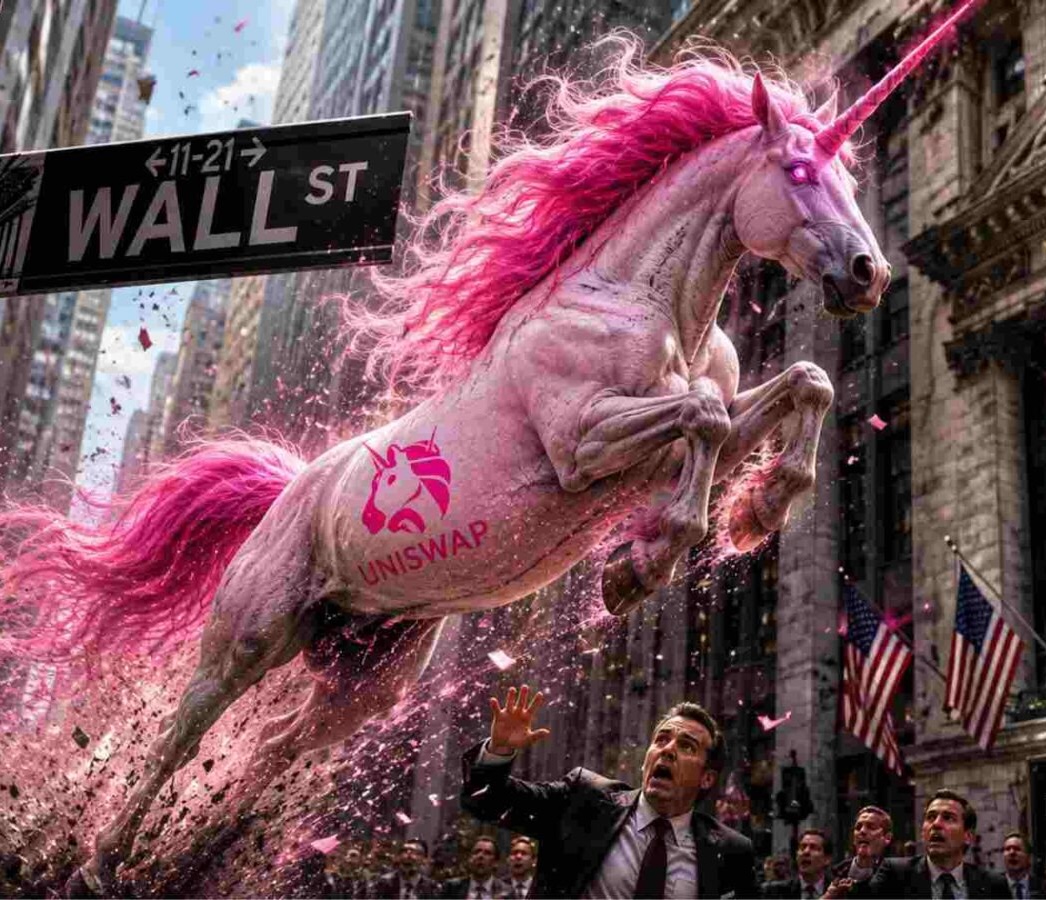
Will UNI Reach $100 in Four Years? Will Standard Chartered's Prediction Come True?

TL;DR: - According to reports, Standard Chartered Bank has published a research report on Uniswap, setting a 2030 price target of $100 for the UNI token. - The bank's core logic is that the tokenization of assets will drive demand for open DeFi liquidity, and Uniswap could capture significant trading volume and fee revenue. - However, most institutional-grade tokenized products are permissioned, and the example of BlackRock's BUIDL shows that DeFi still faces significant access barriers. Standard Chartered's $100 target for UNI by 2030 is based on the hypothesis that tokenized assets will grow massively and a significant portion will flow into open DeFi markets, requiring decentralized exchange platforms like Uniswap for liquidity. The bank forecasts tokenized assets could reach $4 trillion by 2028, with up to 30% in DeFi by 2030. The key question is whether tokenized assets like treasuries and funds will trade in open, decentralized markets or remain within closed, permissioned institutional systems. This directly impacts Uniswap's potential growth. A real-world example is BlackRock's BUIDL fund, which, while using UniswapX for trading, is strictly limited to pre-approved, whitelisted institutional participants. This highlights the current trend: institutions may leverage DeFi infrastructure but maintain strict control over access and transfers. Furthermore, for UNI's value to rise significantly, Uniswap must establish a clear value-capture mechanism, such as the approved fee switch and token burn proposal. Regulatory and interoperability hurdles also persist, as noted by bodies like the Financial Stability Board. In summary, Standard Chartered's bold prediction hinges on the future flow of tokenized asset liquidity. While it signals institutional recognition of DeFi's potential, the path to $100 depends on overcoming current permissioned models and enabling truly open, cross-asset liquidity pools on platforms like Uniswap.

Foresight News1h ago

Will UNI Reach $100 in Four Years? Will Standard Chartered's Prediction Come True?

Foresight News1h ago

Odaily Editorial Team Tea Talk (June 17)

Odaily Editorial Team Casual Chat (June 17) This is an informal column sharing real-time thoughts from Odaily's editorial team on industry news, data, and events. The content is based on actual investment and observations, does not constitute investment advice, and aims to expand perspectives. Azuma shared recent operations: small-scale buys in crypto (mainly BTC) at relatively high levels, a small addition to HOOD stock, and participation in World Cup prediction markets. He also discussed Hyperliquid, noting that while its token HYPE has performed well, its high price may hinder the expansion of its HIP-3 ecosystem by making market creation cost-prohibitive, potentially limiting the platform to just one major market (trade.xyz). Suzz emphasized the importance of a calm mindset in investing, stating that markets offer perpetual opportunities. He warned against "hindsight bias," where past opportunities seem obvious, and stressed that the present always holds new chances for those with the right knowledge and temperament. Golem analyzed SpaceX's acquisition of AI tool Cursor's parent company, Anysphere, for $60 billion paid entirely in SpaceX stock. He speculated whether Musk's interests might work to keep SpaceX's trading volume and market cap high in the short term to reduce the actual equity cost of the deal, noting current high retail investor enthusiasm. Wenser shared a market outlook: cautiously bullish on BTC, monitoring SpaceX stock post-IPO for a potential rise, observing World Cup trends favoring strong teams, and noting the continued strength of Japanese and Korean stocks. He highlighted Anthropic's potential for a massive future IPO and the defensive investment logic in "picks and shovels" AI infrastructure. Qin Xiaofeng discussed trading HYPE around $56-$70, viewing the $50-$60 range as long-term support due to Hyperliquid's dominance in on-chain traditional asset trading and its substantial fee revenue used to buy back HYPE. On ETH, he noted a divide between disappointed crypto natives and bullish traditional investors like Tom Lee, personally viewing current ETH prices as undervalued.

Odaily星球日报1h ago

Odaily Editorial Team Tea Talk (June 17)

Odaily星球日报1h ago

Trading

Spot
Futures
活动图片