1. BTC trading leverage soared
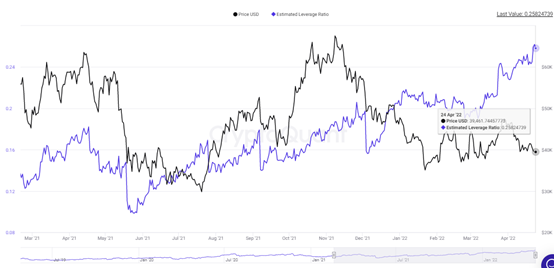
In sharp contrast to the low price of BTC, the trading leverage ratio of investors has soared sharply. Even though it reached 0.258 on April 25, the numerical growth trend still shows no sign of ending. In absolute terms, the leverage ratio is not enough to improve the risk level. However, the leverage ratio reflects the leverage performance of the overall market, which is significantly higher than 0.11 before the sharp decline in March 2020. Then the problem comes. If BTC continues to withdraw, airdrop may gain greater benefits.
2. Multiple orders and a large number of positions burst in the whole network
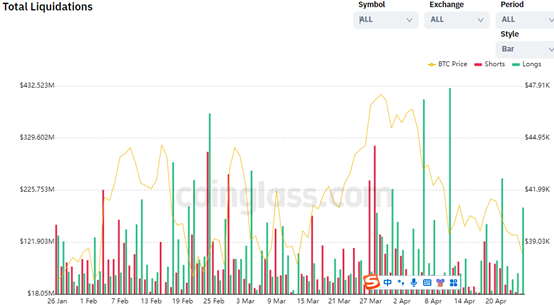
The number of multiple single positions is not only larger than that of empty single positions, but also its growth rate is faster. From April 25, when more than $190 million was sold out, the scale of empty single position was only $18 million, and the scale of long position was 10 times that of short position. It can be seen that at present, the bulls are the only loser from the position explosion growth driven by the price decline. Investors who continue to short may expand their profit scale if they are not forced to close their positions during the price shock.
3. BTC may drop to the new area
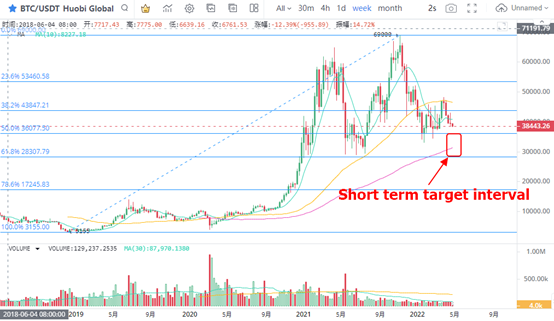
In the weekly K-line chart of BTC, the price may reach a new range in the short term. That is, the 28307 corresponding to 61.8% of Fibonacci is less than the 36077 corresponding to 50% of Fibonacci. From the point of view, BTC is very close to this interval. Although BTC did not fall below this range during the price adjustment in 2021, it does not mean that the support of this range must be effective. The current trading downturn is more severe than that in 2021, so the predicted possible reversal point is lower.
4. Cold wallet BTC outflow trend continues
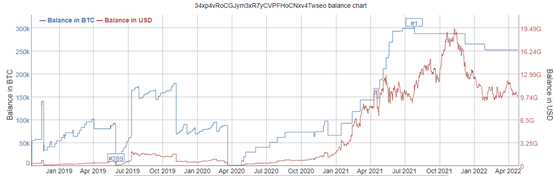
According to the data from the cold wallet, the number of BTCs in the largest exchange cold wallet address fell from 29943 to 252600 at present, and its downward trend continued. The decrease in the number of cold wallet BTCs indicates that the number of investors participating in the transaction has increased. It has to be said that this is a typical trading signal. Cold wallet BTC is more likely to flow into the exchange, and the selling pressure will prolong the cycle of price adjustment.
Historically, the number of cold wallet BTCs with the address of 34xp4vrocgjym3xr7ycvpfhocnxv4twseo has increased from almost zero in early 2020 to nearly 300000 in mid-2021. During this period, the upward trend of BTC price has generally continued. At present, there are signs of reversal, which is worthy of attention.