$100M Annual Revenue, Two Berkeley Roommates in Their 20s Build the Most Profitable AI Business

marsbitPublished on 2026-07-06Last updated on 2026-07-06

Abstract

Arena, the AI model ranking platform, has become a $100 million annual revenue business just eight months after launching its commercial service. Originally a UC Berkeley open-source research project called Chatbot Arena, it created a "battle arena" where users blind-test and vote on anonymous AI model responses. This has generated a highly trusted, community-driven leaderboard based on over 10 million user evaluations and 82 million votes. Major AI companies like OpenAI, Google, and Anthropic submit their flagship models to be ranked. The core monetization strategy is its AI Evaluations service, where model developers and large enterprises pay for in-depth performance analysis from Arena's massive user community. This provides real-world feedback on model strengths, weaknesses, and hallucinations—a critical service as models become more complex. The company, spun out from Berkeley in early 2025, quickly raised $100 million in seed funding at a $600 million valuation and later secured a $150 million Series A at a $1.7 billion valuation. The founding team includes CEO Anastasios Angelopoulos, a mathematician focused on rigorous model evaluation; CTO Wei-Lin Chiang, creator of the popular Vicuna chatbot; and co-founder Ion Stoica, a renowned Berkeley professor. Arena is now expanding beyond chat benchmarks into "Agent Mode," evaluating AI agents on complex, multi-step tasks like coding and research. The company's success illustrates the growing value and cost of independent, ...

A company that doesn't build AI is earning $100 million a year!

The creator of this business miracle is 'Arena', the 'large model battleground' that major Silicon Valley AI giants are vying for.

Its predecessor was called Chatbot Arena, initially just an open-source research project launched by a UC Berkeley team in 2023.
Who would have thought that in such a short time, it would become the core arena holding the fate of large models.

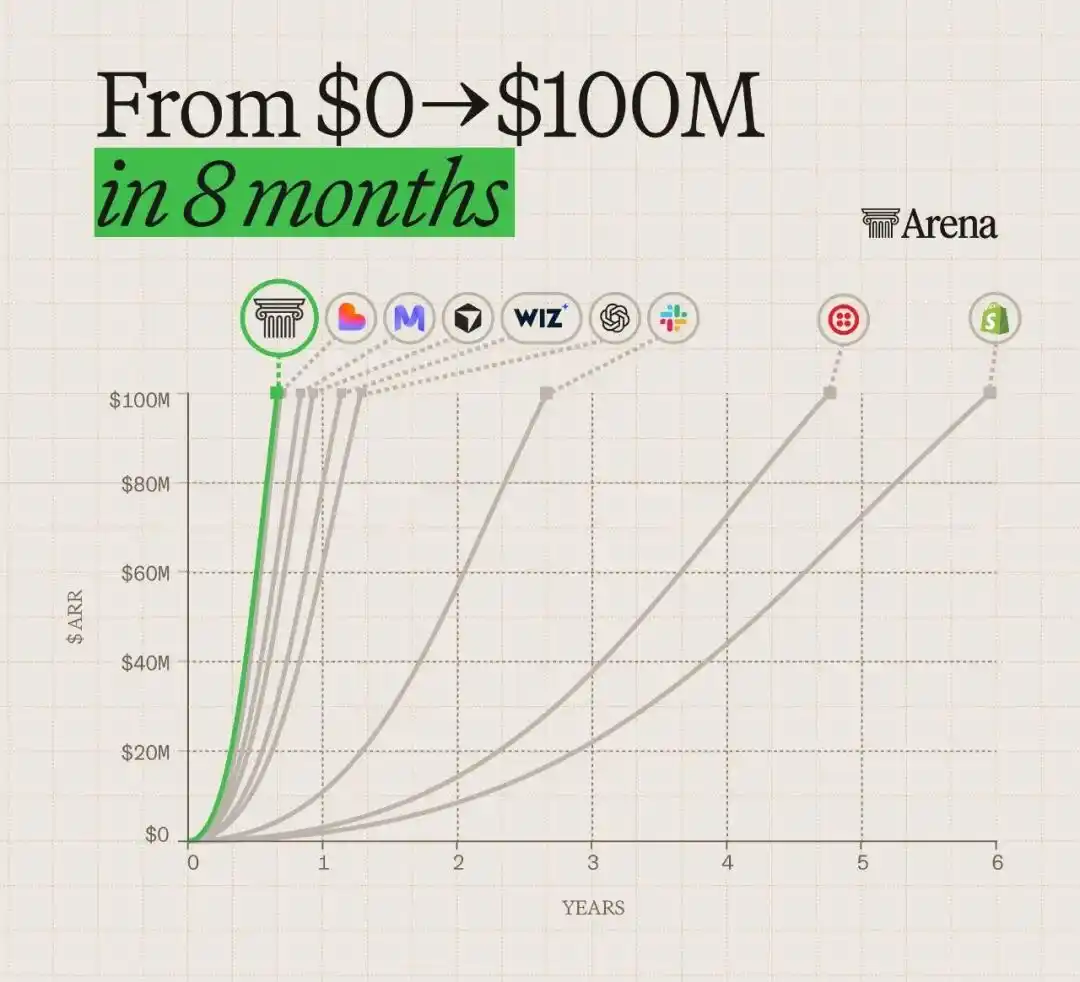
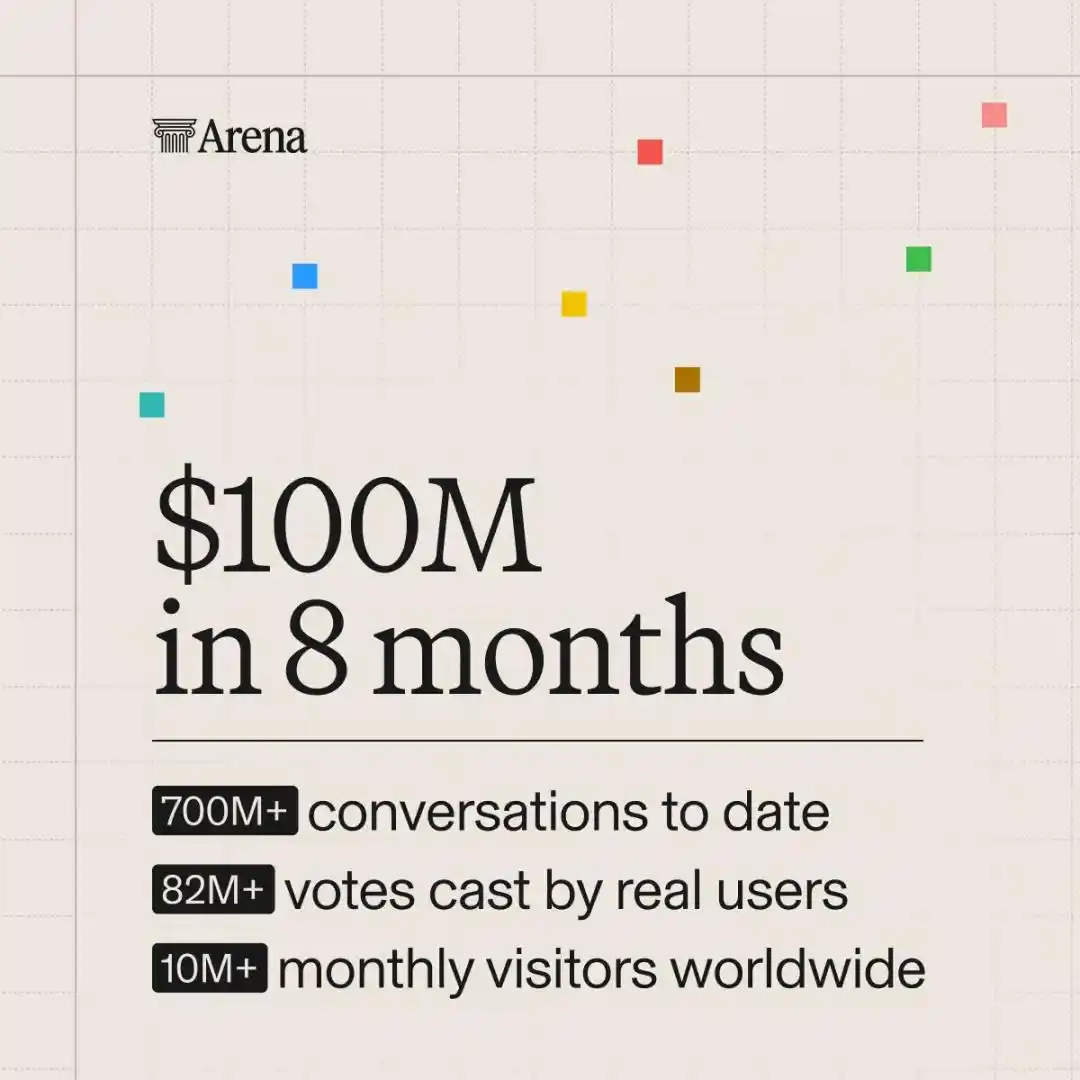
Just today, a mere 8 months after Arena's commercial service launched, its annualized revenue reached $100 million, hitting a new milestone.
ChatGPT, Claude Battle for the Top, The Large Model Arena

For many, Arena is no stranger.

What it's most famous for is that large model leaderboard entirely built on real user blind testing.

The gameplay is extremely simple, yet full of competitive spirit—

Enter a prompt, the system blindly dispatches two anonymous models to answer simultaneously; then choose which one is better.
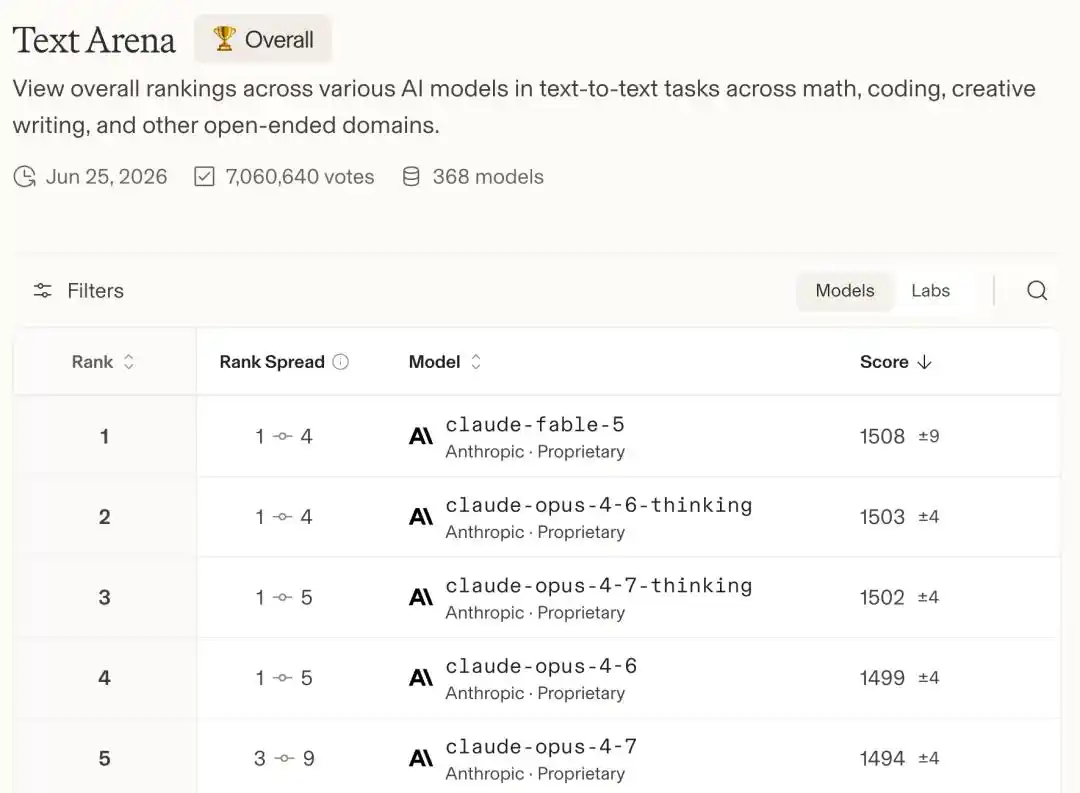
The system aggregates tens of millions of such votes into an Elo-style leaderboard.

This 'battle arena' mechanism has made it a holy land for global AI enthusiasts and developers.

To date, the platform has accumulated over 10 million user evaluations, 700 million conversations, 82 million votes, more than 10 million monthly visitors from over 150 countries worldwide.

More crucially, about 80% of daily user prompts are completely new, no model can 'memorize' them in advance.
How valuable is this?

OpenAI, Google, Anthropic, Meta—these top-tier giants usually at each other's throats—all submit their flagship models to Arena to be grilled by the community.

OpenAI even secretly tested on the board under the codename 'summit' before GPT-5's official release.
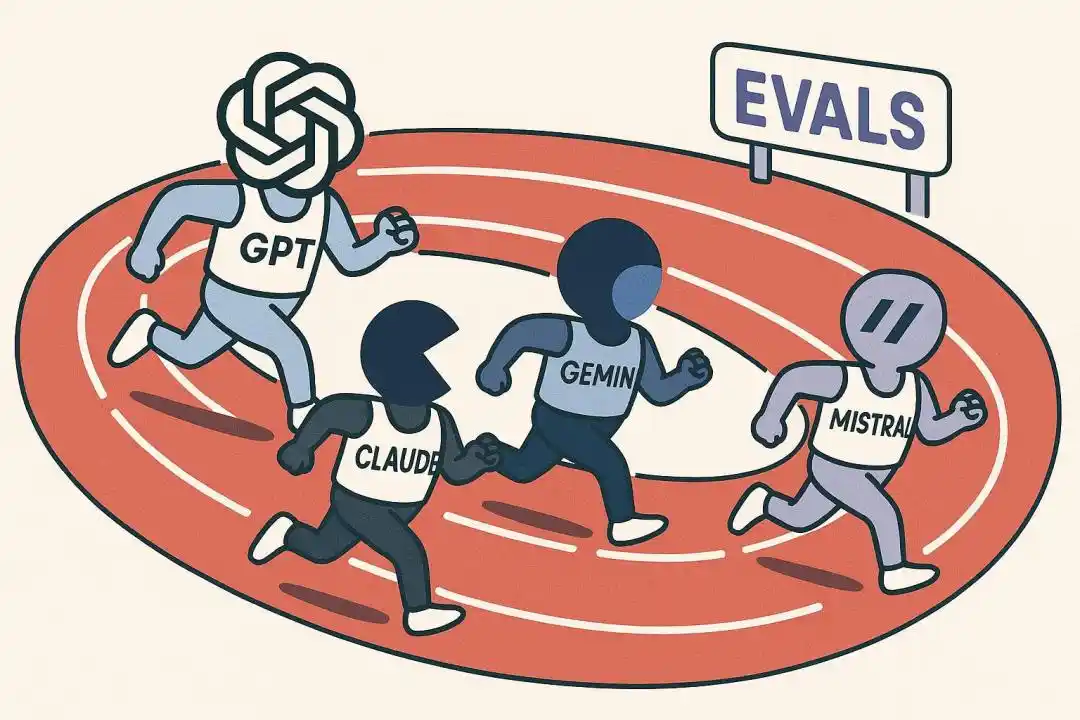
In other words, the strongest batch of models in all of Silicon Valley are waiting for a Berkeley student project to give them its stamp of approval.

How Did $100 Million in Revenue Materialize?

So the question arises—how did a free leaderboard become a $100 million cash cow?

Last September, Arena launched a commercial service called AI Evaluations:

Model vendors and large enterprises can pay to have Arena mobilize its community of tens of millions to conduct in-depth evaluations of their own models, obtaining 'real-world' performance analyses that mere benchmarking simply can't provide.

This is a set of 'CI/CD system for the real world'.

Once a model is ready for public release, Arena will evaluate it for the community for free;

But if a company wants to know where their model truly excels, where it's weak, and where it's hallucinating in the hands of real users, they have to pay.

This is a classic 'pickaxe seller' business—during a gold rush, those digging for gold might not make money, but those selling water and shovels profit steadily.

The more frantically large model vendors compete, the more desperately they try to squeeze out the last bit of performance, the bigger their appetite becomes for this kind of 'post-launch optimization' service.

And Arena happens to be positioned exactly where everyone must pass through.

Three Berkeley Grads

Building the Most Profitable Business

Arena's predecessor was called Chatbot Arena.

Before that, it belonged to the renowned LMSYS research group at Berkeley.

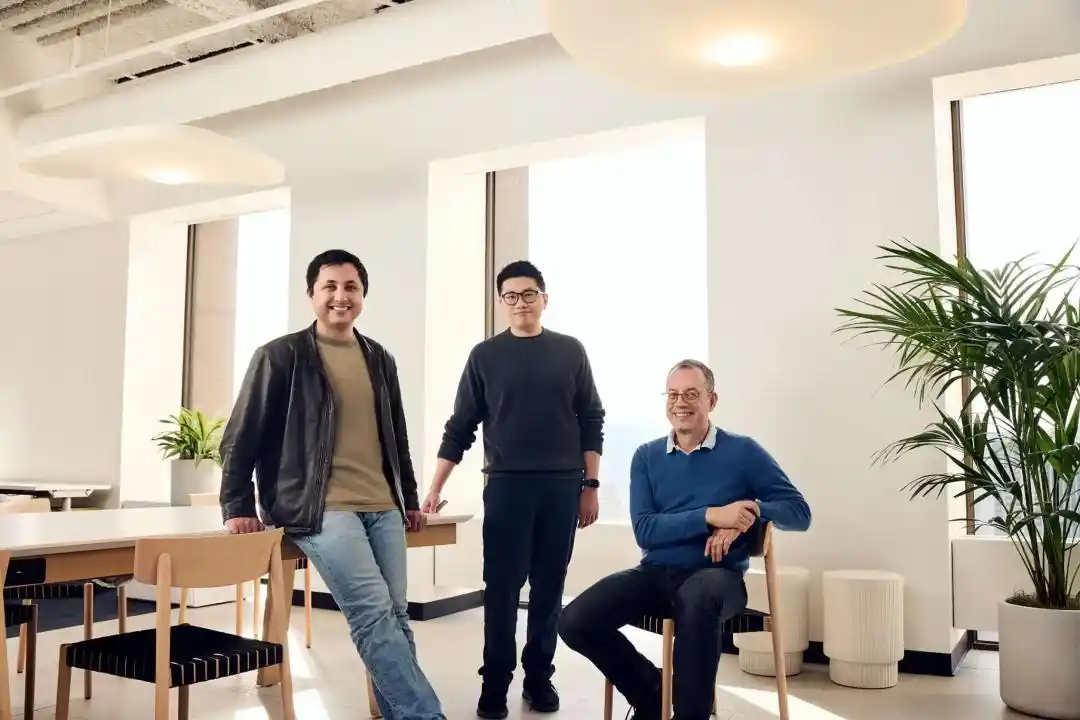
Two Berkeley roommates simply wanted to do something straightforward—build a neutral arena for large language models, letting everyone compete fairly.

No one expected this student project would sprint its way to becoming a unicorn.

The timeline is breathtakingly fast: In the spring of 2025, the project spun off from the university, formally incorporated, and within weeks secured a $100 million seed round at a $600 million valuation;

A few months after the commercial product launched, within just four months, annualized revenue surged to $30 million.

Immediately following, this January, a $150 million Series A round led by Felicis and UC Investments landed, with a post-money valuation fixed at $1.7 billion.
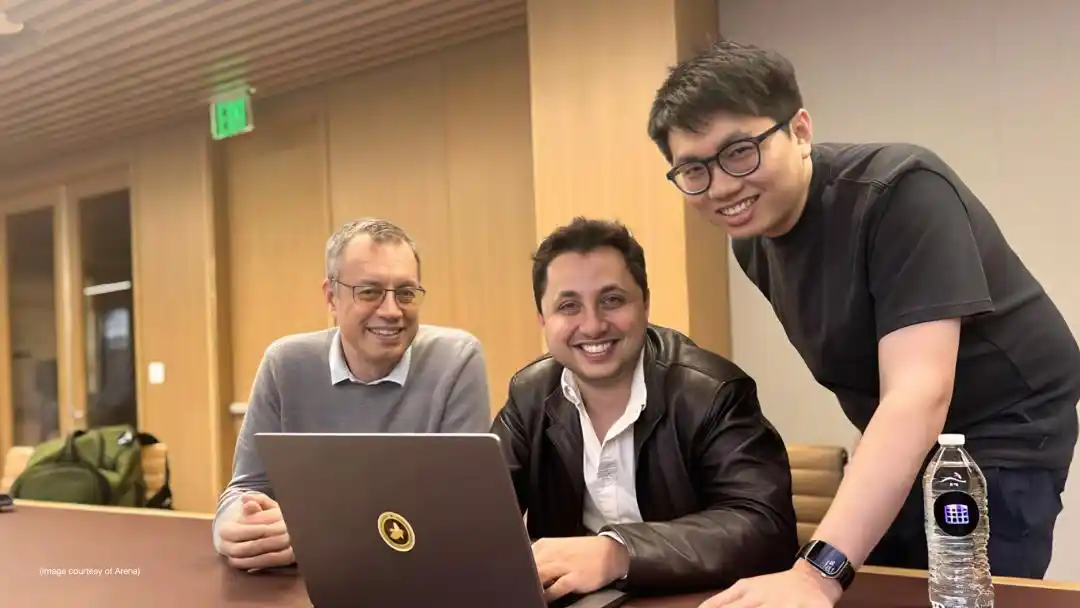
The three at the helm are no ordinary figures either.

CEO Anastasios Angelopoulos is a mathematician at heart.

While studying electrical engineering as an undergraduate at Stanford, he studied under the legendary figure in convex optimization, Stephen Boyd.

For his Ph.D. at Berkeley, his advisors were directly two godfather-level giants—machine learning master Michael I. Jordan and computer vision master Jitendra Malik.

His research focus in recent years has mainly been on how to make mathematically rigorous judgments about a black-box model.
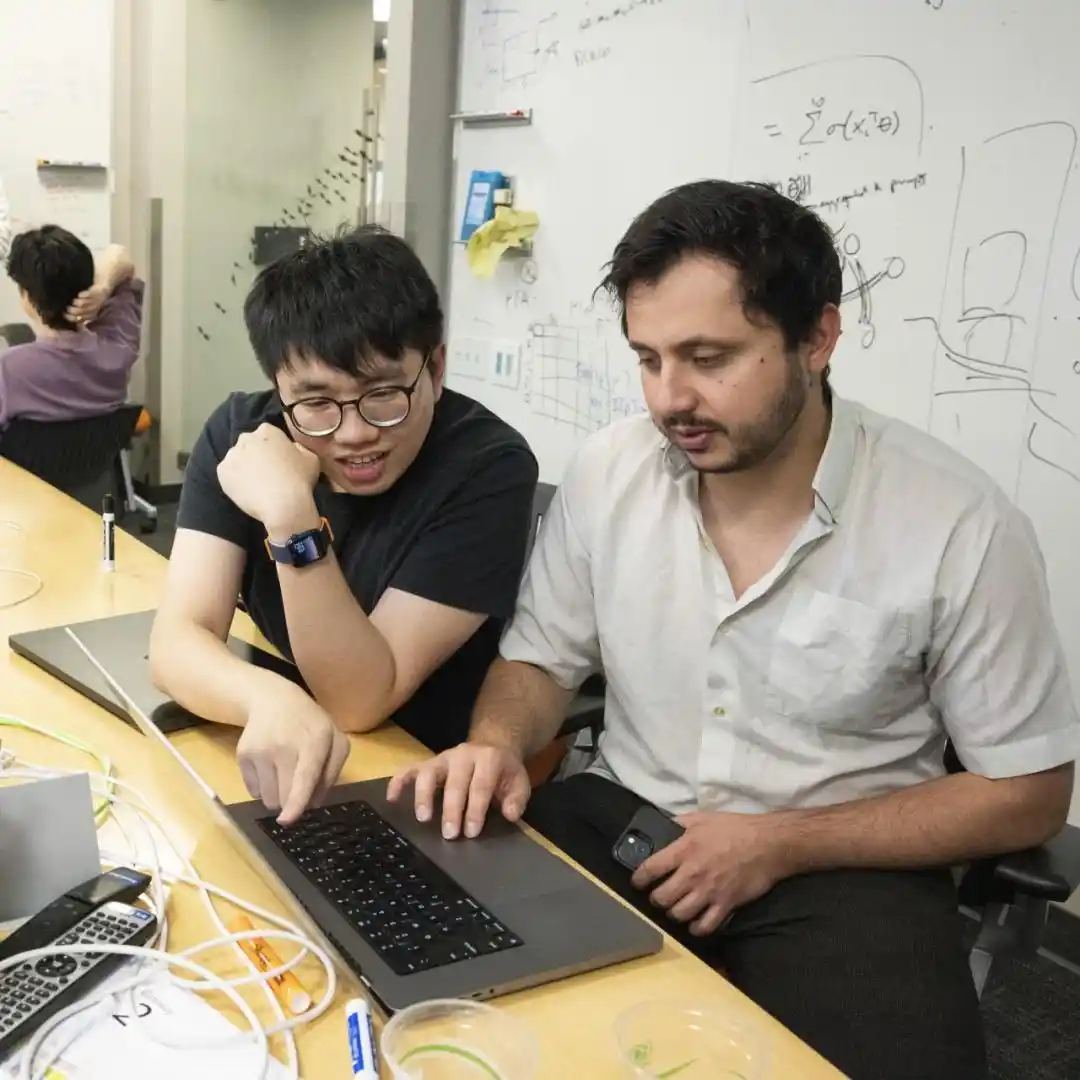
CTO Wei-Lin Chiang is a familiar face in the open-source community—the wildly popular open-source chatbot Vicuna was his creation.

He pursued his Ph.D. at Berkeley under Ion Stoica, specializing in distributed systems, and previously worked at Google, Amazon, and Microsoft.

The moment ChatGPT entered public beta in late 2022, he dropped all his previous research and plunged headfirst into Arena.
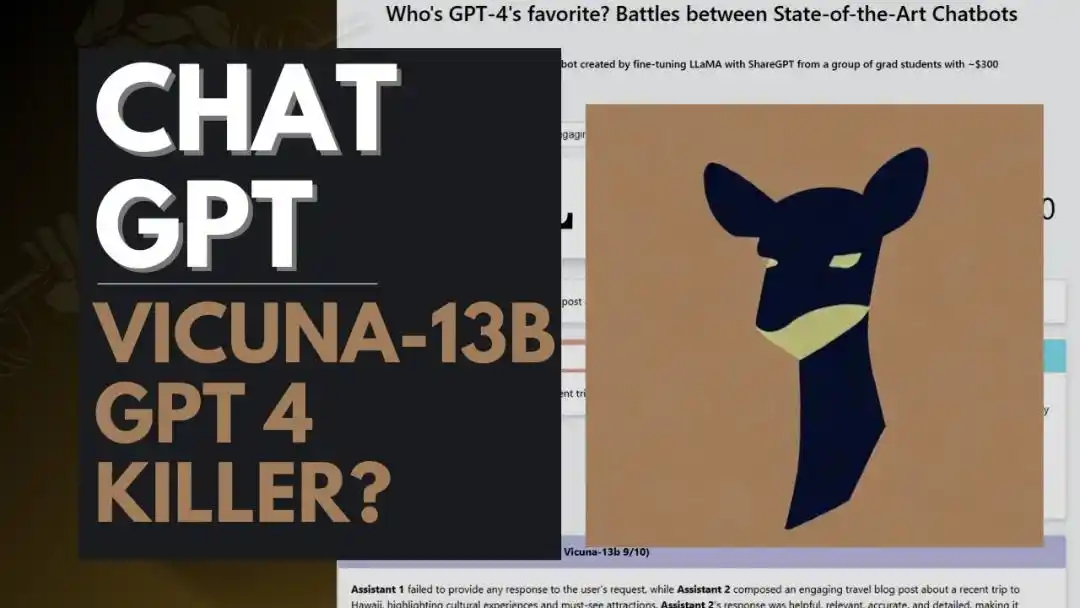
His obsession with this project was described by his partner Angelopoulos as 'a labor of love'.

For this project, their work hours were so long they simply moved in together. Two roommates built a $1.7 billion company.

The third co-founder is the famous Berkeley professor and Databricks co-founder Ion Stoica. He served as an advisor until the project incorporated in April 2025.

Being the Referee is More Important Than Being the Player

Arena's latest move is launching Agent Mode.

What it evaluates is no longer just 'who chats better', but the real work millions of users are doing with agents: writing code, debugging, conducting research, analyzing documents—those long tasks involving hundreds of tool calls and multi-turn interactions.

It has begun scoring with objective metrics like task completion rate and hallucination rate, far exceeding the initial scope of 'human preference voting'.

AI is evolving from 'chatbots' to 'agents' capable of independently handling work, with tasks growing longer and stakes higher.

Evaluation is the last probe humans have into the inner workings of AI.

The reason Arena's business can be worth $100 million, worth $1.7 billion, essentially bets on this fact becoming increasingly important and increasingly expensive.

But everyone ultimately has to answer the same question—when machines start setting their own exams, who remains qualified to grade them?

References:

https://techcrunch.com/2026/06/29/arena-the-ai-leaderboard-everyone-uses-is-now-a-100m-business/

https://x.com/ml_angelopoulos/status/2071629882057228680?s=20

This article is from the WeChat public account "新智元", author: ASI启示录, editor: 桃子

Trending Cryptos

Related Questions

QWhat is Arena and what is its business model?

AArena is a large-scale AI model benchmarking platform, originally an open-source research project from UC Berkeley called Chatbot Arena. Its business model is providing commercial AI evaluation services. Model vendors and enterprises pay Arena to leverage its community of users to conduct in-depth performance testing on their models, generating real-world usage analysis. This "AI Evaluations" service is its primary revenue source, with an annualized revenue reaching $100 million.

QHow did Arena achieve a $100 million annualized revenue?

AArena achieved this milestone by launching its commercial AI Evaluations service just 8 months prior. Its revenue comes from paid, in-depth performance evaluations for AI model companies and large enterprises. These clients pay to access Arena's massive user community (generating over 10 million visits monthly) to test their models in real-world scenarios, identifying strengths, weaknesses, and potential errors before public release.

QWho are the key founders of Arena and what are their backgrounds?

AThe key founders are CEO Anastasios Angelopoulos and CTO Wei-Lin Chiang. Angelopoulos, with a strong mathematical background, studied under prominent figures like Stephen Boyd at Stanford and later Michael I. Jordan and Jitendra Malik at UC Berkeley. Chiang, a PhD student at Berkeley under Ion Stoica, is known for creating the popular open-source chatbot Vicuna and has worked at Google, Amazon, and Microsoft. Professor Ion Stoica, co-founder of Databricks, was also a founding advisor.

QWhat makes Arena's AI model leaderboard so influential in the industry?

AIts influence stems from its unique, community-driven, blind-testing methodology. Users input a prompt, and the system anonymously deploys two models to respond. The user then votes for the better answer. This process generates millions of unbiased, real-world evaluations. The resulting Elo-style ranking is highly trusted, attracting leading AI companies like OpenAI, Google, Anthropic, and Meta to submit their flagship models for testing, including OpenAI testing GPT-5 under a codename before release.

QWhat recent evolution has Arena made beyond its original chatbot evaluation?

AArena has launched an "Agent Mode." This evolution moves beyond evaluating simple conversational ability (chatbots) to assessing AI agents on complex, long-horizon tasks. It now evaluates how well AI performs in real work like coding, debugging, research, and document analysis—tasks involving hundreds of tool calls and multi-step interactions. It uses objective metrics like task completion rates and hallucination rates, expanding its scope far beyond initial human preference voting.

Related Reads

After Close Observation of Wash, Morgan Stanley's Chief Economist Insists: The Fed Will Not Raise Rates This Year

After close observation of Federal Reserve Chair Wash, Seth Carpenter, Morgan Stanley's Chief Global Economist, asserts that the Fed will not raise interest rates this year. Following Wash's speech at the ECB's Sintra forum, Carpenter notes a marginal dovish shift: Wash now more clearly balances the Fed's dual mandate of price stability and maximum employment, rather than focusing nearly exclusively on inflation. Importantly, Wash highlighted that the latest policy meeting (coinciding with falling oil prices) has already lowered market inflation expectations and term premiums, signaling no urgency for a July rate hike. Carpenter's view is supported by data. Recent non-farm payroll figures provide room for the Fed to remain patient. Morgan Stanley's inflation forecasts are below the median FOMC projection, and methodological revisions to PCE inflation could further lower readings. These factors make Carpenter "comfortable" with the call for no hikes in 2024. Carpenter also pushes back against the simplistic narrative that AI will be deflationary and lead to rate cuts. He argues AI investment is currently boosting inflation marginally. More broadly, the business cycle will dictate policy; AI's productivity gains could boost demand and, crucially, raise the equilibrium interest rate (r*), weakening the case for cuts. In contrast, the ECB's path remains more hawkish. Carpenter interprets President Lagarde's Sintra comments as leaving the door open for another 25 basis point hike in September, though softer recent data and falling oil prices provide some flexibility. A July hike or more than one additional hike this year is seen as unlikely.

marsbit1m ago

After Close Observation of Wash, Morgan Stanley's Chief Economist Insists: The Fed Will Not Raise Rates This Year

marsbit1m ago

StarDynamics Secures 2.5 Billion in Two Months, State-Owned Capital Consortium Joins In

Star Era Raises 25 Billion Yuan in Two Months with State Capital Leading the Charge. Chinese humanoid robotics leader Star Era has secured a new 10-billion-yuan funding round led by state-owned capital, including funds like Chengtong Fund under the SASAC, marking 25 billion yuan raised within two months. The company, a spin-off from Tsinghua University, has built a comprehensive capital matrix combining state guidance, top-tier financial backers, and industrial partners. Founded in 2023 by Dr. Chen Jianyu, one of Tsinghua's youngest doctoral supervisors, Star Era stands out for its early and pioneering work on "world models" for embodied AI, notably releasing its PAD world action model ahead of major global players. The company follows an AI-native, full-stack R&D strategy from data and AI brain to control, dexterous hands (XHAND series), and robot bodies (bipedal L7, wheeled Q5). A core innovation is its fully direct-drive dexterous hands, which act as high-fidelity data collectors for training its AI models like the ERA-42 and VLAW, creating a virtuous cycle of data and intelligence. Star Era claims to possess one of the world's largest real-world dexterous hand datasets. Commercially, Star Era has achieved product-market fit, most notably in logistics, with robots operating 24/7 in distribution centers for partners like SF Express and China Post, handling over 1,200 parcels per hour. It is also expanding into high-end manufacturing (Samsung, Geely) and commercial services. Its hardware components are used by nine of the global top ten tech firms and leading research institutions. The article positions 2026 as an inflection point where success shifts from model capabilities to proven, scalable commercial deployment. Star Era's rapid funding and industrial traction highlight its position in this competitive race.

marsbit5m ago

StarDynamics Secures 2.5 Billion in Two Months, State-Owned Capital Consortium Joins In

marsbit5m ago

U.S. Stock Market Trend (July 6th): Gold and Crypto Lead Rebound Ahead of Stocks, Fed Minutes Set Weekly Direction

**U.S. Market Trends (July 6): Gold & Crypto Lead, Fed Minutes to Set Tone** Markets rebounded ahead of the U.S. Independence Day holiday, with Nasdaq 100 futures rising over 1% as AI sector concerns eased. Gold posted its best week in over a month, breaking a four-week losing streak despite ongoing Russia-Ukraine tensions, as Middle East risk premiums faded. Brent crude extended its decline for a fourth week. The week ahead is packed with key events. On Tuesday, SpaceX makes a record-fast entry into the Nasdaq 100 index, forcing passive fund flows, while U.S. tariff hearings and the Sun Valley Conference—notably missing NVIDIA's Jensen Huang and Tesla's Elon Musk—add complexity. OpenAI's scheduled GPT-5.6 release intensifies the AI model rollout race. The main focus is Thursday's release of the first Fed meeting minutes under Chair Wash. With half the FOMC already leaning toward a rate hike this year per the June dot plot, the minutes' tone will be critical for market direction. Hawkish confirmation could reverse recent risk-on sentiment, likely signaled first by a pullback in high-volatility assets like Bitcoin and Ethereum, which significantly outperformed last week. Other events include SK Hynix's large U.S. ADR listing and the start of the Q2 earnings season with reports from PepsiCo and Delta Air Lines. The market's path hinges on whether the liquidity and optimism built during the holiday can withstand the combined tests of Fed policy, trade tensions, and major corporate events.

marsbit6m ago

U.S. Stock Market Trend (July 6th): Gold and Crypto Lead Rebound Ahead of Stocks, Fed Minutes Set Weekly Direction

marsbit6m ago

World's Largest Data Center Project Scrapped

Blackstone Abandons Plans for World's Largest Data Center, Signaling Wider AI Infrastructure Headwinds Blackstone has halted construction of its massive "Digital Gateway" data center campus in Virginia, which was planned to be the world's largest. The project's cancellation follows a five-year battle with local residents concerned about historical preservation, environmental impact, and strain on local resources. A procedural error in the zoning approval process ultimately led a state court to invalidate the project's permits. This move comes shortly after Blackstone sold other mature data center assets, suggesting a strategic pivot by the asset management giant. Industry analysts see this as a potential sign of "peak" investment enthusiasm, mirroring Blackstone's past exits from overheated sectors like office real estate. The cancellation highlights significant bottlenecks facing the AI-driven data center boom across the U.S. Key challenges include severe power grid constraints, with data centers' electricity demand projected to triple nationally by 2035, and mounting grassroots opposition. A report notes over $130 billion worth of U.S. data center projects were delayed in Q1 2026 alone, primarily due to power shortages and community resistance. Local and state governments are also beginning to implement stricter regulations, including new taxes and moratoriums on construction. Blackstone's exit underscores that the breakneck expansion of AI infrastructure is colliding with practical limits, from physical resource caps to social license, forcing a more realistic assessment of costs and feasibility.

marsbit32m ago

World's Largest Data Center Project Scrapped

marsbit32m ago

Trading

Spot

Hot Articles

Discussions

Welcome to the HTX Community. Here, you can stay informed about the latest platform developments and gain access to professional market insights. Users' opinions on the price of AI (AI) are presented below.

活动图片