Qubic Starts Dogecoin Mining Phase 2, Shifting Rewards Away From XMR

bitcoinist發佈於 2026-04-16更新於 2026-04-16

文章摘要

Qubic has entered phase 2 of its Dogecoin mining rollout, shifting miner rewards from Monero (XMR) to DOGE-based incentives. Starting with epoch 209, computors can operate in either XMR or DOGE mode, with only the higher-yielding contribution counted per index—effectively phasing out XMR if DOGE is more profitable. All block rewards are used for QUBIC buybacks, which are then distributed proportionally based on Dogecoin shares submitted. This transition, part of a three-phase plan announced in March, aims to fully migrate from XMR to DOGE, allowing parallel operation of DOGE mining (via Scrypt ASICs) and AI training (on CPUs/GPUs). Phase 2 introduces weekly reward windows, aligning with Qubic’s goal of scaling toward full-capacity dual-workstream operations.

Qubic has moved its Dogecoin mining rollout into phase 2, a step that begins redirecting miner economics away from Monero and toward DOGE-linked rewards. For Qubic, the change matters because phase 2 is where the migration stops being a live test and starts becoming a real incentive shift.

In an April 15 Discord update shared on X by community member Rayyan, Qubic tech lead Joetom said phase 2 began with epoch 209 and that, from this point, “each computor can operate in either legacy XMR mode or Doge mode.” He added: “For every computor index, only one contribution is counted: max(XMR, DOGE). This effectively replaces XMR participation if Doge yields a higher contribution. No dual counting.”

Qubic Activates Dogecoin Phase 2

The move lines up with the transition plan Qubic published ahead of launch. In its March 27 rollout note, the team described a three-phase migration from XMR to DOGE. Phase 1 was a testing period in which XMR revenue remained intact while Dogecoin mining ran on mainnet in a non-rewarded validation mode.

Phase 2 was framed as the decision point, where computors could opt into DOGE rewards while XMR began phasing out. Phase 3 is the end state: XMR removed, DOGE running at full production, and Qubic’s CPU and GPU resources returned to full-time AI training.

That broader architecture is central to Qubic’s pitch. Under the old model, the network alternated between Monero hashing and AI-related work. With Dogecoin, Qubic says the jobs can run in parallel because DOGE mining relies on Scrypt ASICs, while the network’s AI training stack runs on CPUs and GPUs. The result, in Qubic’s telling, is a cleaner division of labor and a path toward running both workstreams at full capacity rather than splitting general-purpose compute between them.

Joetom’s April 15 message also clarified how rewards are now being routed. “All block rewards are used for Qubic buybacks,” he wrote. “The acquired Qubic is distributed proportionally based on delivered Doge shares.”

He then outlined how accounting will evolve as the system scales: “Target state is a daily reward window from 12:00 to 12:00 UTC. All blocks mined within a window are allocated to shares submitted within the same window. Phase 2 starts with a weekly window aligned to epochs.”

That mechanism fits the buyback structure Qubic had already outlined publicly. The network has said DOGE mined through its system is sold, the proceeds are used to buy back QUBIC, and those tokens are then distributed to participants based on contribution.

The timing also tracks the roadmap. Qubic launched Dogecoin mining on April 1 and said the full migration from Monero would likely play out across roughly four weeks, with phase lengths flexible depending on stability and network conditions. Phase 2 arriving in mid-April suggests that schedule is broadly holding, even if reward windows and other parameters remain adjustable.

At press time, DOGE traded at $0.09618.
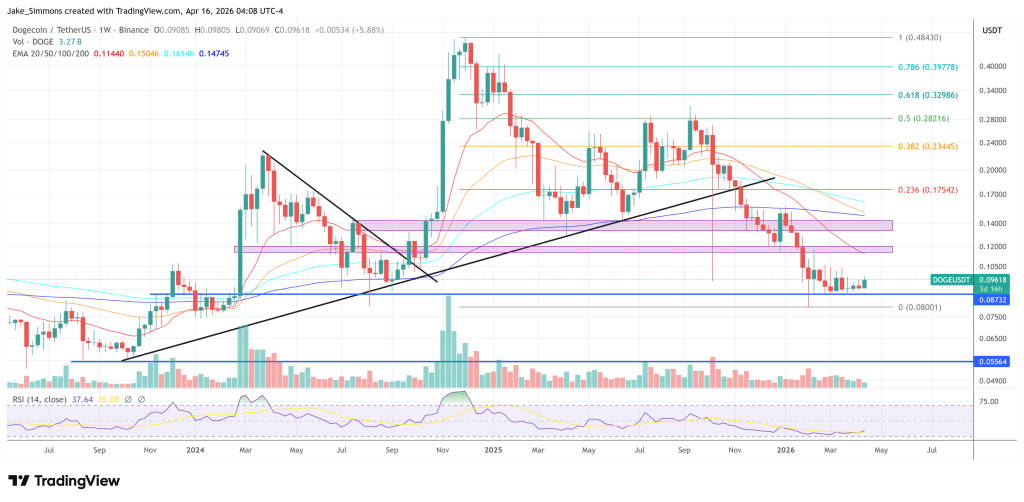
DOGE holds above key support, 1-month chart | Source: DOGEUSDT on TradingView.com

熱門幣種推薦

相關問答

QWhat is the main change introduced in Qubic's Dogecoin mining phase 2?

APhase 2 begins redirecting miner economics away from Monero (XMR) and toward DOGE-linked rewards, allowing computors to operate in either legacy XMR mode or Doge mode, with only the higher-yielding contribution being counted.

QHow does Qubic's reward distribution mechanism work in the new Dogecoin mining system?

AAll Dogecoin block rewards are used for Qubic buybacks. The acquired QUBIC tokens are then distributed proportionally to participants based on the Doge shares they delivered.

QWhat is the stated benefit of switching from Monero to Dogecoin mining for the Qubic network?

AThe switch allows Dogecoin mining (which relies on Scrypt ASICs) and AI training (which runs on CPUs and GPUs) to operate in parallel, creating a cleaner division of labor and enabling both workstreams to run at full capacity instead of splitting general-purpose compute between them.

QWhat are the three phases of Qubic's migration from XMR to DOGE mining?

APhase 1 was a testing period with XMR revenue intact. Phase 2 is the decision point where computors can opt into DOGE rewards while XMR phases out. Phase 3 is the end state with XMR completely removed and DOGE running at full production.

QHow does the reward window system work in the target state of phase 2?

AThe target state is a daily reward window from 12:00 to 12:00 UTC. All blocks mined within a window are allocated to shares submitted within that same window, though phase 2 starts with a weekly window aligned to epochs.

你可能也喜歡

中国启动芯片光刻机生产:为何专家未急于喝彩

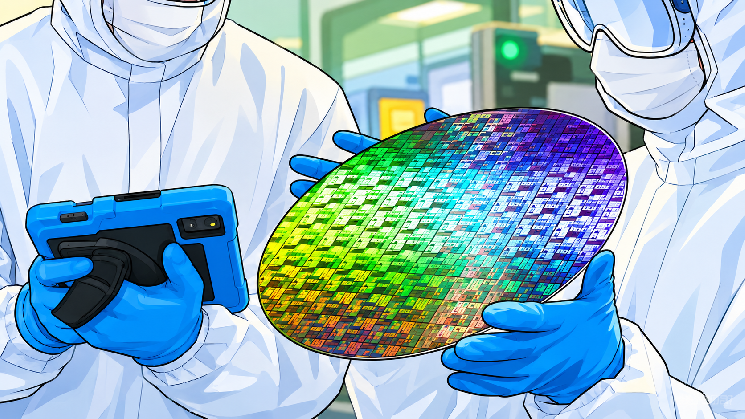
中国一家上海国企已启动沉浸式DUV光刻机的生产,这是制造现代半导体的关键设备。据匿名消息称,该公司计划在2026年生产约五台,2027年约二十台,首批设备将供应给中芯国际、华虹半导体和长鑫存储等企业。生产方为2023年注册、注册资本70亿元的上海艾盛纳电子科技集团,其整合了来自上海宇量昇科技及上海微电子装备等公司的研发团队。 然而,行业专家对此持谨慎态度。消息人士指出,艾盛纳的设备仍需大量测试,且远未达到行业领导者荷兰ASML的水平。分析师强调,小批量生产与具备大规模量产能力的商业可行设备存在本质区别,后者需要极高的良率、对准精度、产能和长期可靠性。专家提醒,过去关于中国在光刻领域取得突破的消息常被夸大,需等待独立验证。目前,ASML的市场主导地位并未受到实质性威胁。 专家认为,对ASML更现实的风险可能来自美国潜在的《MATCH法案》对其设备销售与服务的限制,而非中国当前的进展。艾盛纳设备的前景,最终取决于其能否实现真正的规模化量产,而非仅制造原型机。从宏观角度看,中国市场虽为ASML贡献了约14%的销售额,但并非决定性收入来源。历史经验表明,中国从实验室原型到稳定量产产品的过程往往耗时漫长,艾盛纳能否打破这一模式,需待2027年的实际交付情况来验证。

cryptonews.ru28 分鐘前

中国启动芯片光刻机生产:为何专家未急于喝彩

cryptonews.ru28 分鐘前

3%返现、6%年息与借记卡:埃隆·马斯克在美国推出X Money

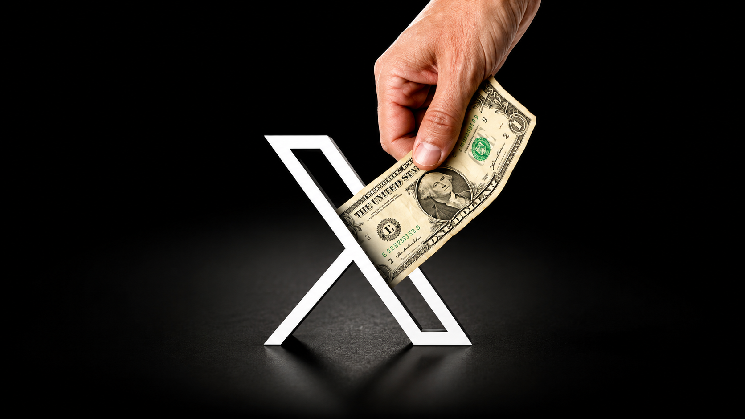
2026年7月27日,社交媒体X(原Twitter)在美国推出内置金融服务X Money,目前仅向美国地区的Premium和Premium+订阅用户开放。创始人埃隆·马斯克强调了此举对平台的重要性。 服务核心是X Card借记卡,支持虚拟和实体金属卡形式,基于Visa网络。主要功能包括:用户间免费即时转账、大部分消费3%现金返还、全球ATM免费取现、免跨境手续费,以及支持Apple Pay/Google Pay。账户余额可享最高6.00%的年收益率(APY),Premium+用户直接获得,Premium用户需满足合格直接存款条件方可达成最高利率。 用户资金并非由X保管,而是存放在FDIC成员银行Cross River Bank,享受最高25万美元的存款保险。通过现金归集计划,资金可分散至多个合作银行,理论上能将总保险额度提升至1000万美元。服务还提供提前两天收到工资、电汇、支票邮寄和账单支付等功能。 安全方面,采用生物识别或设备PIN码的通行密钥登录,并支持自定义交易限额及Visa的零责任防欺诈政策。此次公开上线前,X已于2026年6月底在部分Premium+用户中进行了小范围测试。 分析认为,X此举延续了科技平台将金融功能整合进社交应用的尝试。与Meta曾推出但很快失败的Novi钱包不同,X Money选择通过与持牌银行合作的传统银行架构,而非自有加密货币,这降低了部分监管风险,但大规模处理用户资金仍将使其面临美国金融监管机构的密切关注。

cryptonews.ru1 小時前

3%返现、6%年息与借记卡:埃隆·马斯克在美国推出X Money

cryptonews.ru1 小時前

交易

現貨

熱門文章

如何購買XMR

歡迎來到HTX.com!在這裡,購買Monero (XMR)變得簡單而便捷。跟隨我們的逐步指南,放心開始您的加密貨幣之旅。第一步:創建您的HTX帳戶使用您的 Email、手機號碼在HTX註冊一個免費帳戶。體驗無憂的註冊過程並解鎖所有平台功能。立即註冊第二步:前往買幣頁面,選擇您的支付方式信用卡/金融卡購買:使用您的Visa或Mastercard即時購買Monero (XMR)。餘額購買:使用您HTX帳戶餘額中的資金進行無縫交易。第三方購買:探索諸如Google Pay或Apple Pay等流行支付方式以增加便利性。C2C購買:在HTX平台上直接與其他用戶交易。HTX 場外交易 (OTC) 購買:為大量交易者提供個性化服務和競爭性匯率。第三步:存儲您的Monero (XMR)購買Monero (XMR)後,將其存儲在您的HTX帳戶中。您也可以透過區塊鏈轉帳將其發送到其他地址或者用於交易其他加密貨幣。第四步:交易Monero (XMR)在HTX的現貨市場輕鬆交易Monero (XMR)。前往您的帳戶,選擇交易對,執行交易,並即時監控。HTX為初學者和經驗豐富的交易者提供了友好的用戶體驗。

800 人學過發佈於 2024.12.10更新於 2026.06.02

如何購買XMR

相關討論

歡迎來到 HTX 社群。在這裡,您可以了解最新的平台發展動態並獲得專業的市場意見。 以下是用戶對 XMR (XMR)幣價的意見。

活动图片