Bitcoin Correlation With The S&P500 Drops To Zero – Will History Repeat?
bitcoinistPublished on 2025-02-17Last updated on 2025-02-18
Abstract
Bitcoin's short-term price direction remains uncertain, with divided opinions among analysts and investors. Some expect a breakout into all-time highs...
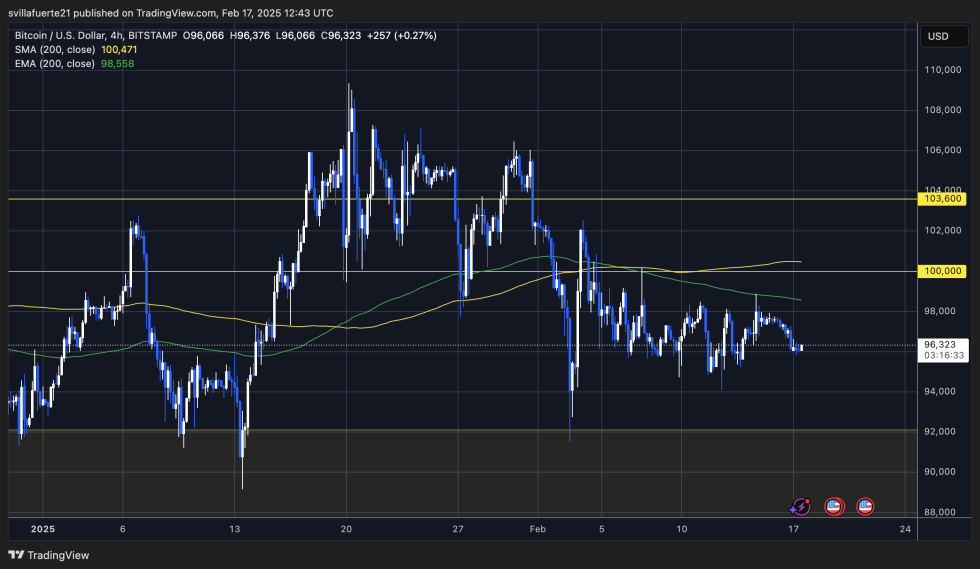
Bitcoin’s short-term price direction remains uncertain, with divided opinions among analysts and investors. Some expect a breakout into all-time highs (ATH) above $109K, while others fear increased selling pressure that could send BTC into lower demand zones. The price has been trading in a narrow range for the past twelve days, holding above $94K and below the $100K mark, leading to speculation about the next move.
Data from IntoTheBlock shows a significant shift in Bitcoin’s market behavior: its correlation with the S&P 500 has dropped to zero, indicating no current linkage between the two assets. Historically, BTC has moved in tandem with the stock market, reacting to macroeconomic events, interest rate policies, and risk-on/risk-off sentiment. However, this decoupling suggests that BTC is now trading based on its own internal market dynamics, rather than following traditional financial markets.
Could this signal the start of another massive rally, or is Bitcoin simply moving into a more speculative and unpredictable phase? The coming weeks will be crucial in answering that question.
Bitcoin Prepares For A Strong Move
Bitcoin remains structurally bullish despite failing to confirm short-term direction, and investors are now looking for signals of the next major move. While uncertainty continues to dominate the market, many analysts argue that BTC is preparing for a massive breakout into all-time highs (ATH).
Key data from IntoTheBlock reveals that Bitcoin’s correlation with the S&P 500 has dropped to zero, signaling that BTC is now decoupled from traditional markets. This is a rare event, as Bitcoin has generally followed macroeconomic trends and stock market movements in the past. However, with no clear correlation, BTC appears to be moving on its own cycle, dictated by internal market forces rather than external financial events.
The last time we saw such a low correlation was on November 5th, 2024, just before Bitcoin surged past $100K. If BTC reclaims the $100K level in the coming days, analysts expect a massive rally to follow, potentially leading to a new all-time high.
Speculation is rising, with analysts suggesting that this recent consolidation is the calm before the storm—and a bullish storm at that. Historically, long periods of sideways trading near cycle highs have led to explosive breakouts, and current market conditions seem to align with that pattern.
Price Consolidation: Technical Levels
Bitcoin is trading at $96,300 after nearly two weeks of sideways trading in a tight range between $94,000 and $100,000. This prolonged consolidation phase signals market indecision as both bulls and bears struggle to gain control.
Despite short-term uncertainty, the long-term trend remains bullish, with Bitcoin holding above key demand zones. However, investors are growing impatient, as the lack of a clear breakout has raised doubts about whether BTC will push into new all-time highs (ATH) or face a deeper correction.
If Bitcoin reclaims the $100K mark, analysts expect an explosive rally that could drive the price toward unexplored territory. Historically, consolidation near ATH levels often precedes major breakouts, and many traders are betting on this scenario playing out again.
On the flip side, a break below $94K could spark strong selling pressure, forcing BTC into lower demand levels around $89K–$90K. For now, the market remains in limbo, awaiting confirmation in either direction. Traders are closely watching key levels, as the next move could set the tone for Bitcoin’s trajectory in the coming weeks.
Featured image from Dall-E, chart from TradingView
Sebastian's journey into the world of crypto began four years ago, driven by a fascination with the potential of blockchain technology to revolutionize financial systems. His initial exploration focused on understanding the intricacies of various crypto projects, particularly those focused on building innovative financial solutions. Through countless hours of research and learning, Sebastian developed a deep understanding of the underlying technologies, market dynamics, and potential applications of cryptocurrencies.
As his knowledge grew, Sebastian felt compelled to share his insights with others. He began actively contributing to online discussions on platforms like X and LinkedIn, focusing on fintech and crypto-related content. His goal was to expose valuable trends and insights to a wider audience, fostering a deeper understanding of the rapidly evolving crypto landscape. Sebastian's contributions quickly gained recognition, and he became a trusted voice in the online crypto community.
To further enhance his expertise, Sebastian pursued a UC Berkeley Fintech: Frameworks, Applications, and Strategies certification. This rigorous program equipped him with valuable skills and knowledge regarding Financial Technology, bridging the gap between traditional finance (TradFi) and decentralized finance (DeFi). The certification deepened his understanding of the broader financial landscape and its intersection with blockchain technology.
Sebastian's passion for finance and writing is evident in his work. He enjoys delving into financial research, analyzing market trends, and exploring the latest developments in the crypto space. In his spare time, Sebastian can often be found immersed in charts, studying 10-K forms, or engaging in thought-provoking discussions about the future of finance.
Sebastian's journey as a crypto analyst and investor has been marked by a relentless pursuit of knowledge and a dedication to sharing his insights. His ability to navigate the complex world of crypto, combined with his passion for financial research and communication, makes him a valuable asset to the industry. As the crypto landscape continues to evolve, Sebastian remains at the forefront, providing valuable insights and contributing to the growth of this revolutionary technology.
Recently, Robinhood Chain adopted Chainlink as its official oracle and CCIP provider.
42.0k Total ViewsPublished 2026.07.22Updated 2026.07.24
Discussions
Welcome to the HTX Community. Here, you can stay informed about the latest platform developments and gain access to professional market insights. Users' opinions on the price of S (S) are presented below.