Claude's Major New Feature: Screen Recording + Voice, Distilling Your Skills into AI Tasks in One Click

marsbitPublished on 2026-07-22Last updated on 2026-07-22

Abstract

Claude has introduced a major new feature called "Record a Skill," available for Pro, Max, and Team users. This function, found in the Claude desktop app's CoWork menu, allows users to create reusable AI skills simply by recording their screen and providing voice narration while performing a task. Claude then automatically analyzes the recording and generates a functional Skill. A hands-on test confirmed the feature works seamlessly. Users start recording via the Skills manager, perform their workflow while verbally explaining the steps and logic, and avoid including sensitive information. After recording, Claude processes the content and creates the Skill, which can be saved and later invoked with a slash command (/). This eliminates the need for manual adjustments or writing complex instruction files. The innovation goes beyond mere efficiency. Previously, creating a Skill required writing a detailed SKILL.md file in Markdown—a significant barrier for non-technical users. "Record a Skill" bypasses this by directly capturing both actions and the implicit reasoning shared in the narration. This lowers the barrier to knowledge transfer and automation, addressing a core challenge in corporate knowledge management: the difficulty of getting experts to write and maintain documentation. However, the feature also highlights a shift in the nature of work. A case study from March 2026 showed a freelancer whose five-year client relationship was effectively replaced by a hand-coded ...

Now, you can completely distill yourself into a Skill through screen recording + voice explanation.

On July 21, Anthropic added a "Record a Skill" option to the + menu in the Claude desktop Cowork: record your screen, operate while explaining with voice, and after recording, Claude automatically converts the demonstration into a reusable Skill.
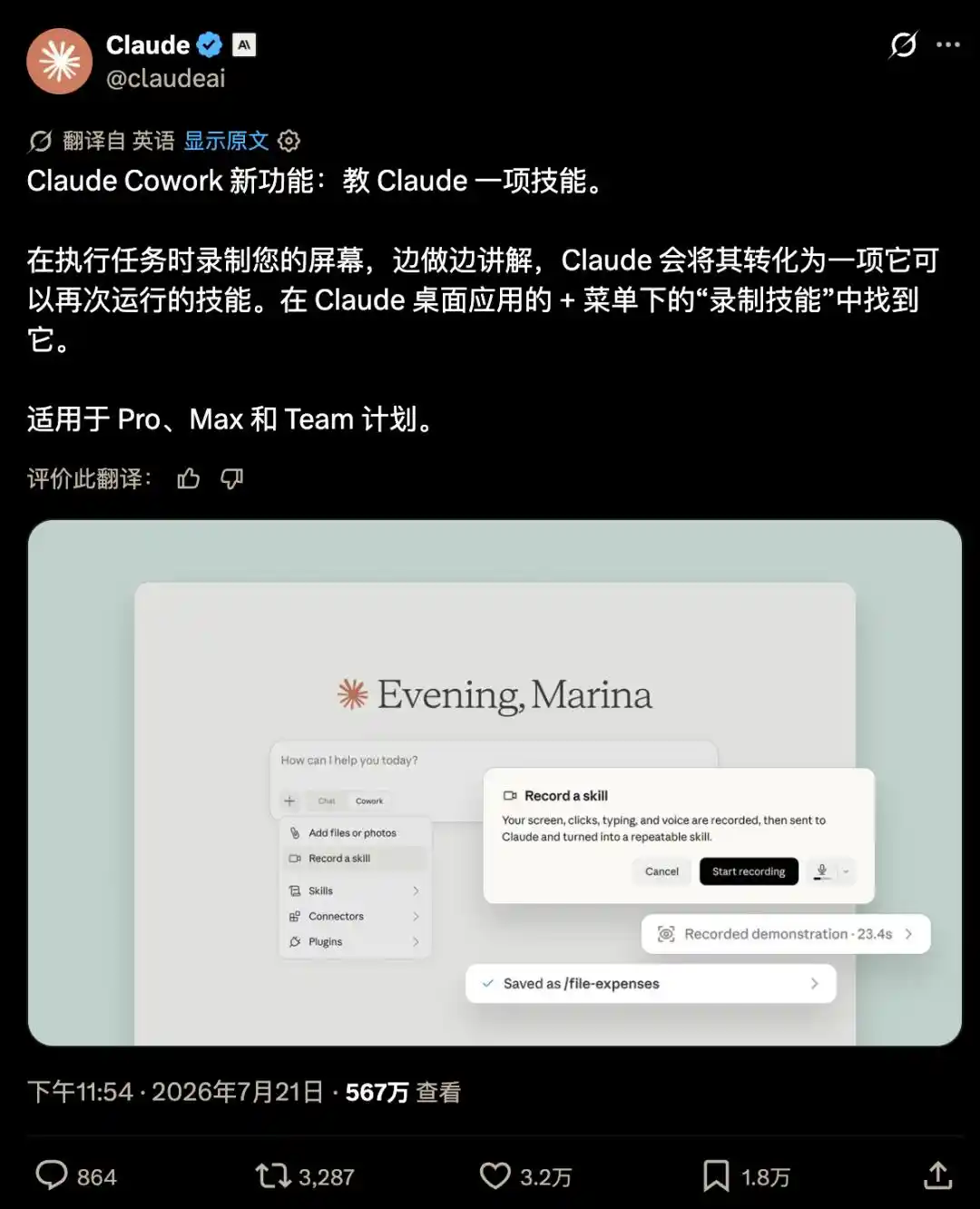
https://x.com/claudeai/status/2079595988998554047

This feature is currently open to Pro, Max, and Team users.

First-hand Test: It Actually Works

We conducted a simple test of this feature immediately.

Open the Claude client, click the 【+】 in the lower left corner of the chat box -> Skills -> Manage skills -> Add -> Record your screen, and you can start using this new feature.
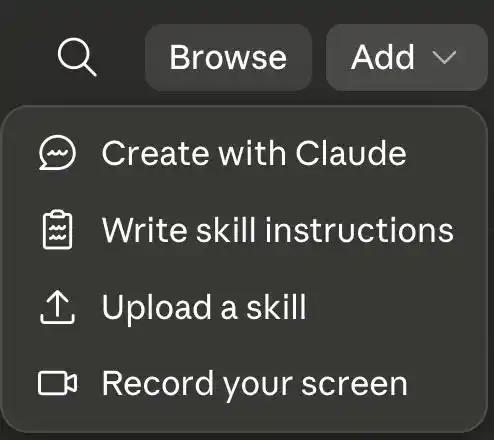
Be careful to avoid recording plaintext passwords, secret keys, API Keys, credit card information, and other sensitive personal information during the screen recording process.
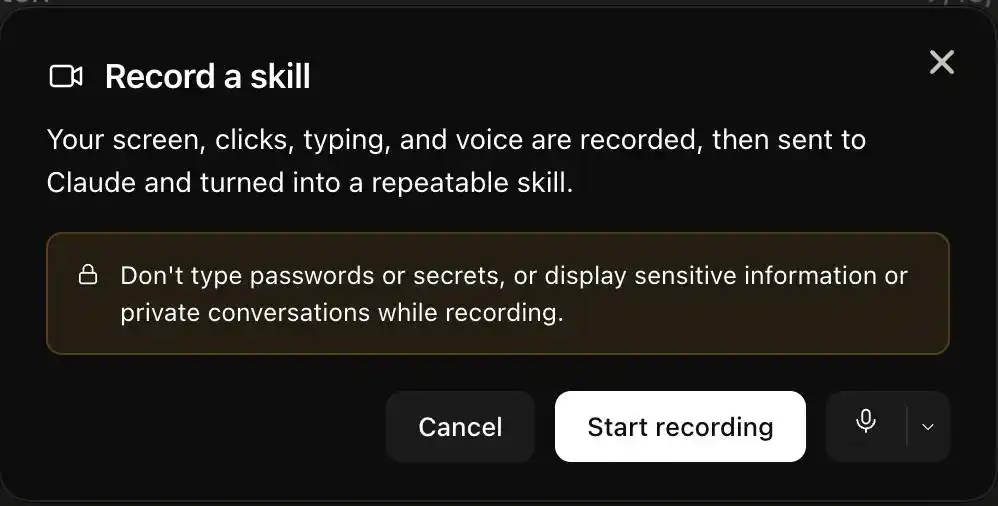
For the first time, you may need to grant screen recording and audio recording permissions. After allowing, click 【Start Recording】 to begin recording.

Simply repeat your complete workflow on the computer, verbally supplementing the necessary implicit operational logic, while avoiding irrelevant operations (like watching a short video or slacking off while waiting for results). Click to end the recording, and it will automatically return to the Claude Cowork interface for analysis and Skill extraction.
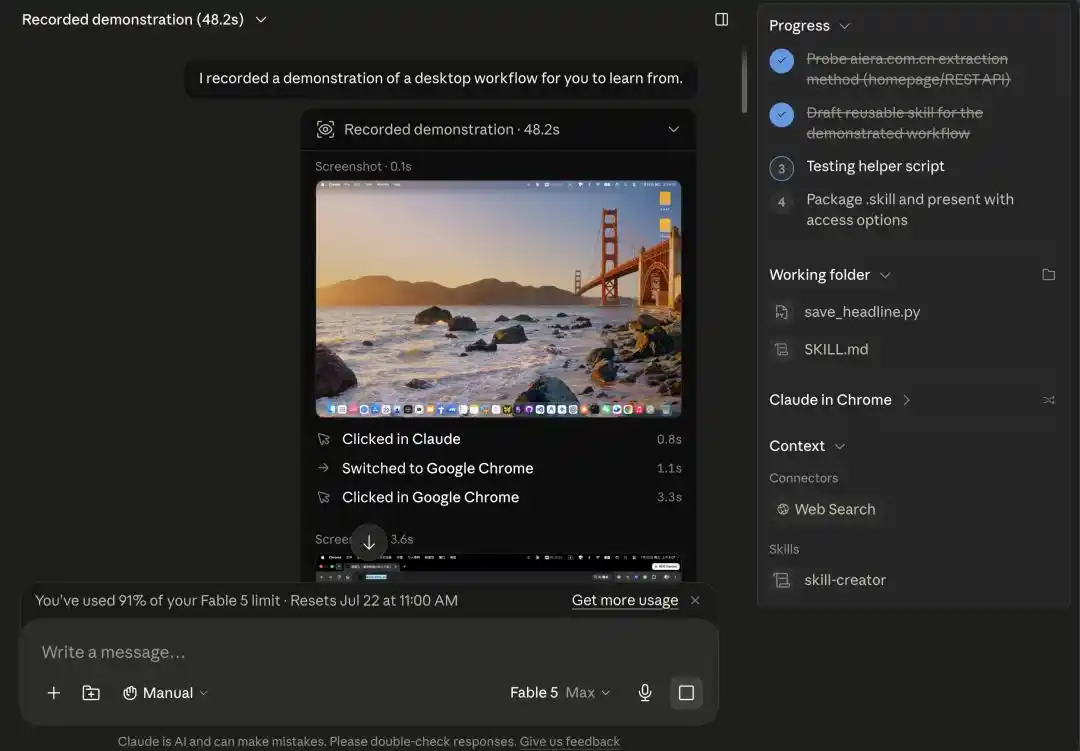
After waiting a while, your exclusive Skill is ready. Click 【Save Skill】 to directly deploy it to Claude.
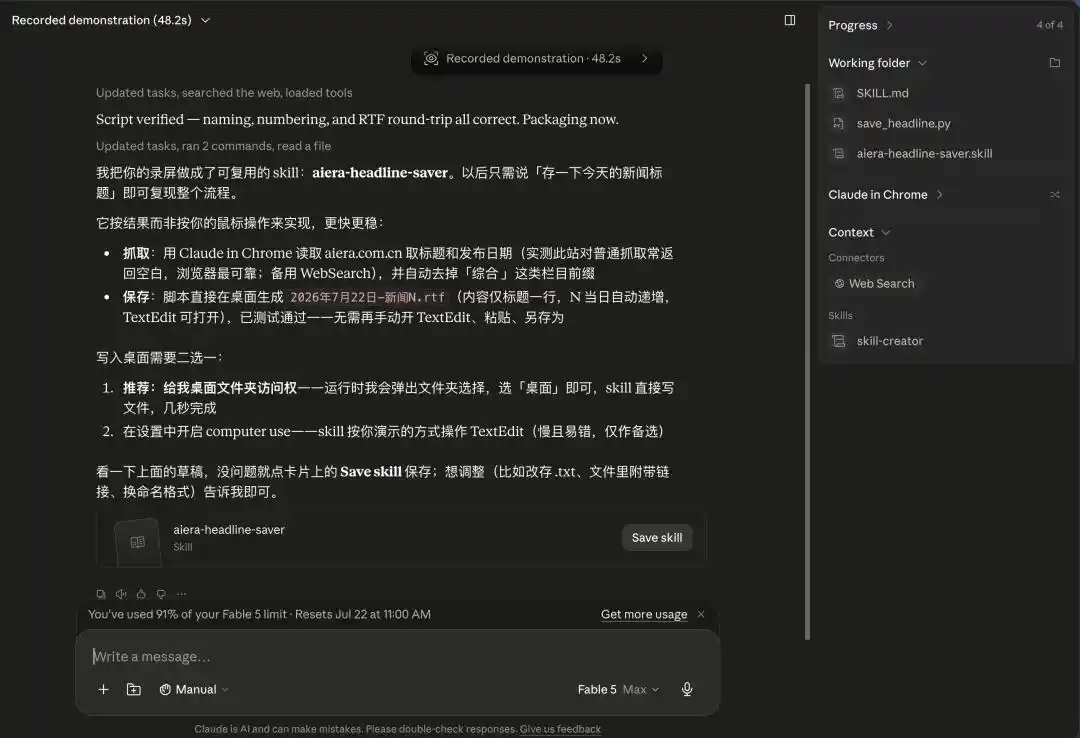
Use the slash command (/) in chat to call this Skill to work.
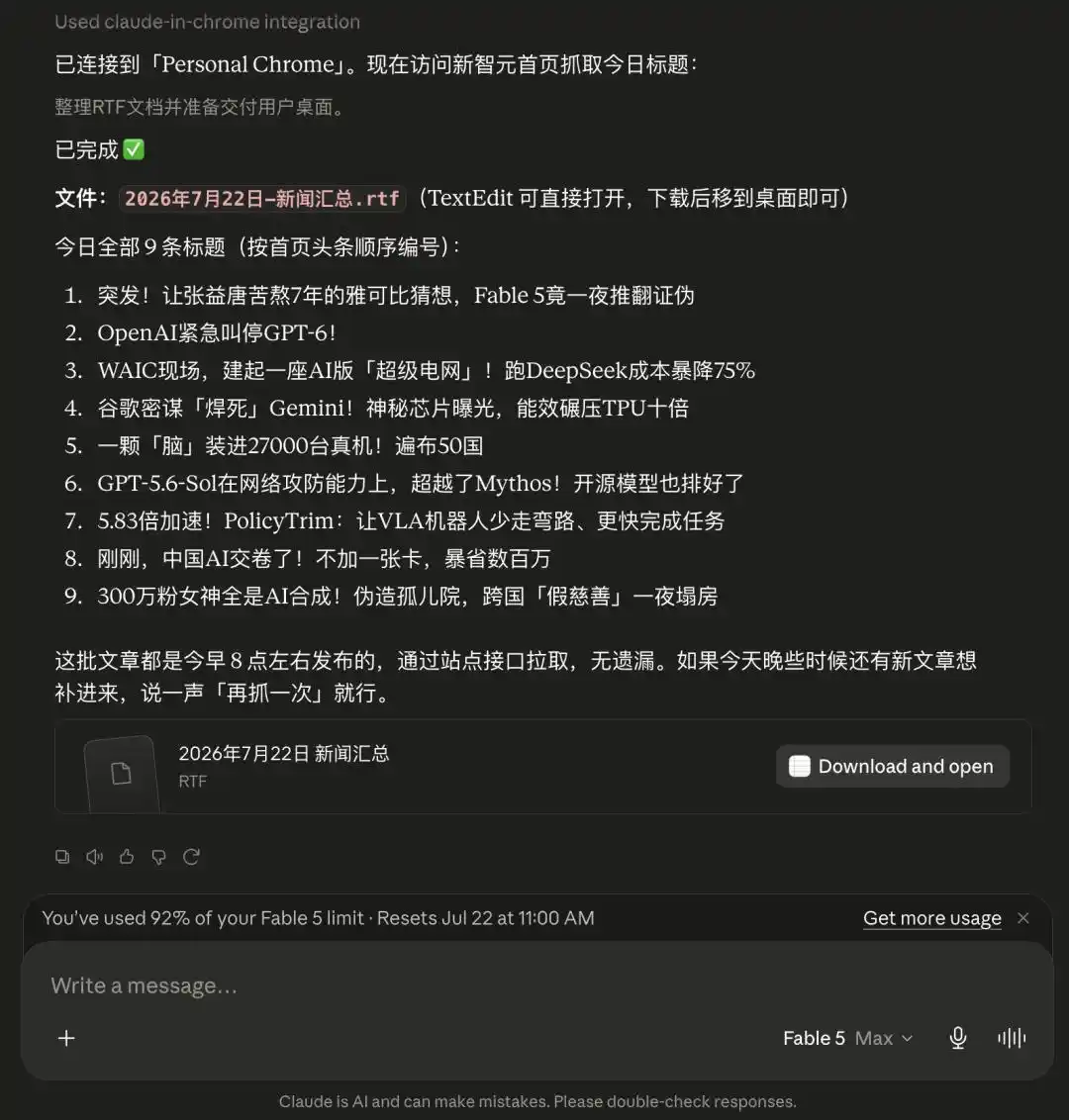
No extra fine-tuning over and over, the fresh exclusive Skill is ready to use out of the box.

Far More Than Just an Efficiency Tool

Most reports categorize "Record a Skill" (screen recording to generate Skill) as a "more convenient way to create automated workflows," but this understanding only scratches the surface.

Previously, creating a Skill required writing a SKILL.md file manually, using Markdown to clearly write the steps, trigger conditions, and metadata.

Non-technical people had to think like process designers to accomplish this.

The barrier was translating tacit experience into explicit instructions.

Now, "Record a Skill" skips the translation step.

It captures both screen operations and voice explanations, with the latter being key: the operator naturally reveals judgment logic during the explanation—which situations to skip, which format is a client's hard requirement, which number abnormality needs manual review.

These things are difficult to write into a manual, but can be fully preserved by a screen recording.

"Record a Skill" bypasses the step of "writing."

For decades, enterprise knowledge management has spent a fortune building knowledge bases, writing SOPs, and compiling best practice libraries. The core pain point has always been one: experts are unwilling to write documentation, and if written, no one maintains it.

The barrier to screen recording with explanation is an order of magnitude lower than writing documentation, and the produced Skill can be read by humans and directly executed by AI.

The Other Side of Screen Recording

The tech media MakeUseOf reported a case in March this year:

A freelance writer, during a handover period after resignation, used Claude Cowork to build a content generation workflow, feeding in brand documents, style guides, and historical articles, and outputting a monthly content calendar according to the Skill process.

During the handover, the client said:

Since you're leaving, can you set this up so we can run it ourselves?

A five-year cooperative relationship was replaced by a Skill folder.
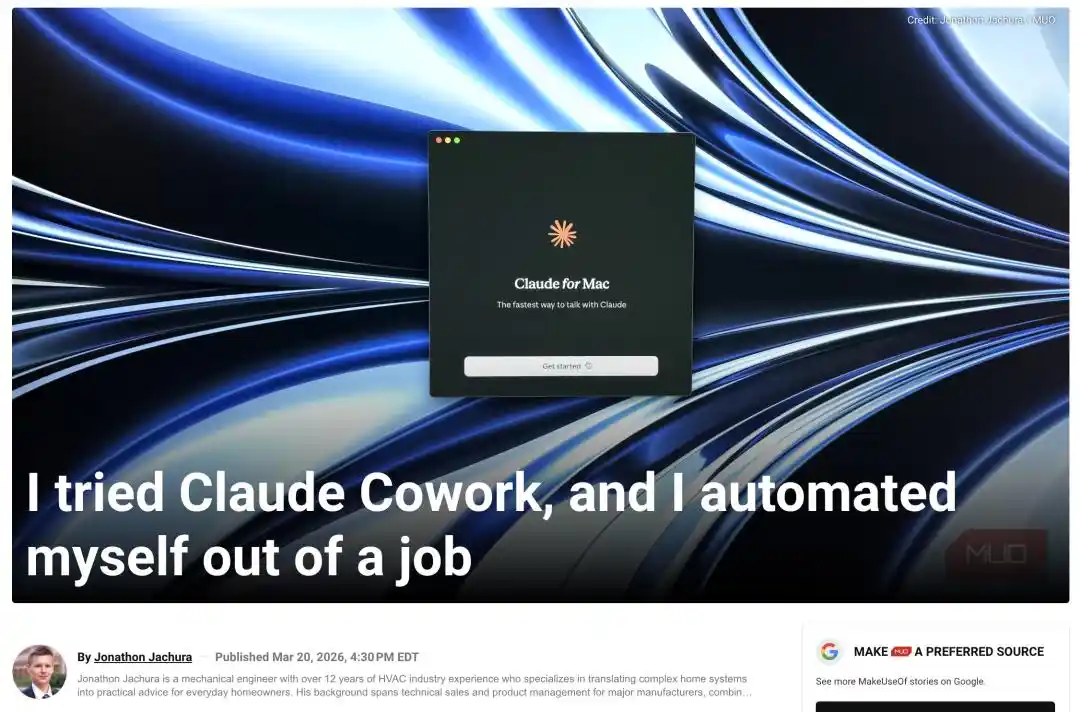
https://www.makeuseof.com/claude-cowork-automated-away-job/

This story happened before "Record a Skill" was launched, using the handwritten Skill method.

Screen recording teaching lowers the operational cost of the same thing another notch: no need to understand Markdown, no need to abstract the process, just do it once and explain it once.

Harvard Business School research data from March 2026 can serve as a footnote for the other side: recruitment for positions with the highest AI exposure decreased by 17%, while recruitment for positions requiring human-machine collaboration increased by 22%.
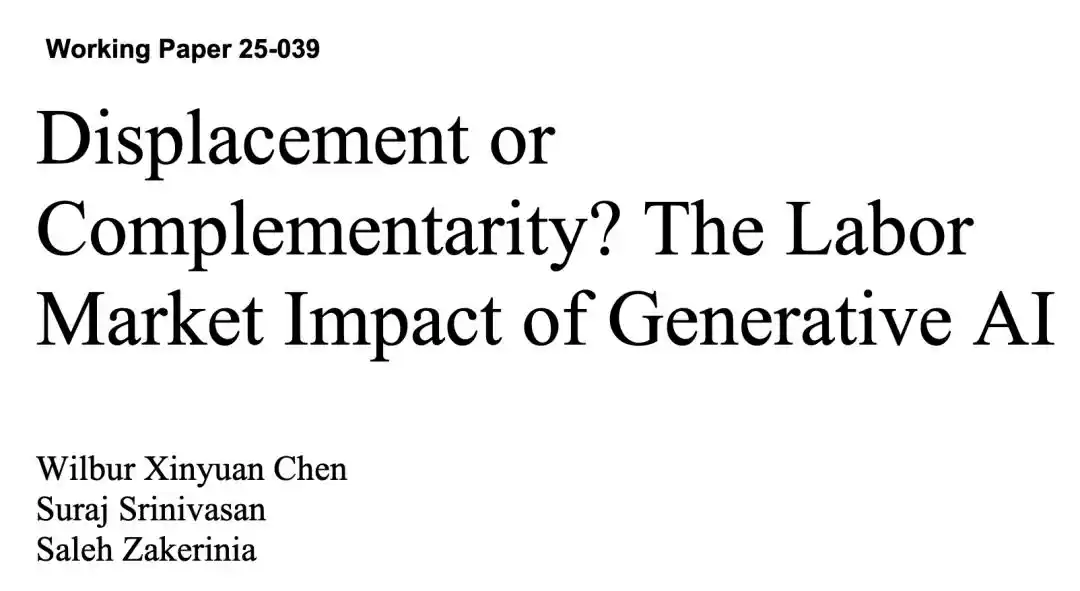
https://www.hbs.edu/ris/Publication%20Files/25-039_05fbec84-1f23-459b-8410-e3cd7ab6c88a.pdf

But the direction "Record a Skill" promotes is clear: the moat of work is shifting from "being able to do" to "being able to do what others cannot."

Reference: https://x.com/claudeai/status/2079595988998554047

This article is from the WeChat public account "New Zhiyuan" (新智元), author: ASI启示录; editor: Ma Ke


Trending Cryptos

Related Questions

QWhat is the core function of Claude's new 'Record a Skill' feature described in the article?

AThe new 'Record a Skill' feature allows users to record their screen while providing voice narration of their actions. Claude then automatically analyzes this recording and converts it into a reusable Skill, which can be triggered later to automate that specific workflow.

QWho currently has access to the 'Record a Skill' functionality?

AThe 'Record a Skill' feature is currently available to Claude's Pro, Max, and Team plan users.

QAccording to the article, what significant hurdle does the 'Record a Skill' feature overcome compared to the previous method of creating Skills?

AThe feature overcomes the hurdle of translating implicit, tacit knowledge into explicit, written instructions. Previously, creating a Skill required manually writing a SKILL.md file in Markdown, which was difficult for non-technical users. 'Record a Skill' bypasses the 'writing' step by capturing both on-screen actions and the user's explanatory voice narration, which naturally conveys judgment calls and logic.

QWhat potential negative impact on employment is suggested by the case study from MakeUseOf mentioned in the article?

AThe case study suggests a potential negative impact where job roles can be automated or made redundant. It describes a freelance writer whose five-year working relationship with a client was essentially replaced by a Claude Skill folder that automated the content generation workflow they had created, allowing the client to run it themselves after the writer's departure.

QWhat broader shift in the 'moat' or defensive advantage of work does the article suggest is being pushed by tools like 'Record a Skill'?

AThe article suggests that the 'moat' or defensive advantage of work is shifting from simply 'knowing how to do a task' to 'knowing how to do tasks that others cannot do.' As routine and documented workflows become easier to automate and distill into AI Skills, the unique, complex, and less-easily-codified aspects of a job become more valuable.

Related Reads

Shing-Tung Yau Invites Wang Hong and Deng Yu to Teach Back Home, After 20 Years of Rivalry, Tsinghua and Peking University Realize the Opponent Isn't Each Other

On July 23, the Fields Medal, the highest global mathematics award, was awarded to two Chinese mathematicians, Wang Hong and Deng Yu, both undergraduate classmates from Peking University's class of 2007. This marks the first time mathematicians who completed their undergraduate studies in mainland China have won the prize, with two laureates in the same year. Following the announcement, renowned mathematician Shing-Tung Yau publicly invited Wang and Deng to return to China to teach at Tsinghua University's Qiuzhen College. This invitation is the latest episode in a decades-long rivalry between Tsinghua and Peking University (PKU) for supremacy in Chinese mathematics. The competition traces back to a 1952 national university restructuring that transferred Tsinghua's entire mathematics department to PKU, leaving Tsinghua without a math program for nearly 30 years until its reinstatement in 1979. The rivalry intensified in 2005 with a public falling-out between Yau and his former student, PKU professor Gang Tian. Subsequently, Yau shifted his efforts to building Tsinghua's mathematics program from the ground up. He established the Yau Mathematical Sciences Center in 2009 and founded the Qiuzhen College in 2021, implementing an elite, accelerated "Math Leadership Program" to recruit prodigies as young as middle school students. The competition spans multiple fronts: recruiting top junior high and high school students from math olympiads, luring renowned scholars from overseas, and securing research funding. A new and fierce battleground has emerged in AI and mathematical reasoning. Both universities are heavily investing in AI research to enhance large language models' mathematical capabilities, with Tsinghua collaborating on projects like the STARE algorithm and PKU developing specialized models for geometry. Despite the intense competition, this rivalry has arguably elevated China's overall standing in mathematics. Chinese mathematicians now frequently publish in top journals and win major international awards. At the recent 17th Yau College Students Mathematics Contests, PKU students swept the top individual awards. Yau, presenting the awards, emphasized the need for inter-university collaboration to advance Chinese mathematics. The landscape is now shifting with the rise of AI in mathematical research. As AI begins to generate proofs at an unprecedented rate, the traditional metrics of competition between institutions may become less relevant. The future for mathematicians, as noted by Terence Tao, is navigating an era of "proof surplus" driven by AI, presenting a new common challenge that transcends university rivalries.

marsbit6m ago

Shing-Tung Yau Invites Wang Hong and Deng Yu to Teach Back Home, After 20 Years of Rivalry, Tsinghua and Peking University Realize the Opponent Isn't Each Other

marsbit6m ago

UBS Interpretation: Public Funds' Tech Holdings Hit Record High, Electronics Becomes Core Increase in Q2

According to UBS's latest China equity strategy report, in Q2 2026, mutual funds' allocations to A-share "hard tech" reached a historical high. The electronics and telecommunications sectors, along with the STAR and ChiNext boards, were the primary focus of increased holdings. The standout figure is the mutual fund allocation to the major technology sector (encompassing electronics, telecom, computers, and defense), which rose to 57.3%, with an overweight position of 18.5%—both setting new records. UBS calculations show the electronics sector alone saw a 20.2 percentage point increase in allocation for the quarter, making it the strongest area of buying. Telecom and machinery allocations also rose. This trend was reinforced by foreign capital inflows. Estimates from major securities firms indicate northbound capital turned to a net inflow of over 2.1 trillion yuan in Q2, a sharp reversal from Q1 outflows. According to UBS's sector classification, industrials and IT were the main destinations for these inflows. The shift wasn't broad-based but concentrated in specific tech areas. Concurrently, holdings in traditional sectors like consumer staples and certain cyclicals declined. The allocation to the STAR and ChiNext boards also hit record highs, indicating a broader exposure to high-growth tech assets beyond just leading industries. Furthermore, the expansion of actively managed technology-themed funds—now constituting 27.5% of total active mutual fund AUM—suggests this is a structural shift in fund focus, not merely short-term portfolio rotation. While this concentration of institutional capital can provide valuation support and liquidity for the hard tech sector, the report cautions that historically high positioning also increases susceptibility to short-term volatility, profit-taking, and external market shocks. The sustainability of the trend will depend on the concurrent realization of upward earnings revisions, stabilization of leverage, and continued foreign capital inflows, all against a backdrop of supportive policies for AI, semiconductors, and advanced manufacturing.

marsbit14m ago

UBS Interpretation: Public Funds' Tech Holdings Hit Record High, Electronics Becomes Core Increase in Q2

marsbit14m ago

Trading

Spot

Hot Articles

Discussions

Welcome to the HTX Community. Here, you can stay informed about the latest platform developments and gain access to professional market insights. Users' opinions on the price of S (S) are presented below.

活动图片