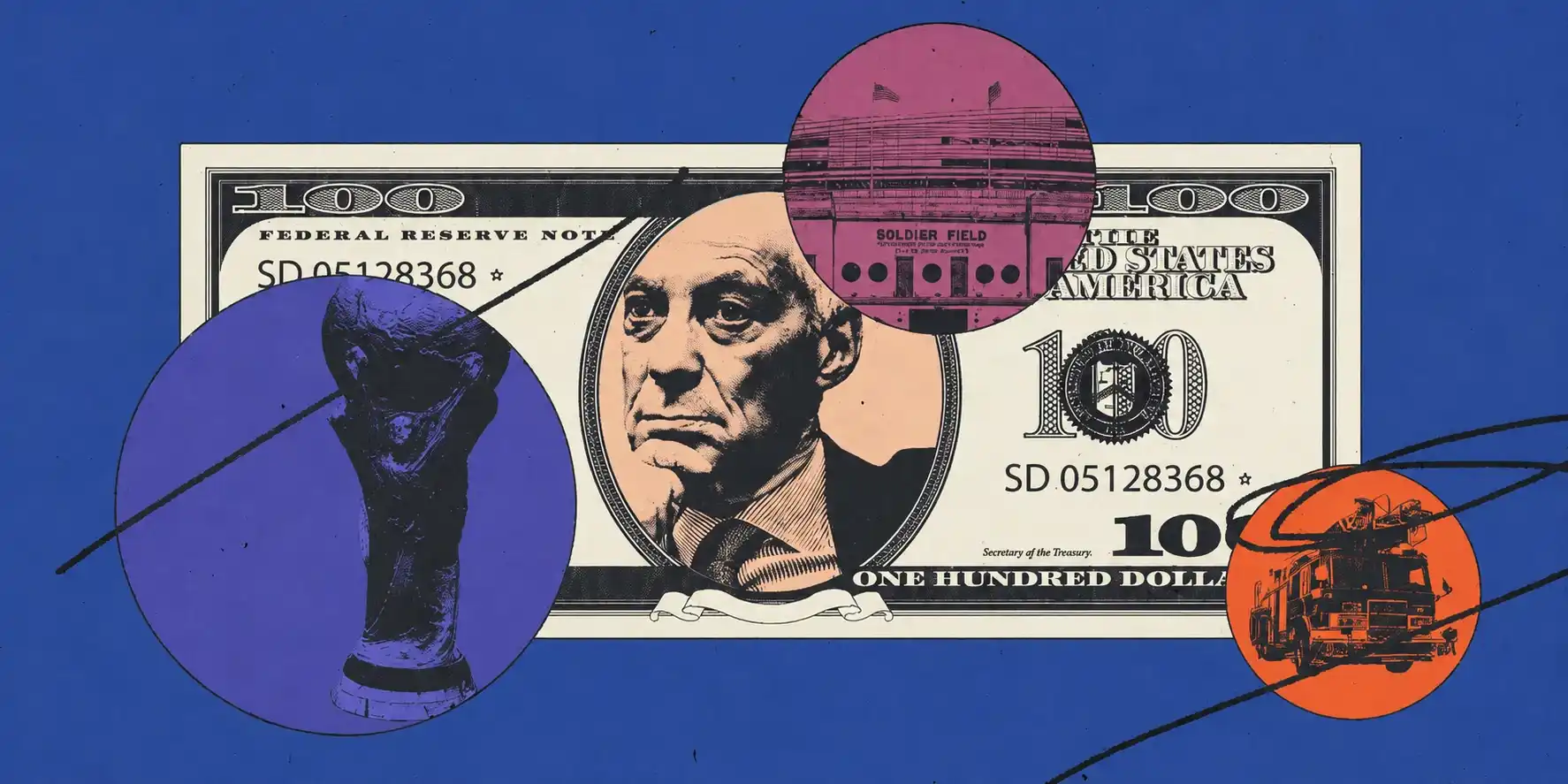
Buy an NFT First to Get a Ticket? The Largest World Cup Ticket Slump in History

marsbitPublished on 2026-06-11Last updated on 2026-06-11

Abstract

"Ticketing Woes for 2026 World Cup: NFT 'Right-to-Buy' and High Prices Dampen Sales" Despite anticipation for the 2026 FIFA World Cup, with 48 teams and 104 matches across North America, the tournament faces significant unsold tickets, with approximately 180,000 group-stage tickets still available for resale just before kick-off. This unexpected shortfall is attributed to FIFA's controversial new ticketing strategy, which includes an NFT-based "Right-to-Buy" (RTB) system and opaque, dynamic pricing. FIFA introduced RTBs as digital collectibles (NFTs) sold on its FIFA Collect platform. An RTB grants the holder only the right to purchase a ticket for a specific match later, not the ticket itself. This two-step process, criticized for selling "scarcity" first, saw RTBs priced from tens to hundreds of dollars, generating millions in revenue for FIFA. With many tickets remaining available on official channels, the value of these prepaid purchase rights is now being questioned. Compounding the issue are ticket prices, reported to be 2 to 4 times higher than the 2022 Qatar World Cup, and up to 7 times more for marquee matches. FIFA employed dynamic pricing, common in U.S. sports, but lacked transparency on seat availability and exact locations during sales, frustrating global fans facing high travel costs. This has drawn scrutiny from regulators in New York and New Jersey. FIFA's official resale platform also drew criticism for imposing high fees—roughly 10% on sellers and 17% o...

Author: Zen, PANews

The long-awaited 2026 FIFA World Cup will officially kick off in Mexico City at 3:00 AM Beijing Time on June 12.

Dubbed an unprecedented super event, this World Cup will feature 48 teams playing a total of 104 matches across venues in the United States, Canada, and Mexico. Barring any unforeseen circumstances, this is poised to become the World Cup with the highest commercial revenue in history.

However, on the eve of the opening ceremony, this tournament is facing a dilemma of unsold tickets. According to the Financial Times, with the opening match just around the corner, there are still approximately 180,000 group stage tickets available for resale. For a top-tier event long regarded as a global spectacle, this contrast is strikingly stark.

This is not because the World Cup itself has lost its global appeal. In fact, the betting industry is touting this World Cup as the "biggest betting opportunity" in history. As of June 11, the amount staked on the event contract for the World Cup winner on the prediction market Polymarket has approached $20 billion. Such a massive influx of capital before the tournament even begins clearly indicates its immense popularity.

Therefore, the issue of "difficult ticket sales" lies more with FIFA's ticketing mechanisms, also exposing the side effects of FIFA's radical commercialization experiment with the ticketing system for this World Cup.

FIFA's Ticketing "Shenanigans": Buy a "Digital Collectible" First for a Ticket

One of the most controversial ticketing arrangements for this World Cup is FIFA's sale of so-called "Right-To-Buy" (RTB) through the FIFA Collect platform.

Unlike traditional ticketing products, RTB is a type of "digital right" or "digital collectible" designed around the eligibility to obtain World Cup tickets, issued and traded via the FIFA Collect digital collectibles platform. The issued digital collectibles are essentially NFTs. The FIFA Collect platform originally ran on the Algorand blockchain and migrated to FIFA's self-built FIFA Blockchain (based on Avalanche technology) in May 2025.

According to the official explanation from FIFA Collect, holding an RTB only grants fans the opportunity to purchase tickets for a specific match during a designated window. Each RTB specifies how many tickets the holder can purchase in the future, and for which match or event, but it does not include the actual ticket itself.

This mechanism splits the ticket-buying process into two steps: first, selling scarcity, and then selling the actual ticket. However, when fans purchase an RTB, they often do not know the final seating area, the full ticket price, and cannot fully assess the future value of this "priority right."

In terms of pricing, RTBs do not have a fixed price; they vary based on the importance of the corresponding match, the number of tickets that can be purchased, and market supply and demand. Previously on the FIFA Collect platform, prices for RTBs for different matches ranged from tens to hundreds of dollars, with some RTBs for popular matches or those including multiple ticket purchase rights fetching even higher prices on the secondary market.

According to reports from the UK sports business media SportsPro, FIFA had already generated revenue in the tens of millions of dollars from these RTB sales.

When tickets are highly scarce and prices are not fully known, such a design encouraging fans to pay upfront might make some sense. However, the awkwardness of RTBs becomes apparent when a significant number of tickets remain available for sale on the official platform. If tickets aren't as hard to get as imagined, the rationale for spending hundreds of dollars upfront for a "ticket purchase qualification" is called into question.

Not Just Expensive, But Also Opaque and Constantly Changing Prices

This tournament's main matches are concentrated in the US market, which is already the world's most mature and expensive market for live sports entertainment. Events like the NFL, NBA, and MLB have long employed business models featuring high ticket prices, luxury boxes, dynamic pricing, and secondary markets. Naturally, upon entering this market, FIFA aimed to align World Cup pricing with these standards.

FIFA has adopted a dynamic or variable pricing model for this World Cup, meaning ticket prices can be continuously adjusted based on demand, inventory, and sales phases. Early on, officials emphasized that some group stage tickets started at $60, but this low-price tier was limited. More prevalent were ticket prices far exceeding fan expectations; for instance, tickets for some popular group stage matches easily cost hundreds or even thousands of dollars, while prices for knockout stages and the final were exorbitantly high.

Reportedly, the actual ticket cost for this World Cup is about 2 to 4 times that of the previous Qatar World Cup, with popular matches, the opening match, and the final reaching 4 to 7 times higher. The problem lies in the fact that the World Cup is not an ordinary commercial league. Its audience isn't just local high-income sports consumers, but ordinary fans from all over the world. Many, in order to support their national teams, need to travel across continents, book flights and hotels in advance, and incur other costs like local transportation. For these fans, ticket prices are only a part of the total cost, but they have become the most uncontrollable part.

What further frustrates fans is the lack of transparency. Complaints from European fan organizations and consumer groups to FIFA stated that FIFA did not adequately disclose from the outset how many tickets remained in each price tier or specific seat locations. Some fans even had to pay high fees without being able to fully confirm seat views and locations during purchase. This information asymmetry severely amplifies the feeling of being "manipulated."

Currently, FIFA's ticketing mechanisms have not only sparked commercial controversy but have also attracted public regulatory scrutiny. Relevant departments in the US states of New York and New Jersey have also launched investigations into the World Cup ticketing, focusing on seat information, ticketing promotions, and potential issues of so-called "artificial scarcity."

Official Resale Platform Amplifies Price Anxiety

FIFA specifically launched an official resale platform for this World Cup. In theory, this was to allow fans to buy and sell tickets in a secure environment, reducing fraud and black-market transactions. However, while this platform improved transaction security, it did not enhance the ticket-buying experience for fans.

The European Fans' Association and the European Consumer Organization criticized FIFA for charging fees to both buyers and sellers on the official resale platform, allowing FIFA to continue profiting from subsequent transactions after the initial ticket sale. According to ticketing rules cited by the Financial Times, on FIFA's official resale platform, sellers pay a service fee of approximately 10% when listing a ticket, while buyers must pay an additional fee of about 17% in commissions and related surcharges.

This means that if a ticket is resold through the official platform, the combined fees borne by both parties amount to nearly 27% of the ticket's face value. This allows FIFA to not only enjoy high ticket revenue in the primary market but also continue capturing fees from the secondary resale market.

And as of now, the FIFA official site is still selling tens of thousands of group stage tickets. For scalpers and speculators who hoped to profit from reselling at higher prices after hoarding tickets at high prices, even listing at the original price would result in an actual loss after deducting platform fees.

Of course, the 180,000 tickets available for resale won't actually lead to a large number of empty seats at this World Cup. FIFA President Gianni Infantino stated at a pre-opening press conference that the tournament has sold over 6 million tickets and claimed that demand exceeded expectations by "10 times or more." Popular matches, host nation matches, knockout stages, and the final will still attract enormous attention. As the tournament begins, emotions rise, and teams' progression becomes clearer, some of the inventory may also be absorbed.

But the significance of this controversy lies in its reminder that even if overall World Cup sales remain strong, this tournament has proven that fans' passion does not equate to an unlimited willingness to pay; there is still a boundary for ticket prices and ticketing mechanisms that should not be easily crossed. The World Cup's global influence does not mean FIFA can endlessly squeeze this emotional premium.


Trending Cryptos

Related Questions

QWhat is the main reason for the ticket sales difficulties faced by the 2026 FIFA World Cup according to the article?

AThe main reason is FIFA's aggressive commercial experiment with its ticketing system, particularly the introduction of the 'Right-To-Buy' (RTB) digital collectibles (NFTs), which require fans to purchase a digital asset first for the *chance* to buy a ticket later. This multi-step, non-transparent process, coupled with high and dynamic ticket pricing, has created frustration and reduced accessibility.

QWhat is an RTB (Right-To-Buy) and how does it function in the FIFA Collect platform?

AAn RTB is a digital collectible or NFT sold on the FIFA Collect platform. It represents a right or eligibility for the holder to purchase a ticket for a specific match during a designated sales window. Crucially, the RTB itself is not a ticket; it is a separate purchase that grants the holder the opportunity to later buy the actual ticket at an unspecified seat and often unknown final price.

QHow has the pricing structure of the 2026 World Cup tickets been criticized?

AThe pricing has been criticized for being significantly higher than previous tournaments (2-4 times more expensive, up to 4-7 times for key matches), using dynamic pricing that causes prices to fluctuate, and lacking transparency. Fans often cannot see exact seat locations or know how many tickets are available at each price tier before committing to a high purchase cost.

QWhat issue does the article highlight regarding FIFA's official ticket resale platform?

AThe article criticizes the platform for charging high fees on both the seller (around 10%) and the buyer (around 17%), meaning nearly 27% of a ticket's face value goes to FIFA in a resale transaction. This allows FIFA to profit repeatedly from the same ticket and has contributed to losses for speculators trying to resell tickets, as the fees cut into their potential profits.

QWhat broader lesson does the article suggest the 2026 World Cup ticketing controversy demonstrates?

AIt demonstrates that even for a massively popular global event like the World Cup, there is a limit to how much fans are willing to pay and how much their emotional investment can be commercially exploited. High prices and complex, non-transparent ticketing mechanisms can lead to public backlash and regulatory scrutiny, showing that fan enthusiasm does not equal unlimited purchasing power.

Related Reads

After Three Consecutive Quarters of Decline, Can the Crypto Market Find a Window for Stabilization in Q3?

The cryptocurrency market has just concluded its worst-performing quarter since 2022, with total capitalization dropping 12.6% to $2.1 trillion. All core metrics indicate capital is leaving the sector, not just rotating within it. Bitcoin fell 14.2% and Ethereum dropped 25.4% in Q2, breaking their previous correlation with US tech stocks. A key driver is the reversal in US spot Bitcoin ETF flows, which saw a net outflow of approximately $4.67 billion in Q2, including a record monthly outflow near $4.5 billion in June. While recent data suggests long-term holders are accumulating again, sustained ETF outflows mean continued selling pressure. Market focus is now singularly on the Federal Reserve. The upcoming July FOMC meeting is seen as the most critical event for Q3. A dovish signal could support Bitcoin reclaiming a $68,000-$84,000 range, while a hawkish stance might establish a new trading band around $50,000-$56,000. Additionally, regulatory uncertainty persists, with the progress of the crucial *CLARITY Act* stalling in the Senate, reducing its perceived 2026 passage probability to 40-45%. Despite the broad downturn, a few sectors showed growth. Prediction markets saw nominal volume surge 48.7% year-over-year to $113.8 billion, and tokenized collectibles transaction volume rose 143% quarterly to $1.4 billion. The Real-World Asset (RWA) tokenization sector also continued steady growth, now representing ~$28.1 billion in on-chain value. The market's foundation for an extreme crash appears limited, with Bitcoin price hovering near its 200-week moving average. However, the trading paradigm has shifted from narrative-driven speculation to decisions based on price action, policy developments, and interest rate expectations, making a broad sentiment-driven rally unlikely in the near term.

marsbitYesterday 08:36

After Three Consecutive Quarters of Decline, Can the Crypto Market Find a Window for Stabilization in Q3?

marsbitYesterday 08:36

BIT Trading Moment: BTC Still Suppressed by Weekly 200 EMA, Rejection May Restart Decline; Storage and Semiconductors that Surged Last Night Begin Falling in Evening Trading

**Crypto & Stock Market Wrap: Bitcoin Tests Resistance, Stocks Retreat After AI Surge** Bitcoin consolidates around $66,000, facing key resistance near $68,000—an area seen as a major psychological and technical hurdle where previous rallies have failed. Analysts note the cryptocurrency is caught between its 200-week moving average (~$63,333) and 200-week EMA (~$68,328). A clear break above $68k is needed to signal a stronger bullish trend, while a rejection could lead to a retest of $63k support. Market sentiment remains cautious, with low futures open interest pointing to a low-liquidity rebound rather than a full bull market. Bitcoin spot ETFs saw another $203 million inflow. US stock futures pointed lower after a strong Tuesday session led by a massive rebound in semiconductors and memory stocks. The rally was fueled by renewed optimism about AI-driven hardware demand, with Micron, SanDisk, and SK Hynix surging. However, those gains reversed in pre-market trading. Super Micro Computer (SMCI) soared over 20% after hours on strong guidance and a record backlog. Other standouts included Rocket Lab and nuclear energy plays Oklo and X-Energy. Rising oil prices (Brent above $91) and climbing Treasury yields (10-year near 4.64%), however, are reigniting inflation concerns and acting as a headwind for equities. In Asia, markets were mixed. South Korea's KOSPI pared early gains to close slightly higher as semiconductor stocks like SK Hynix gave back initial surges. Japan's Nikkei edged lower as the yen hit a fresh 38-year low against the dollar, raising fears of potential market intervention. Key events to watch include the Samsung Galaxy launch, AMD's AI event, and a slew of major tech earnings from Alphabet, Tesla, and IBM after the close on Wednesday, followed by the ECB meeting and Intel's earnings on Thursday.

marsbitYesterday 08:28

BIT Trading Moment: BTC Still Suppressed by Weekly 200 EMA, Rejection May Restart Decline; Storage and Semiconductors that Surged Last Night Begin Falling in Evening Trading

marsbitYesterday 08:28

Former CFTC Chairman, Circle President Tarbert: Preaching Long-Termism While Cashing Out $30 Million Himself

Former CFTC Chairman and Circle President Heath Tarbert has consistently advocated for a long-term vision in public, urging patience from investors as Circle’s stock price has fallen significantly from its peak. However, it has been revealed that since Circle’s IPO, Tarbert has continuously sold his CRCL shares through pre-arranged trading plans, cashing out approximately $30 million, without making any public market purchases. This contrast between his public messaging and personal actions has drawn criticism. Tarbert joined Circle in July 2023 as Chief Legal Officer, leveraging his regulatory experience to help guide the company through its IPO and expansion. Despite promoting stablecoins as long-term infrastructure, he established a 10b5-1 trading plan just before Circle went public, leading to substantial stock sales over the following year. In March 2026, he initiated another plan to sell more shares. His career trajectory highlights a pattern of moving between high-level regulatory roles and influential positions in the financial sector. After resigning as CFTC Chairman in early 2021, he joined Citadel Securities as Chief Legal Officer just 27 days later, during a period of intense regulatory scrutiny for the firm. He later joined Circle, aiding its efforts to navigate regulatory challenges for its public listing. While Tarbert's expertise in policy and compliance is valuable to companies like Circle, his actions—advocating long-term confidence while personally divesting—raise questions about the alignment between his public statements and his private financial decisions, leaving investors who followed his advice to bear the market risks.

marsbitYesterday 08:06

Former CFTC Chairman, Circle President Tarbert: Preaching Long-Termism While Cashing Out $30 Million Himself

marsbitYesterday 08:06

Gate Research Institute: The 'Wall Street-ization' Wave of Crypto Financial Products – Competition or Integration?

The article titled "Gate Research Institute: Are Crypto Financial Products Sparking a 'Wall Street' Wave—Competition or Convergence?" explores the evolving relationship between the crypto ecosystem and traditional finance (TradFi). The piece begins by reflecting on Bitcoin's original 2009 vision of decentralization, disintermediation, and moving away from banks. It then contrasts this with the 2024 landscape, where key crypto assets like Bitcoin are increasingly held through Wall Street products like ETFs issued by giants like BlackRock. The article questions whether this signifies that TradFi is systematically taking over the rights to issue, price, custody, and distribute crypto financial assets. The core argument is that this is not a zero-sum takeover but rather a bidirectional convergence where each side addresses the other's weaknesses. Crypto offers 24/7 global markets, programmable settlement, and open access but lacks compliant channels, institutional-grade custody, deep fiat liquidity, and mainstream distribution. TradFi possesses these but is constrained by legacy systems, limited operating hours, and slow settlement. Two primary convergence paths are highlighted: * **Path A (CEX to TradFi):** Exemplified by Gate, which has progressed from offering tokenized stocks and CFDs to providing direct, real stock trading (US, Hong Kong, South Korea) within its platform, using USDT. * **Path B (TradFi to Crypto):** Exemplified by Robinhood, which has integrated crypto trading, acquired exchanges like Bitstamp, and is moving traditional assets like stocks onto the blockchain via tokenization and its own Layer 2. Both paths are ultimately competing to become the next-generation, unified financial account—a "super account" where users can seamlessly trade cryptocurrencies, stocks, ETFs, RWA (Real World Assets), and tokenized treasury products in one interface. The growth of RWA and tokenized treasuries (e.g., BlackRock's BUIDL) is presented as the asset-layer fusion, providing stable, yield-bearing assets on-chain and acting as a bridge between the two worlds. In conclusion, the "Wall Street-ization" of crypto is framed as a mutual transformation. Decentralized ideals persist in the protocol layer, while at the application layer, a more efficient, global, and accessible unified capital market is emerging from this convergence. The future competition lies not between crypto exchanges and stockbrokers, but between platforms vying to offer the most comprehensive asset coverage, liquidity, and user experience within a single account.

marsbitYesterday 08:01

Gate Research Institute: The 'Wall Street-ization' Wave of Crypto Financial Products – Competition or Integration?

marsbitYesterday 08:01

Trading

Spot

Hot Articles

How to Buy NFT

Welcome to HTX.com! We've made purchasing AINFT (NFT) simple and convenient. Follow our step-by-step guide to embark on your crypto journey.Step 1: Create Your HTX AccountUse your email or phone number to sign up for a free account on HTX. Experience a hassle-free registration journey and unlock all features.Get My AccountStep 2: Go to Buy Crypto and Choose Your Payment MethodCredit/Debit Card: Use your Visa or Mastercard to buy AINFT (NFT) instantly.Balance: Use funds from your HTX account balance to trade seamlessly.Third Parties: We've added popular payment methods such as Google Pay and Apple Pay to enhance convenience.P2P: Trade directly with other users on HTX.Over-the-Counter (OTC): We offer tailor-made services and competitive exchange rates for traders.Step 3: Store Your AINFT (NFT)After purchasing your AINFT (NFT), store it in your HTX account. Alternatively, you can send it elsewhere via blockchain transfer or use it to trade other cryptocurrencies.Step 4: Trade AINFT (NFT)Easily trade AINFT (NFT) on HTX's spot market. Simply access your account, select your trading pair, execute your trades, and monitor in real-time. We offer a user-friendly experience for both beginners and seasoned traders.

7.6k Total ViewsPublished 2024.03.29Updated 2026.06.02

How to Buy NFT

What is Altura NFT?

Altura: Providing One-Stop NFT Solutions for Game Developers

56.2k Total ViewsPublished 2024.06.12Updated 2024.06.12

What is Altura NFT?

What is AINFT

EternaFi Agents and $AINFT: A Comprehensive Analysis of AI-Powered NFT Infrastructure in the Web3 Ecosystem The intersection of artificial intelligence (AI) and blockchain technology is rapidly evolving, establishing innovative platforms that redefine ownership models and economic participation. EternaFi Agents, along with its native token $AINFT, exemplifies a groundbreaking approach to the tokenization of AI infrastructures through the means of non-fungible tokens (NFTs). Launched in July 2025 by the development team at Nova Club, EternaFi merges the advancements of AI with the decentralized financial mechanisms of blockchain, presenting a unique investment opportunity for participants within the web3 ecosystem. This article aims to provide an in-depth assessment of EternaFi Agents, covering its core components, functionality, and significance within the crypto landscape. Introduction and Project Overview EternaFi Agents stands as a salient example of how blockchain technology can democratize access to advanced AI capabilities. The project endeavors to reshape the paradigm of AI ownership by diversifying economic participation, making sophisticated AI systems accessible to a larger pool of stakeholders. At its core, the project tokenizes a proprietary large language model (LLM) developed by Nova Club, allowing NFT holders to gain fractional exposure to the model's economic performance. By utilizing NFTs representing stakes in the LLM, EternaFi Agents fosters a model wherein stakeholders not only participate in AI service consumption but also enjoy sharing in the economic rewards generated by the platform. This transformative approach enables the development of sustainable revenue models for AI services, all the while promoting broad community engagement and facilitating transparent governance. What is EternaFi Agents? EternaFi Agents represents an AI-NFT infrastructure project that aims to blend the capabilities of AI with blockchain technology in a coherent ecosystem. The essential feature of this project is the creation of NFTs that serve as financial instruments, representing fractions of ownership in Nova Club's proprietary AI infrastructure. Each NFT symbolizes direct exposure to the economic performance of the underlying AI system, providing a lucrative opportunity for investors. The project operates on the Base blockchain, known for its scalability and efficiency, thus ensuring manageable transaction costs while facilitating a seamless operational experience. One of the notable features includes a revenue-sharing mechanism, wherein NFT holders can receive portions of subscription income generated by the AI services provided on the platform. This innovative approach establishes a connection between the success of the AI services and the economic dividends distributed among the holders, thus ensuring an alignment of interests across the community. Who is the Creator of EternaFi Agents? The creative force behind EternaFi Agents is Nova Club, a development team based in Singapore proficient in the amalgamation of AI and blockchain technology. Their prior experience in AI development and cryptocurrency analysis gives credence to the project, contributing a breadth of expertise to the creation of EternaFi Agents. Nova Club’s mission centers on democratizing access to cutting-edge AI technologies while building sustainable economic models that benefit users alongside developers. Their commitment to transparency, community governance, and innovation is reflected in the design and implementation of the EternaFi platform, aiming to establish a unique ecosystem that fosters positive engagement and long-term value creation. Who are the Investors of EternaFi Agents? The specific details concerning investors or investment organizations backing EternaFi Agents are not publicly available. However, EternaFi has adopted an inclusive approach to funding its development through the sale of NFTs to the public, allowing a wide array of participants to invest in the ecosystem. The project’s architecture ensures that core infrastructure is funded responsibly while allowing community members to partake in the ownership and economic returns generated from the AI services. This model emphasizes community engagement by aligning the interests of investors and project developers, creating a collaborative environment where long-term participation is incentivized. How Does EternaFi Agents Work? EternaFi Agents operates through a multifaceted ecosystem where NFTs serve as a primary means of ownership representation within the project. Each NFT holder is entitled to a share of the monthly subscription income produced by the underlying AI-powered platform, thereby positioning NFT ownership as a lucrative investment vehicle. Revenue Generation Mechanism The primary source of revenue generation for the EternaFi platform stems from subscription fees related to the AI services provided. Users can access various tiered services, ranging from basic market analysis tools to comprehensive AI-assisted trading solutions. These services are monetized and form the basis for the revenue-sharing framework, which distributes profits to NFT holders through automated smart contracts. An innovative feature of the EternaFi ecosystem is the revenue-sharing mechanism that operates transparently, ensuring that rewards are allocated based on verifiable metrics from the AI platform's operations. This creates a direct link between the performance of AI services and the returns available to community investors, establishing a sustainable economic model. Staking and Vesting Mechanisms Participants within EternaFi can engage in staking their NFTs to unlock additional economic benefits. The vesting schedule is designed to promote long-term commitment among participants, rewarding those who exhibit ongoing support for the project. This ensures a robust alignment of interests and fosters a sense of community engagement essential for achieving the project's long-term goals. Transparent Governance EternaFi Agents embraces decentralized governance, allowing NFT holders to play an active role in decision-making regarding the platform's development and future directions. The governing structure includes community voting mechanisms, providing NFT holders with the opportunity to influence significant decisions and contributing to a collaborative approach to project growth. Timeline of EternaFi Agents The development trajectory of EternaFi Agents showcases a systematic approach toward building a sustainable AI infrastructure while meeting the needs of community participants. Below is a timeline of important milestones in the project’s history: July 2025: Launch of EternaFi Agents, including the public sale of NFTs and deployment of the $AINFT token on the Base blockchain. Q4 2025: Establishment of market infrastructure including liquidity pools and launch of staking dashboards for NFT holders. 2026: Initiation of community engagement programs, expanding AI capabilities, and integration with cross-chain technologies. Q4 2026: Implementation of the dividend distribution system, allowing NFT holders to reap economic benefits from their investments. These milestones signify the focus on establishing a functional and participative ecosystem while ensuring continuous evolution to meet market demands. Technological Infrastructure and Blockchain Integration EternaFi Agents is anchored in an advanced technological framework combining AI systems with blockchain capabilities. Operating on the Base blockchain, the project leverages the advantages of scalability and low transaction costs. The underlying smart contract architecture governs the NFT ownership, revenue sharing, and community management features, ensuring efficiency and transparency. AI System Development The proprietary large language model underpinning EternaFi Agents has been independently developed and designed to cater to revenue-generating applications without reliance on proprietary external frameworks. This endeavor reflects a commitment to creating a versatile and adaptable AI infrastructure capable of delivering meaningful services to users, thus generating economic value for investors. Security Measures The robustness of EternaFi’s security infrastructure is paramount. Regular audits and stringent security measures ensure the integrity of the AI systems and blockchain mechanisms, safeguarding against potential vulnerabilities while fostering confidence among participants. Conclusion EternaFi Agents signifies a landmark innovation within the realm of artificial intelligence and blockchain technology, opening avenues for community ownership and economic participation in advanced AI capabilities. The project’s comprehensive strategy to tokenize AI infrastructure via NFTs establishes a precedent for future decentralized ecosystems. By harmonizing technical sophistication with user-centric economic models, EternaFi not only fosters engagement but also generates a sustainable revenue-sharing framework for community participants. The significance of EternaFi extends well beyond its operational success as it exemplifies how blockchain can democratize cutting-edge AI technologies, paving the way for future ventures in this intersectional space. The evolution of EternaFi Agents may herald a new era of AI development characterized by participant-driven governance, sustainable economic models, and transparent verification, ultimately contributing to the broader democratization of AI and technology accessibility across industries.

4.8k Total ViewsPublished 2025.08.14Updated 2025.08.14

What is AINFT

Discussions

Welcome to the HTX Community. Here, you can stay informed about the latest platform developments and gain access to professional market insights. Users' opinions on the price of NFT (NFT) are presented below.

活动图片