US Government Shutdown Again? Why the Somali Immigration Fraud Case Ends with the Crypto Market Footing the Bill

marsbitPubblicato 2026-01-26Pubblicato ultima volta 2026-01-26

Introduzione

U.S. Government Shutdown Risk Surges to 79%, Triggering Crypto Market Sell-off According to Polymarket, the probability of a U.S. government shutdown by the end of January has dramatically increased from 9% to 79%. This sudden spike, occurring over a weekend, caused an immediate negative reaction in the cryptocurrency market, leading to a sharp price decline. The potential shutdown stems from a political impasse over funding for the Department of Homeland Security (DHS). The current funding, a temporary "Continuing Resolution" from a compromise bill passed in November, is set to expire on January 30th. The deadlock is directly linked to recent aggressive immigration enforcement actions. Following a massive welfare fraud case involving Somali immigrants in Minnesota (with confirmed losses of $240 million and potential losses up to $9 billion), former President Trump called for a crackdown. This led to the deployment of approximately 2,000 ICE agents to Minneapolis. During these operations, ICE agents shot and killed two U.S. citizens, sparking major public controversy. Senate Democrats are now opposing the House's funding bill for DHS, demanding accountability and reform for ICE's conduct. Republicans, however, are pushing for their border security agenda. This funding stalemate is the direct cause of the heightened shutdown risk. The crypto market absorbed the initial shock of this political news over the weekend, acting as the first "payer" for the crisis. The sell-off r...

Author: Demir, C Labs Crypto Observer

According to data from Polymarket, the probability of a US government shutdown by the end of the month has suddenly surged from 9% to 79%!
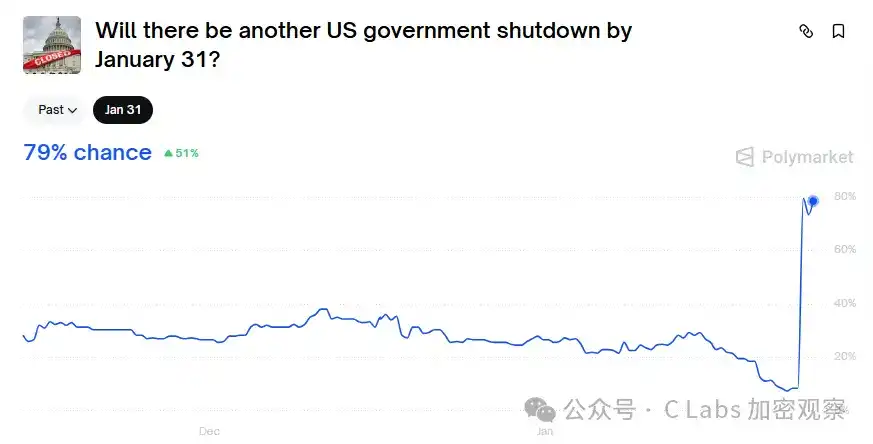
Due to the sudden nature of the event and it being a weekend, the crypto market has already taken a hit:
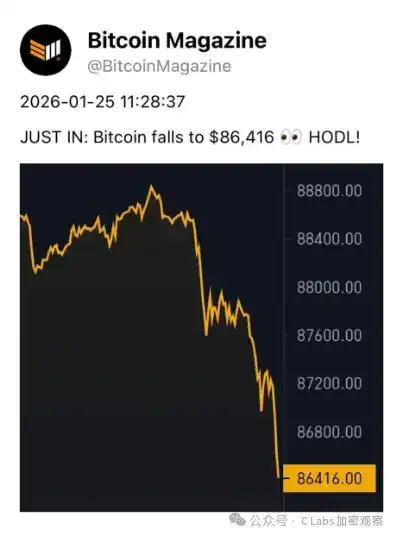
It's important to remember that the US government had already experienced a record 43-day shutdown starting on October 1st of last year, which ultimately ended on November 12, 2025, with the passage of a compromise bill (While the Binance community was celebrating, the US government had already been shut down for two weeks...).

Now, barely over two months have passed since that compromise bill, so why is there another potential shutdown?

01. Why is the government shutting down again?

The reason for this potential US government shutdown is that the bill passed last year was only a "Continuing Resolution" (CR), which temporarily extended funding authorization for most government agencies until January 30, 2026.

Only a few departments (such as the Department of Agriculture, Veterans Affairs, and Congressional operations themselves) received full-year funding.

Congress must pass a new, longer-term bill before January 30th; otherwise, agencies without full-year funding will face another lapse.
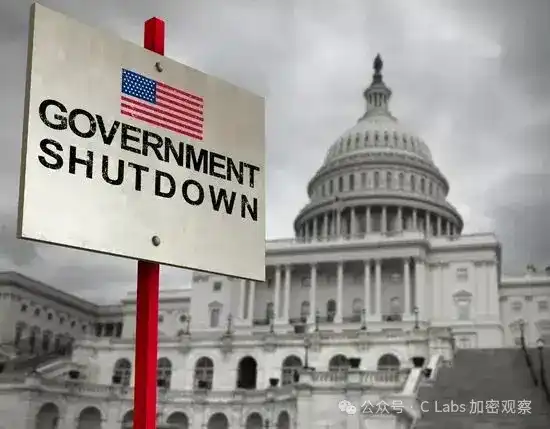
The reason for this shutdown threat is that Democrats disagree with the funding allocation plan for the Department of Homeland Security (DHS), citing recent shootings involving Immigration and Customs Enforcement (ICE) agents.

02. Originating from Somali Immigrant Fraud

Trump has recently been heavily focused on the Somali immigrant fraud case in Minnesota, using it as a pretext to intensify crackdowns on illegal immigration in the area.

However, ICE agents conducted two enforcement operations in Minneapolis, resulting in the fatal shootings of two US citizens, which has caused significant controversy in US public opinion.

The relief fund fraud case involving Somalis has confirmed losses of over $240 million, with other reports suggesting total losses could be as high as $9 billion.

Trump consequently made strong public statements, saying Somalis should "get out of the US," and accused officials of "inciting rebellion."

Using this as a pretext, the Department of Homeland Security (DHS) escalated its enforcement actions against illegal immigration, deploying approximately 2,000 additional ICE agents to Minneapolis, the capital of Minnesota. The initial targets of the operation were Somalis with final orders of removal.

But it was these aggressive enforcement actions and the subsequent shootings of US citizens by ICE agents that have now led Senate Democrats to oppose the House appropriations bill containing DHS funding.

Democrats are demanding accountability and reform for ICE's actions, while Republicans want to continue pushing their border security agenda.

This deadlock directly leads to the current risk of a government shutdown.

03. Crypto Market Becomes the "Payer"

The Somali fraud case appears massive, with confirmed losses of $240 million and potential total involvement up to $9 billion.
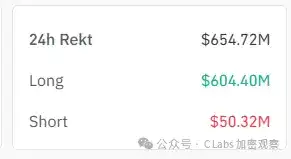
Because Democrats suddenly raised objections over the weekend to the funding for DHS, it is once again the crypto market that is bearing the brunt of this shock.

Today's crash in the crypto market, caused by the risk of a US government shutdown, has already resulted in over $600 million in long positions being liquidated in a single day, and the crypto market capitalization has evaporated by more than $30 billion in one day...

So, the money defrauded from US government welfare by Somalis in Minnesota has finally been paid for by the crypto market today.

As for how the US stock market will react, we'll have to wait until it opens tomorrow to find out~


Domande pertinenti

QWhy is the U.S. government facing another potential shutdown at the end of January?

AThe U.S. government is facing a potential shutdown because the previous continuing resolution (CR) that funded most government agencies expires on January 30, 2026. A new, longer-term funding bill must be passed by Congress before this date to avoid a shutdown for agencies that did not receive full-year funding.

QWhat specific event triggered the Democratic Party's opposition to the Department of Homeland Security (DHS) funding bill?

AThe Democratic Party's opposition was triggered by recent U.S. Immigration and Customs Enforcement (ICE) agent shootings that resulted in the deaths of two American citizens during enforcement actions in Minneapolis, leading to demands for ICE accountability and reform.

QWhat was the connection between the Somali immigrant fraud case and the increased ICE enforcement actions?

AFormer President Trump used the massive Somali immigrant relief fund fraud case (involving up to $9 billion) as a reason to intensify crackdowns on illegal immigration, leading to the deployment of approximately 2,000 additional ICE agents to Minneapolis and the subsequent controversial enforcement actions.

QHow did the cryptocurrency market react to the increased probability of a U.S. government shutdown?

AThe cryptocurrency market reacted negatively, experiencing a sharp decline over the weekend. This led to over $6 billion in long positions being liquidated in a single day and a loss of more than $30 billion in market value.

QWhich government agencies were already funded for the full year and thus not affected by the potential shutdown?

AA few departments, including the Department of Agriculture, the Department of Veterans Affairs, and the operations of Congress itself, had already received full-year funding and would not be affected by the potential shutdown.

Letture associate

STAR 50 Soars 10.73%, Why Did A-Shares Stage a "V-Shaped Reversal"?

After a prolonged decline, the Chinese A-share market staged a strong rally on July 21. The STAR 50 index surged 10.73%, its largest single-day gain in nearly a year, leading a broad-based "V-shaped" reversal. The Shanghai Composite Index rose 1.79%, the Shenzhen Component Index gained 4.81%, and the ChiNext Index jumped 7.05%. Total market turnover reached 2.97 trillion yuan, an increase of 256.1 billion yuan from the previous session, with over 3,100 stocks advancing. The semiconductor sector spearheaded the rebound, with related ETFs posting significant gains. Analysts attribute the surge to three converging factors. First, coordinated capital inflows from "national team" institutions, insurance funds, listed company buybacks, and fund house self-purchases have bolstered market liquidity and confidence. Second, supportive policy signals, including commitments from regulators to ensure stable market operations, provided a favorable backdrop. Third, a stabilization and recovery in overseas markets, notably South Korea, created a positive external environment. Institutions suggest the most severe panic selling phase for the tech sector has likely passed, following a significant digestion of crowded positions and leveraged funds. While short-term volatility may persist, the medium to long-term outlook remains underpinned by enduring trends like AI computing demand expansion and semiconductor localization. The market's focus now shifts to the sustainability of supportive fund flows, earnings reports, and upcoming catalysts from the global AI industry chain.

marsbit17 min fa

STAR 50 Soars 10.73%, Why Did A-Shares Stage a "V-Shaped Reversal"?

marsbit17 min fa

U.S. Tech Momentum Stocks Post Largest Single-Day Gain Ever, But Is the Plunge Over?

US tech momentum stocks staged a sharp rebound on Tuesday (July 21st). Morgan Stanley's TMT Momentum Factor surged over 12%, marking its largest single-day gain on record, exceeding even peaks from the 2000 dot-com bubble. Key momentum indices from Goldman Sachs also posted their strongest daily performances in years. The rally was led by semiconductors, with the Philadelphia Semiconductor Index jumping 4.6%. This rebound followed three consecutive down days and a cumulative 33% plunge in momentum stocks, one of the steepest drawdowns since the dot-com era. Analysts attribute the surge largely to a short squeeze. Heavy selling had pushed high-beta momentum stocks into deeply oversold territory, forcing many short sellers, particularly in Asia, to cover their positions, creating a self-reinforcing buying spiral. However, the rebound's internals appear weak. Trading volume was notably low, and advancing stocks still lagged decliners on the S&P 500, indicating a narrow, concentrated rally rather than broad market participation. Diverging views emerge on the outlook. BTIG warns the bounce has hit key resistance and recommends selling into strength, citing extreme volatility and historical parallels to past market tops. Conversely, Goldman Sachs and UBS believe the momentum unwind is nearing its end, suggesting it may be time to gradually add exposure, as positioning has been significantly reduced. They caution, however, that high volatility warrants a measured approach, potentially using defined-risk strategies. The upcoming earnings season, particularly reports from major tech firms like Alphabet, is seen as a critical test for the rally's sustainability. Simultaneously, bond markets flashed a warning, with yields rising partly due to spiking oil prices. Analysts note that if long-term Treasury yields break decisively higher, it could pose a significant headwind for equities, especially growth stocks.

marsbit25 min fa

U.S. Tech Momentum Stocks Post Largest Single-Day Gain Ever, But Is the Plunge Over?

marsbit25 min fa

U.S. Tech Momentum Stocks Record Largest Single-Day Gain Ever, but Has the Rout Ended?

U.S. tech momentum stocks staged a dramatic rebound on Tuesday, July 21st. Key momentum indices like the Morgan Stanley TMT Momentum Factor and Goldman Sachs' High Beta Momentum Long Index posted historic or near-historic single-day gains, fueled largely by semiconductor stocks. This sharp rally followed a severe three-day sell-off that saw momentum stocks plunge 33%, marking one of the steepest pullbacks since the dot-com bubble. Analysts attribute the bounce primarily to a short squeeze, as forced covering from over-leveraged traders, particularly in Asia, created a buying spiral. However, the rally's health is questioned due to weak market breadth—overall trading volume was low, and decliners outnumbered advancers in the S&P 500 despite the index's gain—suggesting a narrow, concentrated surge rather than broad recovery. Opinions on the sustainability diverge. BTIG strategists warn the rebound has hit key resistance levels, citing extreme volatility and historic stock dispersion as signs of an ongoing broader correction, and recommend selling into strength. Conversely, Goldman Sachs and UBS view the aggressive momentum unwinding as nearing its end, noting reduced positioning and a lack of new fundamental catalysts. They suggest the sell-off presents a selective opportunity to add exposure, albeit cautiously and gradually using defined-risk strategies. The immediate trajectory hinges on the ongoing earnings season, with market focus on Alphabet's capital expenditure guidance for AI investment clarity. Meanwhile, bond markets present a risk, with rising Treasury yields—potentially heading toward 5.5%—and widening credit spreads for mega-cap tech companies posing a threat to equity valuations. The combination of technical factors, earnings results, and macro conditions leaves the durability of the rebound in doubt.

链捕手27 min fa

U.S. Tech Momentum Stocks Record Largest Single-Day Gain Ever, but Has the Rout Ended?

链捕手27 min fa

Long-Divided Must Unite, Long-United Must Divide: When L1 Becomes Its Own Rollup, What Is Ethereum's Endgame?

"The Inevitable Cycle: When L1 Becomes Its Own Rollup – What is Ethereum's Endgame?" For years, the Ethereum community grappled with concerns that L2s were fragmenting the ecosystem and eroding L1's value. While L2s provided cheaper execution, they also splintered liquidity and the unified user experience of a single chain. This has prompted a fundamental reassessment of the relationship between L1 and L2. Ethereum's roadmap is evolving. The "Scale" initiative merges L1 and L2 expansion into a holistic framework. L1 itself is advancing with higher gas limits, statelessness, and zkEVM verification, no longer content to be just a low-throughput settlement layer. Consequently, the primary value proposition of L2s is shifting from merely providing cheap blockspace to offering L1 cannot easily provide: application-specific optimizations, privacy features, and flexible governance models. L2s are becoming a spectrum of execution environments with varying degrees of security inheritance from Ethereum. A critical challenge in this multi-chain future is interoperability. The vision is to make Ethereum "feel like one chain again." This relies on advancements in native account abstraction (like EIP-7702) and intent-based architectures (Open Intents Framework), where users declare desired outcomes, and solvers handle the complex cross-chain execution. Furthermore, shortening Ethereum's finality time from minutes to seconds is crucial, as it underpins trust between chains for bridges, stablecoins, and cross-chain applications. Perhaps the most provocative idea is that Ethereum L1 itself could become a form of "its own Rollup." As zkEVM and proof systems mature, high-performance nodes could execute transactions and generate validity proofs. Regular validators would then verify these proofs instead of re-executing all transactions. This blurs the traditional L1/L2 hierarchy, making "Rollup" more of a general execution-verification architecture. Native Rollup aims to integrate L2 validation more directly into the Ethereum protocol, allowing L2s to inherit L1's security more fully and move away from reliance on security councils. In the end, L2s are not destined to replace L1 or be made obsolete by it. The likely future is a unified system where diverse execution environments—each optimized for specific use cases like DeFi, gaming, or privacy—coexist. They will share a common foundation of security, liquidity, and verifiable state, seamlessly connected to restore a cohesive user experience. The next phase for Ethereum is not just about scaling through separation, but about intelligently reintegrating what was separated back into a coherent whole.

链捕手43 min fa

Long-Divided Must Unite, Long-United Must Divide: When L1 Becomes Its Own Rollup, What Is Ethereum's Endgame?

链捕手43 min fa

Trading

Spot
活动图片




