UK, US, Canada launch Operation Atlantic to fight crypto scams: Report

ambcryptoPubblicato 2026-03-18Pubblicato ultima volta 2026-03-18

Introduzione

The US, UK, and Canada have launched Operation Atlantic, a joint initiative to combat crypto scams in real-time. Led by the US Secret Service, the UK's National Crime Agency, and Canadian authorities, the operation focuses on proactively detecting and preventing fraud, rather than just tracing stolen funds after the fact. The primary target is "approval phishing," where victims are tricked into signing malicious smart contracts that grant attackers access to their wallets. Authorities will collaborate with crypto exchanges and blockchain firms to monitor suspicious transactions and directly contact potential victims before funds are stolen. The operation also targets "pig butchering" scams, a long-term social engineering scheme. This initiative builds on previous efforts like Canada's Project Atlas. While Chainalysis reports scammers received around $14 billion in crypto in 2025, TRM Labs notes illicit activity still only represents about 1.2% of total market volume, indicating the legitimate crypto economy is growing faster. The operation highlights a shift toward cross-border, proactive law enforcement response to increasingly globalized crypto crime.

For years, crypto fraud was linked to hackers stealing funds that seemed to vanish on the blockchain. Now, that perception is changing. Three countries have joined forces to stop scams in real time.

Called Operation Atlantic, the initiative brings together the U.S. Secret Service, the UK’s National Crime Agency (NCA), and Canadian authorities.

Instead of only tracing stolen funds after a crime, the operation aims to detect and prevent scams before money is taken.

Main focus of Operation Atlantic

The main target is “approval phishing.” In this scam, victims are tricked into signing a transaction that quietly permits attackers to access their crypto wallets.

By working with private blockchain firms and analyzing real-time data, investigators are now trying to spot risky wallet activity. This marks a shift from reactive investigations to proactive prevention.

Stressing the seriousness of the situation, Brent Daniels, Deputy Assistant Director for the U.S. Secret Service’s Office of Field Operations, said,

Approval phishing and investment scams cost victims millions in financial loss each year.

In response to the rising threat of such crimes, Paul Foster, Deputy Director of Cyber at the UK’s National Crime Agency, added,

Criminals operate across borders, so our response must do the same.

What will the investigators do?

In this effort, authorities will work closely with crypto exchanges and Virtual Asset Service Providers (VASPs) to monitor suspicious transaction patterns.

When they identify a wallet at risk, investigators will contact the potential victim by phone or email before scammers complete the fraud.

Additionally, the other focus is “pig butchering” scams, a long-term social engineering scheme where criminals slowly build trust with victims.

After gaining confidence, scammers trick victims into signing transactions that grant access to their crypto wallets through malicious smart contracts.

To avoid confusion, while pig butchering refers to the broader manipulation strategy, approval phishing is the mechanism that allows scammers to actually drain funds once trust has been established.

Other such initiatives

That said, the initiative also builds on Project Atlas, a 2024 Canadian-led operation that targeted international crypto investment fraud networks.

Remarking on which, Detective Superintendent Jennifer Spurrell, Director of the Financial Crimes Services Bureau at the Ontario Provincial Police, noted,

Project Atlas demonstrated the power of coordinated disruption....As fraud becomes increasingly global, this level of collaboration is essential.

Concerning data sets on rising crypto frauds

Operation Atlantic shows that law enforcement is becoming faster and more coordinated, but crypto fraud still remains a major challenge.
Source: Chainalysis

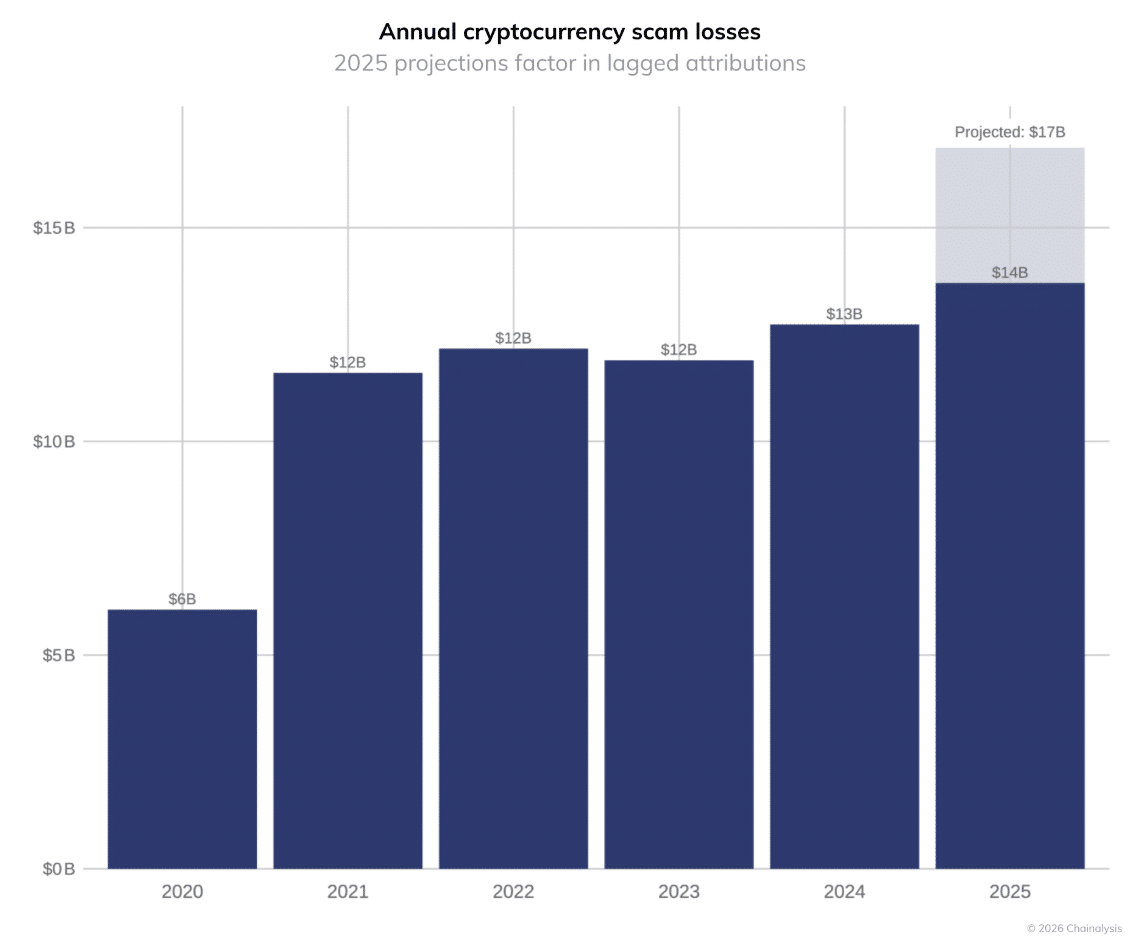
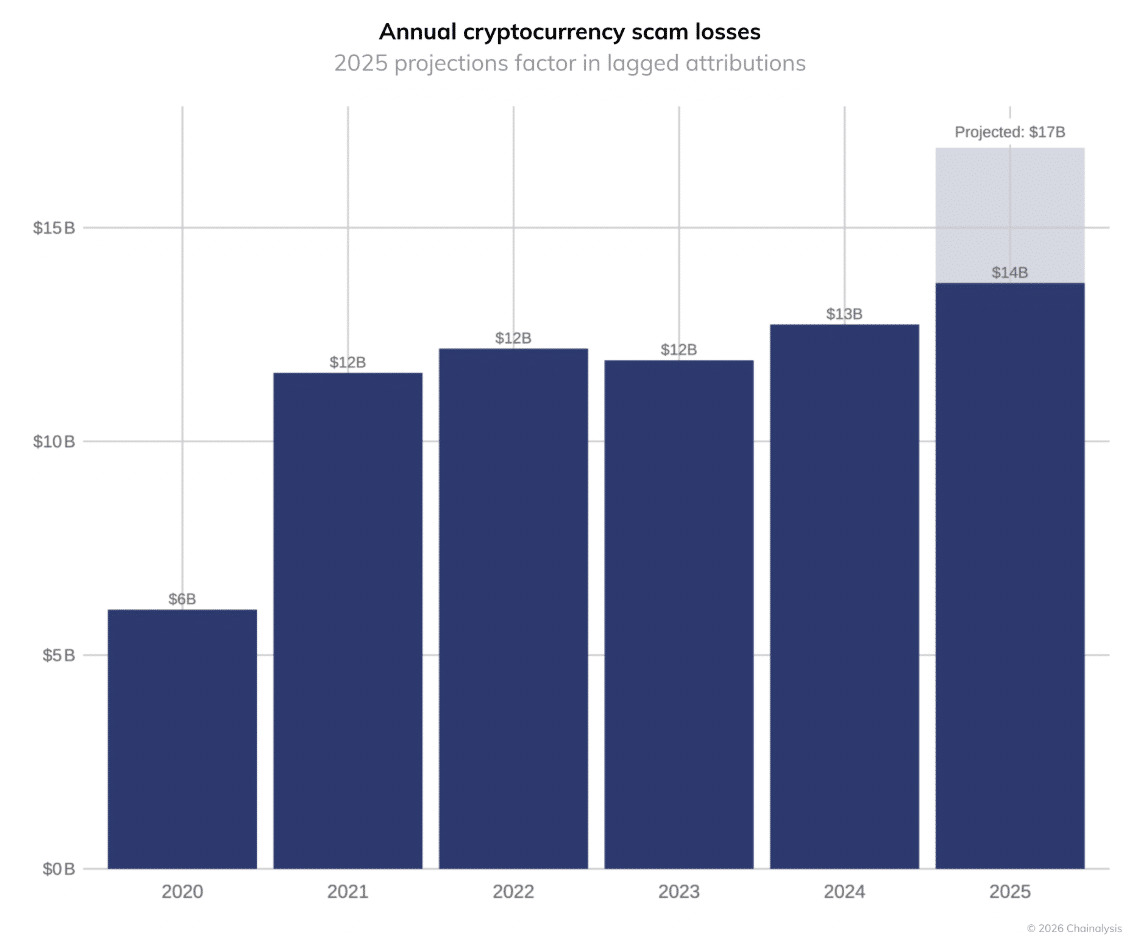
According to Chainalysis, scammers received around $14 billion in crypto in 2025, and investigators could identify over $17 billion as they uncover more illicit wallets.

However, TRM Labs reports a positive trend.
Source: TRM Labs

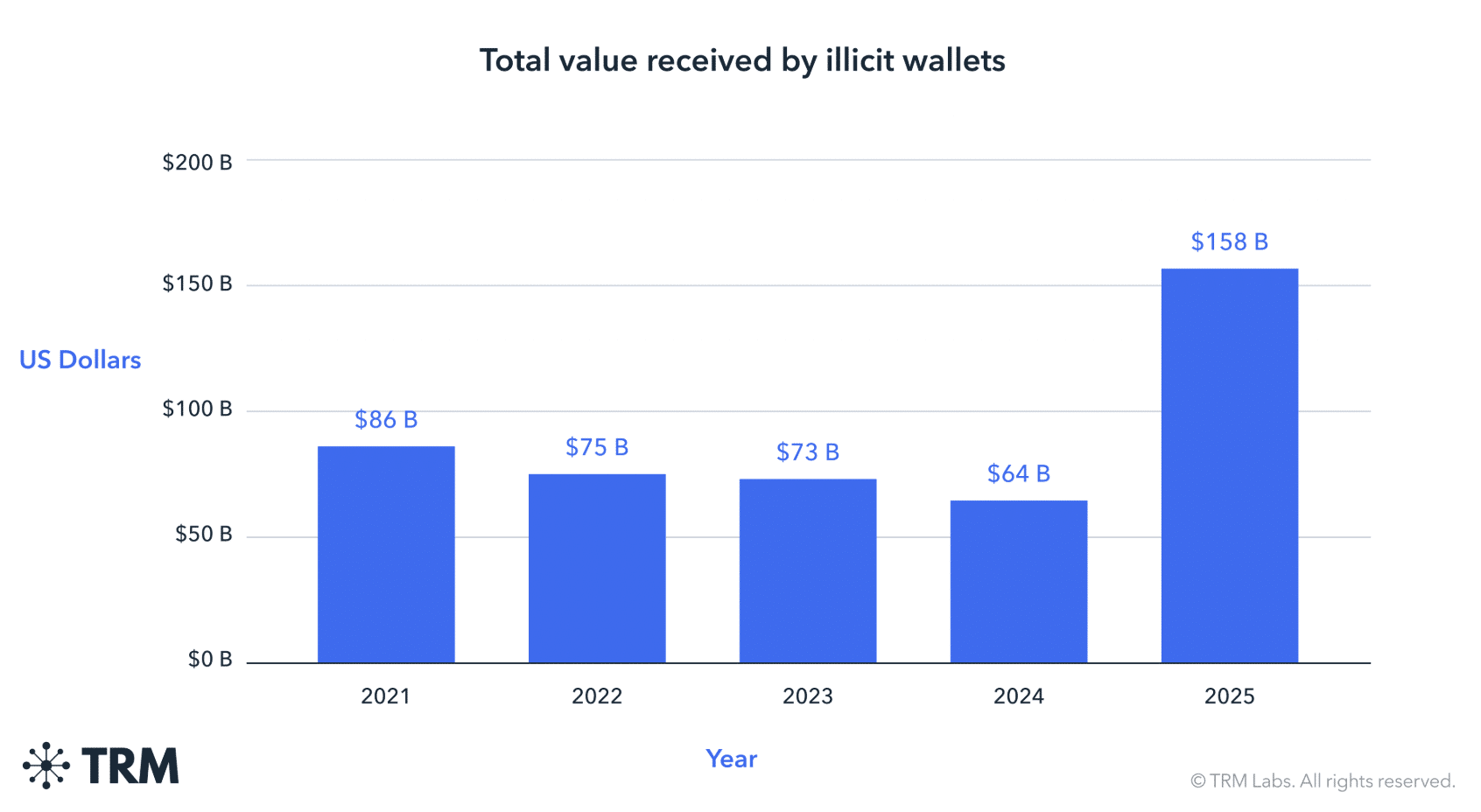
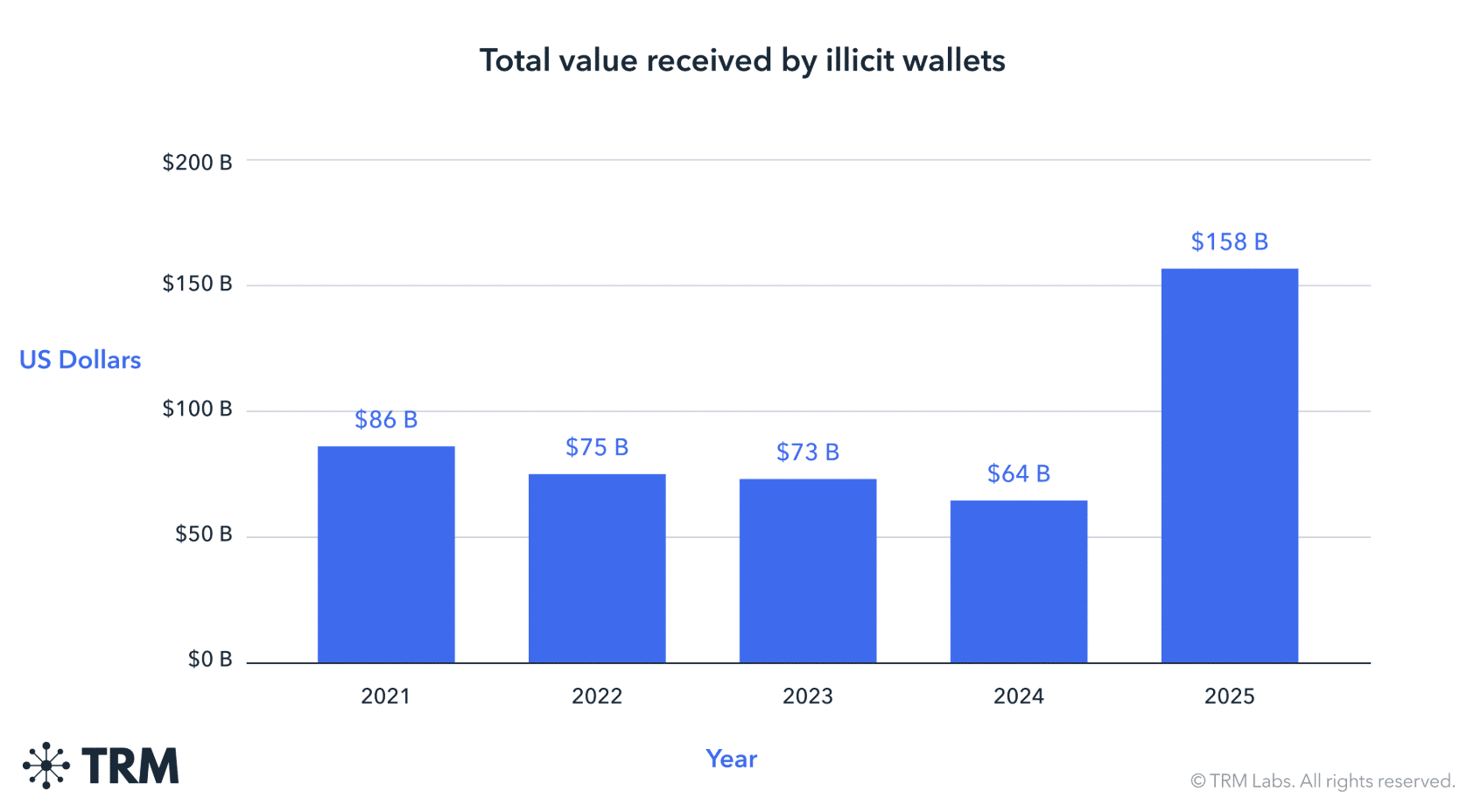
Illicit crypto activity reached $158 billion last year, but it accounted for only about 1.2% of total market activity. This suggests that despite rising fraud, the legitimate crypto economy is expanding at a much faster pace.


Final Summary

  • The rise of approval phishing scams exposes a key weakness in Web3 design, wherein many users do not fully understand the permissions they grant to smart contracts.
  • Billions lost to scams indicate that criminal networks are scaling just as quickly as the crypto industry itself.


Domande pertinenti

QWhat is the name of the joint operation launched by the UK, US, and Canada to combat crypto scams, and which agencies are involved?

AThe operation is called Operation Atlantic. It involves the U.S. Secret Service, the UK’s National Crime Agency (NCA), and Canadian authorities.

QWhat is the primary type of scam that Operation Atlantic is targeting, and how does it work?

AThe primary target is 'approval phishing.' In this scam, victims are tricked into signing a transaction that secretly grants attackers access to their crypto wallets, allowing the scammers to drain funds.

QHow does Operation Atlantic aim to prevent crypto fraud differently from previous methods?

AInstead of only tracing stolen funds after a crime has occurred (reactive), the operation aims to proactively detect and prevent scams by monitoring real-time data and suspicious wallet activity, then contacting potential victims before the fraud is completed.

QAccording to the report, what was the estimated value of crypto received by scammers in 2025, and what positive trend was noted by TRM Labs?

AAccording to Chainalysis, scammers received around $14 billion in crypto in 2025. TRM Labs reported that while illicit crypto activity reached $158 billion, it only accounted for about 1.2% of total market activity, indicating the legitimate crypto economy is expanding at a much faster pace.

QWhat is the name of the previous Canadian-led initiative that Operation Atlantic builds upon, and what did it target?

AOperation Atlantic builds on Project Atlas, a 2024 Canadian-led operation that targeted international crypto investment fraud networks.

Letture associate

From Banning Doubao to Embracing Honor: Why Did WeChat Suddenly 'Change Its Face'?

The article explores the sudden shift in WeChat's strategy towards AI assistants from mobile phone manufacturers, transitioning from strict opposition to active collaboration. For over a year, WeChat fiercely resisted attempts by phone AI assistants (like ByteDance's Doubao in late 2025) to control its features via GUI automation ("simulated clicking"), citing security and data control concerns. This stance created a significant barrier for system-level AI integration. Now, Tencent has initiated A2A (Agent-to-Agent) partnerships with major phone brands like Honor, Xiaomi, OPPO, and vivo. This model allows a phone's system AI (e.g., Honor's YOYO) to parse a user's voice command and send a structured request directly to WeChat's own internal AI agent via secure APIs. WeChat then executes the action (e.g., sending a message) and returns the result. The article attributes Tencent's "change of face" to strategic pressure. While leading in social app usage, Tencent trails rivals like ByteDance and Alibaba in standalone AI app popularity. WeChat, with its vast mini-program ecosystem, is Tencent's key asset for an AI comeback. The upcoming WeChat AI agent aims to handle tasks like booking and payments within the app. However, phone system assistants remain the primary AI entry point for most users. The A2A collaboration allows Tencent to extend WeChat's AI reach to this crucial system layer while maintaining control over its core functions and data. For phone manufacturers, embracing A2A is a pragmatic move. The GUI route proved unviable due to WeChat's blocks. A2A offers a compliant path to integrate a vital service, enhancing their AI assistants' usefulness. It allows them to focus on developing their own AI ecosystems for other services while cooperating on WeChat access. The collaboration is framed as a mutual, strategic necessity: Tencent gains a distribution channel, and manufacturers gain a key functionality. The partnership relies on a "dual authorization" mechanism for security, requiring both user and app consent for each action. While questions about long-term data privacy practices remain, experts note A2A is more secure and compliant than GUI automation. Ultimately, this cooperation is seen as a tentative, calculated truce. Tencent's long-term goal is to make WeChat an AI-powered "service OS." Phone manufacturers aim to make their system AI the central user interface. Their paths may converge or clash in the future, but for now, the A2A deal represents the opening chapter in the battle for the AI-era user入口, driven by necessity and strategic calculus on both sides.

marsbit27 min fa

From Banning Doubao to Embracing Honor: Why Did WeChat Suddenly 'Change Its Face'?

marsbit27 min fa

On-Chain Figures on the Eve of Kickoff: 1.6 Billion Traded Before the World Cup Even Begins

"On-Chain Numbers on the Eve of the World Cup: $1.6 Billion Traded Before Kick-off" Analysis of on-chain markets before the 2026 FIFA World Cup reveals significant crypto integration into football. The most striking figure is the approximately **$1.6 billion** in total trading volume on the single "World Cup Winner" contract on the Polymarket prediction market platform, accumulated before a single match was played. This represents explosive growth for a sector whose annual volume surged from ~$16B in 2024 to ~$64B in 2025. The ecosystem is maturing beyond speculation. Key developments include: 1) **Infrastructure upgrades** like Polymarket's migration to native, regulated USDC stablecoin for settlements; 2) **Reliable data oracles**, such as Chainlink, being used to resolve real-world match outcomes on-chain; and 3) **Official recognition**, with FIFA appointing its first-ever "Prediction Markets" partner. Over 100 contracts now cover everything from the outright winner to individual match results and even non-sporting risks like venue relocation. This evolution marks a fundamental shift. While crypto firms are absent from FIFA's top-tier sponsor list, the technology has deeply penetrated the tournament's financial and predictive infrastructure through regulated stablecoin settlements, decentralized oracles, and new official partnership categories. The regulatory landscape remains complex and varies by jurisdiction, but on-chain markets for the World Cup are already a multi-billion-dollar reality.

marsbit1 h fa

On-Chain Figures on the Eve of Kickoff: 1.6 Billion Traded Before the World Cup Even Begins

marsbit1 h fa

From SpaceX's IPO to the Future of Crypto: Which Crypto Sectors Will Host the Trillion-Dollar Narrative?

From the SpaceX IPO, which targets a $750 billion raise at a $1.77 trillion valuation, we can extrapolate capital flow trends relevant to crypto. The focus shifts from speculative narratives to foundational infrastructure and real-world asset (RWA) integration. Key crypto sectors poised to benefit include: 1. **AI Infrastructure**: The narrative is moving from consumer-facing AI applications to underlying, scarce resources like compute power and decentralized GPU networks (e.g., TAO, RENDER, AKT, IO). These protocols are positioning as the essential "picks and shovels" providers for the AI economy. 2. **Real-World Assets (RWA)**: Beyond tokenized treasury bonds, RWA's future lies in on-chain equity and pre-IPO assets like SpaceX. This could democratize access to high-growth assets and reshape global capital flows, benefiting infrastructure projects like ONDO, LINK, and Plume that facilitate issuance, data, and liquidity. 3. **Core Financial Infrastructure**: Stablecoins, payment networks, and DePIN (Decentralized Physical Infrastructure Networks) are critical for settling the future on-chain economy. Their role expands from internal trading tools to foundational layers for global finance, AI systems, and real-world asset networks, leading to potential value reassessment. In summary, the next cycle may prioritize long-term infrastructure value—AI compute, asset tokenization networks, and settlement layers—over short-lived application hype, mirroring the broader market's shift towards funding the foundational systems of the future.

marsbit1 h fa

From SpaceX's IPO to the Future of Crypto: Which Crypto Sectors Will Host the Trillion-Dollar Narrative?

marsbit1 h fa

Trading

Spot
Futures
活动图片