# Turkey Articoli collegati

Il Centro Notizie HTX fornisce gli articoli più recenti e le analisi più approfondite su "Turkey", coprendo tendenze di mercato, aggiornamenti sui progetti, sviluppi tecnologici e politiche normative nel settore crypto.

Turkey blocked 47,493 illegal betting sites amid expanded measures targeting cryptocurrency accounts

Turkey has blocked access to 47,493 illegal betting websites since January 1st as part of a nationwide crackdown on online gambling operators and their payment networks. Police and gendarmerie conducted 680 operations, detaining 5,629 suspects, with 3,231 placed in pre-trial detention and 1,515 placed under judicial supervision. Cybercrime units are conducting 24/7 monitoring of illegal betting sites, social media ads, and digital payment channels. Investigators are tracking bank accounts, e-money services, and crypto asset wallets suspected of facilitating betting operations or laundering criminal proceeds. The actions follow earlier raids in May targeting over 670 suspects, with one investigation in Adana uncovering cryptocurrency platforms used for laundering betting revenues. Authorities highlighted a specific case involving a network allegedly coordinated by a suspect with initials İ.Ö.Ö., which reportedly generated revenue from illegal betting and match-fixing. Prosecutors identified seven overseas crypto wallets that received transfers from this network, estimating total transaction volume at $4 billion. All related bank and crypto accounts were frozen. The network allegedly recruited individuals to act as "common accounts" for processing bets in exchange for a 1% commission. In separate operations, authorities blocked 4,742 bank accounts and six crypto accounts in Adana, and identified transactional activity worth approximately $104 million across 47 suspects. Assets including companies, vehicles, and properties were seized. The crackdown includes real-time disruption. During the 2022 World Cup final, prosecutors identified and ordered the freezing of 6,314 bank accounts used for illegal betting, aided by an AI analysis system called AVCI. They project illegal betting volume for the 2026 World Cup could reach $50 billion. Justice Minister Yılmaz Tunç stated that 19 offshore "financial companies" managing panel systems for illegal betting sites were identified, with legal proceedings initiated against 23 suspects. He emphasized a strategic shift towards "draining the swamp" through coordinated asset seizures and digital evidence collection, rather than relying on individual prosecutions.

cryptonews.ru07/30 05:16
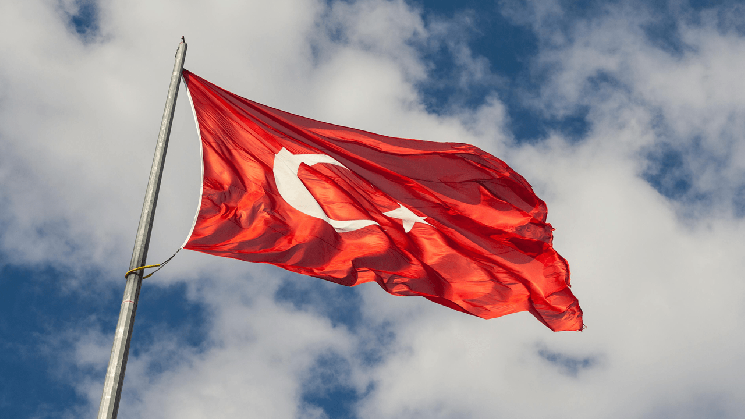
Turkey blocked 47,493 illegal betting sites amid expanded measures targeting cryptocurrency accounts

cryptonews.ru07/30 05:16

Under the Shock of Oil Prices and Inflation, Which Country Will Be the First to Sell Off Its Gold Reserves?

The article draws a parallel between the 2003 North American blackout and the potential collapse of the global financial system, framing the US dollar and Treasury market as the world's economic "power grid." It argues that the closure of the Strait of Hormuz is creating a shockwave, starting with oil-importing emerging markets like Turkey, India, and Indonesia. As oil prices rise, these nations are forced to sell dollar-denominated assets—first US Treasuries, then potentially their gold reserves—to afford fuel. Turkey is highlighted as a key case, having sold nearly 90% of its Treasuries and begun tapping gold reserves when oil was between $70-$105/barrel. The article warns that if prices spike to $150-$160/barrel, global buffers like oil inventories and strategic reserves will be depleted. This could trigger a cascade: vulnerable nations, having exhausted assets, could face economic and political collapse (like Sri Lanka in 2022). Their forced asset sales would drive US Treasury yields higher, potentially past a critical threshold (around 5%), forcing the US to choose between a bond market crash or hyperinflation through massive money printing. Ultimately, the piece posits that the dollar's long-term decline is inevitable. The first domino to fall will likely be a fragile emerging market, signaling the start of a chain reaction that eventually threatens the core of the dollar system. The conclusion advises holding tangible assets like gold and energy, which cannot be printed, as a hedge against currency devaluation.

marsbit06/17 07:28

Under the Shock of Oil Prices and Inflation, Which Country Will Be the First to Sell Off Its Gold Reserves?

marsbit06/17 07:28

Bloomberg: Assisting Turkey in Freezing $1 Billion in Assets, Tether Is Reshaping Compliance Boundaries

On January 30, Turkish authorities froze over $500 million in assets linked to Veysel Sahin, who is accused of operating an illegal gambling platform and money laundering. The operation was executed by an unnamed cryptocurrency company, later revealed to be Tether Holdings SA, the issuer of the $185 billion stablecoin USDT. Tether has been cooperating with global law enforcement agencies to combat crypto-related crimes, including money laundering and sanctions evasion. Tether CEO Paolo Ardoino stated that the company follows legal procedures when assisting authorities, including the U.S. Department of Justice and FBI. The freeze is part of a broader Turkish operation that has seized over $1 billion in assets. A second individual under investigation for similar charges had an additional $500 million in crypto assets frozen, though it is unclear if Tether tokens were involved. According to Elliptic, Tether and its competitor Circle have blacklisted approximately 5,700 wallets holding around $2.5 billion in assets, with three-quarters of them containing USDT. Tether claims to have assisted law enforcement in 62 countries, freezing $3.4 billion in USDT tied to illicit activities. This marks a significant shift from Tether’s earlier conflicts with U.S. regulators, including a 2021 settlement over misrepresenting reserves. The company has recently re-entered the U.S. market with a compliant stablecoin, USAT, and has gained recognition for its cooperation with authorities. Despite this, USDT continues to face scrutiny for its use in criminal activities, including a recent case involving $1 billion in money laundering and reports of Iran’s central bank using USDT to evade sanctions.

marsbit02/15 04:10

Bloomberg: Assisting Turkey in Freezing $1 Billion in Assets, Tether Is Reshaping Compliance Boundaries

marsbit02/15 04:10

Assisting Turkey in Freezing $1 Billion in Assets, Tether's Compliance Approach Has Changed

On January 30, Turkish authorities froze assets worth over $500 million belonging to Veysel Sahin, who is accused of operating an illegal gambling platform and money laundering. Tether Holdings SA, the issuer of the $185 billion stablecoin USDT, assisted in the freeze at the request of the Turkish government. This action is part of a broader Turkish operation that has frozen over $1 billion in assets. Tether has increasingly collaborated with global law enforcement agencies to combat cryptocurrency-related crimes, including money laundering, drug trafficking, and sanctions evasion. According to Tether CEO Paolo Ardoino, the company follows legal procedures when working with authorities such as the U.S. Department of Justice and the FBI. Analysis by Elliptic shows that Tether and its competitor Circle have blacklisted around 5,700 wallets holding approximately $2.5 billion in assets, with three-quarters of these containing USDT. Tether claims to have assisted in over 1,800 cases across 62 countries, freezing $3.4 billion in USDT tied to illicit activities. This marks a shift from Tether’s earlier tensions with U.S. regulators, including a 2021 settlement over misrepresenting reserves. The company has recently re-entered the U.S. market with a compliant stablecoin, USAT, and has gained regulatory acceptance under the Trump administration. Despite these efforts, USDT remains under scrutiny for its use in criminal activities, including a recent case involving $1 billion in money laundering and reports of Iran’s central bank using USDT to evade sanctions.

marsbit02/09 12:18

Assisting Turkey in Freezing $1 Billion in Assets, Tether's Compliance Approach Has Changed

marsbit02/09 12:18

活动图片