# Report Articoli collegati

Il Centro Notizie HTX fornisce gli articoli più recenti e le analisi più approfondite su "Report", coprendo tendenze di mercato, aggiornamenti sui progetti, sviluppi tecnologici e politiche normative nel settore crypto.

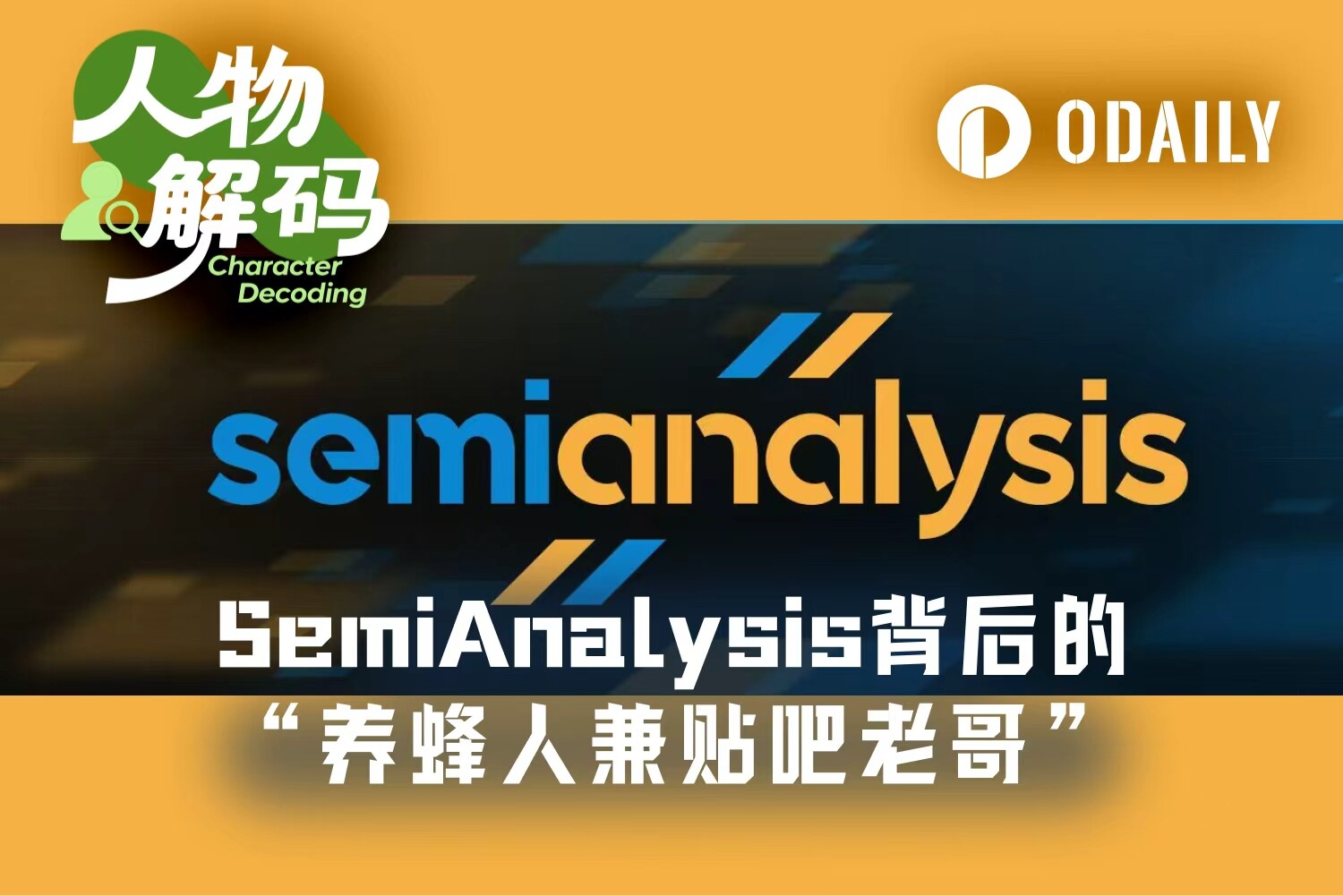
Dylan Patel: SemiAnalysis, Praised by Jensen Huang, is Founded by a 'Beekeeper and Forum Warrior'

Dylan Patel, founder of the independent research firm SemiAnalysis, has an unconventional background. Growing up in rural Georgia, he later worked as a beekeeper in Minnesota. His entry into semiconductors began as a self-taught "forum warrior," engaging anonymously in online tech communities from a young age. In May 2020, he started the SemiAnalysis blog on WordPress, later moving it to Substack as a paid subscription service. The firm has since evolved from a one-person operation into a global company with around 60 employees, featuring a dedicated chip teardown lab. Its revenue, reaching $20 million last year, is projected to surpass $100 million this year. SemiAnalysis is highly regarded in the AI and semiconductor industry for its deep technical analysis. NVIDIA founder Jensen Huang has publicly praised its reports. In a notable instance, a critical report on AMD's MI300X GPU software shortcomings prompted a 90-minute call with CEO Lisa Su, who thanked Patel for the "constructive feedback." A later report acknowledged AMD's subsequent improvements. The firm's analyses have significant market impact. For example, a June report discussing potential memory configuration changes in NVIDIA's next-generation servers was cited as a factor in pressure on memory-related stocks. Patel plans to establish a venture capital firm, having already made personal investments in about 20 startups. SemiAnalysis combines roles as a consultancy, model platform, and tech lab, focusing on the practical bottlenecks in AI infrastructure.

Odaily星球日报4 h fa

Dylan Patel: SemiAnalysis, Praised by Jensen Huang, is Founded by a 'Beekeeper and Forum Warrior'

Odaily星球日报4 h fa

SemiAnalysis Report Claims Delay in Two Key Technologies, Triggers Sharp Decline in 'Optoelectronics', Sparking Online Debate Over CPO

A report from analysis firm SemiAnalysis, claiming significant delays in two key AI data center technologies, triggered a sharp sell-off in the photonics sector and sparked intense online debate. The report, dated June 10, states that NVIDIA's 800VDC power architecture rollout is pushed to 2028 and CPO (Co-Packaged Optics) mass production is likely delayed until 2028 or even 2029. Following the news, U.S. optical communication stocks fell sharply, with AAOI dropping 17% and Lumentum down about 8%. The delays were attributed to engineering challenges like photonic engine yield and cost-effectiveness, not a disappearance of demand. Simultaneously, an interview with NVIDIA's networking SVP Gilad Shainer presented an opposing, optimistic view, stating CPO is "the most exciting thing" and shipments would begin scaling in the second half of the year. This contradiction fueled debate on social media. Bears pointed to unresolved reliability and maintenance hurdles for CPO. Bulls argued the delay simply redirects capital to interim solutions like traditional pluggable optical modules and NPO (Near-Packaged Optics), extending their revenue runway. Some users questioned the report's internal logic and timing, noting similar views had circulated earlier. Analysts highlighted potential beneficiaries, including companies in the 1.6T pluggable modules, NPO, and 400VDC power transition supply chains. The consensus suggests the market reaction reflects a recalibration of the technology adoption timeline rather than a fundamental weakening of AI infrastructure demand, with key bottlenecks like power, storage, and GPUs remaining unchanged.

marsbit06/10 02:08

SemiAnalysis Report Claims Delay in Two Key Technologies, Triggers Sharp Decline in 'Optoelectronics', Sparking Online Debate Over CPO

marsbit06/10 02:08

Goldman Sachs Research Report Analysis: Chip Shortage to Persist Until 2028, Maintain Buy Recommendations

Goldman Sachs Research Report Summary: Memory Shortage Until 2028, Maintain Buy Recommendations Goldman Sachs' latest Asia-Pacific equities report, "The 720," forecasts a sustained memory chip upcycle extending into 2028, driven by strong AI server demand visibility, limited supply growth, and binding long-term agreements. The firm believes the market significantly underestimates the cycle's duration, as evidenced by low P/E ratios for memory stocks. Key sector calls include raising 12-month price targets for Samsung Electronics and SK Hynix, and upgrading Kioxia from Hold to Buy, citing higher and more sustainable peak profits over the next 2-3 years. The report also highlights the broader AI hardware supply chain benefiting from hyperscaler capex acceleration. Recommendations include: * MediaTek (Buy) for its data center/ASIC pivot. * Eoptolink (Buy) on 1.6T optical module ramp-up. * Biren (Buy) for its AI chip migration. * Huaqin (Buy, newly covered) for its shift from consumer electronics ODM to AI data centers. * Lenovo (Buy) on the AI PC refresh cycle. Other notable mentions include China property developers (under an optimistic scenario), BYD for its affordable city NOA strategy, and select Japanese semiconductor equipment makers. A macro theme notes the divergence between AI-boom beneficiaries (e.g., Korea, Taiwan) and energy-importing economies facing inflationary pressure. The report concludes with standard disclaimers, noting that price targets are forward-looking estimates and that sell-side research has an inherent bullish bias. The core investment thesis hinges on the longevity of the memory upcycle and the AI-driven capex wave.

marsbit06/01 02:14

Goldman Sachs Research Report Analysis: Chip Shortage to Persist Until 2028, Maintain Buy Recommendations

marsbit06/01 02:14

21Shares Report: HYPE's P/S Ratio Only Half That of CME, Bull Market Target Price $70

21Shares Research Report: HYPE's P/S Ratio Half of CME's, Bullish Target $70 A recent report from 21Shares highlights Hyperliquid's evolution from a crypto derivatives DEX into a 24/7 "everything exchange" for perpetual contracts across various asset classes. The platform gained prominence during a February geopolitical incident when it provided real-time price discovery for WTI crude oil while traditional markets like CME were closed. Non-digital assets now account for approximately 35% of its volume, with traditional commodities and indices featuring among its top-traded assets. Hyperliquid's business model is rapidly diversifying, significantly reducing its dependence on crypto market cycles. Its cumulative trading volume and revenue are approaching levels comparable to CME Group's crypto derivatives segment. A key feature is its Assistance Fund, which directs 97%-99% of protocol fees to automated HYPE token buybacks, creating a deflationary mechanism with an implied buyback yield significantly higher than CME's traditional share repurchase program. Despite strong fundamentals, HYPE currently trades at a Price-to-Revenue (P/R) ratio of ~10x, roughly half of CME's ~17x. The report outlines valuation scenarios: a bullish case targets $62-$70 based on annualized revenue reaching $12-$15B and applying CME's P/R multiple. A bear case considers $15-$19 if growth slows. Key risks include platform centralization during crises, regulatory uncertainty for on-chain commodities, dependence on geopolitical volatility for non-crypto volume, and the need for sustained high trading volume to offset token unlocks. The analysis concludes that HYPE is increasingly being valued as a legitimate exchange business rather than a speculative crypto asset.

marsbit05/22 05:56

21Shares Report: HYPE's P/S Ratio Only Half That of CME, Bull Market Target Price $70

marsbit05/22 05:56

Solana Q1 Report: Revenue Plunges 68% Year-on-Year, Developers Decrease by 30%

Solana Q1 2026 Report: Key Metrics Show Significant Decline Amid Market Reset Solana experienced a substantial downturn in Q1 2026, with key performance indicators reflecting a broader market cooling. Total network revenue (REV) fell to $89.9 million, down 68% year-over-year (YoY) and 1.4% quarter-over-quarter (QoQ). This decline was driven by reduced speculative activity, which had previously fueled the network during the 2024/2025 bull market. Key revenue components saw mixed results: base fees dropped 8.7% QoQ, Jito tips (MEV) fell 19.7%, priority fees rose 23%, and vote fees declined 44.5%. The annualized real yield for stakers was just 0.17%, down 67% YoY. Network GDP, generated by top applications, fell 7% QoQ to $451 million. Pump Fun emerged as a standout, generating $103 million (up 3% QoQ), surpassing Solana's L1 revenue. However, daily active addresses averaged 2.4 million, down 4.8% YoY. Stablecoin supply on Solana reached $15.9 billion, down 2.7% QoQ but up 18% YoY. USDC and USDT remained dominant. DEX volumes averaged $3.2 billion daily, with private DEXs now accounting for 60% of all volume. The network's net dilution rate was 4.38%, while the cost to produce $1 of REV was $8.10, up 93% YoY. The number of new tokens created on launchpads grew 42% QoQ to 3 million, with Pump Fun dominating 85% of this market. Despite the downturn, Solana's core strengths remain: its position as a hub for retail trading apps, potential in perpetual markets, and growing use in stablecoin-based fintech applications, particularly in Latin America. However, developer activity declined 32% YoY, slightly worse than Ethereum's 29% drop. The network must now focus on attracting traditional finance, competing in perpetual markets, and sustaining developer ecosystem growth to drive the next expansion cycle.

marsbit04/20 10:42

Solana Q1 Report: Revenue Plunges 68% Year-on-Year, Developers Decrease by 30%

marsbit04/20 10:42

活动图片