# Monetary Premium Articoli collegati

Il Centro Notizie HTX fornisce gli articoli più recenti e le analisi più approfondite su "Monetary Premium", coprendo tendenze di mercato, aggiornamenti sui progetti, sviluppi tecnologici e politiche normative nel settore crypto.

Hash Global Founder: Why I Also Choose to Liquidate All My ETH Holdings?

Hash Global founder explains his decision to sell all ETH holdings, despite recognizing the potential regulatory clarity from the US CLARITY Act as a positive development. He argues against the narrative that such clarity would automatically grant ETH a "monetary premium" comparable to Bitcoin or gold. The core of his critique is that market valuation for ETH remains tied to fundamental network metrics—like mainnet revenue, DeFi activity, staking yield, and competition—rather than a pure store-of-value narrative. He contends that legal classification solves compliance issues for institutions but does not inherently create the deep, historical consensus required for monetary status. Furthermore, Ethereum's complexity and role as a multi-functional infrastructure asset (gas, collateral, settlement layer) work against the simple narrative needed for such a premium. Looking forward, he suggests that the rise of DeFi and tokenized real-world assets (RWA) will mean ETH is not the only yield-bearing asset; tokenized gold, treasuries, and others will also offer programmable yield. Thus, ETH's "yielding" advantage diminishes. He believes monetary premium will likely remain with Bitcoin, physical gold, and potentially tokenized gold, while ETH's value is more accurately framed as a crucial infrastructure asset. Ultimately, he views CLARITY's benefit as reducing a "regulatory discount" on ETH, not unlocking trillions in monetary re-rating. ETH's long-term value is significant but stems from its network effects, developer ecosystem, and role in on-chain finance—not from being a direct substitute for gold.

marsbit05/28 07:10
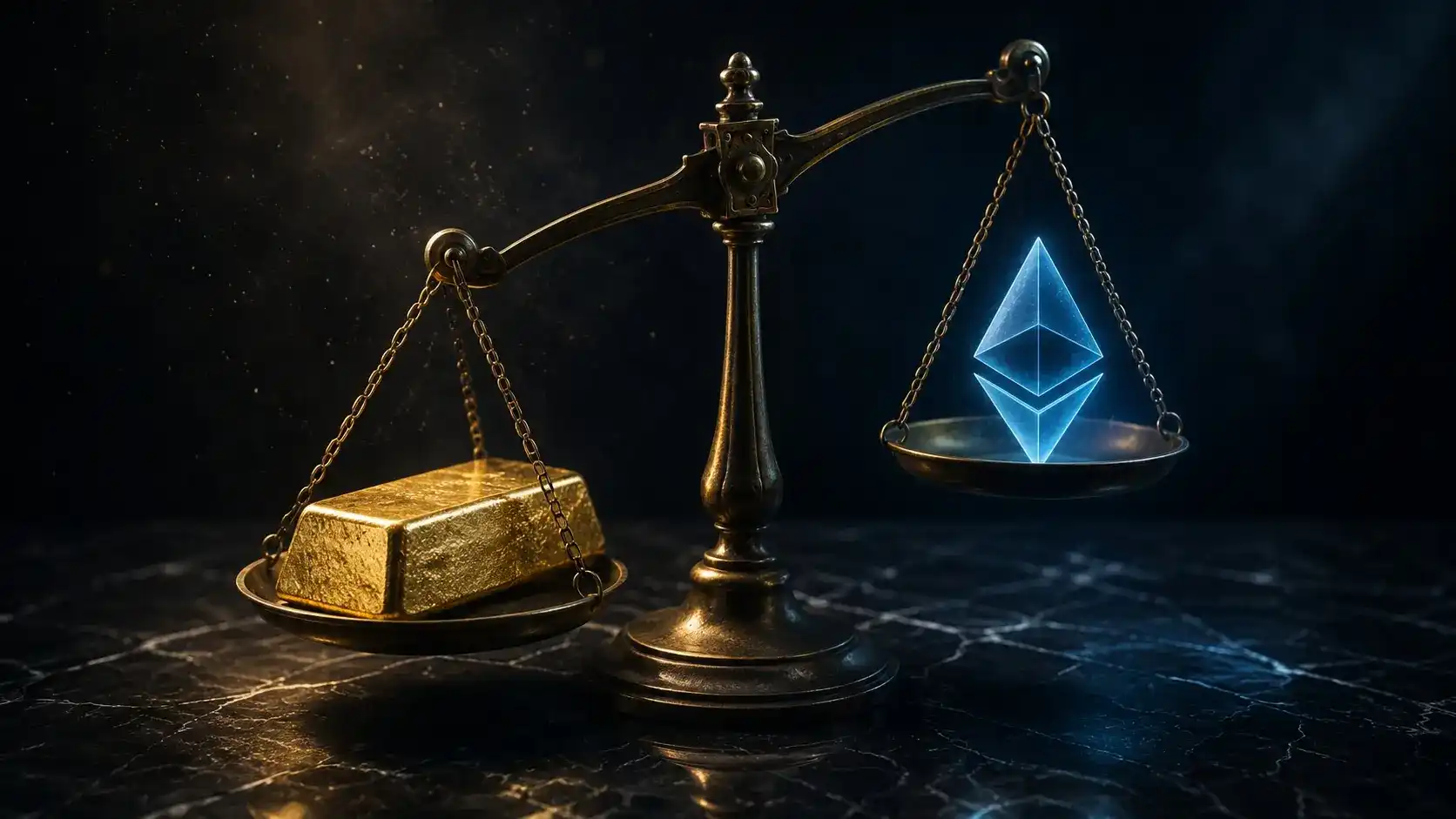
Hash Global Founder: Why I Also Choose to Liquidate All My ETH Holdings?

marsbit05/28 07:10

Hash Global Founder: Why I Also Chose to Liquidate All My ETH?

Title: Hash Global Founder Explains Why He Sold All His ETH The author (Hash Global founder) has liquidated his entire ETH holdings, despite acknowledging that the potential U.S. CLARITY Act (clarifying ETH as a decentralized digital commodity) is a significant regulatory positive. His core argument is that this regulatory clarity should not be conflated with granting ETH a "monetary premium" akin to Bitcoin (BTC) or gold. He disputes the thesis that ETH's valuation framework should shift from network revenue to a monetary/store-of-value logic. The market continues to value ETH based on concrete metrics like network fees, DeFi activity, staking yield, and ecosystem competition—essentially as a productive infrastructure/platform asset. BTC's narrative as "digital gold" is simpler and more suited for monetary premium. The author identifies several key reservations: 1) Legal classification solves compliance for institutions but doesn't automatically create long-term store-of-value demand. 2) ETH's "yield-bearing" advantage over BTC/gold may diminish as DeFi and Real-World Assets (RWA) tokenize traditional assets like gold and treasuries, which can also generate yield on-chain. 3) Future monetary premium will likely remain with BTC, physical gold, and potentially tokenized gold, while ETH serves as the core settlement infrastructure for these assets. 4) Ethereum's value-capture mechanism remains unresolved, especially with Layer-2 scaling; ecosystem growth does not guarantee proportional value accrual to ETH. 5) Institutions using Ethereum for applications (e.g., stablecoins, RWA) does not necessitate them holding ETH as a core asset. In conclusion, CLARITY is a positive that reduces ETH's "regulatory discount," but it does not transform ETH into a monetary asset like gold. ETH is a critically important financial infrastructure asset whose valuation should be based on network fundamentals, usage, and value flow, not an assumed monetary premium.

链捕手05/28 06:53

Hash Global Founder: Why I Also Chose to Liquidate All My ETH?

链捕手05/28 06:53

From ETH to SOL: Why Will L1s Ultimately Lose to Bitcoin?

The article "From ETH to SOL: Why L1s Will Ultimately Lose to Bitcoin?" argues that Bitcoin (BTC) is increasingly dominating the "cryptomoney" narrative, leaving little room for other Layer-1 (L1) blockchains to compete for monetary premium. The core of the argument is that approximately 81% of the total crypto market cap is invested in assets viewed as money or potential money, with BTC alone accounting for 55%. While L1s like ETH, XRP, BNB, and SOL represent a significant portion of the remaining value, their valuations are not primarily driven by revenue or real economic activity. Data shows that L1 revenues have been declining annually, yet their price-to-earnings ratios have soared, suggesting their market caps are almost entirely propped up by speculation on future monetary premium, not fundamentals. The performance of L1s against BTC further supports this. Since December 2022, eight of the top ten L1s have underperformed BTC, with six lagging by over 40%. Solana (SOL) was a notable exception, outperforming BTC by 87%. However, this gain is put into perspective by its ecosystem's explosive growth: a ~3,000% increase in DeFi TVL, fees, and DEX volume. This indicates that an L1 must achieve astronomical, orders-of-magnitude growth to merely eke out a modest performance lead over BTC. The conclusion is that the trend of BTC consolidating monetary premium at the expense of L1s is irreversible. The narrative that an L1 could become "money" is losing credibility as investors now have a decade of data showing that L1s consistently underperform BTC unless their ecosystems experience extreme, unsustainable growth. Without genuine economic growth, L1s' monetary premium will continue to erode.

coinvoice12/08 04:07

From ETH to SOL: Why Will L1s Ultimately Lose to Bitcoin?

coinvoice12/08 04:07

活动图片