# Memory Articoli collegati

Il Centro Notizie HTX fornisce gli articoli più recenti e le analisi più approfondite su "Memory", coprendo tendenze di mercato, aggiornamenti sui progetti, sviluppi tecnologici e politiche normative nel settore crypto.

The US Stock Market in 2026, It's Almost Too Easy, and That Makes Me Nervous

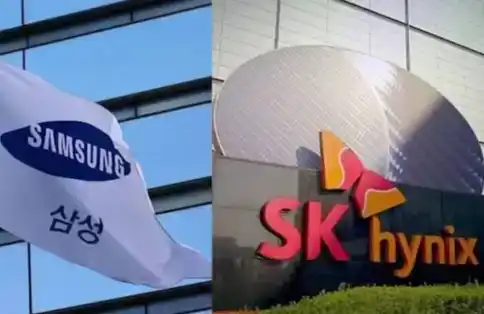
The U.S. stock market's performance in 2026, particularly in the semiconductor memory sector, has generated significant returns that make some investors uneasy. A popular sentiment contrasts the perceived skill required for success in China's A-shares with the apparent ease of profiting from simply holding U.S. stocks. The primary driver is a global memory chip boom. Stocks like Micron, Seagate, Western Digital, and especially SanDisk (spinning off from WDC in 2025) have skyrocketed, with some gains exceeding 500% or even 2200%. Korean giants Samsung and SK Hynix, dominating their domestic index, have also surged. This rally is fueled by an AI-driven demand surge for memory like HBM (High-Bandwidth Memory), critical for AI chips. Tech giants like Google and Microsoft are placing massive, "unpriced" orders, while analysts continuously upgrade forecasts. SK Hynix reported its 2026 HBM capacity is already sold out. Despite record profits and sky-high margins (e.g., SK Hynix's 72% operating margin), major memory manufacturers are deliberately restricting capital expenditure and capacity expansion, controlling over 90% of DRAM supply. This supply discipline sustains high prices but draws parallels to cartel behavior. The situation presents two narratives. The bullish case sees AI demand as a structural, long-term shift with a prolonged supply gap. The bearish case, exemplified by short-seller Citron's failed bet against SanDisk, warns of a classic commodity cycle where prices eventually crash rapidly, as seen historically. The irony is noted: while retail investors marvel at easy gains, insiders like Western Digital are selling SanDisk shares at a 25% discount. Ultimately, the high cost of memory in consumer devices feeds into the record profits of memory companies and the soaring stock prices, leading many to question the sustainability of a market where making money seems "as easy as breathing."

marsbit2 h fa

The US Stock Market in 2026, It's Almost Too Easy, and That Makes Me Nervous

marsbit2 h fa

a16z: AI's 'Amnesia', Can Continuous Learning Cure It?

The article "a16z: AI's 'Amnesia' – Can Continual Learning Cure It?" explores the limitations of current large language models (LLMs), which, like the protagonist in the film *Memento*, are trapped in a perpetual present—unable to form new memories after training. While methods like in-context learning (ICL), retrieval-augmented generation (RAG), and external scaffolding (e.g., chat history, prompts) provide temporary solutions, they fail to enable true internalization of new knowledge. The authors argue that compression—the core of learning during training—is halted at deployment, preventing models from generalizing, discovering novel solutions (e.g., mathematical proofs), or handling adversarial scenarios. The piece introduces *continual learning* as a critical research direction to address this, categorizing approaches into three paths: 1. **Context**: Scaling external memory via longer context windows, multi-agent systems, and smarter retrieval. 2. **Modules**: Using pluggable adapters or external memory layers for specialization without full retraining. 3. **Weights**: Enabling parameter updates through sparse training, test-time training, meta-learning, distillation, and reinforcement learning from feedback. Challenges include catastrophic forgetting, safety risks, and auditability, but overcoming these could unlock models that learn iteratively from experience. The conclusion emphasizes that while context-based methods are effective, true breakthroughs require models to compress new information into weights post-deployment, moving from mere retrieval to genuine learning.

marsbit04/25 04:23

a16z: AI's 'Amnesia', Can Continuous Learning Cure It?

marsbit04/25 04:23

A 120,000 Yuan Tombstone or 399 Yuan AI Immortality: Which Would You Choose?

"The 'Deathcare Moutai' Fushouyuan, once a highly profitable cemetery operator, has halted trading amid a severe crisis, with its net profit plummeting by 52.8% in 2024. This reflects a broader trend of people rejecting expensive traditional burials, as average grave prices in China have soared to over ¥120,000. In response, the industry is pivoting to digital alternatives, with companies like Fushouyuan offering AI-powered memorial services, such as virtual farewell halls and AI-generated recreations of the deceased. Simultaneously, a low-cost, unregulated AI 'resurrection' industry has emerged online, with services priced as low as ¥399. These often use open-source tools to create crude digital avatars from photos and voice clips, exploiting vulnerable individuals, particularly bereaved parents who have lost their only child. However, these services raise significant ethical and legal concerns, including data privacy risks and potential use in scams. Academic studies warn that such AI companions may exacerbate grief, leading to prolonged mourning disorders and emotional dependency, rather than providing genuine comfort. While regulations are being drafted to manage digital human services, the deep emotional drive to 'reconnect' with loved ones often overshadows rational concerns. Ultimately, the article questions whether digital immortality truly preserves memory or merely offers a commercialized illusion, emphasizing that no technology can replace the real, irreplaceable loss of a human life."

marsbit04/22 08:34

A 120,000 Yuan Tombstone or 399 Yuan AI Immortality: Which Would You Choose?

marsbit04/22 08:34

Hermes Agent Guide: Surpassing OpenClaw, Boosting Productivity by 100x

A guide to Hermes Agent, an open-source AI agent framework by Nous Research, positioned as a powerful alternative to OpenClaw. It is described as a self-evolving agent with a built-in learning loop that autonomously creates skills from experience, continuously improves them, and solidifies knowledge into reusable assets. Its core features include a memory system (storing environment info and user preferences in MEMORY.md and USER.md) and a skill system that generates structured documentation for complex tasks. The agent boasts over 40 built-in tools for web search, browser automation, vision, image generation, and text-to-speech. It supports scheduling automated tasks and can run on various infrastructures, from a $5 VPS to GPU clusters. Popular tools within its ecosystem include the Hindsight memory plugin, the Anthropic Cybersecurity Skills pack, and the mission-control dashboard for agent orchestration. Key differentiators from OpenClaw are its architecture philosophy—centered on the agent's own execution loop rather than a central controller—and its autonomous skill generation versus OpenClaw's manually written skills. Installation is a one-line command, and setup is guided. It integrates with messaging platforms like Telegram, Discord, and Slack. It's suited for scenarios requiring a persistent, context-aware assistant that improves over time, automates workflows, and operates across various deployment environments.

marsbit04/13 13:11

Hermes Agent Guide: Surpassing OpenClaw, Boosting Productivity by 100x

marsbit04/13 13:11

5 Minutes to Make AI Your Second Brain

This article introduces a powerful personal knowledge management system combining Claude Code and Obsidian, designed to function as an "AI second brain." Unlike traditional RAG systems that perform temporary, one-off retrievals, this system enables AI to continuously build and maintain an evolving knowledge wiki. The architecture consists of three layers: a raw data layer (notes, articles, transcripts), an AI-maintained structured knowledge base that builds cross-references, and a schema layer that governs organization and system logic. Core operations are Ingest (bringing in external information), Query (instant knowledge access), and Lint (checking consistency and fixing issues). The system's power lies in creating a "compound interest" effect for knowledge: it reduces cognitive load by offloading the tasks of connecting, organizing, and understanding information to AI, while simultaneously improving the accuracy and contextual consistency of the AI's outputs. The setup process is quick, requiring users to download Obsidian, create a vault (knowledge repository), configure Claude Code to access that vault, and apply a specific system prompt. Advanced tips include using a browser extension to easily add web content, maintaining separate vaults for work and personal life, and utilizing the "Orphans" feature to identify unlinked ideas. The main drawbacks are the need for visual thinking, a commitment to ongoing maintenance, and local storage usage. Ultimately, the system transforms scattered information into a reusable, interconnected network of knowledge.

marsbit04/11 12:46

5 Minutes to Make AI Your Second Brain

marsbit04/11 12:46

AI, Why Does It Also Need to Sleep?

Anthropic's accidental leak of Claude Code's source code in 2026 revealed an experimental feature called "autoDream," part of the KAIROS system, which gives AI a sleep-like cycle. Unlike the prevailing AI agent paradigm of continuous, uninterrupted operation, autoDream operates offline when users are inactive. It processes and consolidates daily logs—resolving contradictions, converting vague observations into facts, and discarding redundant information—while avoiding the accumulation of noise in the limited context window, a phenomenon known as "context corruption." This mirrors human brain function: the hippocampus temporarily stores daily experiences, and during rest, the brain prioritizes and transfers important memories to the neocortex through processes like active systems consolidation. Both systems must go offline to perform memory maintenance, as simultaneous processing and consolidation compete for resources. autoDream differs in one key aspect: it labels its outputs as "hints" rather than definitive truths, requiring verification upon use—a cautious approach unlike human memory, which often constructs narratives with high confidence. The emergence of this sleep-like mechanism suggests that, beyond mere biological imitation, intelligent systems may inherently require periodic rest to maintain coherence and performance. It challenges the assumption that more power and continuous operation always lead to greater intelligence, pointing instead to the necessity of rhythmic cycles in advanced cognition.

marsbit04/07 08:20

AI, Why Does It Also Need to Sleep?

marsbit04/07 08:20

活动图片