# Margin Call Articoli collegati

Il Centro Notizie HTX fornisce gli articoli più recenti e le analisi più approfondite su "Margin Call", coprendo tendenze di mercato, aggiornamenti sui progetti, sviluppi tecnologici e politiche normative nel settore crypto.

1.2 Million in Line for Margin Calls: The Collapse of South Korea's National "Gamble" by Retail Investors

In July 2026, the South Korean stock market, fueled by a national "all-in" bet on semiconductor stocks, experienced a catastrophic meltdown. The KOSPI index plummeted from record highs, triggering seven market-wide trading halts in the first half of the year—more than half the total since the mechanism's inception in 2000. The crisis stemmed from the market's extreme concentration on two giants: Samsung Electronics and SK Hynix, which accounted for 60% of the KOSPI index. Amid an AI-driven boom, rampant retail speculation, particularly among young investors seeking to overcome high living costs and social immobility, led to a surge in leveraged trading. In a pivotal move, regulators allowed the launch of 2x leveraged ETFs tied solely to these two stocks in May 2026. This set the stage for disaster. When signs of an HBM chip glut emerged in July, prices for Samsung and SK Hynix fell. The leveraged ETFs' mandatory daily rebalancing mechanism forced them to sell shares aggressively to maintain their leverage ratios. This triggered a vicious cycle: ETF selling drove prices down further, which triggered margin calls and forced liquidations of retail investors' leveraged positions, leading to more selling. The market entered a self-reinforcing "death spiral" of cascading liquidations. The aftermath was devastating. Over 1.2 million retail margin accounts faced liquidation warnings, with an estimated 320,000 to 460,000 accounts completely wiped out, many left owing money to their brokers. Approximately 62% of these affected investors were in their 20s and 30s. Total losses from leveraged positions were estimated at around 2.15 trillion won (~$1.6 billion USD). Regulators later expressed regret for approving the high-risk ETFs, highlighting the dangers of financial innovation outpacing proper risk controls and investor protection. The episode serves as a stark warning: when market frenzy, structural fragility, and complex leverage products converge, the outcome can be a rapid and brutal wealth destruction, disproportionately impacting the most vulnerable participants.

marsbit07/20 11:38
1.2 Million in Line for Margin Calls: The Collapse of South Korea's National "Gamble" by Retail Investors

marsbit07/20 11:38

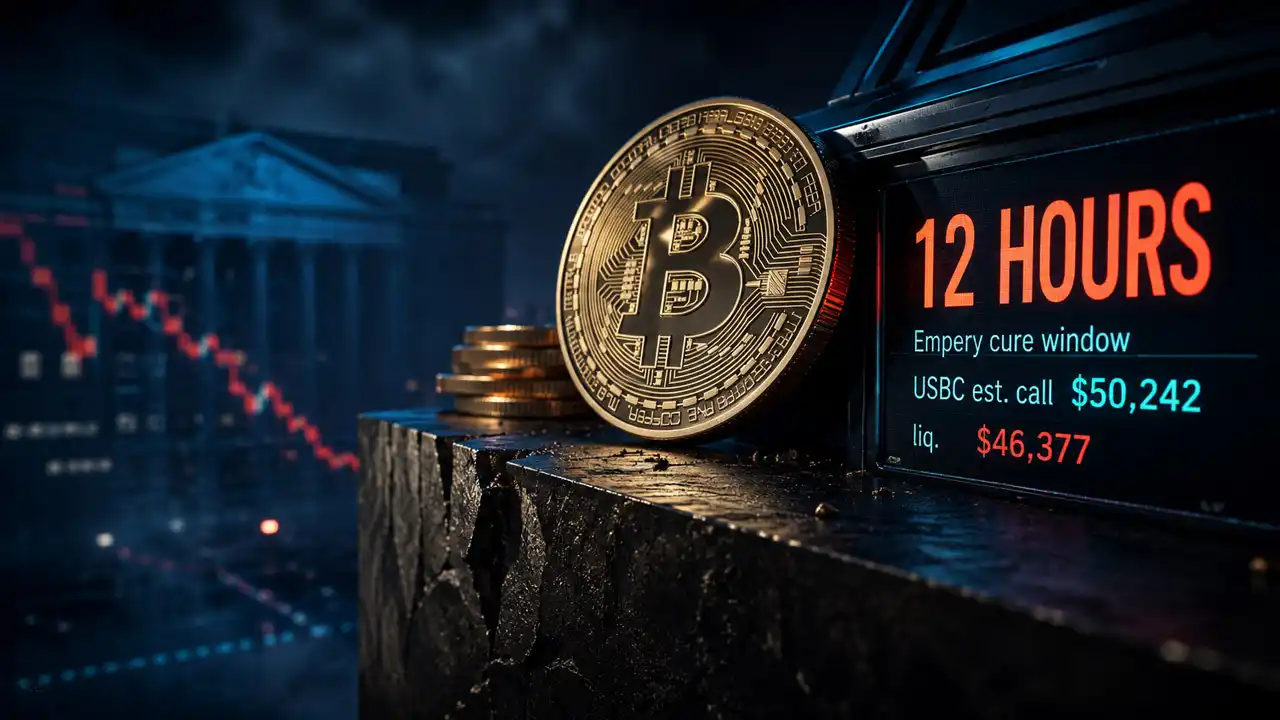
Bitcoin Treasury Collateral Liquidation Countdown: Some Loans Only Give 12 Hours to Save the Day

"Bitcoin Treasury Collateral Liquidation Countdown: Some Loans Allow Only 12 Hours to Act" The rules for public companies borrowing against their Bitcoin (BTC) treasury reserves are becoming perilously strict. Loan agreements now stipulate that if the collateral value falls below a certain threshold—the "maintenance" or "margin call" level—borrowers may have as little as 12 to 24 hours to add more BTC or repay part of the debt. Failure to do so can grant lenders the right to sell the pledged Bitcoin. This is not a theoretical risk. In February 2024, at least three companies faced collateral pressure: Fold received a formal maintenance notice and added 50 BTC; Empery Digital breached its loan covenant, adding 576 BTC; and Nakamoto added 688 BTC to meet requirements. While no lender-initiated liquidations were reported, these events forced companies to act—selling BTC, refinancing, or repaying debt—to avoid default. Contract terms vary, but response windows are short. For example, USBC's amended loan allows a 12-hour period to post collateral after breaching the liquidation level, while Hut 8's new FalconX loan provides a 24-hour window for a margin call, with a possible 12-hour extension under specific conditions. Current disclosures from companies are inconsistent, making precise calculations of risk thresholds difficult. Factors like repayments, additional collateral, and contract-specific valuation rules all influence the collateral coverage ratio independently of Bitcoin's spot price. The key distinction is between a mandatory borrower response and an actual lender liquidation. So far, actions have been borrower-led. However, the mere existence of these loans transforms passive Bitcoin holdings into potential immediate liabilities. For investors, a company's reported "XX BTC held" can quickly become a forced sale trigger if prices drop and collateral calls are issued. As Bitcoin-backed financing grows, especially among miners, these contractual clocks are ticking.

marsbit07/15 03:13

Bitcoin Treasury Collateral Liquidation Countdown: Some Loans Only Give 12 Hours to Save the Day

marsbit07/15 03:13

Retail Investors' 'Short Squeeze' Turns into 'Stampede': How a Silver Frenzy Became a Mass Grave?

The article details how a retail-driven silver squeeze, initially hailed as the "2026 GameStop," rapidly turned into a catastrophic crash, described as a "mass grave" for small investors. In January 2026, retail investors poured a record $1 billion into silver ETFs, with trading volume nearly matching that of the S&P 500 ETF at its peak. Fueled by social media hype and comparisons to the GameStop rally, silver prices soared to over $120 per ounce. However, the rally abruptly ended in just three days, with prices plummeting 40%, erasing all gains and causing significant losses. The crash was triggered not by news events, as initially speculated, but by a 50% increase in margin requirements imposed by the CME exchange. This forced over-leveraged retail investors to liquidate positions automatically, initiating a vicious cycle of selling. While散户 were forced to sell at the worst prices, institutional players like JPMorgan capitalized on the chaos. They accessed emergency liquidity from the Federal Reserve, exploited their role as authorized participants in silver ETFs to arbitrage price discrepancies, and strategically acquired physical assets at depressed prices. The piece concludes that the silver market is inherently risky and structurally skewed in favor of institutions, highlighting the vast power imbalance where retail enthusiasm and memes are no match for algorithmic trading, leverage, and rule-making authority.

比推02/05 13:45

Retail Investors' 'Short Squeeze' Turns into 'Stampede': How a Silver Frenzy Became a Mass Grave?

比推02/05 13:45

活动图片