# Lending Articoli collegati

Il Centro Notizie HTX fornisce gli articoli più recenti e le analisi più approfondite su "Lending", coprendo tendenze di mercato, aggiornamenti sui progetti, sviluppi tecnologici e politiche normative nel settore crypto.

Aave's Stable Vault

This article explores Aave's recently launched "Stable Vaults," a product designed to bridge the gap between traditional finance users and DeFi yield. It argues that while DeFi offers transparency and potentially higher returns, its complexity and volatility are major barriers for mainstream adoption. The core problem is that users pay for convenience and simplicity, often accepting lower returns to avoid decision-making and technical hurdles. Stable Vaults allow fintech apps, neobanks, or payment platforms (operators) to integrate with Aave's lending markets once and offer their users a "savings account" with a fixed, predictable yield (e.g., 4%). The operator absorbs the underlying market volatility; if Aave's pool pays 6%, the operator pockets the 2% difference, but if it pays only 2%, the operator covers the shortfall to maintain the promised 4% for users. The piece analyzes this model from three perspectives: 1. **The User:** Gains simplicity, a fixed rate, and familiar app features (customer support, account recovery). However, they lose potential upside, accept a lower fixed yield, and take on new counterparty risks from the operator and its proprietary backend systems. 2. **The Operator (e.g., a neobank):** Can monetize idle user balances easily, generating significant fee income (the spread between the fixed rate and the actual yield) with minimal integration effort, turning a cost center into revenue. 3. **Aave:** Gains "sticky," loyalty-based deposits that are less likely to flee during minor yield fluctuations, securing a stable revenue stream crucial for its tokenomics (like buybacks). It becomes a back-end infrastructure provider for the broader consumer finance ecosystem. The author acknowledges that while sophisticated users can access higher yields directly on Aave, most people prefer convenience and security over optimization. They reference behavioral studies showing that too many choices lead to inaction. Therefore, Stable Vaults represent an acceptance of human nature—prioritizing safety, predictability, and ease—and a strategic move for Aave to capture stable, large-scale deposits from mainstream finance applications. Examples like Rise (payroll) and Kraken are already using similar embedded yield models.

marsbitIeri 05:41

Aave's Stable Vault

marsbitIeri 05:41

Morpho Launches Fixed-Rate Product Midnight: Lenders and Borrowers Set Their Own Rates, Ending the Era of Interest Rate Models

Morpho Launches Fixed-Rate Product Midnight: Lenders and Borrowers Set Their Own Rates, Ending the Era of Algorithmic Interest Models On-chain lending has grown to $60 billion but remains minuscule compared to traditional finance's $200 trillion annual credit volume. Morpho identifies the lack of fixed rates and maturity dates as key bottlenecks. Institutions need predictability, not the passive floating rates set by algorithmic models. Midnight allows lenders and borrowers to directly quote rates, set terms, and become price makers, not takers. Fixed-rate lending is now viable due to cheaper, faster blockchains and the entry of institutions demanding control and certainty over returns, costs, and duration. Morpho Blue previously gave users control over risk; Midnight adds control over interest rates. Past attempts at on-chain fixed-rate lending failed primarily because they were built on top of floating-rate pools (creating unpredictability) or lacked sufficient active participants. Midnight avoids these pitfalls as a standalone primitive with fixed rates at its core, built upon Morpho Blue's existing large and active user base. Midnight offers distinct value: institutions gain predictable term structures and full control; fintech companies can offer tailored fixed-rate products; lenders/borrowers achieve predictability and efficiency; and curators can now differentiate by configuring both risk and interest rates. Morpho Midnight is not a replacement for Morpho Blue. The Morpho network will now feature two complementary market structures: floating-rate/open-term (Blue) for flexibility and fixed-rate/fixed-term (Midnight) for predictability. Liquidity can flow between them. The launch will be gradual, prioritizing security. Initially, it will support direct lending on Base network with one trading pair (cbBTC/USDC) and limited maturity dates. Advanced features like auto-rollovers will be introduced later.

marsbit07/22 06:32

Morpho Launches Fixed-Rate Product Midnight: Lenders and Borrowers Set Their Own Rates, Ending the Era of Interest Rate Models

marsbit07/22 06:32

NFTs That Can Earn Stock Tokens? What Exactly is StonkBrokers?

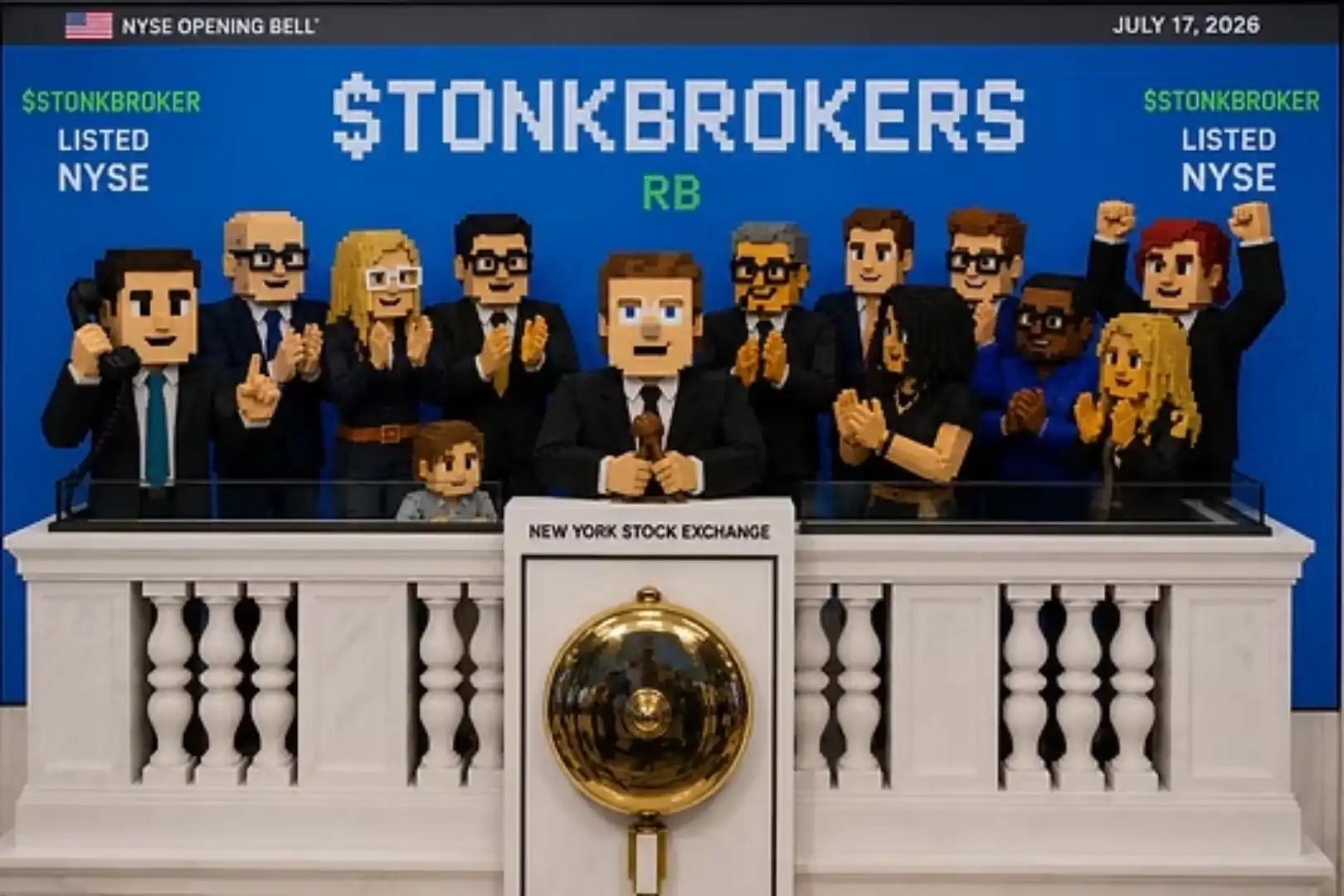
Title: How StonkBrokers Connects NFTs to Stock Token Earnings StonkBrokers is an NFT project from the Web3 development team Clutch Labs (CLUTCH) built on Robinhood Chain. It consists of 4,444 "pixel broker" NFTs. Unlike typical NFTs, each one is linked to an ERC-6551 token-bound account, meaning it functions as its own wallet capable of holding assets like stock tokens. The project's ecosystem includes: 1. **STONKBROKER (ERC-20 Token)**: The fungible token connected to the NFTs via the Anvil AMM. Users can trade tokens for NFTs at a base rate of 666,666 STONKBROKER (plus ETH fees). 2. **NFT Activation & Rewards**: NFT holders must spend STONKBROKER tokens to "activate" their NFT into one of five tiers, which determines their weight in receiving stock token rewards. These rewards are funded by 70% of the ETH trading fees generated on the Anvil AMM. 3. **Lending**: NFTs can be used as collateral to borrow STONKBROKER tokens. 4. **Future Products**: The roadmap includes the Stonk Launcher (a token launchpad) and the Stonk Exchange (a "vote-directed DEX" based on Uniswap V3), scheduled for late July and August 2026, respectively. The project aims to provide NFTs with ongoing utility as active financial agents rather than static collectibles. Its token (STONKBROKER) and NFT collection have seen significant price increases recently. However, the project's long-term viability depends on successful product delivery, sustainable protocol revenue, and navigating risks like market volatility, smart contract security, and the nascent Robinhood Chain ecosystem.

Foresight News07/21 02:21

NFTs That Can Earn Stock Tokens? What Exactly is StonkBrokers?

Foresight News07/21 02:21

Crypto Watch This Week: Uniswap Fee Switch Vote Starts Today, CLARITY Act Could Face Senate Vote This Week

**Weekly Crypto Watch: Key Events & Catalysts** This week’s crypto focus is on pivotal governance votes, potential regulatory progress, and major protocol upgrades. **Uniswap** takes center stage with two crucial on-chain proposals going to vote from July 19-26. The first aims to activate protocol fees for Uniswap V2/V3 on the new Robinhood Chain and direct them to a UNI token burn mechanism. The second seeks to activate V4 fees across seven major chains, including Ethereum and Base. Robinhood Chain has already seen over $60B in Uniswap volume since its launch 18 days ago. The proposals build on last year's UNIfication plan, which transformed UNI into a fee-generating asset. On the **U.S. regulatory front**, the **CLARITY Act** could face a Senate floor vote this week. While some lawmakers are optimistic, the bill faces hurdles, needing at least 60 votes to overcome a filibuster. Prediction market Polymarket currently gives it only a 34% chance of being signed into law this year. Other notable catalysts include: * **Morpho's** fixed-rate lending protocol, **Morpho Midnight**, is set for its public launch, starting with a single market (cbBTC/USDC) on Base. * **Derive** (formerly Lyra) is preparing for its largest-ever upgrade, **V3**, which will reportedly introduce 0DTE options and a more retail-friendly UX. * **Pendle** will hold a community call on July 22 to share its roadmap, with a focus on expanding its RWA (Real World Assets) capabilities. * An undisclosed privacy-focused application for **Polymarket**, built on **Starknet**, is reportedly launching on July 20.

marsbit07/20 10:13

Crypto Watch This Week: Uniswap Fee Switch Vote Starts Today, CLARITY Act Could Face Senate Vote This Week

marsbit07/20 10:13

Stable Vaults Are the Final Piece in Aave's Mass Commercialization Puzzle

Aave's introduction of "Stable Vaults" aims to bridge the gap between complex DeFi protocols and mainstream users by offering a simplified, predictable savings product. The core innovation is a fixed-yield layer built atop Aave's volatile underlying lending pools. Partnering platforms (like digital banks or wallets) can offer users a guaranteed interest rate (e.g., 4%), shielding them from market fluctuations. The partner absorbs the risk and profit/loss from the difference between this fixed rate and Aave's variable rate. From the user's perspective, Stable Vaults provide ease of use, predictable returns, and familiar services like customer support and account recovery, addressing key barriers like wallet management and volatility. However, users pay a price: they cap their potential earnings (forgoing higher market yields), add counterparty risk from the partner platform, and may lack transparency into the true spread being captured. For partners, Stable Vaults turn idle user funds into a revenue stream via the yield spread. For Aave, this strategy attracts sticky, "sticky" capital from mass-market applications, providing a stable fee revenue stream crucial for its tokenomics (e.g., buyback mechanisms), especially in bear markets. The article contrasts this approach with direct DeFi interaction, where users keep all yield but face complexity and volatility. It argues that Stable Vaults align with proven consumer behavior: most users prioritize convenience, safety, and predictability over maximizing returns, willingly paying a "peace of mind" premium. Examples like Coinbase and Robinhood offering similar "savings" products validate this demand. Thus, Stable Vaults represent Aave's strategic move to commercialize by catering to fundamental human preferences for simplicity and stability in finance.

marsbit07/17 10:31

Stable Vaults Are the Final Piece in Aave's Mass Commercialization Puzzle

marsbit07/17 10:31

The Price of DeFi Mass Adoption: Understanding the Profit Distribution and Hidden Risks of Aave Stable Vaults

**Title:** The Price of DeFi Mass Adoption: Understanding Aave Stable Vaults' Profit Distribution and Hidden Risks **Summary:** Aave Labs' new "Stable Vaults" product aims to simplify DeFi for mainstream users by offering fixed yields, a rarity in crypto. The model inserts a middleman layer between users and Aave's underlying lending pools. This layer, often a fintech app or digital bank, absorbs interest rate volatility, guaranteeing users a pre-set stable return while capturing any excess yield from Aave's underlying pools. In exchange for this predictable "peace of mind" and services like customer support and simplified onboarding, users sacrifice potential higher yields and take on new counterparty risks from the operating entity and its infrastructure. The article illustrates this with the example of payroll provider Rise, which transparently passes through most Aave yield, versus the higher profit margins possible through Stable Vaults. While a rational trade-off for many non-expert users prioritizing simplicity and security, the system centralizes risk and obfuscates true market yields. Aave benefits by attracting sticky, non-speculative capital crucial for its long-term economic model, highlighting the industry's shift towards catering to fundamental human preferences for convenience over complex, self-managed financial systems.

Foresight News07/17 06:09

The Price of DeFi Mass Adoption: Understanding the Profit Distribution and Hidden Risks of Aave Stable Vaults

Foresight News07/17 06:09

RWA's "Robinhood Moment": A Complete Overview of Early-Stage Projects

**RWA's "Robinhood Moment": An Overview of Early Projects** Robinhood's recent focus on Real-World Assets (RWAs) has sparked significant activity on its newly launched Robinhood Chain. Following CEO Vlad Tenev's public interest in projects integrating stock tokens and RWAs, several early-stage initiatives have emerged on the network. Key projects include: * **Arcus:** A DEX for stock tokens and crypto, built by dYdX Labs and Robinhood Crypto, focusing on spot and perpetual trading. Future token distribution will prioritize the dYdX community. * **Lighter:** A ZK-powered DEX for perpetual contracts and stock tokens, offering rewards in its LIT token to users, especially those trading via Robinhood Wallet. * **Rialto:** An official AMM for Robinhood Chain aiming to support crypto, stocks, ETFs, and commodities with a focus on robust quoting, market making, and settlement. * **The Index (INDEX):** A protocol that distributes stock tokens to INDEX holders, funded by transaction fees from its platform. It also offers a leveraged trading product for RWA assets. * **Arrow Finance (ARROW):** A crypto/stock token collateralized lending protocol currently on testnet, allowing users to mint aUSD stablecoin against deposited assets. * **Meridian:** A platform for RWA perpetual contracts and prediction markets, settled in USDe. It was previously known as Ethereal. * **Vimen (VIM):** Creates fully collateralized index basket tokens (e.g., "MAG7" for major tech stocks) that represent a group of underlying stock tokens or crypto assets. * **RoodFi (ROODFI):** Attempts to tokenize US municipal tax liens and tax deeds on-chain for purchase and secondary trading. * **Fletcher (FLETCHER):** A project bridging physical graded trading cards (via Solana NFTs) to Robinhood Chain as mirrored NFTs, featuring a gacha-style "loot box" mechanic. * **Sherwood Exchange (SWOOD):** Aims to provide a privacy layer for RWA trading on Robinhood Chain using zero-knowledge proofs, while utilizing public liquidity pools. * **Fletch Finance:** A yield-tokenization protocol similar to Pendle, splitting stock tokens into Principal Tokens (PT) and Yield Tokens (YT) representing future dividends. **Important Note:** The RWA ecosystem on Robinhood Chain is highly nascent. Most projects are very new, with unproven product viability, user demand, and sustainability. Mentions or features by ecosystem accounts like Virtuals do not constitute formal endorsements or guarantees. Significant risks exist, including incomplete products, low liquidity, smart contract vulnerabilities, and high volatility. Extreme caution and independent research (DYOR) are strongly advised.

Foresight News07/16 02:28

RWA's "Robinhood Moment": A Complete Overview of Early-Stage Projects

Foresight News07/16 02:28

活动图片