# Infrastructure Articoli collegati

Il Centro Notizie HTX fornisce gli articoli più recenti e le analisi più approfondite su "Infrastructure", coprendo tendenze di mercato, aggiornamenti sui progetti, sviluppi tecnologici e politiche normative nel settore crypto.

BitGo Buys NYDIG's Trading Unit as Institutions Consolidate Crypto Services

On August 27, 2026, BitGo, a major regulated crypto custodian, announced the acquisition of NYDIG's institutional trading division. This move expands BitGo's service offerings to include derivatives, structured products, and lending services, allowing it to provide institutions with a more comprehensive, single-provider solution for custody, trading, and settlement. The deal adds approximately 30 NYDIG employees and their trading network to BitGo. The acquisition reflects a broader institutional trend towards consolidating digital asset services with fewer, regulated partners. A Fireblocks report from April 2026 indicated strong institutional budget allocation for such infrastructure, with 53% of surveyed firms spending at least $1 million. BitGo, which went public in January 2026, reported significant revenue and client growth alongside platform assets of $65.2 billion. Its regulatory standing, including a federal trust license, is a key factor for risk-conscious institutions. The deal also provides BitGo access to the crypto lending market, despite a recent quarterly decline reported by Galaxy Research, and aligns with growing activity on regulated derivatives venues like CME Group. However, this integration of multiple services attracts closer regulatory scrutiny. The Bank for International Settlements has warned that such crypto conglomerates could concentrate financial risks. For NYDIG, the sale marks a strategic shift to focus on its vertically integrated bitcoin mining and high-performance computing data center business.

cryptonews.ru13 h fa

BitGo Buys NYDIG's Trading Unit as Institutions Consolidate Crypto Services

cryptonews.ru13 h fa

Hash Global: After BTC, Who Will Take the Baton for the Next Bull Market?

"Hash Global: After Bitcoin, Who Will Take the Baton in the Next Bull Run?" The market, following a period of consolidation, has re-entered a bull trend, initiated by Bitcoin's surge past key resistance levels. However, this cycle may differ from the last. While BTC remains a crucial entry point, the primary growth narrative is shifting from traditional capital flowing into crypto (TradFi → Crypto) to traditional assets migrating on-chain (TradFi → Onchain). This "Everything-on-chain" trend, fueled by evolving regulatory frameworks like Regulation Crypto, signifies a potential explosion in high-quality tokenized real-world assets (RWA) like stocks and bonds. The critical question becomes: which infrastructure will host this influx? The answer likely lies not in new entrants, but in mature, concentrated ecosystems with proven networks. Ethereum (ETH) offers **deterministic value** as the most established decentralized finance (DeFi) infrastructure, poised to capture the largest share of new demand. Binance Coin (BNB) represents **growth elasticity**, building a comprehensive financial network that connects users, assets, and liquidity, evidenced by its rapid RWA expansion. Robinhood mirrors this trend from the TradFi side, bridging traditional finance to the blockchain. In summary, while BTC opens the door, the next bull market's major beneficiaries could be the foundational platforms—like ETH and BNB—that enable and profit from the mass migration of real-world assets onto crypto networks.

marsbit16 h fa

Hash Global: After BTC, Who Will Take the Baton for the Next Bull Market?

marsbit16 h fa

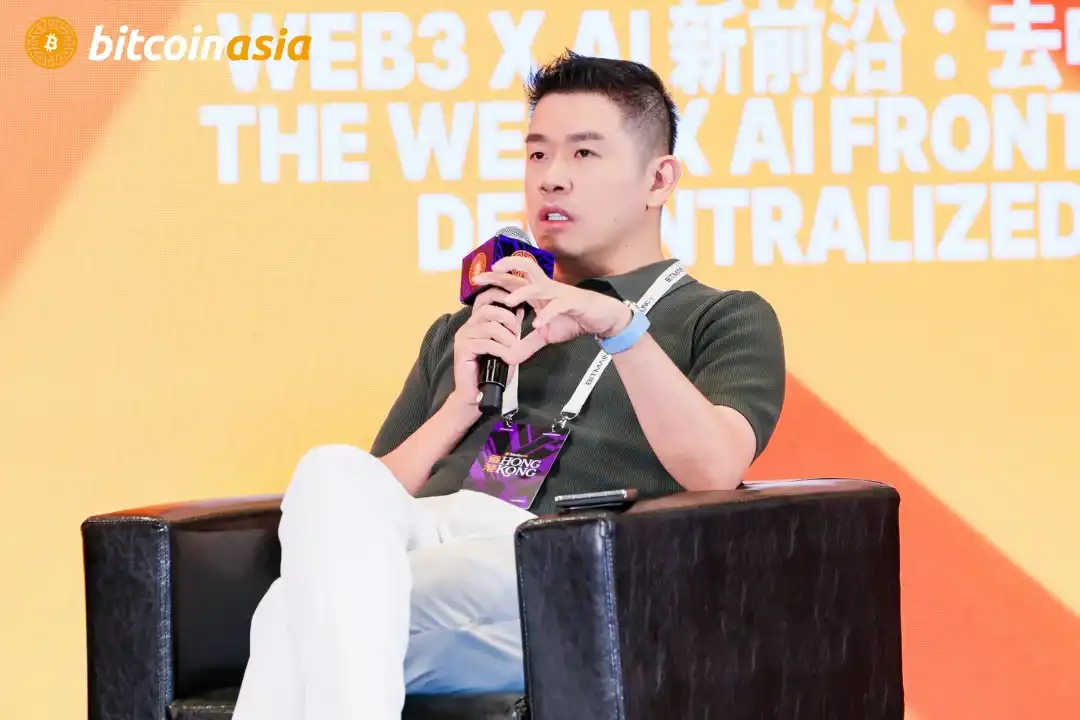
Livio, CEO of New Huo Group: RWA Will Become the Bridge Connecting Carbon-Based Humans and Silicon-Based AI, Crypto's Next 100 Million Users to Come from AI Agents

At the "Deep Integration of AI and Crypto" roundtable during the Bitcoin Asia conference, Livio Weng, CEO of Bitfire at New Huo Group, stated that the core narrative for AI and Crypto convergence in the coming years will likely focus on the "agential economy." As infrastructure for AI identity recognition, authorized wallets, and payment protocols matures, AI will progressively gain the ability to autonomously use, manage, and transact assets, deeply integrating with existing crypto sectors like trading, prediction markets, asset management, and payments. Livio believes Real World Assets (RWA) will serve as a crucial bridge connecting carbon-based humans and silicon-based AI. On one hand, RWA can tokenize traditional assets, enabling AI to use and trade assets from human society. On the other hand, "AI assets" such as computing power, data, and AI-generated services can also be made accessible to humans through RWA formats for purchase, analysis, and trading. This process will drive deeper integration between humans and AI. "The next 100 to 200 million new crypto users may not be humans, but AI Agents," Livio suggested, noting that future critical infrastructure and applications might be autonomously generated by AI rather than primarily coded by humans. As AI evolves from an information assistant to a wealth management assistant and further into an autonomous task executor, AI Agents are poised to become significant participants in the Crypto ecosystem. Livio also highlighted that deep AI-Crypto integration requires robust underlying infrastructure, including settlement layers for autonomous machine transactions, identity and authorization layers for AI independent identity and recognition, and incentive/disincentive layers to address fraud and misconduct. Protocols like X402 and EIP-8004 are exploring related applications, but challenges in security, governance, and ethics remain. In practice, New Huo is actively embracing RWA to seize opportunities from AI-Crypto convergence. The group recently launched comprehensive RWA operator services and released Hong Kong's first compliant crypto asset quantitative strategy. By incorporating RWA assets, this strategy aims to offer cross-asset allocation and risk hedging opportunities, helping investors navigate volatility across different asset classes and market cycles. Livio concluded that RWA is not only a vehicle for traditional assets to enter the on-chain world but also potential key infrastructure for AI to participate in the real economy, utilize real-world assets, and provide services to humans. As the machine economy develops, the intersection between AI and Crypto will expand, offering substantial room for innovation and growth.

marsbitIeri 08:21

Livio, CEO of New Huo Group: RWA Will Become the Bridge Connecting Carbon-Based Humans and Silicon-Based AI, Crypto's Next 100 Million Users to Come from AI Agents

marsbitIeri 08:21

活动图片