# Geopolitics Articoli collegati

Il Centro Notizie HTX fornisce gli articoli più recenti e le analisi più approfondite su "Geopolitics", coprendo tendenze di mercato, aggiornamenti sui progetti, sviluppi tecnologici e politiche normative nel settore crypto.

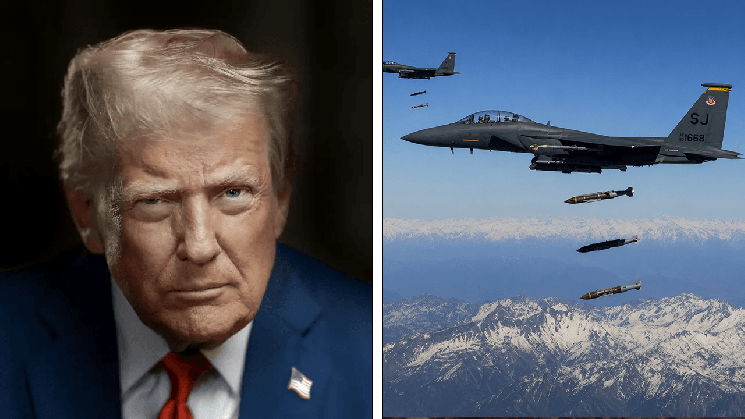
Iran Launches 'Sudden Strike' on US Base in Jordan; Oil Prices Jump Nearly 4%, Threatening Bitcoin Rally

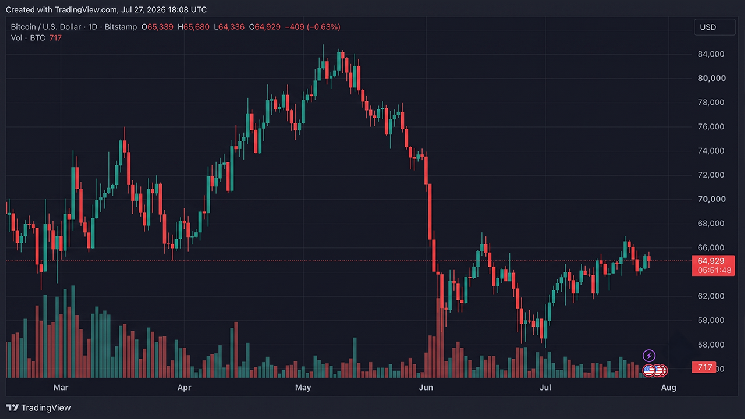
Iran launched a "sudden strike" with ballistic missiles targeting a US base near Jordan's Muwaffaq Salti Air Base on July 28. US Central Command reported all missiles were intercepted by Patriot air defense systems, with no casualties. Iran claimed the attack was retaliation for perceived US actions against its interests. This strike broke a brief ceasefire that began after President Trump paused offensive operations against Iran days earlier. The attack triggered immediate financial market reactions. WTI crude oil prices surged nearly 4% to $83.08 per barrel, while Brent crude rose to $87.34. US stock index futures also saw gains as traders priced in renewed Middle East risks. This price jump reversed a significant portion of the oil price decline that followed the initial ceasefire announcement. Bitcoin's price movement mirrored this volatile cycle. It had recovered to around $65,200 as oil prices fell during the ceasefire, but dropped back to the $63,600-$63,800 range following news of the missile strike. While Bitcoin has shown some resilience compared to purely risk-on assets during the conflict, the July 28 attack directly challenged the "truce" narrative that had supported its recent stability. The pattern of price declines following escalations and recoveries during pauses has become familiar since the conflict began in February.

cryptonews.ru8 h fa

Iran Launches 'Sudden Strike' on US Base in Jordan; Oil Prices Jump Nearly 4%, Threatening Bitcoin Rally

cryptonews.ru8 h fa

Losing the "Anchor": Walsh's Minimalist Communication is Forcing the Market to Price Itself

Losing the "Anchor": Walsh's Minimalist Communication Forces Markets to Self-Price The probability of a rate hike priced into the market ahead of the Thursday meeting is unusually high at 40%. This stems from the new framework under Chairman Walsh, characterized by "data dependence and low communication." Since taking office, Walsh has implemented reforms: drastically shortening statements, removing traditional forward guidance, and emphasizing that statements only provide facts. He has also established working groups to review practices and strongly reiterated a commitment to price stability amid prolonged high inflation. Walsh does not submit a personal dot-plot forecast, urging markets to price based on their own data interpretation rather than reflecting Fed signals. This has removed the traditional "anchor," forcing markets to independently price in the possibility of sudden action in a truly data-driven environment. Consequently, short-term rate volatility and tail risk premiums have increased, as markets pay for protection against a potential sudden hike to reinforce anti-inflation credibility. Specific catalysts supporting this uncertainty include: 1) Iran-related tensions and volatile energy prices raising inflation tail risks, and 2) The new chairman's potential need to establish his anti-inflation credibility with an early, decisive move. In essence, the 40% hike probability reflects the market pricing protection for tail risks under Walsh's new low-guidance framework, compounded by geopolitical and data uncertainties, rather than treating a hike as the base case. The outcome will signal how this new communication paradigm shapes market adaptation. If rates are held steady, focus will shift to September. An unexpected hike would reinforce the "data and credibility first" narrative, prompting a repricing for higher-for-longer rates and tighter financial conditions.

marsbit13 h fa

Losing the "Anchor": Walsh's Minimalist Communication is Forcing the Market to Price Itself

marsbit13 h fa

The Semiconductor Industry's Most Obscure Chokepoint Material: It Has Multiplied in Price Unnoticed, and China Just Banned Its Export

"Helium: The Silent Choke Point in Semiconductors" Helium, despite being the universe's second most abundant element, is critically scarce on Earth. It cannot be synthesized artificially and escapes Earth's gravity once released, making it a non-renewable resource. Yet, it is indispensable for advanced semiconductor manufacturing, requiring ultra-high purity (99.9999%) for processes like wafer etching, leak detection, and thermal management in lithography tools, with no viable substitutes. This low-profile resource, whose price has doubled unnoticed, suddenly gained attention when China imposed an export ban on July 10th. The ban is a response to a severe global shortage triggered months earlier. In March, missile attacks damaged the world's largest helium production hub in Qatar's Ras Laffan, halting a third of global supply with repairs expected to take 3-5 years. Concurrently, Russia tightened export controls, and the US sold off its federal helium reserve. Approximately 200 specialized transport containers, each worth ~$1 million, were stranded with perishable cargo. Global spot prices skyrocketed, and chipmakers like TSMC warned of potential impacts. China, which imports over 84% of its helium (primarily from Qatar and Russia), faces a severe squeeze. Despite being helium-poor, China has developed domestic extraction technology over five years, processing byproduct gases from LNG plants to produce ultra-pure helium. Domestic output, while still only covering less than 20% of demand, enabled the recent export ban aimed at securing domestic supply for its own expanding chip industry. The industry now faces "Helium Shortage 5.0." With key global sources constrained for years, this invisible gas—once wasted on party balloons—has become a critical, geopolitically charged bottleneck for chips, healthcare (MRI machines), and beyond, forcing the world to finally treat it as the finite strategic resource it is.

marsbit17 h fa
The Semiconductor Industry's Most Obscure Chokepoint Material: It Has Multiplied in Price Unnoticed, and China Just Banned Its Export

marsbit17 h fa

活动图片