Iran Launches 'Sudden Strike' on US Base in Jordan; Oil Prices Jump Nearly 4%, Threatening Bitcoin Rally

cryptonews.ruPubblicato 2026-07-29Pubblicato ultima volta 2026-07-29

Introduzione

Iran launched a "sudden strike" with ballistic missiles targeting a US base near Jordan's Muwaffaq Salti Air Base on July 28. US Central Command reported all missiles were intercepted by Patriot air defense systems, with no casualties. Iran claimed the attack was retaliation for perceived US actions against its interests. This strike broke a brief ceasefire that began after President Trump paused offensive operations against Iran days earlier. The attack triggered immediate financial market reactions. WTI crude oil prices surged nearly 4% to $83.08 per barrel, while Brent crude rose to $87.34. US stock index futures also saw gains as traders priced in renewed Middle East risks. This price jump reversed a significant portion of the oil price decline that followed the initial ceasefire announcement. Bitcoin's price movement mirrored this volatile cycle. It had recovered to around $65,200 as oil prices fell during the ceasefire, but dropped back to the $63,600-$63,800 range following news of the missile strike. While Bitcoin has shown some resilience compared to purely risk-on assets during the conflict, the July 28 attack directly challenged the "truce" narrative that had supported its recent stability. The pattern of price declines following escalations and recoveries during pauses has become familiar since the conflict began in February.

In a statement, CENTCOM reported that at 5:45 PM Eastern Time on July 28, Islamic Revolutionary Guard Corps forces launched several ballistic missiles from Iran as part of an "attempted surprise attack" against U.S. troops in the Middle East; the missiles were aimed at U.S. positions near Jordan's Muwaffaq Salti Air Base. The Command reported that Patriot air defense batteries intercepted all inbound missiles, and there were no casualties.

Iranian military forces claimed responsibility for the attack, calling it a response to what they identified as "illegal and malicious actions" by Washington against Iranian interests. This attack marks the first strike by Iranian ballistic missiles on a U.S. base in the region since President Trump paused offensive strikes against Iran several days ago to give diplomacy with Tehran a chance, thereby breaking a brief lull in the war that began on February 28.

That previous pause had already been tested, given that an Iranian strike on Jordan's Al-Azraq air base on July 18 resulted in the deaths of two U.S. service members, with a third listed as missing—this was one of several flare-ups that have accompanied the five-month-long conflict. Jordanian military officials reported that this time, they also shot down some of the projectiles flying toward them, with no damage or casualties recorded on their territory.

Oil Futures and Stocks Surge Sharply

Financial markets reacted within hours: the price of WTI crude oil rose by 3.95% to $83.08 per barrel, while the price of Brent crude, the global benchmark, increased by 3.86% to $87.34. Dow Jones futures rose by 63 points, or 0.12%, to 53,007, while S&P 500 futures gained 26 points, and Nasdaq 100 futures rose by nearly 133 points, as traders priced in a resumption of Middle East risks.
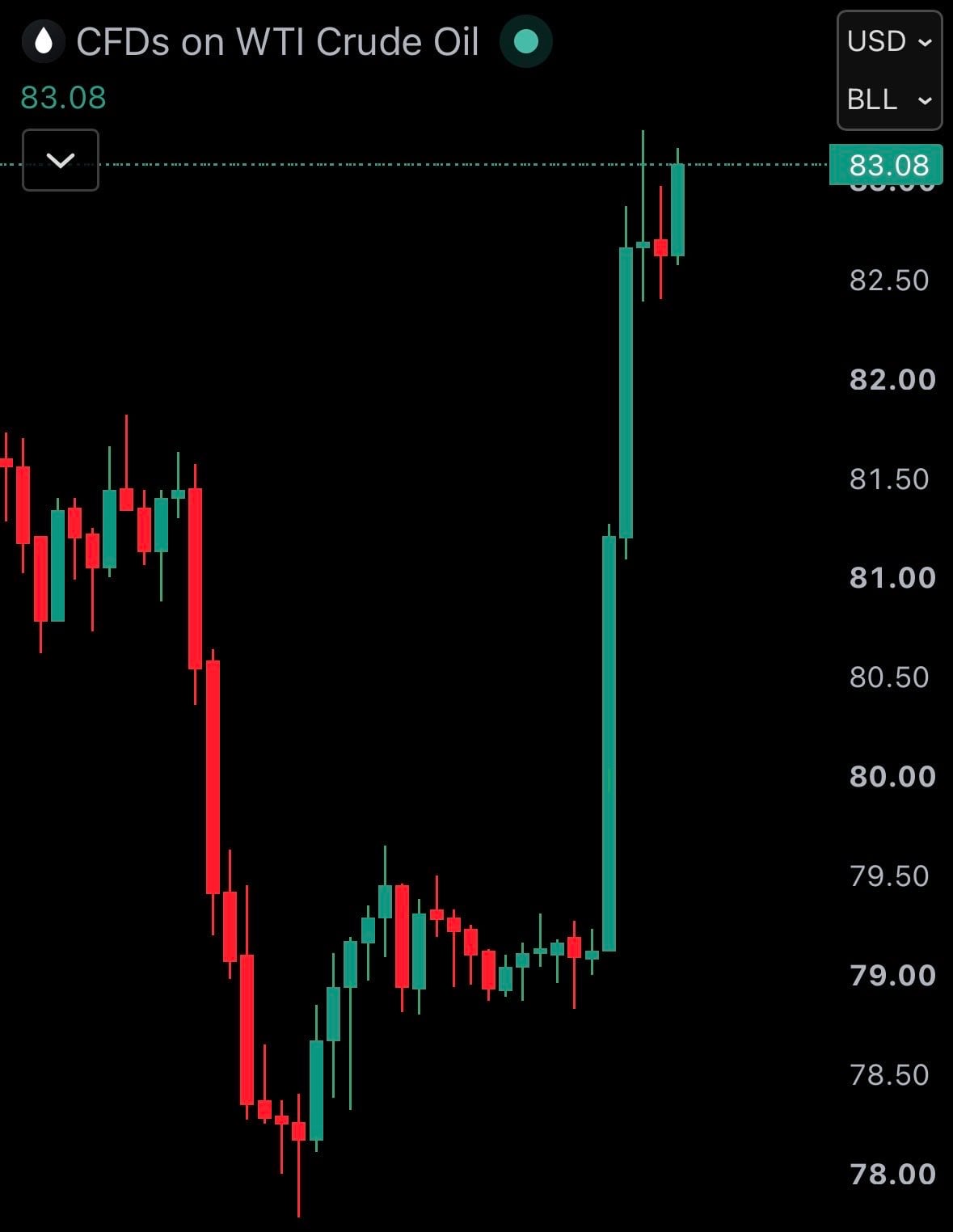
This rebound partially offset a sharp move in the opposite direction just days earlier. Oil prices had plunged by as much as 8% after the Trump administration first signaled the pause, with the price of Brent crude falling from above $100 per barrel to around $87 as mediators negotiated over the Strait of Hormuz. The July 28 attack erased a significant portion of that relief within hours—a pattern now familiar to traders tracking the start-stop rhythm of this conflict since February.

Bitcoin Rally Amid 'Truce' Faces Next Test

Cryptocurrency markets have moved in step with this same cycle, as by July 27 (when Brent crude collapsed to $87), Bitcoin had recovered to around $65,200, briefly reaching $65,600 at the start of futures trading. This recovery gave way to a decline the next day: by July 28, Bitcoin dropped to around $64,000 even before the evening strike, then continued to fall into the $63,600 to $63,800 range once news of the missile strike spread.

Bitcoin.com News previously reported that Bitcoin held near $63,000 during a previous escalation of the conflict in July—part of a trend where the network repeatedly recouped losses within days of each escalation, only to lose some of those gains again at the next flare-up.

Nevertheless, throughout this year, BTC has at times shown signs of decoupling from purely risk-on asset behavior amid the conflict, maintaining support even amid sharp swings in oil and stock prices (unlike the sharper and more consistent sell-offs observed for assets like Ether during the same periods). However, the July 28 strike posed the most direct challenge yet to the 'truce' narrative that underpinned last week's calm.

end-content


Crypto di tendenza

Domande pertinenti

QWhat did the Iranian attack on an American base in Jordan target, and what was the immediate military outcome according to CENTCOM?

AThe Iranian attack targeted American positions near Jordan's Muwaffaq Salti Air Base. According to CENTCOM, Patriot air defense batteries intercepted all of the incoming ballistic missiles, and there were no casualties reported.

QHow did the Iranian military justify their missile attack on the American base in Jordan?

AThe Iranian military claimed responsibility for the attack, justifying it as a response to what they identified as 'unlawful and malicious actions' by Washington against Iranian interests.

QWhat was the immediate impact of the July 28th attack on global oil prices?

AFollowing the attack, WTI crude oil prices rose by 3.95% to $83.08 per barrel, and Brent crude oil prices increased by 3.86% to $87.34 per barrel.

QHow did Bitcoin's price react in the hours surrounding the July 28th attack on the Jordanian base?

ABefore the evening attack on July 28th, Bitcoin had dropped to around $64,000. After news of the missile strike spread, its price fell further into the range of $63,600 to $63,800.

QWhat pattern has been observed regarding Bitcoin's price movements in relation to Middle East conflict escalations earlier in the year, according to the article?

AAccording to the article, Bitcoin has shown a pattern of repeatedly recovering losses within days after each escalation of the conflict, only to lose some of those gains again during the next escalation. However, it has also shown signs of decoupling from purely risk-on asset behavior, maintaining support even during sharp swings in oil and stock prices.

Letture associate

Thanks to Dice Rolls, Bitcoin Keys Are Stored Offline, But Not Everyone Will Do It

The article discusses using dice rolls to generate secure Bitcoin wallet seeds, providing entropy independent of potentially flawed hardware random number generators. It explains that each fair dice roll offers about 2.585 bits of entropy, with around 50 rolls needed for a standard 12-word seed phrase and 99+ recommended for higher security. This method gained attention after a vulnerability was revealed in some Coldcard hardware wallets, where a faulty firmware RNG (dating back to 2021) compromised generated keys. The analysis notes that while a dice-generated main seed was safe from this specific flaw, other Coldcard functions (like creating paper wallets, backup keys, or passwords) could still be vulnerable if they used the defective RNG. The piece argues that while dice-based entropy is technically robust, the manual process is error-prone, tedious, and unrealistic for most new users, who might make mistakes in recording or inputting rolls. It concludes that while manual entropy generation should remain an option for advanced users, the long-term goal is to develop reliable, user-friendly hardware and software that securely generates randomness without requiring specialized knowledge. Coldcard users are advised to check their firmware version and replace any secondary secrets (like paper wallet keys) created with vulnerable devices, while also considering multi-signature setups with devices from different manufacturers for added security.

cryptonews.ru3 h fa

Thanks to Dice Rolls, Bitcoin Keys Are Stored Offline, But Not Everyone Will Do It

cryptonews.ru3 h fa

Trading

Spot

Articoli Popolari

Come comprare 4

Benvenuto in HTX.com! Abbiamo reso l'acquisto di 4 (4) semplice e conveniente. Segui la nostra guida passo passo per intraprendere il tuo viaggio nel mondo delle criptovalute.Step 1: Crea il tuo Account HTXUsa la tua email o numero di telefono per registrarti il tuo account gratuito su HTX. Vivi un'esperienza facile e sblocca tutte le funzionalità,Crea il mio accountStep 2: Vai in Acquista crypto e seleziona il tuo metodo di pagamentoCarta di credito/debito: utilizza la tua Visa o Mastercard per acquistare immediatamente 44.Bilancio: Usa i fondi dal bilancio del tuo account HTX per fare trading senza problemi.Terze parti: abbiamo aggiunto metodi di pagamento molto utilizzati come Google Pay e Apple Pay per maggiore comodità.P2P: Fai trading direttamente con altri utenti HTX.Over-the-Counter (OTC): Offriamo servizi su misura e tassi di cambio competitivi per i trader.Step 3: Conserva 4 (4)Dopo aver acquistato 4 (4), conserva nel tuo account HTX. In alternativa, puoi inviare tramite trasferimento blockchain o scambiare per altre criptovalute.Step 4: Scambia 4 (4)Scambia facilmente 4 (4) nel mercato spot di HTX. Accedi al tuo account, seleziona la tua coppia di trading, esegui le tue operazioni e monitora in tempo reale. Offriamo un'esperienza user-friendly sia per chi ha appena iniziato che per i trader più esperti.

432 Totale visualizzazioniPubblicato il 2025.10.20Aggiornato il 2026.06.02

Come comprare 4

Discussioni

Benvenuto nella Community HTX. Qui puoi rimanere informato sugli ultimi sviluppi della piattaforma e accedere ad approfondimenti esperti sul mercato. Le opinioni degli utenti sul prezzo di 4 4 sono presentate come di seguito.

活动图片