# Equity Articoli collegati

Il Centro Notizie HTX fornisce gli articoli più recenti e le analisi più approfondite su "Equity", coprendo tendenze di mercato, aggiornamenti sui progetti, sviluppi tecnologici e politiche normative nel settore crypto.

Exploring ChangXin Technology's Hefei Headquarters: The Rising Campus Ignites Changgang CBD, Grassroots Employees 'Witness' Wealth Creation Myth

"On-the-Ground Visit to CXMT's Hefei Headquarters: Campus Boom Ignites Changgang 'CBD,' While Rank-and-File Employees Watch Wealth Creation Myth from the Sidelines." Following CXMT's (ChangXin Memory Technologies Inc., 688825.SH) explosive stock market debut on July 27, where its share price surged over fivefold, a site visit to its Hefei headquarters reveals a stark contrast. While the company's市值 soared, making it A-share's most valuable firm,基层员工 indicate the wealth creation has largely bypassed them. Employees reveal that股权激励 is restricted to managerial levels (Grade 9科长 and above), with most普通员工 at Grades 11 or 12. Salaries, while considered high for Hefei at around 200,000 RMB annually, fall short of the millions speculated online. Work routines remain demanding, with long hours, phone confiscation in sensitive areas, and strict保密 protocols forbidding unauthorized external communication. Simultaneously, CXMT's expansion is visibly transforming the once-rural Changgang area. Ongoing construction includes multiple new phases, with an industrial chain of supporting companies集聚 around the campus. This growth has spurred local development: housing prices initially skyrocketed, and a vibrant commercial district dubbed "Changgang CBD" now thrives, catering to the潮汐效应 of shift workers. The area has evolved from construction sites to a bustling hub, though the company's stringent安保, including high-voltage perimeter fencing, underscores its sensitive nature. The report concludes that while CXMT's rise fuels regional economic activity, the immediate financial rewards of its上市 are not shared by its frontline workforce.

marsbit2 giorni fa 06:01

Exploring ChangXin Technology's Hefei Headquarters: The Rising Campus Ignites Changgang CBD, Grassroots Employees 'Witness' Wealth Creation Myth

marsbit2 giorni fa 06:01

Storj Labs Files for Bankruptcy Protection, Can Token Holders Exchange for Company Equity?

Storj Labs, the parent company of decentralized cloud storage platform Storj, filed for Chapter 11 bankruptcy protection in the US on July 26. The company states its network will operate normally and token functionality remains unaffected. A notable proposal in its restructuring plan is to provide STORJ token holders a path to equity in the reorganized company—an unprecedented move in the crypto industry. However, this conversion is contingent on value remaining after creditor repayments, as token holders are lowest in the bankruptcy priority hierarchy. Storj, founded in 2014 and acquired by Inveniam Capital Partners in late 2025, attributes its bankruptcy to legacy debts from past operations and acquisitions, including the 2024 purchase of GPU computing firm Valdi. The company plans to refocus on its core decentralized storage business and likely divest Valdi. The token-to-equity proposal faces significant legal and practical hurdles, with no direct precedent. Key details like eligibility, allocation ratio, and mechanics are pending court approval. Another complexity is that Storj Labs itself holds roughly 30% of the total STORJ supply, creating potential conflicts. Following the news, the STORJ token price fell approximately 11.2%. In the broader decentralized storage market, Storj is a smaller player compared to leaders like Filecoin and Arweave, competing mainly on fast retrieval speeds for hot data. The bankruptcy process introduces risks of client and node operator migration to competitors.

marsbit07/27 09:06

Storj Labs Files for Bankruptcy Protection, Can Token Holders Exchange for Company Equity?

marsbit07/27 09:06

1inch Co-founder Anton Bukov Leaves, Launches New Project Second Tier

Anton Bukov, co-founder of the decentralized exchange aggregator protocol 1inch, has announced his departure from the company's daily operations. Bukov, who was instrumental in designing core 1inch architectures like the Router, Fusion, and cross-chain Swap, ceased involvement in November 2025 due to strategic and leadership disagreements, though he retains his co-founder title and 50% equity stake. Concurrently, Bukov unveiled his new venture, Second Tier (tier.xyz), describing it as infrastructure to "shorten the distance between economic intent and on-chain execution." He explicitly stated it is not a DEX or aggregator. The project's public-facing material is currently a manifesto criticizing systemic financial friction and advocating for building new architectural categories rather than competing within existing ones. No product details, team, or funding have been disclosed. The split highlights a strategic divergence within 1inch. While CEO Sergej Kunz has steered the company toward traditional finance integration—evidenced by a 2025 brand refresh and a major Coinbase partnership—Bukov emphasized a commitment to decentralized, permissionless DeFi principles. Bukov's exit coincides with a challenging period for 1inch. Q1 2026 data shows a 60.3% quarterly drop in its daily average trading volume to $97.1 million, underperforming the broader DEX aggregator market decline. Its market share fell from 25.2% to 17.0%, dropping it to fourth place among competitors. Key questions remain regarding Bukov's future role as a major 1inch shareholder, the timeline for Second Tier's product development, and whether 1inch's institutional-focused strategy can reverse its declining trading metrics.

Foresight News07/17 03:59

1inch Co-founder Anton Bukov Leaves, Launches New Project Second Tier

Foresight News07/17 03:59

Buyback and Burn: Just Empty Promises? The Unbridgeable Rights Gap Between Tokens and Equity

"Token Repurchase and Burn: An Empty Promise? The Unbridgeable Rights Gap Between Tokens and Equity" Holding company stock grants shareholders residual claim rights - a legally enforceable entitlement to remaining assets after all other obligations are paid. This comes with rights like voting, dividends, and a share in sale proceeds. Crypto protocols have long promised token holders similar benefits: governance participation and a share of future growth. However, this narrative is fundamentally flawed and built on voluntary promises, not enforceable legal rights. The core difference is that token holders lack any legally enforceable claim to a protocol's underlying value or revenues. Common mechanisms like using protocol revenue to buy back and burn tokens are purely discretionary; the team can alter or stop the policy at any time. Token holders have no legal recourse. This rights gap becomes critically apparent when protocols introduce traditional equity alongside tokens, as seen with Venice AI's $65M funding round. Equity investors hold legal contracts with rights to company assets and profits, while token holders' benefits depend entirely on the continued goodwill of the protocol's management. The acquisition of Houdini Swap, where equity holders were paid while token holders received nothing, starkly illustrates this disparity. Upcoming legislation like the CLARITY Act threatens to eliminate the regulatory gray area that has allowed this ambiguous "pseudo-equity" narrative. The Act would classify tokens as either digital commodities (regulated by CFTC) or investment contract assets/securities (regulated by SEC). Protocols aiming for the "digital commodity" classification would be explicitly prohibited from granting token holders any legal claim to corporate revenue, profits, or assets. Promising that tokens will appreciate from protocol profits would likely classify them as securities. Projects like Aave are attempting technical solutions, such as its automated, on-chain "Aavenomics 3.0" buyback mechanism. However, this remains code that the governance body could still vote to change, not an immutable legal contract. The industry faces a clear fork: either acknowledge tokens as digital commodities and stop promising economic rights tied to corporate profits, or formally register tokens as securities and bear the associated compliance burden. The decade-long narrative equating tokens with ownership is built on unenforceable promises. The entry of traditional equity investors with real legal rights exposes this foundational weakness, which may unravel with the next major funding deal.

Foresight News07/14 11:03

Buyback and Burn: Just Empty Promises? The Unbridgeable Rights Gap Between Tokens and Equity

Foresight News07/14 11:03

Tokenized Equity Is Unbundling Venture Capital's One-Stop-Shop Financing Business

Tokenized Equity Splits VC's One-Stop Financing Business The article explores how tokenizing company shares on the blockchain fundamentally reshapes the venture capital model. Traditionally, a VC's term sheet is a bundled service providing capital, valuation, curation/signaling, network access, governance, and implied follow-on funding. Tokenized equity, where shares are natively issued and registered on-chain, enables the unbundling of these services. Securitize exemplified this by listing on the NYSE while simultaneously issuing its native stock tokens on Solana and Avalanche. This creates continuous liquidity and price discovery, allowing startups to source services separately. Market-based platforms can handle funding and valuation; specialized service providers manage cap tables, token vesting, and programmable governance; and key individuals or smaller funds can offer brand credibility and network access. While this unbundling commoditizes transactional and administrative functions, core VC value persists in areas resistant to digitization: deep value judgment, strategic guidance, and using personal reputation to attract talent, customers, and future investors. Just as record labels survived by focusing on A&R (artist discovery) after music distribution was digitized, VCs will evolve to specialize in the nuanced, human-centric aspects of startup building. Founders gain the freedom to choose which services to source from the market versus which to obtain from trusted partners, fundamentally changing early-stage decision-making.

Foresight News07/13 07:17

Tokenized Equity Is Unbundling Venture Capital's One-Stop-Shop Financing Business

Foresight News07/13 07:17

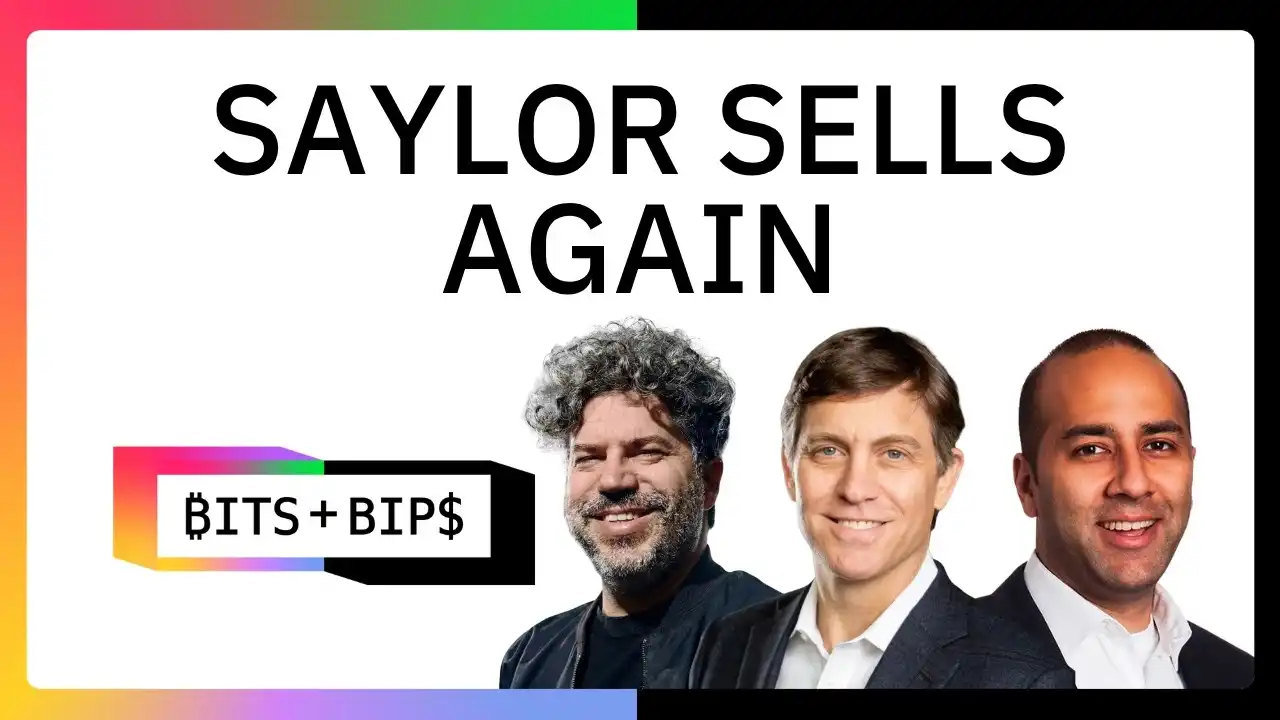
When the Largest BTC Buyer Becomes a Seller, Who's Buying After MicroStrategy Sells 3,588 Bitcoin?

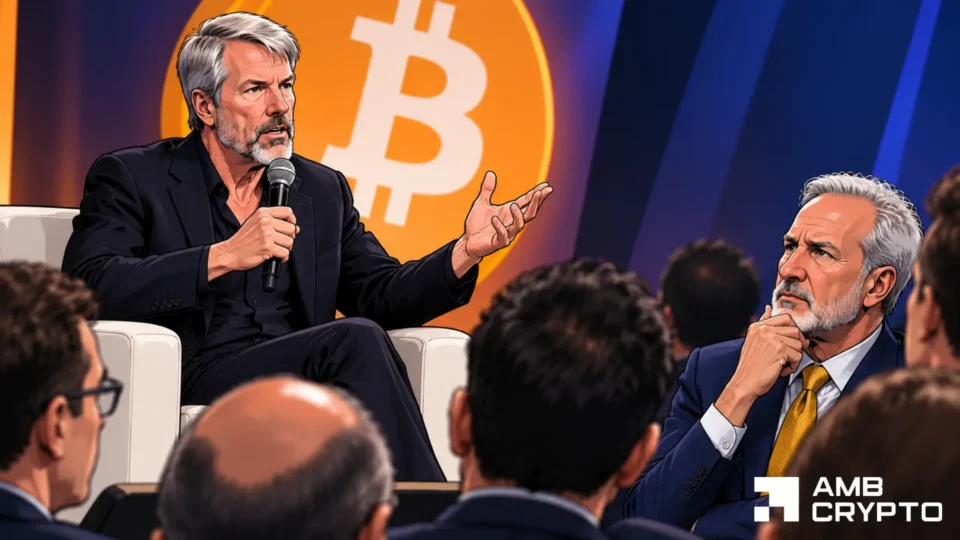
MicroStrategy, once the largest corporate buyer of Bitcoin, sold 3,588 BTC for approximately $216 million to fund its preferred stock dividends, marking a significant shift from buyer to seller. This move occurred after its market-to-NAV premium vanished, breaking its "print stock to buy Bitcoin" financial model. A roundtable discussion featuring Austin Campbell, Ram Ahluwalia, and Chris Perkins analyzed the implications. They noted that MicroStrategy's dominance has become a narrative bottleneck for the broader crypto market, with some speculating that Bitcoin's price might only surge significantly after the company's influence wanes. The conversation expanded to examine the capital structure conflict between traditional equity and crypto tokens, arguing that most current tokens will fail as they don't fit neatly into existing debt/equity frameworks. A "stablecoin war" was identified as a major trend, with entities like Tether, Robinhood, and the OUSD alliance competing. Tether's decision to abandon the European MiCA market highlights strategic divergences. The panelists argued that bank-issued stablecoins could revolutionize global finance by allowing US banks to capture net interest margins from international transactions, potentially making JPMorgan the first trillion-dollar bank. They concluded that while capital is currently being siphoned by AI/semiconductors, markets will eventually refocus on fundamentals and cash flow, which could benefit cryptocurrencies with real utility.

marsbit07/08 06:02

When the Largest BTC Buyer Becomes a Seller, Who's Buying After MicroStrategy Sells 3,588 Bitcoin?

marsbit07/08 06:02

活动图片