# Energy Articoli collegati

Il Centro Notizie HTX fornisce gli articoli più recenti e le analisi più approfondite su "Energy", coprendo tendenze di mercato, aggiornamenti sui progetti, sviluppi tecnologici e politiche normative nel settore crypto.

The New Rules of the AI Race: Nvidia Shifts from Chips to Energy Resources and Construction Sites

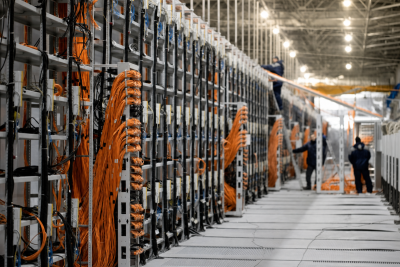
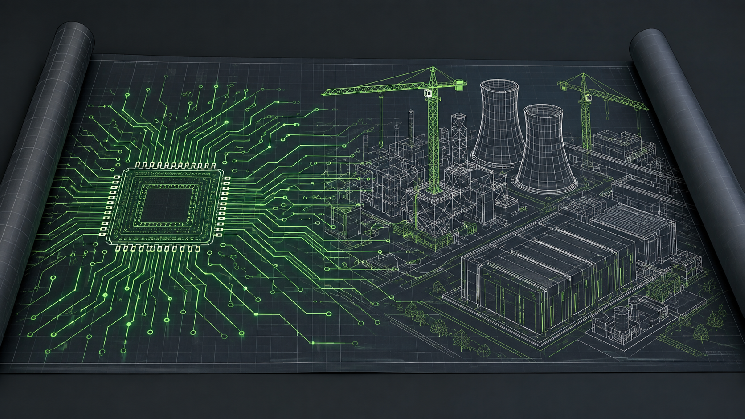
Nvidia is providing a $105 billion financial guarantee for the construction of OpenAI's data center campus in Ohio, signaling a strategic shift in the AI industry from competing on chips to battling for physical infrastructure and energy resources. The guarantee, detailed in an SEC filing, acts as insurance against tenant default rather than direct construction funding. OpenAI must repay any sums drawn. Nvidia will also invest $1.5 billion in SB Energy for the project's power component. The planned campus has a capacity of 4.25 GW, with OpenAI's current commitments to Nvidia reaching 12 GW. This move underscores that leading AI development now requires securing space, power, and financial backing for massive, long-term projects. Tech giants are taking on roles akin to developers and financial institutions. Concurrently, AI firms are diversifying suppliers: OpenAI and Anthropic have signed major deals with AMD for GPU deployments. Nvidia is also scaling its financial model through partnerships with investment firms to mobilize over $500 billion in external capital. The paradigm in AI is shifting from hardware supremacy to building comprehensive ecosystems. Future industry growth will depend on balancing innovation with real-world infrastructure capabilities, turning abstract computations into tangible industrial projects. An AI analysis notes the deal's resemblance to vendor financing schemes from the telecom bubble of the late 1990s and questions the long-term viability of gas-dependent energy infrastructure for AI, should market growth slow.

cryptonews.ru08/21 09:16

The New Rules of the AI Race: Nvidia Shifts from Chips to Energy Resources and Construction Sites

cryptonews.ru08/21 09:16

HSBC Research Report Analysis: Behind 12 Million Starlink Users, the Space Economy is Feeding Back to Earth

HSBC Research Report Analysis: The 120 Million Starlink Users and How the Space Economy is Fueling Earth's Industries. The core value of the new space race is returning to Earth, driving industrial upgrades across multiple sectors, according to an HSBC report covering 12 industries. Key developments include: SpaceX’s Starlink has surpassed a critical scale with 10,200 satellites, 12 million broadband users, and 7.4 million direct-to-cell devices. It is evolving from a backup solution to default infrastructure in maritime, aviation, trucking, and remote areas, complementing rather than competing with terrestrial telecom operators. Starship aims to reduce launch costs to $100-$300 per kilogram, a 95%+ reduction from historical averages. This drastic cost compression is reshaping the economics of satellite manufacturing, in-orbit services, and future ventures like asteroid mining. SpaceX’s plans for orbital AI data centers (100 GW by 2040) and the Terafab vertically integrated semiconductor foundry (a joint venture with Tesla and xAI) represent strategic shifts. While orbital data center costs are currently triple those on Earth, they offer a policy-independent backup for power-constrained AI growth. Terafab poses a potential challenge to the traditional fabless-foundry model. The report warns that aggressive capacity expansion by SpaceX and others could lead to a compute surplus by the late 2020s, potentially commoditizing LLMs and pressuring hardware vendors. The space race is most directly reshaping three core industries: 1. **Power/Utilities:** AI data centers are boosting annual U.S. electricity demand growth. Renewable energy and grid infrastructure are clear beneficiaries. 2. **Semiconductors:** Demand is created for "low-Earth orbit optimized" chips, while the vertically integrated Terafab model threatens traditional foundries. 3. **Robotics/Industrial:** Technologies for space mining, lunar construction, and in-orbit servicing are advancing with direct feedback to terrestrial applications in autonomous machinery and navigation. In conclusion, the space economy is already acting as an accelerator for Earth's industries through Starlink's scale, Starship's cost curve, and strategic projects like Terafab, with the most immediate impacts felt in power, semiconductors, and robotics.

marsbit08/20 08:11
HSBC Research Report Analysis: Behind 12 Million Starlink Users, the Space Economy is Feeding Back to Earth

marsbit08/20 08:11

From Cold War Nuclear Wasteland to an 8-Gigawatt AI Superfactory: Huang Renxun Bets $1.5B, OpenAI Secures Exclusive 20-Year Deal

A Cold War-era uranium enrichment site in Ohio, once used for atomic bomb production, is being transformed into the world's largest AI supercomputing facility. NVIDIA, OpenAI, and SoftBank are leading this project, which plans an ultimate power capacity of 8 gigawatts—nearly two-thirds of the total power used by 82 of the world's top AI data centers today. NVIDIA's CEO Jensen Huang has committed $1.5 billion in funding and a 20-year credit guarantee for the infrastructure. OpenAI has signed a 20-year lease to fully utilize the facility's computing power. SoftBank is investing heavily in land acquisition, construction, and grid upgrades, promising to add 1 gigawatt of new power generation. Huang argues that the next major bottleneck for AI advancement is no longer chip supply, but the availability of land, power, and data center space—resources that new AI companies often lack the long-term credibility to secure. By leveraging NVIDIA's market position and credit to lock down these critical physical resources for decades, the company ensures a steady, long-term demand for its GPUs within the facility. The infrastructure, with a 20-year lifespan, will host new generations of NVIDIA hardware every few years, creating recurring revenue streams. Analysts estimate this project alone could represent a $600 billion revenue opportunity for NVIDIA from OpenAI by 2030. This move signifies a strategic shift in the AI race: competition is expanding from semiconductor technology to securing the foundational elements of power and real estate on a massive scale.

marsbit08/18 11:21

From Cold War Nuclear Wasteland to an 8-Gigawatt AI Superfactory: Huang Renxun Bets $1.5B, OpenAI Secures Exclusive 20-Year Deal

marsbit08/18 11:21

Earning on Uselessness? How the Proof of Useful Work Consensus Works

Earning from the Useless? How Proof of Useful Work Consensus Works Classical cryptocurrency mining, like Bitcoin's Proof of Work (PoW), secures the network and prevents double-spending by performing computationally intensive "useless" hash calculations. Proof of Useful Work (PoUW) aims to solve this by making the work miners do valuable beyond the blockchain. The goal is for computational power securing the network to simultaneously solve problems in fields like medicine, astronomy, or AI. However, implementing PoUW faces significant challenges: 1. **Providing Useful Work**: Unlike uniform hash calculations, useful tasks are rarely identical or consistently available, making fair, parallel work distribution difficult. 2. **The Blockchain Trilemma**: Verifying complex "useful" solutions can be slower than verifying a simple hash, potentially harming scalability and security. 3. **Solution Uniqueness**: Solutions must be unique for each block to prevent reuse. 4. **Predictable Effort**: The system must ensure fair competition with predictable costs, preventing participants from cherry-picking only easy tasks. 5. **Economic Model**: The "useless" work in PoW has intrinsic value—it secures the network and incurs real costs (hardware, electricity), which contribute to a cryptocurrency's economic foundation and valuation. Replacing it with externally valuable work complicates this economic incentive structure. Examples of projects exploring PoUW concepts include: * **Primecoin (2013)**: The first major PoUW attempt, where mining involved searching for special chains of prime numbers, contributing to mathematics. * **Gridcoin**: Rewards participants for contributing computational power to scientific projects via the BOINC platform, though it uses PoS as its base consensus. * **Flux**: A decentralized cloud infrastructure where nodes perform real computational work like hosting and AI tasks under a PoUW v2 model. Other networks like Bittensor (machine learning) and Render Network (GPU rendering) also align with the broad idea of useful computation. In conclusion, while PoUW seeks to merge blockchain security with practical problem-solving, it currently grapples with technical and economic hurdles. Despite these challenges, the concept continues to evolve, indicating persistent interest in making computational work genuinely useful.

cryptonews.ru08/16 20:42

Earning on Uselessness? How the Proof of Useful Work Consensus Works

cryptonews.ru08/16 20:42

Michael Saylor Compares Bitcoin and Gold!

Michael Saylor, founder of MicroStrategy, argues that Bitcoin fundamentally changes how wealth is stored and transferred by transforming digital scarcity into economic value. He describes Bitcoin as the first digital monetary network, combining computers, digital networks, and cryptography. It digitizes monetary assets, allowing their supply to be controlled by public protocols rather than institutions, thus converting economic value into information transmissible over global networks. Comparing Bitcoin to gold, Saylor states that while increasing Bitcoin's supply is harder, its integration with software and transfer is easier. He highlights Bitcoin's proof-of-work mechanism, which ties it to the physical world by consuming real energy to secure the ledger, making past transactions immutable. This creates a shared security system involving miners, energy companies, and investors. Saylor suggests "digital monetary energy" is a more accurate term than "digital gold." He emphasizes that the Bitcoin network is an adaptive ecosystem of miners, nodes, developers, and users. Its core design is intentionally simple, focused on maintaining a secure ledger for scarce digital assets, with complex functionalities built in higher-layer applications. This architecture allows Bitcoin to serve as a foundation for transmitting value and fostering innovation in payments and financial services. Saylor notes Bitcoin's deeper impact lies in creating digital sovereignty, where private keys give individuals permissionless control over their economic power, with ownership verified mathematically, not by institutions. He concludes that while gold's physical scarcity makes it money, Bitcoin's digital scarcity does the same, characterizing Bitcoin as the monetary energy of the digital age.

cryptonews.ru08/16 10:45

Michael Saylor Compares Bitcoin and Gold!

cryptonews.ru08/16 10:45

活动图片