# DeFi Articoli collegati

Il Centro Notizie HTX fornisce gli articoli più recenti e le analisi più approfondite su "DeFi", coprendo tendenze di mercato, aggiornamenti sui progetti, sviluppi tecnologici e politiche normative nel settore crypto.

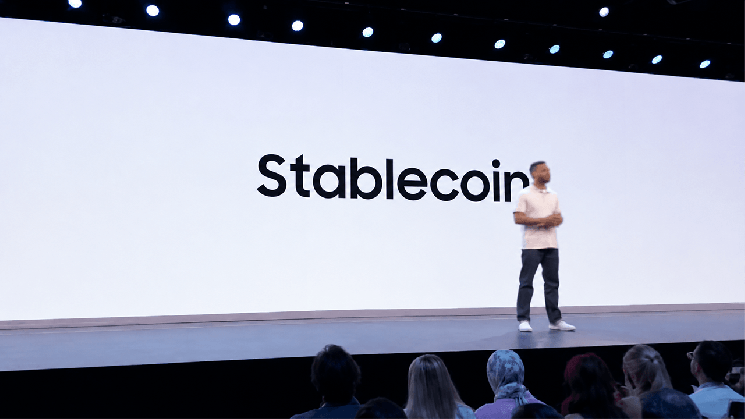
Undercover in Crypto for 8 Years, 5 Jobs: The Revolution and Scam in My Eyes

"Undercover in Crypto for 8 Years, 5 Jobs: The Revolution and the Scam I Saw" In 2017, the author entered crypto believing it would revolutionize everything: replacing fiat, disintermediating finance, and shifting power to users. Eight years later, almost none of that has happened as predicted. The author worked at Circle, Messari, Coinbase, and Crossmint, witnessing the asset class grow from under $10B to over $4T, through multiple speculative bubbles and a near-systemic crisis. The journey began with the 2017-18 ICO frenzy, an "internet bubble 2.0" fueled by Ethereum. The promised "decentralized Uber" never materialized; instead, it was an era of greed, fraud, and rampant speculation where founders cashed out early. In the 2018-19 hangover, the focus shifted. The seeds of crypto's next phase were planted: stablecoins (like USDC) for borderless dollars and DeFi (decentralized finance) for rebuilding financial primitives like lending and trading on-chain. The COVID-19 pandemic and massive monetary stimulus triggered "DeFi Summer" in 2020-21. DeFi's value soared 250x to $180B, but it resembled a high-stakes game for mercenary traders with "food-themed" tokens. A new bubble formed around NFTs, with digital art selling for millions. The 2022 "crypto winter" mirrored the 2008 financial crisis. The collapse of the algorithmic stablecoin Terra (UST) triggered a chain reaction, bringing down hedge funds (Three Arrows Capital) and lending platforms (Celsius, Voyager). The final blow was the implosion of FTX and Sam Bankman-Fried, who had misused customer funds. This was crypto's "Lehman Moment." After the crash, the Biden administration's hostile regulatory crackdown under the SEC pushed innovation toward the legally safest, most absurd path: meme coins. The 2024 meme coin mania peaked at $150B before imploding. This political pressure, however, mobilized the industry. Donald Trump capitalized, promising a crypto-friendly stance, which many credit for helping him win the 2024 election. Trump's victory marked a turning point. A pro-crypto SEC chair took over, the "GENIUS Act" provided clear stablecoin rules in 2025, and institutional adoption accelerated. Circle (maker of USDC) IPO'd, and traditional giants like MoneyGram began using stablecoins for cross-border payments via firms like Crossmint. Looking back, the predicted consumer revolution (decentralized Uber) didn't happen. Instead, crypto built the plumbing for a new internet financial system. Each boom/bust cycle refined the infrastructure for global, 24/7 finance accessible to anyone online. The $300B+ stablecoin market, settling tens of trillions annually and creating demand for U.S. debt, is now a strategic U.S. priority. The future lies in convergence, not replacement. Crypto will be the backend, invisible to most users. The next frontier is integration with AI, where autonomous agents will use crypto wallets and stablecoins to transact. The result will be a global financial system equally accessible in New York or Nigeria, paving the way for countless new innovations.

marsbit17 h fa

Undercover in Crypto for 8 Years, 5 Jobs: The Revolution and Scam in My Eyes

marsbit17 h fa

One Article to Understand $UORE: The V4 Hook Project That Packs Mining, Lottery, and NFT Into a Single Transaction

An In-Depth Look at $UORE: The V4 Hook Project Packing Mining, Lotteries, and NFTs into a Single Transaction $UORE is the latest project leveraging the Uniswap V4 Hook mechanism, following in the footsteps of projects like SATO, uPEG, and Slonks. It distinguishes itself by integrating multiple functions—on-chain mining, a buy-to-enter lottery, auto-generated pixel NFTs (Orelings), and a deflationary burn mechanism—all within a single Uniswap V4 liquidity pool transaction. This complexity results in transaction gas fees that are 2-3 times higher than a standard swap. The project's tokenomics are intricate. Each whole $UORE token held automatically mints a corresponding Oreling NFT, a 32x32 pixel miner character with random traits determined by the next block's hash. Each Oreling has a Class (rarity) and Hash value, which combine to form its Mining Power for staking rewards. Rewards are distributed daily from an emission that decays by 1% daily, with an 80/20 split between stakers and a Motherlode lottery pool. A "refined-ore boost" mechanism taxes early reward claims, redistributing 10% to remaining stakers. The Motherlode lottery awards tickets for buys of ≥0.1 ETH, with winning chances scaling up to 1% for 1 ETH purchases. Wins split the pool 50% to the buyer and 50% to a random staker. A 1% buy tax is burned, and a 1% sell tax funds an automatic buyback-and-burn mechanism triggered at 0.1 ETH. The project's code is a fork of uPEG, with claimed fixes for NFT duplication and flash loan attacks. Its creator, Noah, describes it as a fusion of Solana's ORE mining concept with uPEG's V4 Hook framework. Key challenges noted include high gas costs, the narrowing attention window for V4 Hook narratives as it's the fourth such project, and significant complexity that creates a high barrier to understanding for users. The project's whitepaper notably advises users to "Read the contracts and understand the mechanics before deploying capital," underscoring its complex and fast-moving nature within a trend where the "alpha" lifespan for new projects appears to be shrinking rapidly.

marsbitIeri 02:23

One Article to Understand $UORE: The V4 Hook Project That Packs Mining, Lottery, and NFT Into a Single Transaction

marsbitIeri 02:23

In a Bull Market, Trade New Coins. Will the 'Hook' Concept Become the Sector That Opens the Bull Market?

In a recent surge of interest, the "Hook" concept on Uniswap v4 has captured significant attention from the retail crypto community, driven by projects like $upeg, $sato, and Slonks. Despite being introduced over a year ago, Hooks—customizable plugins for the Uniswap protocol—gained mainstream traction only recently. The article argues that earlier Uniswap efforts to promote Hooks focused too heavily on technical improvements and liquidity provider (LP) solutions, which failed to capture the imagination of everyday users. The breakthrough came with projects that introduced novel, engaging gameplay. $upeg combines trading with generative art, where each integer purchase creates a unique image, adding a layer of artistic creation and complexity to tokenomics. $sato leverages a bonding curve on Ethereum, appealing to the network's "diamond hands" culture with a decentralized, zero-intervention model that turns into a "belief game." Slonks uses an AI model to redraw CryptoPunks, creating a gamified ecosystem where users can burn or merge NFTs to earn $SLOP tokens based on how much the AI "deviated" from the original. These examples highlight Hooks' potential to transform Uniswap from a simple swap and LP platform into a vibrant ecosystem of innovative applications. While technically possible to build such projects independently, the synergy with Uniswap’s established user base and infrastructure provides mutual benefits. For "Hook" to become a true catalyst for a bull market, the author suggests that projects need compelling, original narratives, and Uniswap must further commit to positioning itself as Ethereum's premier application marketplace for creative on-chain experiences.

marsbitIeri 01:09

In a Bull Market, Trade New Coins. Will the 'Hook' Concept Become the Sector That Opens the Bull Market?

marsbitIeri 01:09

Eight-Year Industry Retrospective: The Crypto Revolution Has Already Occurred, Just Not as Envisioned

Eight Years in Crypto: A Different Revolution Unfolds After eight years across four crypto companies, my initial vision of decentralized apps and currencies replacing traditional systems largely failed to materialize. Instead, the industry has forged a distinct, perhaps more significant, path centered on rebuilding the global financial system from the ground up. My journey began in the 2017 ICO frenzy, a bubble reminiscent of the dot-com era, where fundraising outpaced usable technology. The subsequent crash led to a quiet rebuilding phase focused on financial primitives. From the ashes emerged stablecoins and DeFi, which gained explosive traction during the 2020 pandemic and the "DeFi Summer" of yield farming and speculative games. This was followed by the 2021 NFT mania, another cycle of exuberance. The 2022 crash was crypto's "Lehman Moment," triggered by the collapse of Terra's UST, hedge funds like Three Arrows Capital, and ultimately FTX, which misused customer funds. The aftermath saw aggressive U.S. regulatory actions under the SEC, which paradoxically fueled the rise of "legal-safe" memecoins, turning parts of the ecosystem into a massive casino by 2024-2025. A pivotal shift occurred with the 2024 U.S. election. A perceived pro-crypto administration led to key legislation like the GENIUS Act, clear stablecoin rules, and institutional adoption. Stablecoins, now a strategic U.S. priority, process trillions in transaction volume, and asset tokenization is gaining Wall Street traction. Today's reality isn't the cypherpunk dream of replacing fiat but a pragmatic revolution: upgrading the dollar system for the internet age and creating a globally accessible, 24/7 financial infrastructure. The next convergence is with AI, where crypto wallets and stablecoins will enable autonomous AI agents to transact in the global economy. The industry's future lies not in颠覆ing traditional finance but in integrating with it, replacing outdated backend systems with blockchain while maintaining familiar frontends. The goal is a seamless, borderless financial system. While my predictions may prove as flawed as my 2017 article, I remain committed to building within this ongoing transformation.

marsbitIeri 15:27

Eight-Year Industry Retrospective: The Crypto Revolution Has Already Occurred, Just Not as Envisioned

marsbitIeri 15:27

活动图片