# Challenges Articoli collegati

Il Centro Notizie HTX fornisce gli articoli più recenti e le analisi più approfondite su "Challenges", coprendo tendenze di mercato, aggiornamenti sui progetti, sviluppi tecnologici e politiche normative nel settore crypto.

Tokenized Stocks Are Gaining Momentum, But Traditional Market Infrastructure Faces Severe Challenges

Tokenized stocks are rapidly moving from pilot tests to live trading, but the core infrastructure underpinning traditional equity markets—corporate action processing, entitlement distribution, reference data maintenance, and settlement mechanisms—is not prepared for these new assets designed for multi-venue, continuous trading. While platforms like Nasdaq and NYSE have received SEC approval to list tokenized versions of major stocks and ETFs, and the DTCC has launched a pilot, significant challenges remain. Regulatory paths diverge: one ties tokenized shares directly to the underlying traditional shares (using the same CUSIP, following T+1 settlement), while a potential "innovative exemption" could allow crypto-native platforms to list price-tracking tokens without issuer consent. This raises critical questions about whether such tokens truly replicate all shareholder rights, such as dividends, voting, and corporate actions. The real complexity lies in replicating a stock's full attributes—far beyond price feeds—across potentially dozens of blockchains operating 24/7. This strains systems built for centralized, fixed-hour trading. Fragmentation is a key systemic risk: without unified standards, multiple unconnected platforms issuing tokens for the same stock could lead to fractured price discovery, information asymmetry, and liquidity splits. Ultimately, tokenized stocks represent a broader infrastructure transformation. The next phase will be led by those who can integrate disparate tokenized venues into a coherent market system, ensuring consistent investor rights, reliable corporate action handling, and trustworthy settlement—regardless of the settlement "rail." Success requires close collaboration between tech providers, traditional players, and regulators to harness blockchain's efficiency while upholding investor protection.

Foresight News07/27 12:54

Tokenized Stocks Are Gaining Momentum, But Traditional Market Infrastructure Faces Severe Challenges

Foresight News07/27 12:54

From Somersaults to Working 24/7: We Saw the ‘Working-Class’ Aura in Robots at WAIC

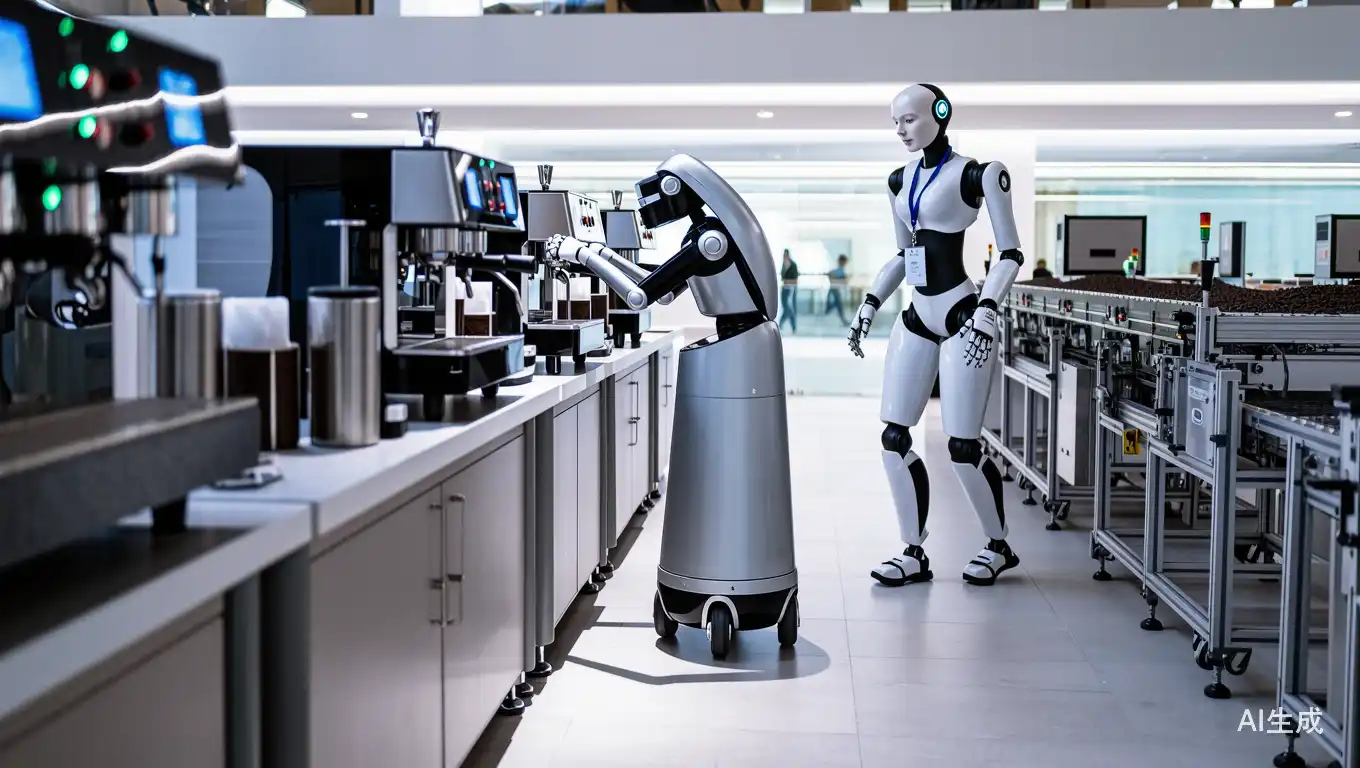
From performing acrobatics to working 24/7: Robots at WAIC are getting down to business. This year's World Artificial Intelligence Conference (WAIC) in Shanghai showcased a significant shift in the robotics industry. While "show-off" robots that dance, play music, or compete in sports are still present, the dominant trend is now practical, task-oriented machines. Hundreds of wheeled and humanoid robots were deployed as guides, baristas, factory workers, and even traffic controllers, moving beyond mere demonstrations to highlight real-world "work capabilities." The focus has pivoted from showcasing technical parameters to pursuing mass production and industrial落地 (landing/implementation). This transition presents major challenges. First, deploying powerful AI models onto robots requires overcoming hardware limitations in computing power and latency. Second, robots demand complex, integrated systems for real-time perception and control. Third, achieving reliable mass production necessitates unprecedented industry-wide collaboration on standards and supply chains. A key bottleneck identified by industry leaders is the robot's "brain"—its AI and cognitive capabilities. While hardware and basic movement ("little brain") have advanced rapidly, the higher-level intelligence for understanding complex instructions and adapting to unstructured environments is progressing more slowly. Companies are investing heavily in developing more advanced "brain" systems, but fully autonomous operation in dynamic settings remains a work in progress. Cost is another critical hurdle. While some consumer-oriented humanoid robots are now priced under $15,000, capable industrial models often cost $50,000 or more. The industry consensus is that bringing robots into unstructured home environments for tasks like comprehensive cleaning is still at least five years away due to technical, safety, and cost barriers. Therefore, 2026 is being called the "first year of mass production," but primarily for industrial and specific commercial applications. WAIC 2026 served less as a stage for spectacular tricks and more as a serious examination of robots' commercial viability, marking their transition from laboratory prototypes to real-world products that must prove their value through stable, repetitive work.

marsbit07/17 14:11

From Somersaults to Working 24/7: We Saw the ‘Working-Class’ Aura in Robots at WAIC

marsbit07/17 14:11

Tencent, Alibaba, ByteDance in a Battle for the Skill Store

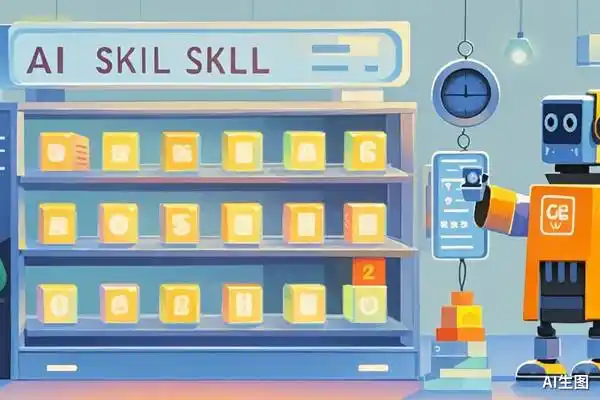
Skill is becoming a key concept in the AI field, essentially serving as a structured "instruction manual" for AI Agents that specifies tool calls, decision logic, and output standards. This allows Agents to execute predefined tasks. As the number of Skills grows, distribution platforms have emerged. Major tech companies are swiftly entering this space. In March, Tencent, Alibaba, and ByteDance launched Skill stores within their respective Agent platforms. Subsequently, players like Zhipu AI, Meituan, and Xiaohongshu joined the fray. This competition for the "Skill store" is fundamentally a battle for the AI-era user entry point; whoever controls distribution controls the users. While ByteDance's Coze has experimented with paid Skills, most platforms offer them for free. The real value lies not in the stores themselves but in using them to attract and retain users within an ecosystem, driving revenue from services like cloud computing, model calls, or advertising. The landscape features three main player types: 1) **Internet giants** (e.g., Alibaba, ByteDance, Tencent, Meituan), leveraging Skills to drive traffic and monetize through their broader ecosystems (cloud services, transactions, ads). 2) **Large model companies** (e.g., Zhipu AI, Moonshot AI), using Skill stores to increase user engagement and monetize model API calls. 3) **Content platforms** (e.g., Xiaohongshu), treating Skills as a new content format to generate traffic and ad revenue. However, transforming Skill stores into a sustainable business faces significant hurdles. Key challenges include: the **difficulty in pricing Skills** due to inconsistent outputs across different models and contexts; **lack of cost transparency** (varying token consumption); **security risks** like Skill poisoning; and the **absence of standardized protocols** for development and evaluation. Unlike standardized mobile apps, Skills are often personalized workflows resistant to uniformity, which hinders the establishment of a reliable review and monetization system akin to the App Store. While there is genuine user demand for paid Skills—particularly in enterprise (e.g., contract review) and certain personal productivity scenarios—current platforms offer developers limited and unpredictable distribution. The future of Skill stores depends on overcoming these standardization, evaluation, and safety challenges to make acquiring a Skill as straightforward as downloading an app. For now, the stores function more as display shelves than robust marketplaces.

marsbit06/03 12:30
Tencent, Alibaba, ByteDance in a Battle for the Skill Store

marsbit06/03 12:30

Some Issues Are Better Discussed in Person: Summer of Ethereum 2026 Is Here!

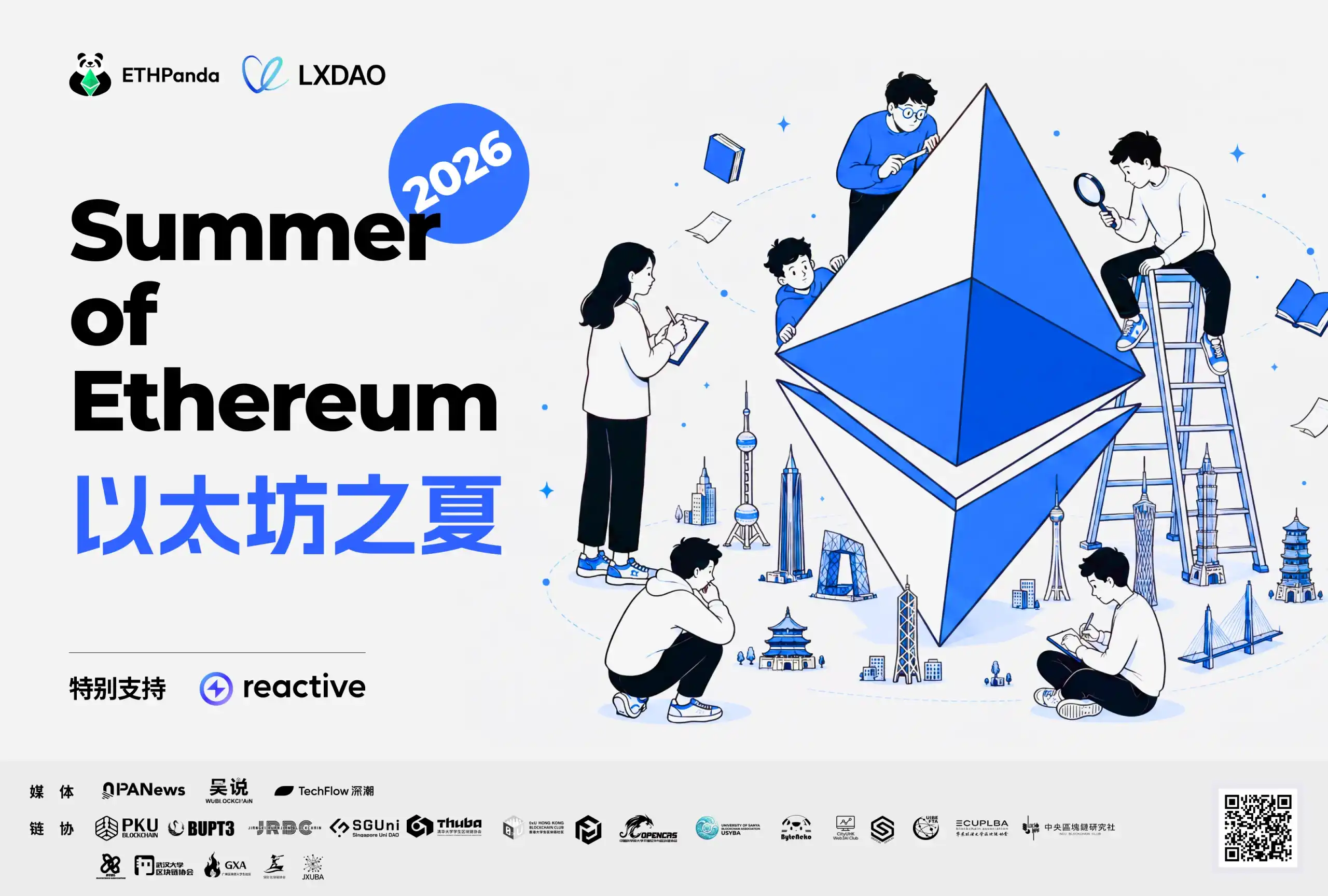
Summer of Ethereum 2026 is returning, focused on bringing crucial discussions about Ethereum's long-term development to in-person meetups across multiple cities. Organized by LXDAO and ETHPanda, the initiative aims to move beyond online discourse and event scheduling by addressing Ethereum's systemic challenges through real-world connections. The core question this year is the value of offline gatherings for the Ethereum community. While online discussions on topics like the roadmap, L2, account abstraction, and governance are abundant, they often lack depth and alignment. The goal is to bring these fragmented, complex issues—such as UX, developer tools, public goods, and local community building—into shared physical spaces to foster deeper understanding, trust, and actionable collaboration. The program will not follow a rigid format but will adapt to each city's context, potentially including talks, panels, workshops, and community gatherings. Key discussion areas include protocol evolution, Ethereum UX/account abstraction, real-world applications, developer tools, and sustainable community governance. The aim is for each event to leave behind clearer problems, stronger personal connections, and tangible follow-up actions. The call is open to developers, researchers, students, community members, local organizers, projects, and media partners. Participation is encouraged whether one brings deep expertise or just genuine curiosity. For Ethereum's ecosystem—built on principles of open networks and long-term collaboration—this "non-negotiable" effort seeks to translate belief into concrete, local cooperation. The ultimate hope is that these meetings will seed lasting partnerships and turn abstract challenges into progress, one city at a time. All event details and schedules will be updated on the Luma Calendar.

marsbit05/15 11:22

Some Issues Are Better Discussed in Person: Summer of Ethereum 2026 Is Here!

marsbit05/15 11:22

活动图片