Standard Chartered: Bitcoin Could Reach $126,000 and Hit a New All-Time High by Year-End

cryptonews.ruPubblicato 2026-08-22Pubblicato ultima volta 2026-08-22

Introduzione

Standard Chartered has revised its year-end Bitcoin price target upward, suggesting it could reach a new all-time high of $126,000. The bank's head of digital assets research, Geoff Kendrick, noted that the current rally is driven by short liquidations and a recovery in spot Bitcoin ETF inflows. He stated that low open interest leaves room for new investors, reducing the risk of a sharp sell-off from an overheated market. This marks a shift from the bank's earlier, more conservative forecast. In February, Standard Chartered lowered its 2024 Bitcoin target from $150,000 to $100,000, anticipating a deep correction first. However, Bitcoin's steady climb has prompted Kendrick to consider the possibility that his initial $100,000 target may be too low. Other analysts are also signaling a potential market bottom. Swan Bitcoin's Cory Klippsten expects a bottom to form in October, while 10x Research's Markus Thielen suggests closing August above $63,000 could confirm the end of the bear market. Bitcoin recently rose above $79,000, gaining 25% in a week. The analysis cautions that macroeconomic factors remain crucial. Past rallies have been vulnerable to inflation data and Federal Reserve rate decisions, with sharp pullbacks following positive news cycles. The sustainability of any surge toward $126,000 will depend on upcoming CPI reports and monetary policy.

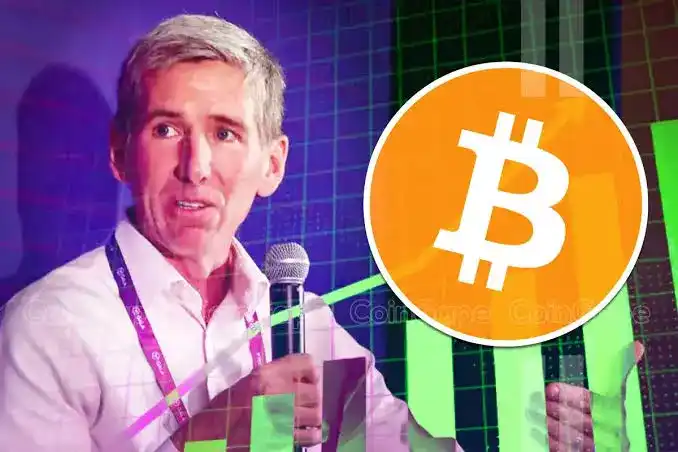
Standard Chartered suggests that Bitcoin could reach a new all-time high of $126,000 by the end of the year, with the asset's recovery potentially accelerating after October 6th. This statement was made by the bank's Head of Digital Assets Research, Geoff Kendrick.

According to the analyst, the current rally is primarily driven by short liquidations, and inflows into spot Bitcoin ETFs have also begun to recover. In his view, the low level of open interest leaves room for new investors to return as the price rises—sharp sell-offs due to an overheated market are unlikely in this scenario.

Kendrick noted that for the first time this year, there is a risk that his annual Bitcoin forecast of $100,000 may prove too conservative. Previously, the bank held a much more cautious stance.

How Standard Chartered's Forecast Has Evolved

In a report dated February 12th, the bank lowered its year-end Bitcoin target from $150,000 to $100,000, and its Ethereum target from $7,500 to $4,000. At that time, Kendrick expected Bitcoin to first drop to around $50,000 and Ethereum to $1,400 before a recovery would commence toward the end of the year. Essentially, the analyst's base scenario envisioned a deep market correction followed by a rebound, rather than steady growth without pullbacks.

The current price dynamics diverge from this scenario: instead of the anticipated decline, Bitcoin is showing confident growth, which prompted Kendrick to revise his risk assessment towards a higher forecast.

Other Analysts Also See a Reversal

Other market participants see similar signals. Swan Bitcoin CEO Cory Klippsten expects a Bitcoin bottom to form in October. Meanwhile, 10x Research founder Markus Thielen stated that a close above $63,000 in August could confirm the formation of a bear market bottom.

Both forecasts align with Kendrick's logic: the market may have found a bottom earlier than the conservative estimates from the beginning of the year suggested.

This week, Bitcoin rose above $79,000, gaining 25% for the week, as previously reported by Hash Telegraph.

AI Perspective

From the standpoint of macroeconomic linkages, the current rally should be considered not only in light of short liquidations but also within the monetary context. History shows that even amid positive ETF dynamics, Bitcoin sharply lost up to 8% during the March inflation spike when the Fed kept rates unchanged, as earlier reported by Hash Telegraph. Such a precedent indicates that any scenario involving $126,000 remains hostage to future CPI releases and interest rate decisions.

A similar pattern occurred in April when a diplomatic easing triggered a cascade of short liquidations worth $530 million and a record weekly inflow into ETFs, as recorded by Hash Telegraph—then the sharp rise was followed by consolidation, not a sustained trend. Will the October scenario be an exception, or will the market again face a quick pullback following a news-driven impulse?


Domande pertinenti

QAccording to Standard Chartered analyst Geoff Kendrick, what is the new potential year-end price target for Bitcoin, and when does he think the recovery could accelerate?

AGeoff Kendrick stated that Bitcoin could reach a new all-time high of $126,000 by the end of the year, and the asset's recovery could accelerate after October 6th.

QWhat two main reasons does Geoff Kendrick cite for the current Bitcoin price increase?

AHe cites the liquidation of short positions and the resumption of inflows into spot Bitcoin ETFs as the primary reasons for the current price increase.

QHow did Standard Chartered's Bitcoin price forecast change from its February 12th report to its current view?

AIn the February 12th report, Standard Chartered lowered its 2024 year-end Bitcoin target from $150,000 to $100,000, expecting a deep correction first. The current view is more bullish, with a risk of the $100,000 target being too low and a potential for $126,000.

QWhat similar market bottom signals are mentioned by other analysts Cory Klippsten and Markus Thielen?

ACory Klippsten of Swan Bitcoin expects a Bitcoin bottom to form in October. Markus Thielen of 10x Research suggested that closing August above $63,000 could confirm the formation of a bear market bottom.

QAccording to the 'AI Opinion' section, what major external factors could threaten a Bitcoin rally towards $126,000?

AThe 'AI Opinion' section states that any scenario targeting $126,000 remains hostage to future Consumer Price Index (CPI) publications and Federal Reserve decisions on interest rates, as past events show Bitcoin can drop sharply on such macroeconomic news.

Letture associate

Mysterious "Ox Alpha" Large Model Goes Viral with Limited-Time Free Access

A mysterious anonymous AI model named "Ox Alpha," nicknamed "Cow is Coming" by Chinese netizens, has appeared on OpenRouter, sparking widespread speculation. The model offers a 1 million token context, supports text, image, and video inputs, can call tools, and is currently free. Its standout feature is strong coding ability. Initial tests on the DeepSWE benchmark, which evaluates real-world software engineering tasks, showed an 80% pass rate on a subset of tasks, reportedly nearing top-tier code models. However, follow-up tests yielded a 63% score, with variations attributed to different task sets and configurations. The model's true developer is a major topic of debate. The prevailing theory points to Zhipu AI's unreleased GLM-5.3 Flash or its multimodal variant. Evidence cited includes identical visual token consumption patterns with GLM-5V-Turbo for videos, a consistent offset in text token counts compared to GLM-5.3, and similar behavioral traits like refusing audio processing. Zhipu has a precedent of anonymous testing. Simultaneously, another anonymous model, "korrine," appeared on Code Arena, with guesses ranging from Moonshot's Kimi K3.1 to models from Qwen or MiMo, adding to the industry's guessing game. This trend of anonymous "undercover" testing allows for unbiased performance evaluation in platforms like Arena and provides real-world, high-pressure testing through tools like OpenRouter before official release. It also serves as an effective marketing tactic, prolonging discussion through suspense. If Ox Alpha is indeed a "Flash" model, its performance raises expectations for the full-scale version's potential.

marsbit4 h fa

Mysterious "Ox Alpha" Large Model Goes Viral with Limited-Time Free Access

marsbit4 h fa

Breaking News: DeepSeek Announces All-Day Off-Peak Pricing on Weekends, Making Weekend Work More Cost-Effective?

DeepSeek has announced a significant change to its API pricing model, effective August 23. The new policy removes peak/off-peak distinctions on weekends (Saturdays and Sundays), charging the lower off-peak rate for the entire two-day period. This adjustment has sparked mixed reactions within the developer and professional communities. For developers and businesses heavily reliant on DeepSeek's V4-Flash and V4-Pro APIs, this is welcome news. It allows them to schedule bulk processing tasks on weekends without the higher peak-hour costs, potentially halving their API bills for such workloads. Some users have celebrated the move for making weekend work more cost-effective. However, the announcement has also raised concerns among employees. There is apprehension that companies, particularly in cost-sensitive sectors like AI-powered short drama production, might reorganize work schedules to align with these new cost incentives. Instances are already emerging where teams schedule high-token tasks during cheaper nighttime hours or adjust staff shifts. This has led to worries about a potential shift towards weekend workdays and weekday time-off, prioritizing cost savings over traditional work-life balance. Debate has ensued regarding the practicality of such schedule changes, with questions about increased communication overhead and overall efficiency. Speculation about DeepSeek's motives for the change includes theories that peak pricing correlates with internal model training schedules, though others counter that training is largely automated. The new pricing structure is now in effect, prompting users to reconsider their task scheduling strategies.

marsbit5 h fa

Breaking News: DeepSeek Announces All-Day Off-Peak Pricing on Weekends, Making Weekend Work More Cost-Effective?

marsbit5 h fa

Just Now, The World's First Human vs. Robot Tennis Match Begins, Robot's Desperate Save Leaves Zheng Jie Astonished

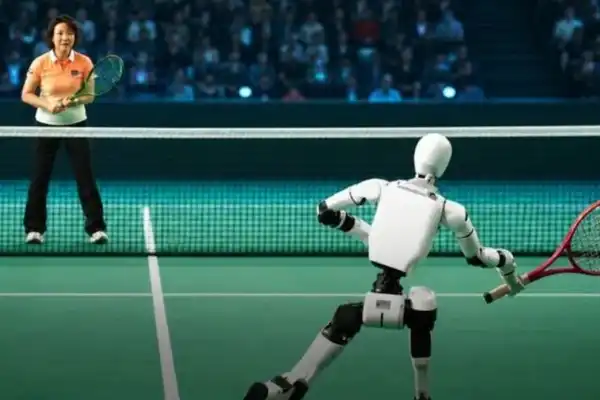
Just now, the world's first human vs. robot tennis match began, featuring stunning robotic saves that left tennis star Zheng Jie in awe. This historic event, part of the second World Humanoid Robot Games and broadcast live globally by China Media Group, marked a pivotal moment in Chinese technological innovation and embodied artificial intelligence. The match featured both mixed human-robot doubles and a groundbreaking singles match between Zheng Jie and the "Galaxy Xingzai" humanoid robot developed by Galaxy General. The robot demonstrated impressive skills including serving, forehands, backhands, and strategic court movement, with serves exceeding 100 km/h. It exhibited remarkable adaptability, recovering from a fall to continue play and handling slices and spins. The doubles match highlighted its ability to coordinate dynamically with a human partner. The event's significance extends far beyond a novelty match. Tennis represents an ultimate pressure test for embodied AI, demanding real-time integration of perception, decision-making, full-body motion control, and live博弈 within fractions of a second—a stark contrast to the discrete, contemplative environment of board games like Go mastered by AlphaGo. It directly confronts Moravec's paradox, showcasing AI's move from digital cognition to physical execution. This capability is powered by Galaxy General's proprietary "Galaxy Star Brain" (AstraBrain) model. Its key innovation is a unified architecture that integrates high-level task understanding/tactical decision-making ("brain") and dynamic whole-body motion control ("cerebellum") into a single model, eliminating latency and information loss between separate modules. The model was trained using a two-step process via the "Galaxy Star Workshop" platform. First, it learned foundational movement priors from "imperfect" human motion data (both amateur and professional). Second, it underwent massive-scale evolution in a virtual tennis simulator where multiple AI agents played millions of games against each other. Through this adversarial training, skills like极限救球and recovery from falls emerged autonomously without explicit programming, before being transferred to the physical robot. This "AstraTennis" moment symbolizes a major leap: a decade after AlphaGo conquered the digital world, embodied AI from China has now demonstrated it can operate under the extreme, unpredictable physical pressures of real-world competition.

marsbit5 h fa

Just Now, The World's First Human vs. Robot Tennis Match Begins, Robot's Desperate Save Leaves Zheng Jie Astonished

marsbit5 h fa

Trading

Spot
活动图片