Just Now, The World's First Human vs. Robot Tennis Match Begins, Robot's Desperate Save Leaves Zheng Jie Astonished

marsbitPubblicato 2026-08-23Pubblicato ultima volta 2026-08-23

Introduzione

Just now, the world's first human vs. robot tennis match began, featuring stunning robotic saves that left tennis star Zheng Jie in awe. This historic event, part of the second World Humanoid Robot Games and broadcast live globally by China Media Group, marked a pivotal moment in Chinese technological innovation and embodied artificial intelligence. The match featured both mixed human-robot doubles and a groundbreaking singles match between Zheng Jie and the "Galaxy Xingzai" humanoid robot developed by Galaxy General. The robot demonstrated impressive skills including serving, forehands, backhands, and strategic court movement, with serves exceeding 100 km/h. It exhibited remarkable adaptability, recovering from a fall to continue play and handling slices and spins. The doubles match highlighted its ability to coordinate dynamically with a human partner. The event's significance extends far beyond a novelty match. Tennis represents an ultimate pressure test for embodied AI, demanding real-time integration of perception, decision-making, full-body motion control, and live博弈 within fractions of a second—a stark contrast to the discrete, contemplative environment of board games like Go mastered by AlphaGo. It directly confronts Moravec's paradox, showcasing AI's move from digital cognition to physical execution. This capability is powered by Galaxy General's proprietary "Galaxy Star Brain" (AstraBrain) model. Its key innovation is a unified architecture that integrates high-l...

AstraTennis moment for China's robots has arrived.

On August 22nd, the second World Humanoid Robot Games opened, broadcast live globally by China Media Group.

As the camera panned across the court, the entire venue seemed to hold its breath.

On either side of the net stood a human tennis star on one side, and a humanoid robot on the other.

This moment marks a historic singularity in embodied AI for Chinese technological innovation.

The world's first true human vs. robot tennis match officially began!

World's First Human vs. Robot Tennis Match

It started right away with an exciting human-robot mixed doubles match.

Surprisingly, Galaxy Xingzai's performance was brilliant: Its footwork was nimble, moving quickly back and forth as needed, playing very smoothly.

Moreover, Xingzai and its human partner formed a perfect one-in-front, one-behind formation with great默契, fighting hard against the opposing team.
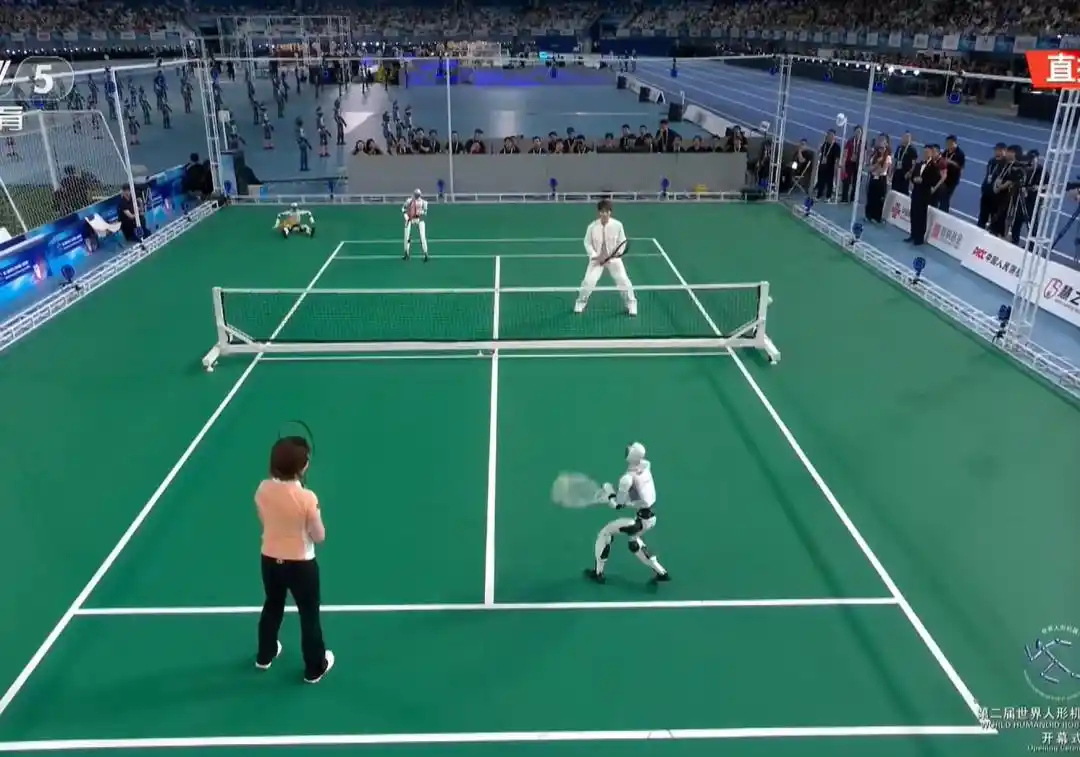
Next, tennis star Zheng Jie and Galaxy General-purpose Robot engaged in the world's first human vs. robot singles match.
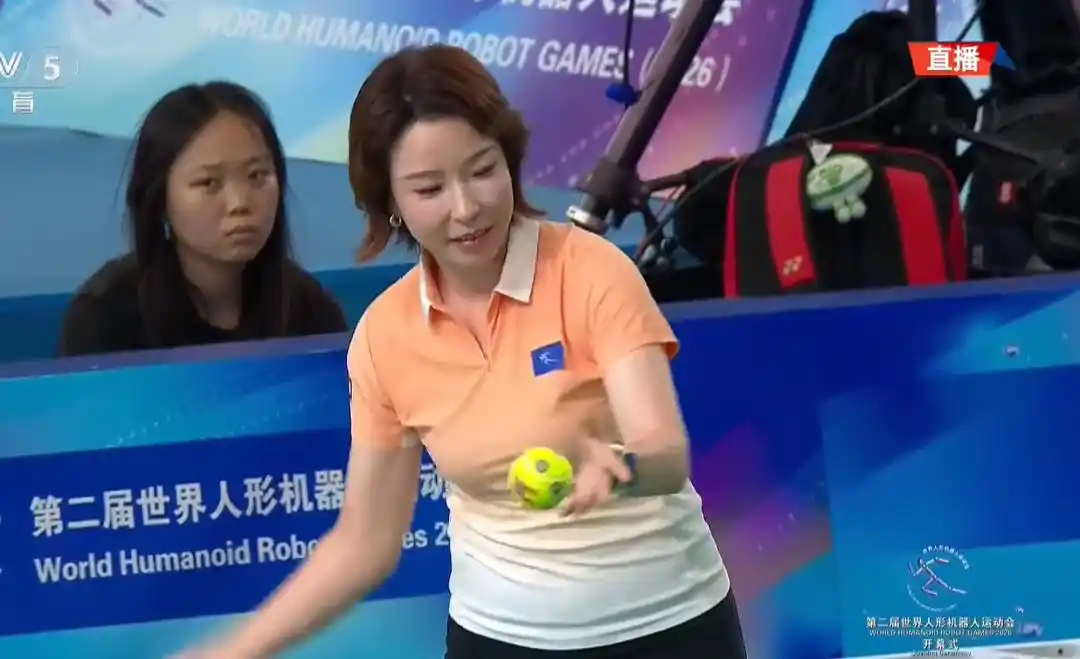
Whether forehand or backhand, the robot traded shots with the human on equal terms.

Then, Zheng Jie decided to up the difficulty, hitting a lob.
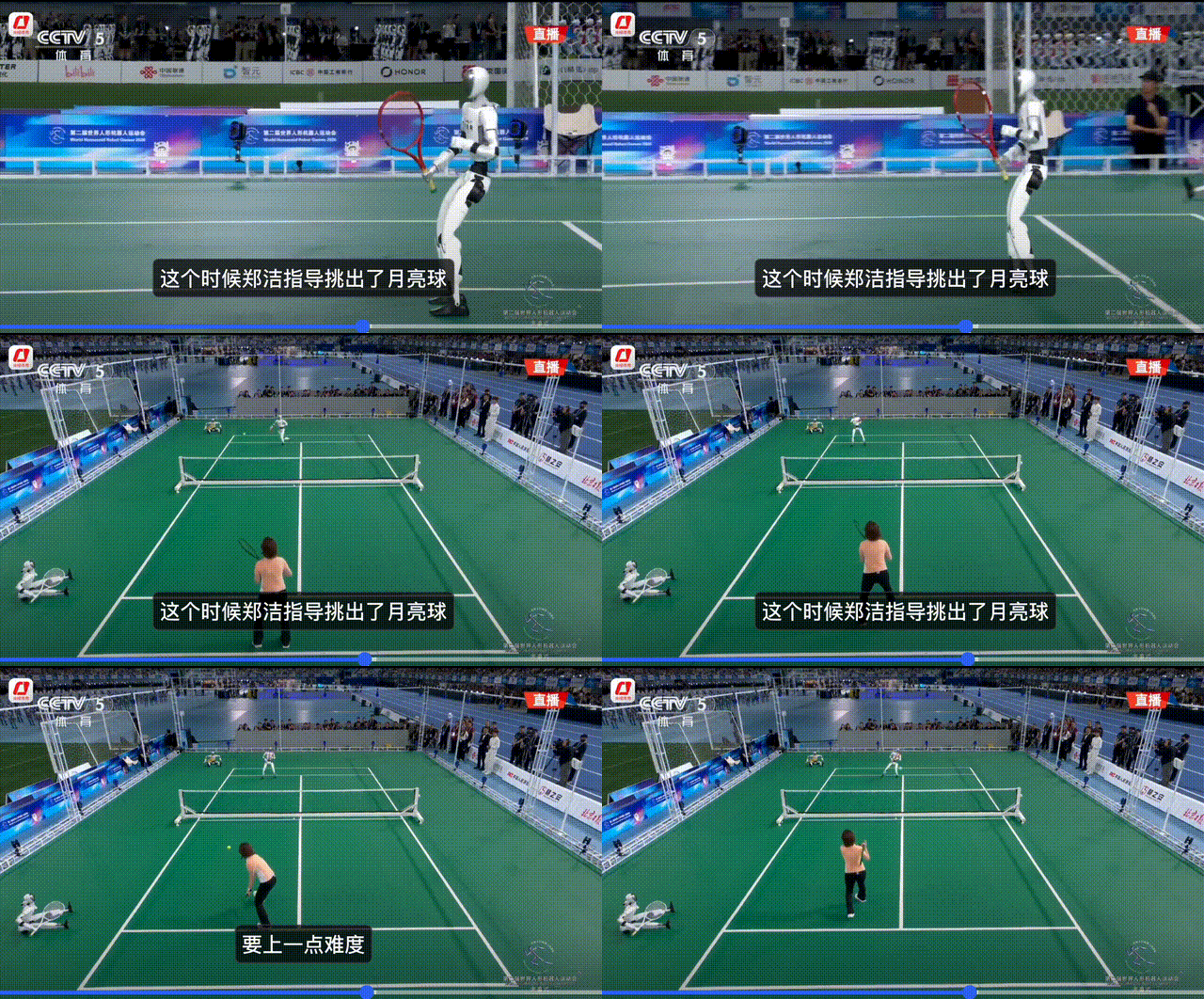
However, while being pulled left and right by its opponent, the robot accidentally took a tumble and landed flat on its back.

Unexpectedly, the next second, it immediately adjusted its posture and stood back up.

Facing Zheng Jie's slices and spins, the robot's judgment was also surprisingly good.

Finally, Zheng Jie knew she couldn't hold back anymore and began moving the robot around with shots left, right, forward, and back. The robot unexpectedly executed a brilliant split-step, earning cheers from the live audience.

The match ended, and the robot's performance had everyone cheering.

Throughout the match, actions like bending the knees, tossing the ball, and body rotation were all performed autonomously by the humanoid robot.

Moreover, with serve speeds exceeding 100 kilometers per hour, leaving it only a few tenths of a second to react, it rarely faltered.

This robot is from Galaxy General.

Ten years ago, AlphaGo defeated Lee Sedol. Ten years later, a Chinese robot competes on the same court as a top tennis athlete.

If AlphaGo proved AI could conquer the digital world, then today, Galaxy General's Chinese robot proves: AI can withstand the extreme pressure tests of the physical world.

For the first time, it stood up from within the code, running, swinging, strategizing in real competition, even getting up on its own after a fall and continuing the fight.

Such a spectacular embodied AI AstraTennis moment was witnessed globally, simultaneously!
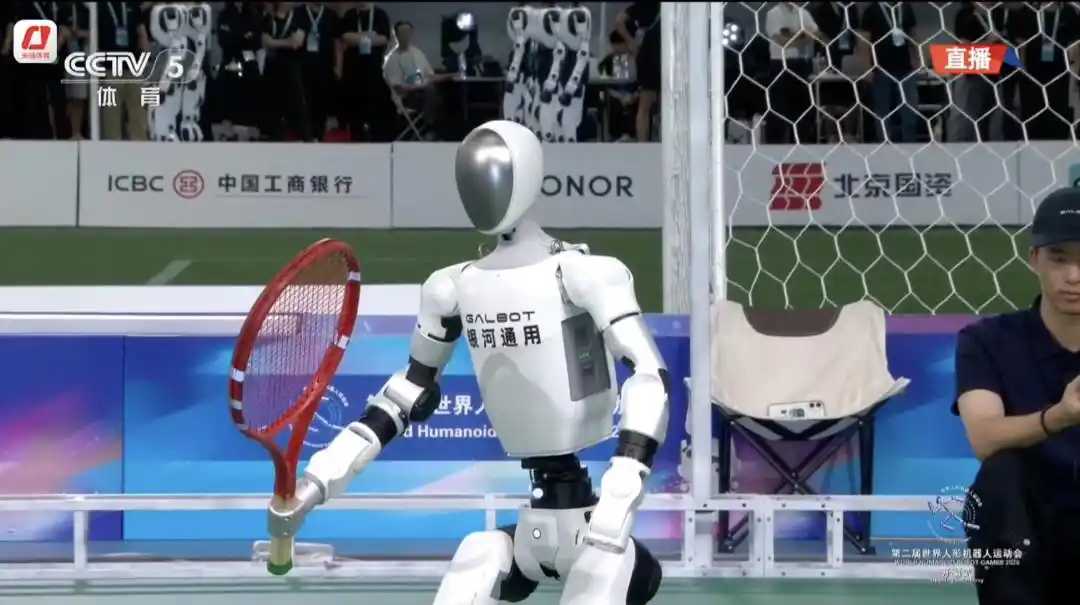
The AstraTennis Moment for China's Robots

Why could this tennis match trigger a massive earthquake in the global tech community?

Because tennis is the ultimate pressure test for embodied intelligence.

With reaction times of only a few tenths of a second, this sport simultaneously pushes a robot's perception, decision-making, whole-body motion control, and real-time strategic gameplay to their physical limits.

Furthermore, playing tennis is much harder for AI than playing Go.

After all, AlphaGo faced 361 definite intersections on a 19x19 grid, and after the opponent's move, it had tens of seconds or even minutes to calculate the next step.

That was gameplay in the digital world—vast solution space, but clear boundaries and constant rules. The entire world was static, discrete, and completely visible to the AI.

Although the solution space for this puzzle was larger than the number of atoms in the universe, for AI it was just a more difficult "math problem."
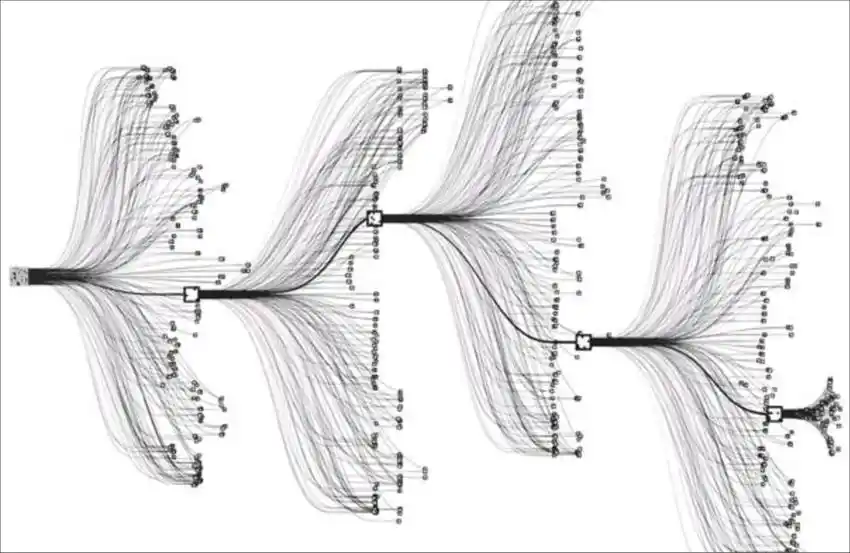
But a tennis court is different.

The ball comes at speeds over 100 km/h, its landing point affected by spin, wind, and court friction, with varying physical parameters for every single shot.

The robot must complete perception, prediction, decision-making, and whole-body coordination within a few hundred milliseconds, while keeping itself from falling. The opponent is a living person who can deceive the robot and change pace.

This is the Moravec's Paradox in action.

In 1988, Hans Moravec, then the head of Carnegie Mellon's Mobile Robot Laboratory, pointed out: "It is comparatively easy to make computers exhibit adult-level performance on intelligence tests or playing checkers, and difficult or impossible to give them the skills of a one-year-old when it comes to perception and mobility."
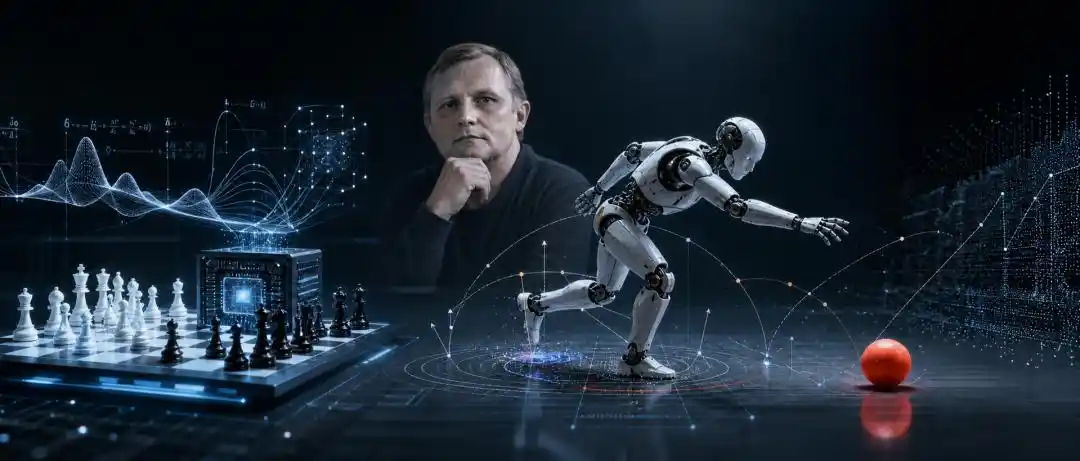
Over thirty years later, the first half has long been fulfilled, but the latter half remains very difficult to achieve.

Therefore, the true significance of this tennis match far exceeds "whether a robot can play tennis."

The question it poses is: This time, can AI truly step out of the digital world and close the loop—perceiving, deciding, controlling motion, and engaging in real-time gameplay—within a real physical environment?

AI cannot stop at thinking; it must complete the full loop from cognitive decision-making to whole-body execution.

This time, a Chinese company has submitted the answer first!

On the court, Galaxy General's robot performance was truly stunning.

Serving, forehand, backhand, baseline rallies, net volleys—all these individual skills appeared during the match, and all were performed exceptionally well.

Doubles presented even greater challenges.

With the robot and its human teammate on the same side, it had to judge in real-time who should go for the ball, who should cover, and dynamically adjust its tactics.

So, it needed to understand not just the ball, but also what its teammate intended to do next.

During the high-speed exchanges, there were moments of desperate saves. After falling down, the robot got back up on its own and continued playing.

Many people's first reaction was: Haven't robots done these individual movements before?

Shooting hoops, kicking a ball, running 100 meters—videos of humanoid robots over the past two years seem to show everything.

But the biggest difference here is that tennis is a contest between two players.

The environment for running is predictable; every shot in tennis is a new problem presented by the opponent in real-time. Running allows practicing one movement ten thousand times; no two tennis shots are exactly the same.

To stand firm in a contest—that is true intelligence.

Brain and Cerebellum, Housed in the Same Model for the First Time

Supporting all this is Galaxy General's self-developed embodied intelligence large model, "Galaxy Star Brain" AstraBrain.

One of its biggest highlights lies in its architectural choice.

The mainstream approach in the industry has been hierarchical: a "brain" model responsible for task understanding and high-level decision-making, a "cerebellum" module responsible for real-time motion control, with instructions passed between them via interfaces.

The drawbacks of this architecture are direct: Even if the brain thinks clearly, by the time the instruction reaches the cerebellum, it's already half a step late; even if the cerebellum's movements are precise, it doesn't know why the brain wants it to move that way.

A more subtle problem is the information gap.

When the brain issues a command, it doesn't know where its center of gravity is leaning or how much force the right arm has left; when the cerebellum executes an action, it doesn't know whether this shot is meant to move the opponent around or to win the point directly.

Both sides might be optimal individually, but together they form a system that "thinks but can't act" or "acts but doesn't think."

In a task like tennis, being slightly late means losing the point.

Galaxy Star Brain's approach is to integrate the brain layer (task understanding and tactical decision-making), the cerebellum layer (high-dynamic whole-body motion control), and neural control within the same model.

According to Galaxy General, this is the world's first model capable of simultaneously handling "thinking clearly" and "acting out," with no information loss in between.

Reasoning backward from the tennis task, this might be the only solution. Tactical decisions cannot be separated from real-time perception of one's own physical limits, and motion control cannot be separated from understanding tactical intent—the two should never have been separated in the first place.
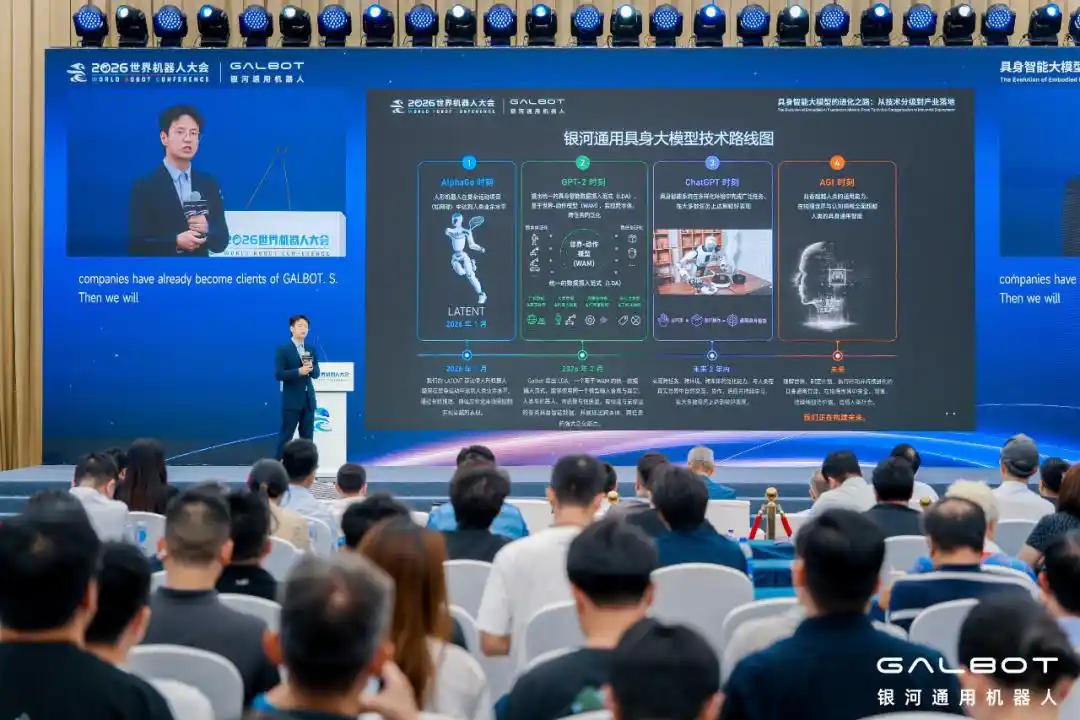
Learning from Imperfect Human Data

Playing Ten Million Matches in Virtual Courts

Beyond architecture, another question is: How was this model trained?

A traditional challenge in robotics is the lack of data.

A language model can consume all the text on the internet; robots don't have such an internet.

Collecting one hour of real robot movement data takes one hour, requires human supervision, and risks hardware damage.
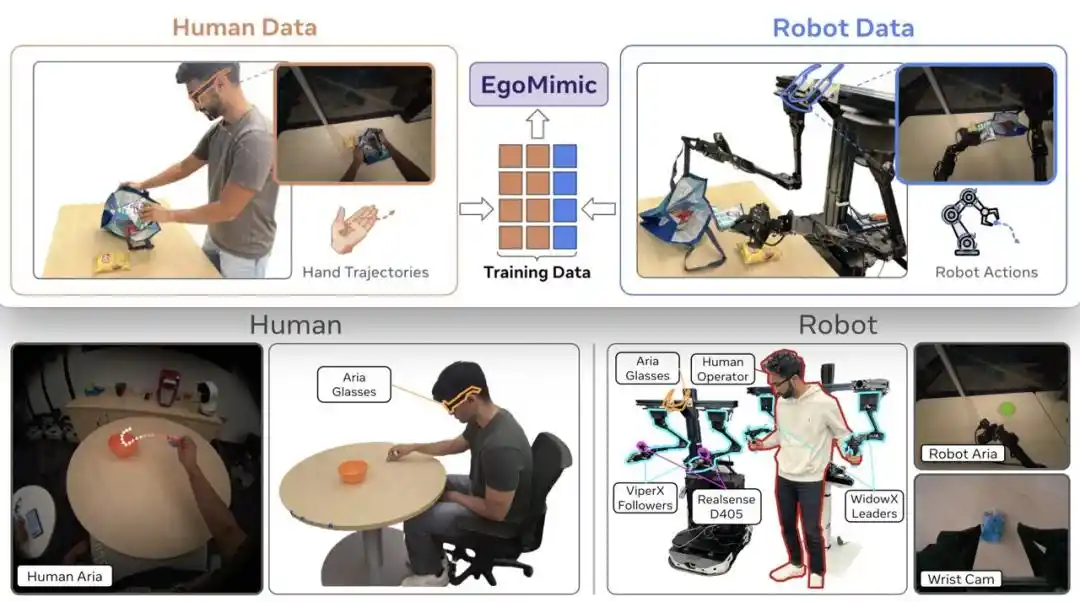
This is also why progress in embodied AI has often been slower than expected in recent years.

Supporting this effort is Galaxy General's core technology platform, "Galaxy Star Workshop."

The process is divided into two main steps.

Step One: Learning from "Imperfect Human Data."

Human tennis movement data can be collected via motion capture, video, or wearable sensors.

However, human movements themselves are not standardized. Amateur players are indeed amateurs, with extraneous movements. Professional players' movements maximize their individual athleticism, making them difficult for others to replicate, and everyone's height, wingspan, and joint angles differ from the robot's.

Traditional imitation learning requires demonstration data to be clean, aligned, and high-quality—requirements almost impossible to meet with human data.

The task of the Galaxy Star Workshop data platform is to extract useful priors from this noisy, misaligned, mixed-quality demonstration data:

When to start moving, the general rhythm of a swing, how to transfer body weight—truly learning the underlying motion principles.

The value of this step lies in cold-start capability.

The robot doesn't have to start exploring from random movements; it begins with a rough idea of "what playing tennis looks like."

Step Two: Entering the Virtual Tennis World.

In the simulated environment, multiple intelligent agents play against each other. It's not one robot practicing against a ball machine, but multiple strategies evolving and competing against each other.

When one side learns to hit the sidelines, the other is forced to learn large lateral movements; when one side learns the drop shot, the other is forced to learn to rush the net.

Within this vast virtual competition, a miracle occurs—"skill emergence."

Engineers never taught it how to slide for a desperate save, but after countless failures to reach the ball, the model itself "figured out" the posture for a maximum extension.

Engineers never wrote hard-coded instructions for getting up after a fall, but after falling millions of times in the virtual world, the model itself "learned" how to coordinate all its motors to stand back up.

Skills do not need to be manually designed; under the pressure of competition, the AI learns them on its own.

Finally, when these "souls" honed to mastery in the virtual world are seamlessly transferred into the physical bodies of real robots in the physical world, a tennis master is born!

Placed within the spectrum of machine learning, this path lies between two extremes.

The ceiling of pure imitation learning is the level of the demonstrator; a human coach cannot teach a student who surpasses them, and human demonstrations simply don't contain data on "how to get up after falling and continue playing."

Pure reinforcement learning explores from scratch. In tasks like tennis with huge action spaces and sparse rewards, the search cost becomes unrealistically high, and it tends to learn bizarre, humanly incomprehensible actions that might win points but don't resemble tennis.

Start with human priors as a foundation, then elevate through autonomous evolution.

This approach isn't entirely new; AlphaGo also started by learning human Go games before self-play. What's new is that ten years ago, this method succeeded on a board, and ten years later, it has succeeded for the first time on a task requiring a body.

In a sense, this is the most fascinating technical echo between AstraTennis and AlphaGo.

In the AlphaGo era, intelligence thought on a board; this time, intelligence begins to enter the physical world.

This is far more than just a tennis match. This AstraTennis moment proves: In the new era of carbon-silicon symbiosis, the power of China is beginning to create more wonders.

Edited by: Aeneas, David

This article is from the WeChat public account "New Zhiyuan", author: ASI Apocalypse

Crypto di tendenza

Domande pertinenti

QWhat major event in the history of AI and robotics is described in the article as taking place on August 22nd?

AThe second World Humanoid Robot Games, which featured the world's first genuine man vs. machine tennis match between Chinese tennis star Zheng Jie and a humanoid robot from Galaxy General Robots.

QWhat is the name of the AI model developed by Galaxy General Robots that powers the tennis-playing robot, and what is its key architectural innovation?

AThe AI model is called AstraBrain (Galaxy Star Brain). Its key innovation is integrating the 'brain' (task understanding and tactical decision-making) and the 'cerebellum' (high-dynamic full-body motion control) into a single model, eliminating information loss and delay between decision and action.

QAccording to the article, why is playing tennis a much harder challenge for AI than playing Go (like AlphaGo)?

ATennis is harder because it exists in the dynamic, continuous physical world. The robot must perceive, predict, decide, and coordinate its entire body within fractions of a second against a live, unpredictable opponent, dealing with variables like spin, wind, and friction. Go, in contrast, is a static, discrete digital board game with clear rules and longer decision times.

QHow did the Galaxy General Robots team train their AI model to play tennis, overcoming the lack of real-world robot data?

AThey used a two-step process. First, the model learned general movement priors from 'imperfect human data' (motion capture, videos). Second, multiple AI agents were placed in a high-fidelity virtual tennis simulator where they played millions of matches against each other. Through this self-play and evolutionary pressure, the model autonomously developed advanced skills like sliding saves and recovering from falls, which were then transferred to the physical robot.

QWhat broader technological significance does the article attribute to this 'AstraTennis moment' beyond just a robot playing a sport?

AThe event marks a historic 'embodied intelligence singularity' for Chinese innovation. It demonstrates that AI can successfully transition from pure cognitive tasks in the digital realm (like AlphaGo) to performing integrated perception, decision-making, and full-body motion control under the extreme pressure of real-time physical competition. It proves AI can form a complete closed loop from thought to action in the unpredictable physical world.

Letture associate

Mysterious "Ox Alpha" Large Model Goes Viral with Limited-Time Free Access

A mysterious anonymous AI model named "Ox Alpha," nicknamed "Cow is Coming" by Chinese netizens, has appeared on OpenRouter, sparking widespread speculation. The model offers a 1 million token context, supports text, image, and video inputs, can call tools, and is currently free. Its standout feature is strong coding ability. Initial tests on the DeepSWE benchmark, which evaluates real-world software engineering tasks, showed an 80% pass rate on a subset of tasks, reportedly nearing top-tier code models. However, follow-up tests yielded a 63% score, with variations attributed to different task sets and configurations. The model's true developer is a major topic of debate. The prevailing theory points to Zhipu AI's unreleased GLM-5.3 Flash or its multimodal variant. Evidence cited includes identical visual token consumption patterns with GLM-5V-Turbo for videos, a consistent offset in text token counts compared to GLM-5.3, and similar behavioral traits like refusing audio processing. Zhipu has a precedent of anonymous testing. Simultaneously, another anonymous model, "korrine," appeared on Code Arena, with guesses ranging from Moonshot's Kimi K3.1 to models from Qwen or MiMo, adding to the industry's guessing game. This trend of anonymous "undercover" testing allows for unbiased performance evaluation in platforms like Arena and provides real-world, high-pressure testing through tools like OpenRouter before official release. It also serves as an effective marketing tactic, prolonging discussion through suspense. If Ox Alpha is indeed a "Flash" model, its performance raises expectations for the full-scale version's potential.

marsbit5 min fa

Mysterious "Ox Alpha" Large Model Goes Viral with Limited-Time Free Access

marsbit5 min fa

Breaking News: DeepSeek Announces All-Day Off-Peak Pricing on Weekends, Making Weekend Work More Cost-Effective?

DeepSeek has announced a significant change to its API pricing model, effective August 23. The new policy removes peak/off-peak distinctions on weekends (Saturdays and Sundays), charging the lower off-peak rate for the entire two-day period. This adjustment has sparked mixed reactions within the developer and professional communities. For developers and businesses heavily reliant on DeepSeek's V4-Flash and V4-Pro APIs, this is welcome news. It allows them to schedule bulk processing tasks on weekends without the higher peak-hour costs, potentially halving their API bills for such workloads. Some users have celebrated the move for making weekend work more cost-effective. However, the announcement has also raised concerns among employees. There is apprehension that companies, particularly in cost-sensitive sectors like AI-powered short drama production, might reorganize work schedules to align with these new cost incentives. Instances are already emerging where teams schedule high-token tasks during cheaper nighttime hours or adjust staff shifts. This has led to worries about a potential shift towards weekend workdays and weekday time-off, prioritizing cost savings over traditional work-life balance. Debate has ensued regarding the practicality of such schedule changes, with questions about increased communication overhead and overall efficiency. Speculation about DeepSeek's motives for the change includes theories that peak pricing correlates with internal model training schedules, though others counter that training is largely automated. The new pricing structure is now in effect, prompting users to reconsider their task scheduling strategies.

marsbit49 min fa

Breaking News: DeepSeek Announces All-Day Off-Peak Pricing on Weekends, Making Weekend Work More Cost-Effective?

marsbit49 min fa

The Biggest Dark Horse in AI Payments Might Be Coinbase Giving Agents a Wallet

In the AI payments race, while most focus on traditional giants like Visa or AI platforms like OpenAI, Coinbase has quietly emerged as a key player. Data from 2026 shows over 90% of on-chain Agent transactions occur on Coinbase's Base network, with 99% settled in USDC and over 97% using the x402 protocol. Coinbase's pivotal move was launching "Agentic Wallets" in February 2026—a dedicated wallet infrastructure giving AI Agents their own financial identity. Unlike Visa or Stripe, which connect Agents to existing payment rails, Coinbase provides Agents with autonomous wallets to hold assets (like stablecoins), initiate transfers, and execute transactions under predefined rules. This solves core issues for machine-to-machine payments: high credit card fees for micropayments, the need for constant human authorization, and unclear transaction attribution. Coinbase's strength lies in its closed-loop ecosystem: the Base blockchain (low-cost, high-throughput), the x402 payment protocol, Agentic Wallets, and native assets like USDC. This integrated stack, built through years of infrastructure investment, positioned Coinbase to capture early Agent payment demand as the AI economy surged. The key insight is that AI payment adoption may depend less on whose standard wins and more on whose usable infrastructure is ready first. While debates over protocols and payment rails continue, real Agent transactions are already flowing—primarily through Coinbase's ecosystem. It may not be the ultimate winner, but for now, it's the frontrunner by being prepared.

marsbit1 h fa

The Biggest Dark Horse in AI Payments Might Be Coinbase Giving Agents a Wallet

marsbit1 h fa

Dialogue with Bitwise CIO: Bitcoin May Be Near Bottom, Who Will Drive the Next Rally?

In a recent podcast, Bitwise CIO Matt Hougan analyzed Bitcoin's current market cycle, suggesting it is near a bottom characterized by low volatility and investor indifference. He believes the next major price surge will be driven primarily by wealth management platforms, financial advisors, and family offices, who control trillions in assets and are now gaining access to Bitcoin ETFs. Hougan views Bitcoin as a long-dated, out-of-the-money call option on it becoming a global reserve asset. Its value increases with global monetary system volatility, making it a natural hedge against currency disorder. He outlined Bitcoin's adoption path: first as a global digital store of value (competing with gold), and potentially later as a check against fiat currency abuse by sovereign states. Addressing the muted price action despite institutional ETF inflows, Hougan explained that significant selling by long-term retail holders has offset buying pressure. However, he is optimistic as data shows retail selling has subsided, which, combined with continued institutional inflows, could propel prices higher. Hougan downplayed the future impact of Federal Reserve interest rates and MicroStrategy's actions on Bitcoin's price, arguing they are becoming less relevant. Instead, he pointed to runaway U.S. fiscal deficits and debt as the core long-term drivers. Finally, he discussed the transformative potential of asset tokenization, predicting all traditional assets will eventually trade 24/7 on blockchains. This will merge traditional and crypto markets, increasing efficiency but also introducing crypto-like features such as overnight volatility and easier access to leverage into traditional finance.

marsbit2 h fa

Dialogue with Bitwise CIO: Bitcoin May Be Near Bottom, Who Will Drive the Next Rally?

marsbit2 h fa

Trading

Spot

Articoli Popolari

Cosa è $S$

Comprendere SPERO: Una Panoramica Completa Introduzione a SPERO Mentre il panorama dell'innovazione continua a evolversi, l'emergere delle tecnologie web3 e dei progetti di criptovaluta gioca un ruolo fondamentale nel plasmare il futuro digitale. Un progetto che ha attirato l'attenzione in questo campo dinamico è SPERO, denotato come SPERO,$$s$. Questo articolo mira a raccogliere e presentare informazioni dettagliate su SPERO, per aiutare gli appassionati e gli investitori a comprendere le sue basi, obiettivi e innovazioni nei domini web3 e crypto. Che cos'è SPERO,$$s$? SPERO,$$s$ è un progetto unico all'interno dello spazio crypto che cerca di sfruttare i principi della decentralizzazione e della tecnologia blockchain per creare un ecosistema che promuove l'impegno, l'utilità e l'inclusione finanziaria. Il progetto è progettato per facilitare interazioni peer-to-peer in modi nuovi, fornendo agli utenti soluzioni e servizi finanziari innovativi. Al suo interno, SPERO,$$s$ mira a responsabilizzare gli individui fornendo strumenti e piattaforme che migliorano l'esperienza dell'utente nello spazio delle criptovalute. Questo include la possibilità di metodi di transazione più flessibili, la promozione di iniziative guidate dalla comunità e la creazione di percorsi per opportunità finanziarie attraverso applicazioni decentralizzate (dApps). La visione sottostante di SPERO,$$s$ ruota attorno all'inclusività, cercando di colmare le lacune all'interno della finanza tradizionale mentre sfrutta i vantaggi della tecnologia blockchain. Chi è il Creatore di SPERO,$$s$? L'identità del creatore di SPERO,$$s$ rimane piuttosto oscura, poiché ci sono risorse pubblicamente disponibili limitate che forniscono informazioni dettagliate sul suo fondatore o fondatori. Questa mancanza di trasparenza può derivare dall'impegno del progetto per la decentralizzazione—un ethos che molti progetti web3 condividono, dando priorità ai contributi collettivi rispetto al riconoscimento individuale. Centrando le discussioni attorno alla comunità e ai suoi obiettivi collettivi, SPERO,$$s$ incarna l'essenza dell'empowerment senza mettere in evidenza individui specifici. Pertanto, comprendere l'etica e la missione di SPERO rimane più importante che identificare un creatore singolo. Chi sono gli Investitori di SPERO,$$s$? SPERO,$$s$ è supportato da una varietà di investitori che vanno dai capitalisti di rischio agli investitori angelici dedicati a promuovere l'innovazione nel settore crypto. Il focus di questi investitori generalmente si allinea con la missione di SPERO—dando priorità a progetti che promettono avanzamenti tecnologici sociali, inclusività finanziaria e governance decentralizzata. Queste fondazioni di investitori sono tipicamente interessate a progetti che non solo offrono prodotti innovativi, ma contribuiscono anche positivamente alla comunità blockchain e ai suoi ecosistemi. Il supporto di questi investitori rafforza SPERO,$$s$ come un concorrente degno di nota nel dominio in rapida evoluzione dei progetti crypto. Come Funziona SPERO,$$s$? SPERO,$$s$ impiega un framework multifunzionale che lo distingue dai progetti di criptovaluta convenzionali. Ecco alcune delle caratteristiche chiave che sottolineano la sua unicità e innovazione: Governance Decentralizzata: SPERO,$$s$ integra modelli di governance decentralizzati, responsabilizzando gli utenti a partecipare attivamente ai processi decisionali riguardanti il futuro del progetto. Questo approccio favorisce un senso di proprietà e responsabilità tra i membri della comunità. Utilità del Token: SPERO,$$s$ utilizza il proprio token di criptovaluta, progettato per servire varie funzioni all'interno dell'ecosistema. Questi token abilitano transazioni, premi e la facilitazione dei servizi offerti sulla piattaforma, migliorando l'impegno e l'utilità complessivi. Architettura Stratificata: L'architettura tecnica di SPERO,$$s$ supporta la modularità e la scalabilità, consentendo un'integrazione fluida di funzionalità e applicazioni aggiuntive man mano che il progetto evolve. Questa adattabilità è fondamentale per mantenere la rilevanza nel panorama crypto in continua evoluzione. Coinvolgimento della Comunità: Il progetto enfatizza iniziative guidate dalla comunità, impiegando meccanismi che incentivano la collaborazione e il feedback. Nutrendo una comunità forte, SPERO,$$s$ può affrontare meglio le esigenze degli utenti e adattarsi alle tendenze di mercato. Focus sull'Inclusione: Offrendo basse commissioni di transazione e interfacce user-friendly, SPERO,$$s$ mira ad attrarre una base utenti diversificata, inclusi individui che potrebbero non aver precedentemente interagito nello spazio crypto. Questo impegno per l'inclusione si allinea con la sua missione generale di empowerment attraverso l'accessibilità. Cronologia di SPERO,$$s$ Comprendere la storia di un progetto fornisce preziose intuizioni sulla sua traiettoria di sviluppo e sui traguardi. Di seguito è riportata una cronologia suggerita che mappa eventi significativi nell'evoluzione di SPERO,$$s$: Fase di Concettualizzazione e Ideazione: Le idee iniziali che formano la base di SPERO,$$s$ sono state concepite, allineandosi strettamente con i principi di decentralizzazione e focus sulla comunità all'interno dell'industria blockchain. Lancio del Whitepaper del Progetto: Dopo la fase concettuale, è stato rilasciato un whitepaper completo che dettaglia la visione, gli obiettivi e l'infrastruttura tecnologica di SPERO,$$s$ per suscitare interesse e feedback dalla comunità. Costruzione della Comunità e Prime Interazioni: Sono stati effettuati sforzi attivi di outreach per costruire una comunità di early adopters e potenziali investitori, facilitando discussioni attorno agli obiettivi del progetto e ottenendo supporto. Evento di Generazione del Token: SPERO,$$s$ ha condotto un evento di generazione del token (TGE) per distribuire i propri token nativi ai primi sostenitori e stabilire una liquidità iniziale all'interno dell'ecosistema. Lancio della Prima dApp: La prima applicazione decentralizzata (dApp) associata a SPERO,$$s$ è stata attivata, consentendo agli utenti di interagire con le funzionalità principali della piattaforma. Sviluppo Continuo e Partnership: Aggiornamenti e miglioramenti continui alle offerte del progetto, inclusi partnership strategiche con altri attori nello spazio blockchain, hanno plasmato SPERO,$$s$ in un concorrente competitivo e in evoluzione nel mercato crypto. Conclusione SPERO,$$s$ rappresenta una testimonianza del potenziale del web3 e delle criptovalute di rivoluzionare i sistemi finanziari e responsabilizzare gli individui. Con un impegno per la governance decentralizzata, il coinvolgimento della comunità e funzionalità progettate in modo innovativo, apre la strada verso un panorama finanziario più inclusivo. Come per qualsiasi investimento nello spazio crypto in rapida evoluzione, si incoraggiano potenziali investitori e utenti a ricercare approfonditamente e a impegnarsi in modo riflessivo con gli sviluppi in corso all'interno di SPERO,$$s$. Il progetto mostra lo spirito innovativo dell'industria crypto, invitando a ulteriori esplorazioni delle sue innumerevoli possibilità. Mentre il percorso di SPERO,$$s$ è ancora in fase di sviluppo, i suoi principi fondamentali potrebbero effettivamente influenzare il futuro di come interagiamo con la tecnologia, la finanza e tra di noi in ecosistemi digitali interconnessi.

448 Totale visualizzazioniPubblicato il 2024.12.17Aggiornato il 2024.12.17

Cosa è $S$

Cosa è AGENT S

Agent S: Il Futuro dell'Interazione Autonoma in Web3 Introduzione Nel panorama in continua evoluzione di Web3 e criptovalute, le innovazioni stanno costantemente ridefinendo il modo in cui gli individui interagiscono con le piattaforme digitali. Uno di questi progetti pionieristici, Agent S, promette di rivoluzionare l'interazione uomo-computer attraverso il suo framework agentico aperto. Aprendo la strada a interazioni autonome, Agent S mira a semplificare compiti complessi, offrendo applicazioni trasformative nell'intelligenza artificiale (AI). Questa esplorazione dettagliata approfondirà le complessità del progetto, le sue caratteristiche uniche e le implicazioni per il dominio delle criptovalute. Cos'è Agent S? Agent S si presenta come un innovativo framework agentico aperto, progettato specificamente per affrontare tre sfide fondamentali nell'automazione dei compiti informatici: Acquisizione di Conoscenze Specifiche del Dominio: Il framework apprende in modo intelligente da varie fonti di conoscenza esterne ed esperienze interne. Questo approccio duale gli consente di costruire un ricco repository di conoscenze specifiche del dominio, migliorando le sue prestazioni nell'esecuzione dei compiti. Pianificazione su Lungo Orizzonte di Compiti: Agent S impiega una pianificazione gerarchica potenziata dall'esperienza, un approccio strategico che facilita la suddivisione e l'esecuzione efficiente di compiti complessi. Questa caratteristica migliora significativamente la sua capacità di gestire più sottocompiti in modo efficiente ed efficace. Gestione di Interfacce Dinamiche e Non Uniformi: Il progetto introduce l'Interfaccia Agente-Computer (ACI), una soluzione innovativa che migliora l'interazione tra agenti e utenti. Utilizzando Modelli Linguistici Multimodali di Grandi Dimensioni (MLLM), Agent S può navigare e manipolare senza sforzo diverse interfacce grafiche utente. Attraverso queste caratteristiche pionieristiche, Agent S fornisce un framework robusto che affronta le complessità coinvolte nell'automazione dell'interazione umana con le macchine, preparando il terreno per innumerevoli applicazioni nell'AI e oltre. Chi è il Creatore di Agent S? Sebbene il concetto di Agent S sia fondamentalmente innovativo, informazioni specifiche sul suo creatore rimangono elusive. Il creatore è attualmente sconosciuto, il che evidenzia sia la fase embrionale del progetto sia la scelta strategica di mantenere i membri fondatori sotto anonimato. Indipendentemente dall'anonimato, l'attenzione rimane sulle capacità e sul potenziale del framework. Chi sono gli Investitori di Agent S? Poiché Agent S è relativamente nuovo nell'ecosistema crittografico, informazioni dettagliate riguardanti i suoi investitori e sostenitori finanziari non sono documentate esplicitamente. La mancanza di approfondimenti pubblicamente disponibili sulle fondazioni di investimento o sulle organizzazioni che supportano il progetto solleva interrogativi sulla sua struttura di finanziamento e sulla roadmap di sviluppo. Comprendere il supporto è cruciale per valutare la sostenibilità del progetto e il suo potenziale impatto sul mercato. Come Funziona Agent S? Al centro di Agent S si trova una tecnologia all'avanguardia che gli consente di funzionare efficacemente in contesti diversi. Il suo modello operativo è costruito attorno a diverse caratteristiche chiave: Interazione Uomo-Computer Simile a Quella Umana: Il framework offre una pianificazione AI avanzata, cercando di rendere le interazioni con i computer più intuitive. Mimando il comportamento umano nell'esecuzione dei compiti, promette di elevare le esperienze degli utenti. Memoria Narrativa: Utilizzata per sfruttare esperienze di alto livello, Agent S utilizza la memoria narrativa per tenere traccia delle storie dei compiti, migliorando così i suoi processi decisionali. Memoria Episodica: Questa caratteristica fornisce agli utenti una guida passo-passo, consentendo al framework di offrire supporto contestuale mentre i compiti si sviluppano. Supporto per OpenACI: Con la capacità di funzionare localmente, Agent S consente agli utenti di mantenere il controllo sulle proprie interazioni e flussi di lavoro, allineandosi con l'etica decentralizzata di Web3. Facile Integrazione con API Esterne: La sua versatilità e compatibilità con varie piattaforme AI garantiscono che Agent S possa adattarsi senza problemi agli ecosistemi tecnologici esistenti, rendendolo una scelta attraente per sviluppatori e organizzazioni. Queste funzionalità contribuiscono collettivamente alla posizione unica di Agent S all'interno dello spazio crittografico, poiché automatizza compiti complessi e multi-fase con un intervento umano minimo. Man mano che il progetto evolve, le sue potenziali applicazioni in Web3 potrebbero ridefinire il modo in cui si svolgono le interazioni digitali. Cronologia di Agent S Lo sviluppo e le tappe di Agent S possono essere riassunti in una cronologia che evidenzia i suoi eventi significativi: 27 Settembre 2024: Il concetto di Agent S è stato lanciato in un documento di ricerca completo intitolato “Un Framework Agentico Aperto che Usa i Computer Come un Umano”, mostrando le basi per il progetto. 10 Ottobre 2024: Il documento di ricerca è stato reso pubblicamente disponibile su arXiv, offrendo un'esplorazione approfondita del framework e della sua valutazione delle prestazioni basata sul benchmark OSWorld. 12 Ottobre 2024: È stata rilasciata una presentazione video, fornendo un'idea visiva delle capacità e delle caratteristiche di Agent S, coinvolgendo ulteriormente potenziali utenti e investitori. Questi indicatori nella cronologia non solo illustrano i progressi di Agent S, ma indicano anche il suo impegno per la trasparenza e il coinvolgimento della comunità. Punti Chiave su Agent S Man mano che il framework Agent S continua a evolversi, diversi attributi chiave si distinguono, sottolineando la sua natura innovativa e il potenziale: Framework Innovativo: Progettato per fornire un uso intuitivo dei computer simile all'interazione umana, Agent S porta un approccio nuovo all'automazione dei compiti. Interazione Autonoma: La capacità di interagire autonomamente con i computer attraverso GUI segna un passo avanti verso soluzioni informatiche più intelligenti ed efficienti. Automazione di Compiti Complessi: Con la sua metodologia robusta, può automatizzare compiti complessi e multi-fase, rendendo i processi più veloci e meno soggetti a errori. Miglioramento Continuo: I meccanismi di apprendimento consentono ad Agent S di migliorare dalle esperienze passate, migliorando continuamente le sue prestazioni e la sua efficacia. Versatilità: La sua adattabilità attraverso diversi ambienti operativi come OSWorld e WindowsAgentArena garantisce che possa servire un'ampia gamma di applicazioni. Man mano che Agent S si posiziona nel panorama di Web3 e delle criptovalute, il suo potenziale per migliorare le capacità di interazione e automatizzare i processi segna un significativo avanzamento nelle tecnologie AI. Attraverso il suo framework innovativo, Agent S esemplifica il futuro delle interazioni digitali, promettendo un'esperienza più fluida ed efficiente per gli utenti in vari settori. Conclusione Agent S rappresenta un audace passo avanti nell'unione tra AI e Web3, con la capacità di ridefinire il modo in cui interagiamo con la tecnologia. Sebbene sia ancora nelle sue fasi iniziali, le possibilità per la sua applicazione sono vaste e coinvolgenti. Attraverso il suo framework completo che affronta sfide critiche, Agent S mira a portare le interazioni autonome al centro dell'esperienza digitale. Man mano che ci addentriamo nei regni delle criptovalute e della decentralizzazione, progetti come Agent S giocheranno senza dubbio un ruolo cruciale nel plasmare il futuro della tecnologia e della collaborazione uomo-computer.

872 Totale visualizzazioniPubblicato il 2025.01.14Aggiornato il 2025.01.14

Cosa è AGENT S

Come comprare S

Benvenuto in HTX.com! Abbiamo reso l'acquisto di Sonic (S) semplice e conveniente. Segui la nostra guida passo passo per intraprendere il tuo viaggio nel mondo delle criptovalute.Step 1: Crea il tuo Account HTXUsa la tua email o numero di telefono per registrarti il tuo account gratuito su HTX. Vivi un'esperienza facile e sblocca tutte le funzionalità,Crea il mio accountStep 2: Vai in Acquista crypto e seleziona il tuo metodo di pagamentoCarta di credito/debito: utilizza la tua Visa o Mastercard per acquistare immediatamente SonicS.Bilancio: Usa i fondi dal bilancio del tuo account HTX per fare trading senza problemi.Terze parti: abbiamo aggiunto metodi di pagamento molto utilizzati come Google Pay e Apple Pay per maggiore comodità.P2P: Fai trading direttamente con altri utenti HTX.Over-the-Counter (OTC): Offriamo servizi su misura e tassi di cambio competitivi per i trader.Step 3: Conserva Sonic (S)Dopo aver acquistato Sonic (S), conserva nel tuo account HTX. In alternativa, puoi inviare tramite trasferimento blockchain o scambiare per altre criptovalute.Step 4: Scambia Sonic (S)Scambia facilmente Sonic (S) nel mercato spot di HTX. Accedi al tuo account, seleziona la tua coppia di trading, esegui le tue operazioni e monitora in tempo reale. Offriamo un'esperienza user-friendly sia per chi ha appena iniziato che per i trader più esperti.

1.7k Totale visualizzazioniPubblicato il 2025.01.15Aggiornato il 2026.06.02

Come comprare S

Discussioni

Benvenuto nella Community HTX. Qui puoi rimanere informato sugli ultimi sviluppi della piattaforma e accedere ad approfondimenti esperti sul mercato. Le opinioni degli utenti sul prezzo di S S sono presentate come di seguito.

活动图片