Has Hook Summer Truly Arrived? sato, Lo0p, FLOOD Ignite the New Uniswap v4 Narrative

Odaily星球日报Pubblicato 2026-05-11Pubblicato ultima volta 2026-05-11

Introduzione

With the broader market showing signs of recovery, a new wave of interest has emerged around Ethereum-based meme coins. Following ASTEROID, tokens like sato, sat1, Lo0p, and FLOOD, built upon the Uniswap v4 Hook protocol, are capturing market attention. Their market capitalizations range from millions to tens of millions of dollars, injecting much-needed focused liquidity into a market lacking narratives. This article explores whether this trend signifies an incoming "Hook Summer" and its potential impact on UNI's price. Hooks are essentially plug-in smart contracts for Uniswap v4 liquidity pools, allowing developers to inject custom logic at key points in a pool's lifecycle (like initialization, adding/removing liquidity, swaps). This transforms the AMM into programmable building blocks. Key highlighted projects include: * **sato**: Peaked over $38M market cap. It utilizes a v4 curve for minting/burning; buying locks ETH as reserve to mint new tokens, while selling redeems ETH from the reserve and burns tokens. * **sat1**: Market cap briefly exceeded $10M, promoted as an "optimized sato," but later declined significantly. * **Lo0p**: Reached nearly $6.6M. It's a lending AMM protocol where buying LO0P tokens locks them as collateral, allowing users to borrow ETH from the pool reserve at 40% LTV, aiming to improve capital efficiency for idle ETH in LPs. * **FLOOD**: Peaked near $6M. Its mechanism directs asset reserves from buys into Aave v3 to generate yield, with f...

Original | Odaily Planet Daily (@OdailyChina)

Author | Wenser (@wenser 2010 )
As the broader market shows slight signs of recovery, the heat for Ethereum ecosystem Meme coins has reignited. Following ASTEROID, ecosystem tokens like sato, sat1, Lo0p, and FLOOD, which are backed by the Uniswap v4 Hook protocol, have gradually become the focus of market attention. Their market capitalizations range from several million to tens of millions of dollars, bringing much-needed concentrated liquidity to the crypto market that has been lacking narratives. In this article, Odaily Planet Daily will briefly review the information about these tokens and explore whether this wave of excitement can drive a recovery in the UNI token price.

Has Hook Summer Arrived? 4 Major Ecosystem Tokens, Intelligent Liquidity Management

According to Uniswap's official documentation, Hooks are essentially "plugin-style smart contracts" custom-designed for liquidity pools (Pools) in Uniswap v4. Unlike traditional Uniswap V2/V3 which only have a fixed constant product curve (x*y=k), Hooks allow developers to automatically inject custom logic before or after key lifecycle events of a pool (initialization, adding/removing liquidity, Swap, Donate, etc.), thereby turning the entire AMM (Automated Market Maker) into programmable "Lego bricks". In addition to the earlier uPEG, recent representative projects are as follows:

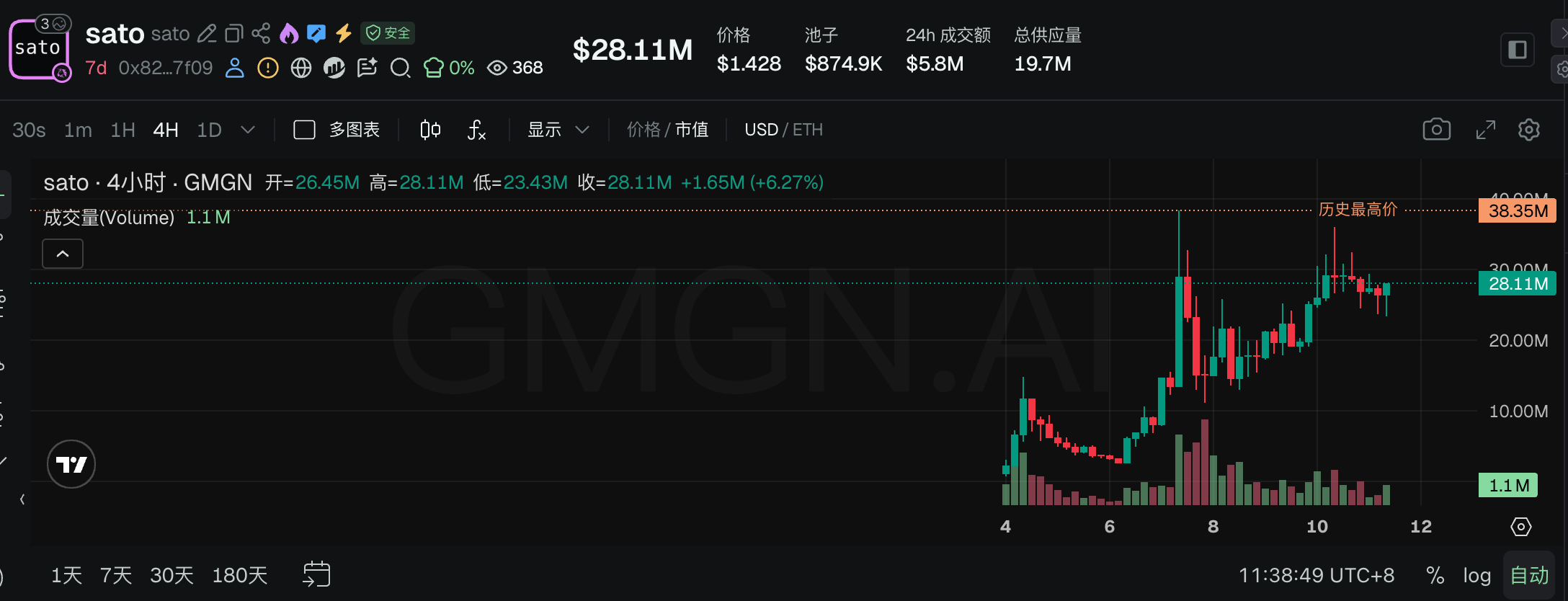
sato: Market Cap Peak Over $38 Million

CA: 0x829f4b62eebe12af653b4dd4ffc480966f7d7f09

Current Market Cap: Approximately $28 Million

On May 4th, immediately after sato's debut, Odaily Planet Daily briefly introduced it. At that time, its market cap was only $9 million. This token is minted and burned through the Uniswap v4 bonding curve mechanism. Buying generates new tokens and locks ETH as reserves, while selling exchanges ETH from the reserves and burns tokens. At that point, its cumulative buy volume had approached 1000 ETH. Subsequently, sato's market cap once exceeded $30 million.

Although community users later discovered its curve mechanism had buy-sell price disparities, causing its market cap to once drop below $13 million, its innovative mechanism and first-mover advantage have kept its current market cap around $28 million, with a 24-hour trading volume nearing $6 million.
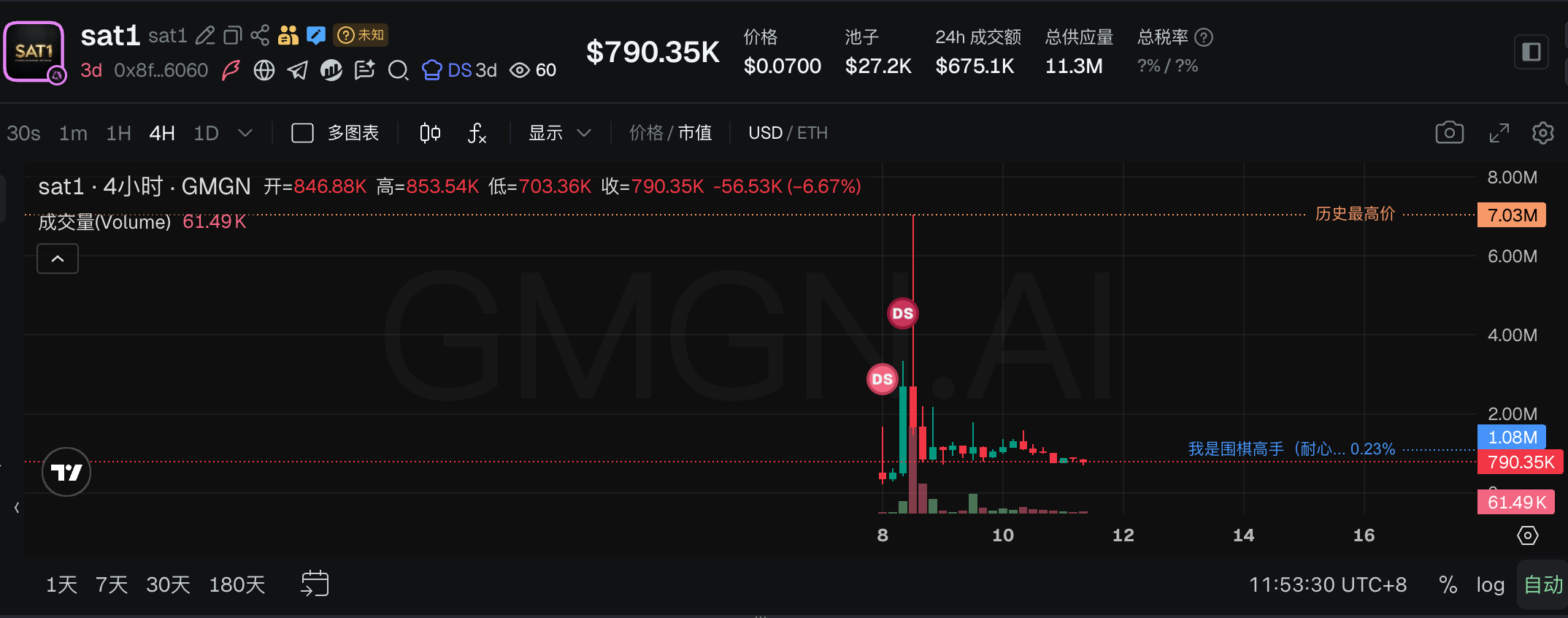
sat1: Market Cap Peak Over $10 Million

CA: 0x8f66337a0c2a02202fd91dd596c411cf977c6060

Current Market Cap: Approximately $800,000

On May 8th, sat1, marketed as an "optimized version of sato", reached its hype peak. Thanks to strong promotion by crypto KOL Huanba Longwang (Dragon King) in WeChat groups, the token's market cap once surpassed $10 million. However, following subsequent backlash, the project eventually spiraled downwards, with its market cap now less than a tenth of its peak.
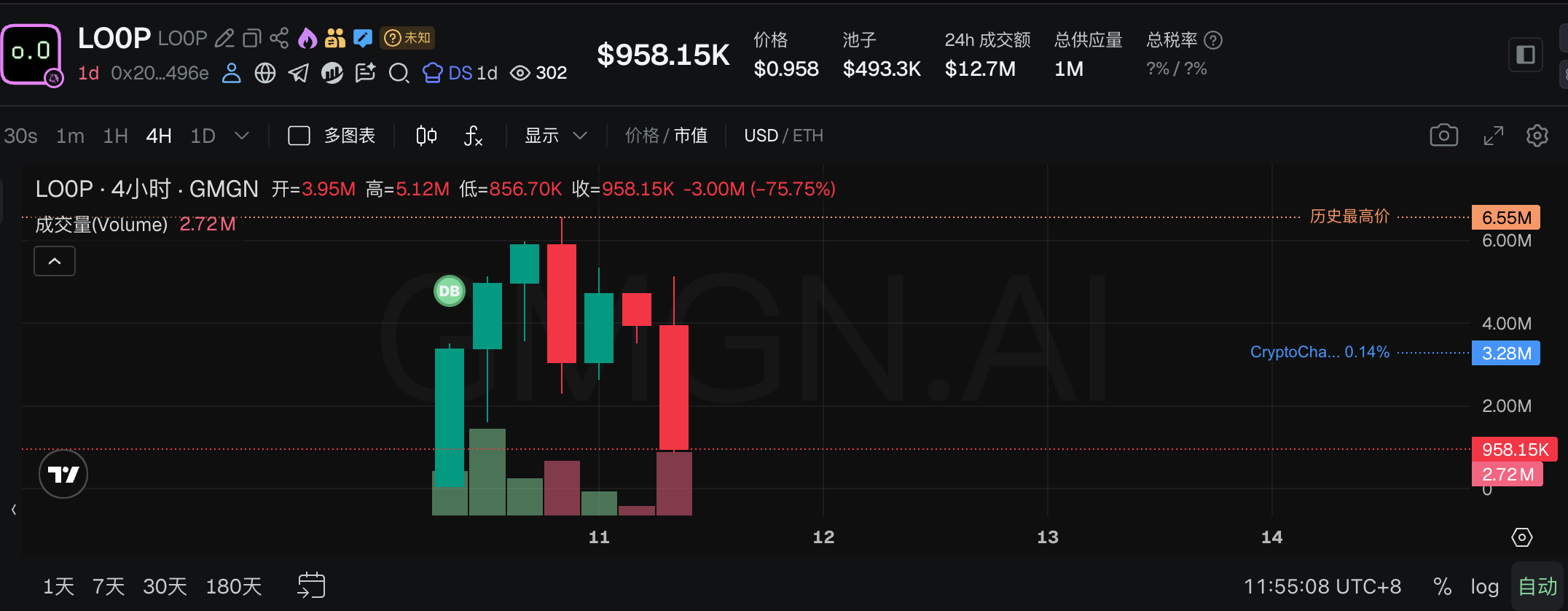
Lo0p: Market Cap Peak Close to $6.6 Million

CA: 0x20ea861b3acec90d3a15b4755d9a1cf1f161496e

Current Market Cap: Approximately $960,000

Official Account: https://x.com/lo0pio

On May 10th, Lo0p's market cap once exceeded $6 million, with a daily increase of over 110x. Similarly, Lo0p's main concept is a "lending AMM protocol based on Uniswap v4 Hooks", aiming to solve the idle ETH capital efficiency issue in LP pools. Users buy LO0P tokens through a bonding curve, which are locked as collateral (without selling), and can directly borrow ETH from the pool reserves at a 40% LTV; borrowing does not directly impact the spot price, and the post-liquidation mechanism attempts to refill the LP band. Hooks inject custom logic during Swap/liquidity lifecycle events, achieving "collateralized lending + LP rewards + borrowing interest" composite returns while maintaining pool price stability. Its core mechanism lies in "built-in lending."
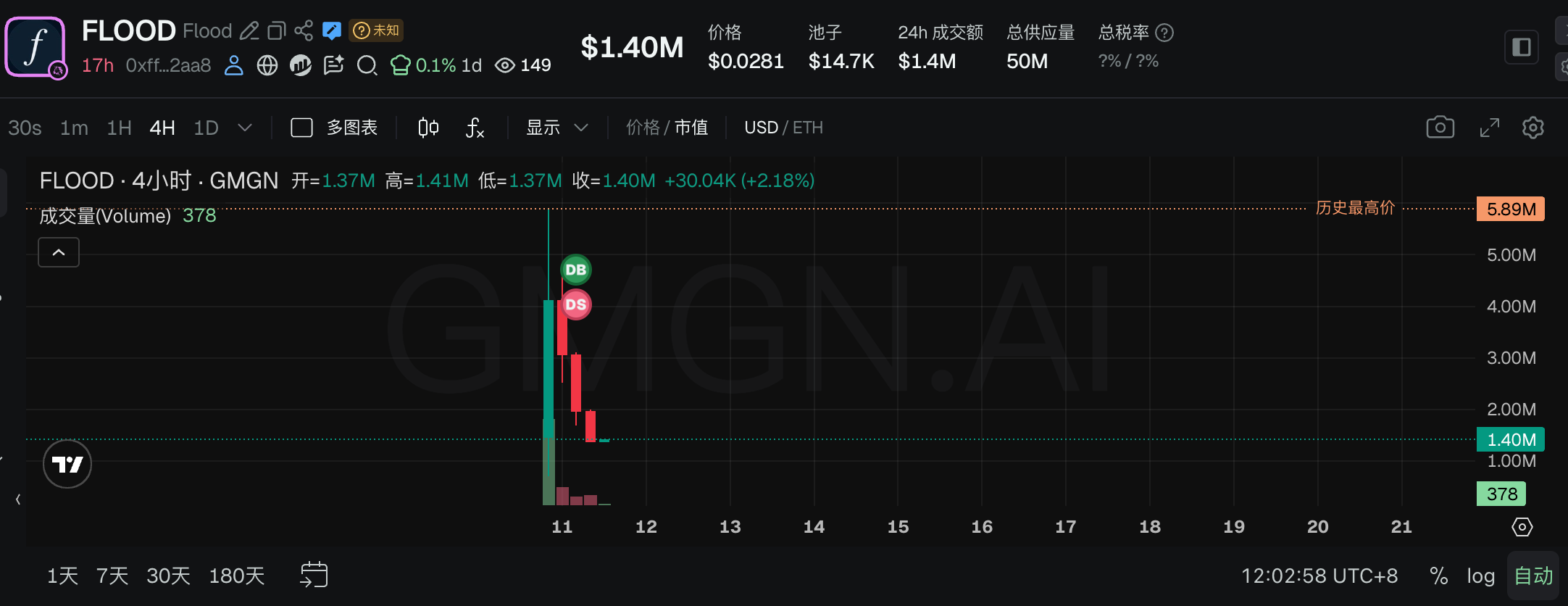
FLOOD: Market Cap Peak Nearly $6 Million

CA: 0xff003fbe8b8d5e7f271a9cb9f2780003daed2aa8

Current Market Cap: Approximately $1.4 Million

Official Account: https://x.com/flood_markets

On May 10th, FLOOD's market cap once exceeded $5 million. As the hype subsided, its current market cap is around $1.4 million. It is reported that FLOOD has a total supply of 50 million tokens. Its special mechanism is: the asset reserves generated from user purchases enter the corresponding Aave v3 market to earn yield; transaction fees are also retained within the pool, used to increase reserves and influence token price. The core lies in the Aave integration for automatic yield, with the Hook mechanism playing the role of "automatic rebalancing and yield recycling". No wonder some community users remarked: "Buying funds enter the pool → pool assets earn interest on Aave → interest stays in the pool → long-term price increase. So this is using my money to deposit and earn interest?"
Hook Mechanism Tokens Drive Uniswap Ecosystem Development: UNI Bullish Long-Term, But Limited Short-Term Gains

Thanks to the rapid development of the Uniswap v4 Hook mechanism, ecosystem tokens in this sector have become a category alongside Meme coins and project ecosystem tokens. In the long run, they can further attract users and capital liquidity to participate in Uniswap v4 liquidity pool trading and development.

Combined with the previous news that "Uniswap has turned on the fee switch, with a portion of protocol fees used to burn UNI tokens," the long-term fundamentals of UNI appear steady and positive.

However, in the short term, the emergence of Hook mechanism tokens cannot directly drive a rise in the UNI token price. Factors such as the lifecycle and sustainability of these tokens, token price volatility versus transaction fee proportions, and UNI's susceptibility to crypto regulatory policies and broader market trends intervene.

Therefore, in summary, the Hook ecosystem is a "long-term nutrient" for UNI, but in the short term, it acts more like a "catalyst" rather than a "booster."

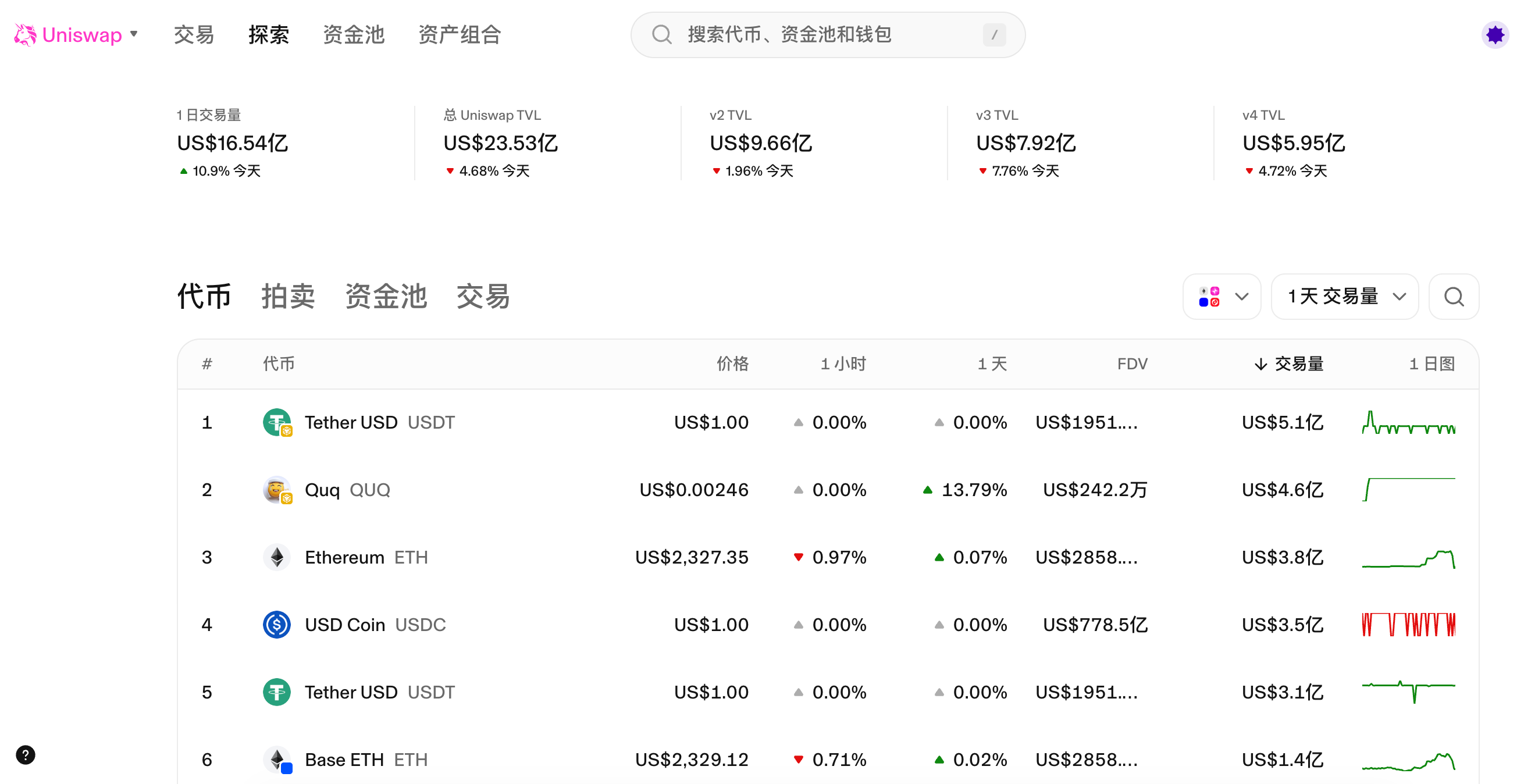
Furthermore, according to the Uniswap official website, the current v4 TVL is approximately $595 million, slightly lower than v3 ($792 million) and v2 ($966 million) liquidity pools. Thus, v4 and the Hook ecosystem still require time to accumulate strength and gradually grow into mainstream liquidity management protocols in the market.
Finally, Odaily Planet Daily reminds readers that the above tokens are all early-stage technological innovation experiments and may contain unknown bugs or other risks. Please be aware of relevant risks when participating in trading. The above information does not constitute investment advice.

Domande pertinenti

QAccording to the article, what is a Uniswap v4 Hook and what is its primary function?

AA Uniswap v4 Hook is a 'plugin smart contract' designed for liquidity pools (Pools). It allows developers to automatically inject custom logic at key lifecycle points of a pool (such as initialization, adding/removing liquidity, Swap, Donate, etc.), transforming the AMM into programmable 'Lego blocks', unlike the traditional constant product curve (x*y=k) of V2/V3.

QWhat unique mechanism does the FLOOD token implement using its Hook?

AFLOOD's Hook integrates with Aave v3. When users buy the token, the generated asset reserves are deposited into the corresponding Aave v3 market to generate yield. The trading fees are also retained within the pool to increase reserves and influence the token's price. The Hook facilitates automatic rebalancing and the flow of generated interest back into the pool.

QWhat problem does the Lo0p protocol aim to solve, and what is its core feature?

AThe Lo0p protocol aims to solve the problem of idle ETH capital efficiency in LP pools. Its core feature is 'built-in lending'. Users can buy LO0P tokens as collateral (without selling) and borrow ETH directly from the pool reserves at a 40% LTV. This mechanism is designed to not directly impact the spot price and attempts to refill the LP band upon liquidation.

QWhat is the article's conclusion regarding the impact of Hook mechanism tokens on the price of UNI in the short and long term?

AThe article concludes that Hook mechanism tokens serve as 'long-term nutrients' for UNI, contributing positively to its fundamentals. However, in the short term, they act more like a 'catalyst' rather than a 'propellant' for a direct price increase, as their impact is moderated by factors like token lifecycle sustainability and broader market trends.

QBased on the article, what was a key risk or criticism identified by the community regarding the sato token's initial mechanism?

AThe community discovered that sato's curve mechanism had a significant buy-sell price spread (slippage), which led to a sharp decline in its market capitalization, dropping from over $38 million to around $13 million at one point.

Letture associate

STRC Breaks Below $95: Why Does It Continue to Depeg? Is There Default Risk?

"STRC Falls Below $95: Why the Persistent Depegging and Is There Default Risk?" The article discusses the recent decline in the price of STRC, a perpetual preferred stock issued by Strategy (MSTR) designed to trade around a $100 par value. As of publication, STRC traded at $94.65, raising market concerns. STRC is described as a high-yield cash flow product, offering an 11.50% annual dividend paid monthly. Its "preferred" status grants it priority over common stock for dividends and in liquidation. Key reasons cited for the price depegging include: 1. **Bitcoin's Price Drop:** MSTR's assets are heavily tied to Bitcoin (BTC), which fell over 21% from its recent high, pressuring all Strategy-related products. 2. **Competitive Pressure:** Rival Strive Asset Management's similar product, SATA, offers daily dividends and has maintained its $100 par value with a ~13% yield. In response, Strategy has proposed changing STRC's dividend frequency from monthly to bi-weekly, pending shareholder vote. 3. **Technical Selling:** A break below $100 may have triggered algorithmic selling and stop-losses, exacerbating the decline. Regarding default risk, the analysis suggests it is currently low. Strategy founder Michael Saylor confirmed the June 2026 dividend rate remains at 11.50% with no cuts or suspensions. The company's massive reserve of 843,706 BTC provides a significant backstop for its obligations. Industry opinions are mixed. Some analysts view the BTC holdings as reliable support for dividends, while critics like Peter Schiff warn of potential dividend cuts leading to price crashes and lawsuits. Others highlight inflation risk and the company's ability to reduce dividends without a formal default. In summary, STRC's drop is attributed to BTC volatility, competition, and technical factors. While immediate default risk appears contained, the product faces challenges from market conditions and competitive dynamics.

marsbit3 min fa

STRC Breaks Below $95: Why Does It Continue to Depeg? Is There Default Risk?

marsbit3 min fa

AI Trading Cools, South Korean Stocks Plunge 1.8%, Spot Gold Rises 1%, Bitcoin Dives

A sell-off in AI-related stocks, triggered by Broadcom's disappointing earnings forecast, sent shockwaves through global markets. South Korea's KOSPI led Asia's decline, plunging 1.8% as the risks from concentrated chip stock gains and surging leveraged investments came to the fore. The tech-heavy Nasdaq 100 futures fell 0.5% following Broadcom's 14% after-hours plunge, which signaled a slower-than-expected transition to AI clients. This pullback extended Wall Street's weakness, halting the S&P 500's nine-day rally amid hawkish Fed signals and renewed Middle East tensions. South Korean authorities convened an emergency meeting, pledging "immediate measures" against market volatility and warning of record-high stock margin debt. The adjustment rippled across assets: Bitcoin fell to around $64,000, its lowest since February, while safe-haven gold rose 1% on bargain hunting. Oil prices dipped on Middle East ceasefire news. Market analysts noted the sell-off was driven by profit-taking after massive gains, particularly in chip stocks like Samsung and SK Hynix, which now dominate the KOSPI. Wall Street banks are divided on Korea's outlook, with Goldman Sachs raising its target while Citigroup and others warn of overvaluation and a potential bubble. Bridgewater's Ray Dalio noted that great technological shifts often create bubbles. Meanwhile, Fed officials' hints at potential future rate hikes added to the cautious mood ahead of key U.S. jobs data.

华尔街日报29 min fa

AI Trading Cools, South Korean Stocks Plunge 1.8%, Spot Gold Rises 1%, Bitcoin Dives

华尔街日报29 min fa

Seeking Alpha's Hot Article: Why Might the U.S. Stock Market Crash in June?

In a recent Seeking Alpha article, financial professor and analyst Damir Tokic argues that the US stock market may be poised for a significant crash in June 2026. The core thesis centers on a "mega-bubble" in equities, particularly within the technology sector, which has driven the S&P 500 to near-record valuations, with a Shiller P/E ratio exceeding 40—a level comparable to the 2000 dot-com bubble. Tokic identifies two primary catalysts for a potential collapse. First, he points to unsustainable market exuberance fueled by what he terms the "Trump Stimulus"—massive AI capital expenditure by tech giants, which he believes is politically driven and cannot last. Second, and more urgently, he highlights the escalating Iran war as a critical threat. The ongoing closure of the Strait of Hormuz has created a severe global energy supply crunch. Strategic petroleum reserves are projected to hit critically low operational levels by June, potentially causing oil prices to spike above $200 per barrel and triggering a severe, supply-driven inflationary shock. This scenario, Tokic warns, would force the Federal Reserve's hand. Despite currently maintaining a dovish bias, the Fed would likely be compelled to officially pivot to a hawkish stance at its June FOMC meeting to combat soaring inflation and bond yields. He contends that such a shift—or even a failure to act, which would destroy Fed credibility—could be the trigger that punctures the market bubble. The resulting downturn, he concludes, could rival the bear markets of 2000 and 2008, advising investors to prepare for a major correction.

marsbit51 min fa

Seeking Alpha's Hot Article: Why Might the U.S. Stock Market Crash in June?

marsbit51 min fa

AI PC Battle: Bet on the Toll Booth, Not the Camp

**Title:** The AI PC Battle: Don't Bet on Sides, Bet on the Tollbooth **Summary:** The AI PC competition is moving beyond simple "x86 vs. Arm" narratives. The core investment thesis should focus on identifying which players can sustain margins, cash flow, and pricing power throughout the upgrade cycle, rather than backing a particular architecture. The opportunity is analyzed in three layers: 1. **The Advanced Foundry Tollbooth:** TSMC is positioned to collect "tolls" regardless of which chip designer wins, due to its dominant ~70% share in advanced semiconductor manufacturing, which is essential for high-end AI PC chips. 2. **Compute & Platform Spillover:** AMD represents an offensive in the x86 CPU+GPU space, while NVIDIA leverages its GPU and CUDA software stack dominance. Both benefit from the demand for increased local AI compute. 3. **Architecture Diffusion & Turnaround Plays:** ARM and Intel offer potential for significant upside (elasticity), but investments here require stricter discipline due to higher execution risks and competitive challenges. The industry is transitioning from concept to shipment validation. While short-term forecasts for AI PC adoption have been revised down slightly due to tariffs and procurement delays, the long-term trend towards AI becoming a standard PC feature remains intact. The key driver for upgrade cycles will be whether compelling enterprise applications (e.g., privacy-sensitive computing, low-latency inference) emerge beyond consumer-focused features like meeting summarization. Investment strategy should prioritize companies with platform-level advantages and recurring revenue streams. TSMC offers high certainty as the foundational tollbooth. AMD presents a strong offensive play within the established ecosystem. ARM and Intel are higher-risk, higher-potential-reward turnaround bets. The report cautions against chasing short-term hype and emphasizes a disciplined, long-term approach focused on buying ecosystem strength and cash-flow certainty after market enthusiasm subsides. **Key Risks:** Underwhelming AI PC applications slowing upgrade cycles; slow improvement in Windows on Arm compatibility; macro/tariff impacts on PC demand; potential advanced node supply-demand mismatches affecting TSMC; high overall AI sector valuations making stocks vulnerable to a risk-off shift in markets.

marsbit1 h fa

AI PC Battle: Bet on the Toll Booth, Not the Camp

marsbit1 h fa

Trading

Spot
Futures
活动图片