
Developer Harbor: Hong Kong's New Opportunities in the AI Era (Beijing Station) Concludes Successfully, Ushering in a New Journey for Alpha Builders

marsbitPubblicato 2026-03-12Pubblicato ultima volta 2026-03-12

Introduzione

On March 11, 2026, the "Developer Harbor: Hong Kong's New Opportunities in the AI Era (Beijing)" event, co-hosted by Web3Labs and YZi Labs, was successfully held at StarLand Center in Beijing. The event brought together over a hundred builders from universities and tech organizations across China to explore Hong Kong's role as an international tech innovation hub in the AI age. The event featured opening remarks from government representatives, including officials from Beijing and Hong Kong, who emphasized the strategic synergy between the two cities in tech innovation, talent mobility, and industrial collaboration. A representative from the Hong Kong government also introduced talent admission policies to support mainland tech professionals seeking opportunities in Hong Kong. Web3Labs CEO Caspar Wong delivered a keynote, arguing that the convergence of AI and Web3 lies at the protocol layer rather than the application layer, with future investment logic focusing on composable, verifiable, and operational infrastructure of real value. A major highlight was the introduction of the "Alpha Builders Innovation Recruitment Program," an initiative by Web3Labs and YZi Labs aimed at identifying and empowering China’s most promising tech builders. Seven teams from top universities such as Tsinghua, Peking, Fudan, and Zhejiang presented projects spanning AI agents, Web3 infrastructure, biocomputing, and privacy computing. Selected teams will gain access to mentorship, ecosystem reso...

On March 11, 2026, "Developer Harbor: Hong Kong's New Opportunities in the AI Era," hosted by Web3Labs and YZi Labs, and co-hosted by the Beijing-Hong Kong Web3.0 Industrial Center, Star Land Center, and OpenSchool, was successfully held at the Star Land Center in Chaoyang District, Beijing. The event brought together over a hundred builders from innovative teams at universities nationwide and industry organizations to jointly explore the new opportunities for Hong Kong as an international hub for technological innovation in the AI era.

🔹 Twin-City Collaboration, Building an Innovation Bridge

The event gathered over a hundred innovators from universities and cutting-edge technology fields across the country, witnessing a complete ecosystem from policy empowerment to technology implementation. The event kicked off with joint opening remarks by Chen Lei, Member of the Party Working Committee and Deputy Director of the Management Committee of Zhongguancun Chaoyang Park, and Dr. Wu Jiezhuang, Member of the National Committee of the Chinese People's Political Consultative Conference and Chairman of the Hong Kong Legislative Council's Commerce, Industry, and Technology Innovation Committee. Both guests emphasized the strategic complementarity between Beijing and Hong Kong in technological innovation, talent mobility, and industrial collaboration, injecting confidence into the joint building of a world-class innovation ecosystem between the two cities.

Subsequently, Huang Weiqi, Chief Affairs Director of the Hong Kong Special Administrative Region Government's Beijing Office, systematically interpreted the "Mainland Talent Admission Scheme for Hong Kong," providing detailed explanations of application channels, support measures, and development paths in Hong Kong, offering clear policy guidance for tech talents interested in cross-border development.
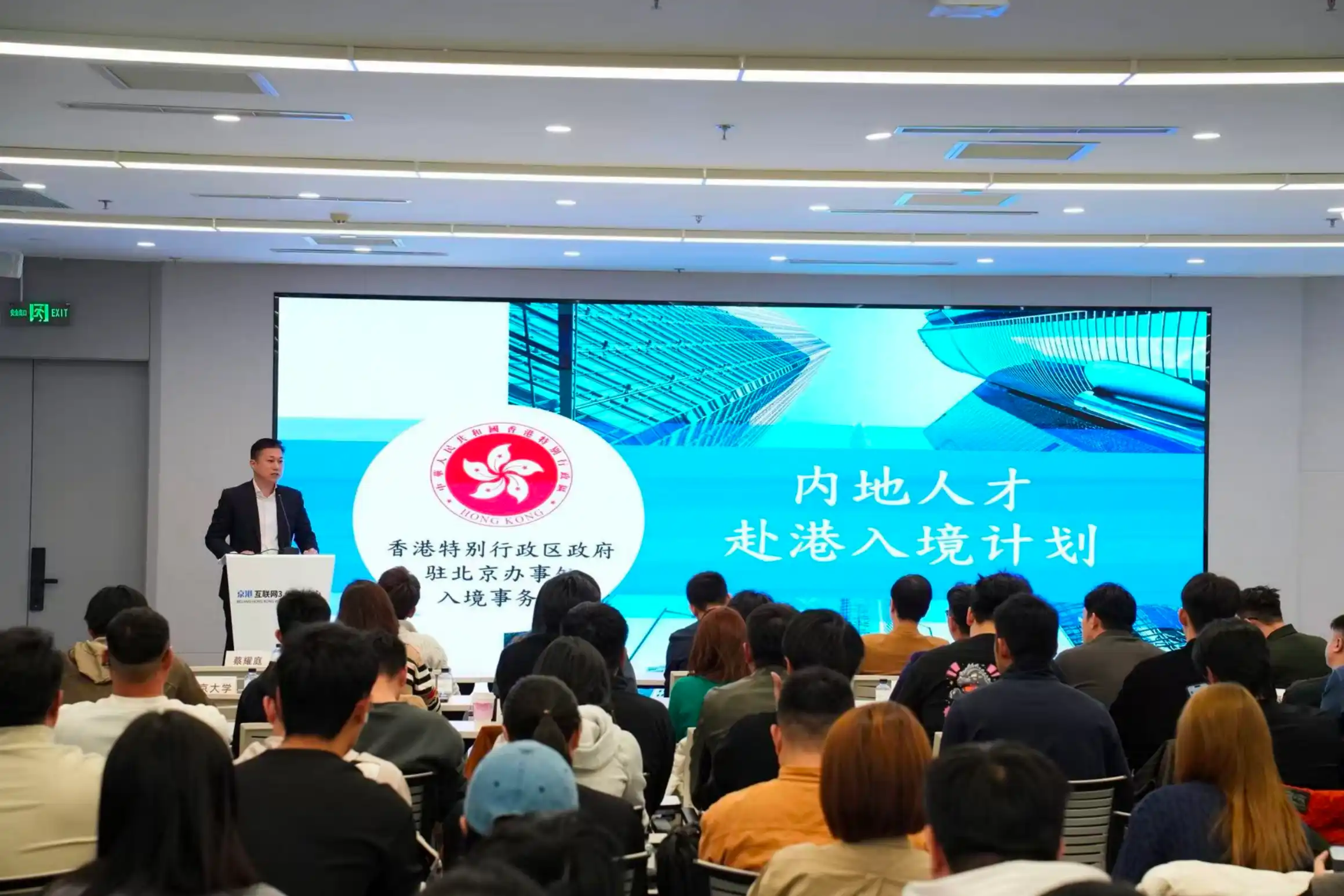
Web3Labs CEO Caspar Wong delivered a keynote speech, proposing that "the convergence of AI and Web3 lies not at the application layer but at the protocol layer," and revealing that the next generation of investment logic will focus on composable, verifiable, and operational real-value infrastructure.

🔹 Alpha Builders Gather for the First Time, Showcasing Their Potential

The core highlight of "Developer Harbor: Hong Kong's New Opportunities in the AI Era (Beijing Station)" was undoubtedly the debut of the innovative teams under the "Alpha Builders Innovator Recruitment Plan." This plan, jointly launched by Web3Labs and YZi Labs, aims to discover and empower China's most promising next-generation technical builders (Builders), bridging the critical path from campus innovation to global ecosystem implementation.

At the event, seven cutting-edge innovative teams from top domestic universities such as Tsinghua University, Peking University, Fudan University, and Zhejiang University took the stage to showcase their projects, covering frontier interdisciplinary fields such as AI agents, Web3 infrastructure, biocomputing, and privacy computing. These teams not only possess solid engineering capabilities but also demonstrate a deep understanding of "real-world problems"—a vivid reflection of the "value-driven innovation"理念 advocated by both parties.
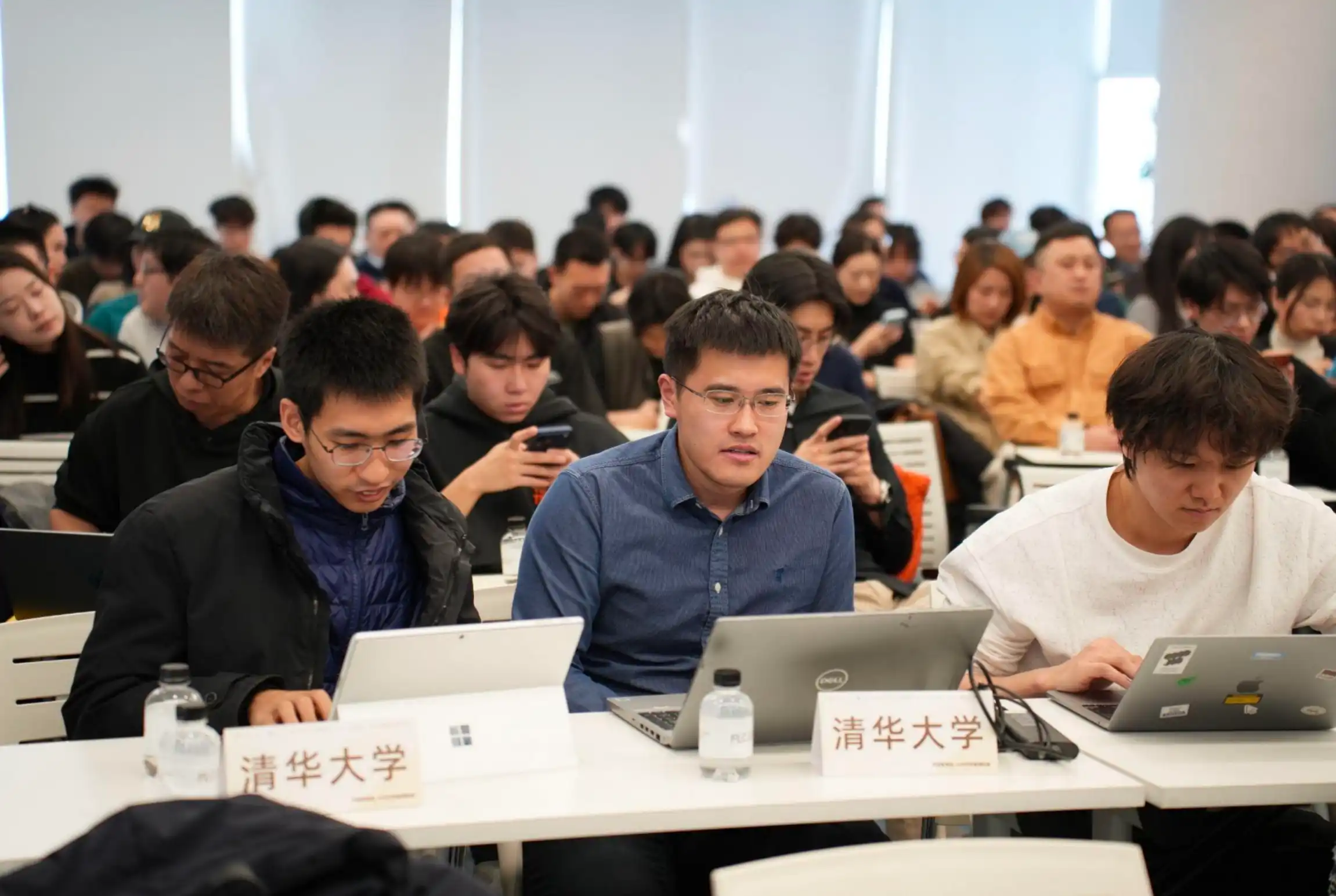
As a globally leading Web3 investment and incubation platform, Web3Labs, in collaboration with YZi Labs, is seeking builders who use technology to solve real-world challenges in Web3, AI, Biotech, and more." This Alpha Builders plan is a practical implementation of this vision—selected teams will have the opportunity to enter the interview process for the EASY Residency program launched by YZi Labs, receiving technical guidance, ecosystem resource connections, and early-stage funding support to accelerate their journey from prototype to product.

From campus laboratories to the international stage, Alpha Builders are constructing a high-speed channel for "youth innovation power × global Web3 ecosystem." This may well be the most anticipated answer to shaping the future in the AI era.
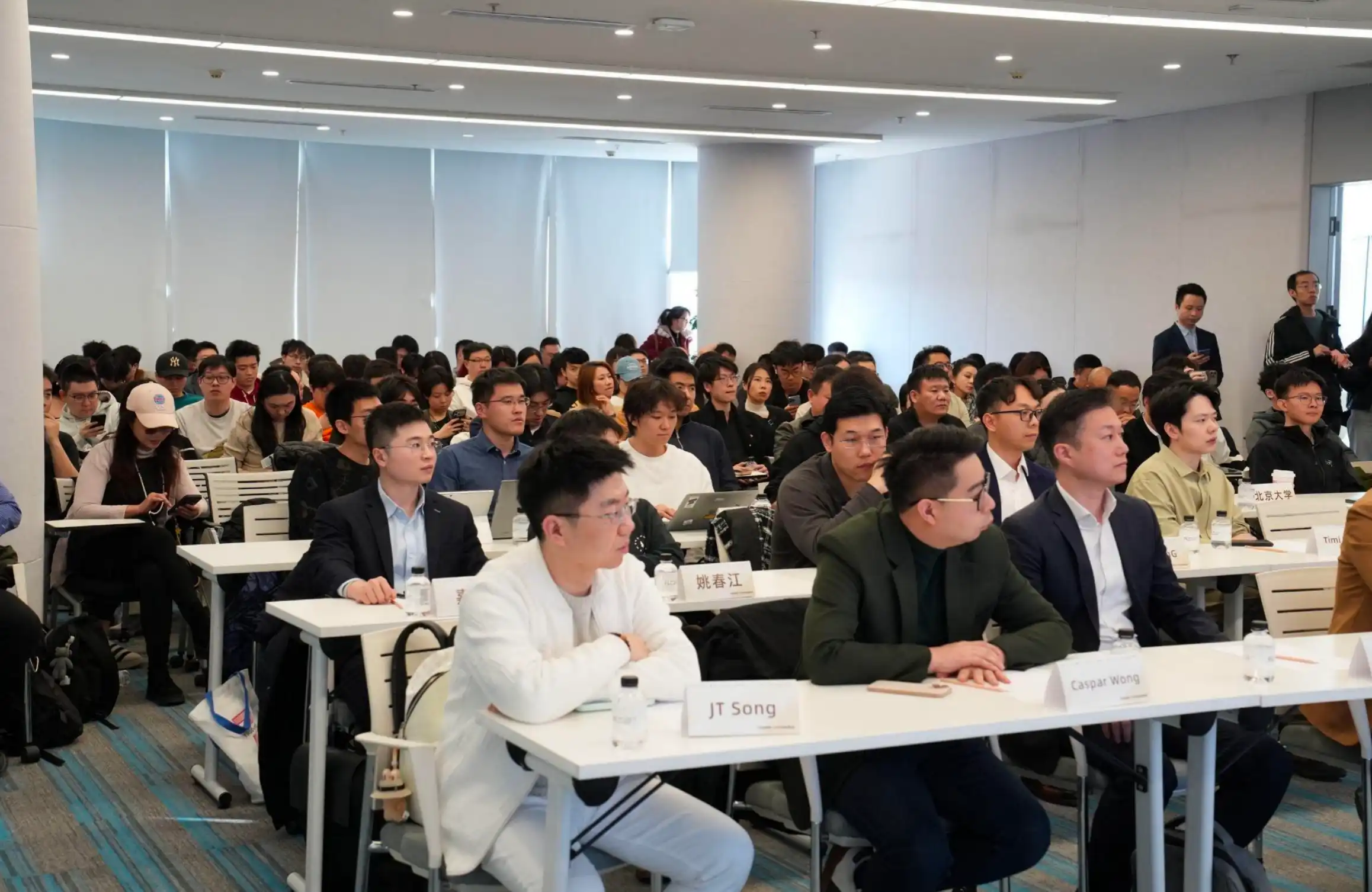
As AI and Web3 reshape the global technological landscape, Hong Kong, with its open system, international ecosystem, and forward-looking policies, is becoming a key hub connecting outstanding innovative forces with the world stage. Web3Labs will continue to collaborate with YZi Labs to discover those Alpha Builders who dare to build, jointly creating a more real, intelligent, and composable digital future.


Domande pertinenti

QWhat was the main theme of the 'Developer Harbor: Hong Kong's New Opportunities in the AI Era (Beijing Station)' event?

AThe main theme was exploring Hong Kong's new opportunities as an international technology and innovation hub in the AI era, with a focus on the 'Alpha Builders' initiative to empower the next generation of technical builders.

QWhich organizations co-hosted the event in Beijing?

AThe event was hosted by Web3Labs and YZi Labs, and co-hosted by the Beijing-Hong Kong Web3.0 Industrial Center, Star Land Center, and OpenSchool.

QWhat did Web3Labs CEO Caspar Wong propose in his keynote speech regarding AI and Web3?

AHe proposed that 'the convergence of AI and Web3 is not at the application layer, but at the protocol layer,' and revealed that the next generation of investment logic will focus on composable, verifiable, and operational real-value infrastructure.

QWhat is the purpose of the 'Alpha Builders Innovation Recruitment Program'?

AThe program aims to discover and empower China's most promising next-generation technical builders (Builders), providing a pathway from campus innovation to global ecosystem implementation, including technical guidance, resource connections, and early funding support.

QFrom which top Chinese universities did the innovative teams participating in the Alpha Builders program come from?

AThe teams came from top universities including Tsinghua University, Peking University, Fudan University, and Zhejiang University.

Letture associate

Claude Opus 4.8 Finds a $4.5 Billion Bug: The AI Era is Mass-Producing Hackers

A researcher discovered a critical "infinite mint" vulnerability in the Zcash cryptocurrency's Orchard protocol using Claude Opus 4.8, leading to a swift fix but also a 50% market drop, erasing billions in value. This incident highlights a new era where powerful, accessible AI models are dramatically lowering the barrier to finding software vulnerabilities. Previously, the security community feared specialized models like Claude Mythos Preview, capable of finding decades-old zero-day exploits. The Zcash case, however, involved a publicly available, general-purpose model. This shift makes advanced security auditing—and attack capabilities—accessible to far more people, not just experts. The mass democratization of vulnerability discovery brings a dual challenge: a flood of low-quality, AI-generated false reports that overwhelm maintainers, and the real, rapid uncovering of deep, dangerous bugs. Open-source projects, often understaffed and unfunded, are particularly vulnerable to this "attention DDoS." The article cites examples like curl shutting down its bug bounty program due to the unsustainable workload. Our perceived digital safety has often been luck, relying on the high cost and effort required to find deeply hidden flaws in complex systems, as seen with historical vulnerabilities like Heartbleed or Baron Samedit. AI changes this cost structure, effectively "mass-producing flashlights" to illuminate every corner of our codebase. While large companies operate extensive security chains involving external white-hat hackers and massive defensive operations, the global cybersecurity workforce faces a severe shortage, especially of experienced personnel capable of analyzing complex threats and coordinating fixes. The core dilemma emerges: AI makes *finding* bugs cheap and scalable, but *fixing* them remains a slow, expensive, and human-intensive process. The article concludes that AI won't destroy the internet but acts as a bright light, revealing that our digital existence is not inherently secure but is precariously maintained by ongoing human effort. The true cost in the AI era may not be discovery, but whether there will be enough people left willing and able to do the hard work of repair.

marsbit27 min fa

Claude Opus 4.8 Finds a $4.5 Billion Bug: The AI Era is Mass-Producing Hackers

marsbit27 min fa

Codex Goal Mode Usage Guide: How to Make AI Continuously Pursue a Specific Objective

"Codex Goal Mode: How to Make AI Work Continuously Toward a Specific Goal" OpenAI's Codex "goal mode" (/goal) transforms the AI from a reactive code assistant into a proactive execution agent capable of working autonomously for hours or even days to achieve a defined objective. To maximize its effectiveness, follow these key principles: 1. **Define Clear, Verifiable Exit Criteria:** The goal prompt should be a concise, measurable success condition, not a lengthy specification. Use quantifiable metrics like "reduce build time by 30%" or "achieve 100% test parity." 2. **Provide Initial Guidance and Tools:** Direct Codex toward likely problem areas and specify available tools (e.g., browsers, testing environments) to prevent it from exploring unproductive paths. 3. **Enable Progress Measurement:** Equip Codex with ways to track advancement, such as creating comparison tools for visual tasks or evaluation sets, ensuring it can gauge its own progress. 4. **Use a Realistic Execution Environment:** For tasks like performance optimization, provide access to environments that closely mimic production (e.g., similar configs, databases) to yield valid results. 5. **Be Cautious with Visual Goals:** Avoid vague "pixel-perfect" instructions. Instead, supplement visual references with functional checklists or design system specifications to prevent Codex from obsessing over minor details. 6. **Implement Progress Tracking:** For long-running tasks, have Codex commit code to draft PRs, update progress documents, or send Slack updates to maintain visibility into its work. 7. **Review and Consolidate Results:** Once the goal is met, instruct Codex to review its work, clean up ineffective experimental code, and reflect on what strategies succeeded or failed. Ultimately, using goal mode shifts the developer's role from writing prompts to managing a persistent engineering agent—defining objectives, establishing metrics, configuring environments, and conducting final reviews.

marsbit1 h fa

Codex Goal Mode Usage Guide: How to Make AI Continuously Pursue a Specific Objective

marsbit1 h fa

From Ethereum to AI's 'CROPS': What Exactly Is This 'Slow Variable' That Vitalik Has Repeatedly Emphasized?

Recently, Vitalik Buterin has frequently emphasized the concept of "CROPS," first outlined in the Ethereum Foundation's March mandate as core principles guiding its focus: Censorship Resistance, Capture Resistance, Open Source, Privacy, and Security. CROPS represents Ethereum's commitment to providing foundational capabilities for user sovereignty—enabling asset ownership, identity expression, and coordination without reliance on centralized platforms or surrendering ultimate control. This framework is gaining new urgency with the rise of AI, particularly AI agents managing digital assets and automating transactions. While AI offers convenience, it risks centralizing user data, intent, and control if dependent on opaque, centralized services. Vitalik argues for "CROPS AI"—AI that is open, privacy-preserving, secure, and capable of local execution to maintain user agency. He highlights convergence between "CROPS Ethereum access layers" and "CROPS AI," such as using zero-knowledge proofs for private remote LLM calls and Ethereum RPC reads, ensuring users can access services without exposing sensitive information. Ultimately, CROPS is not just an abstract ideal but a practical guide for Ethereum's development and AI integration. It addresses the critical long-term question: as digital systems grow more powerful, how can users retain control over their privacy, assets, and autonomy? In an AI-driven era, these principles may define Ethereum's enduring value—prioritizing verifiable, secure, and user-centric design over short-term optimizations like speed and cost alone.

marsbit1 h fa

From Ethereum to AI's 'CROPS': What Exactly Is This 'Slow Variable' That Vitalik Has Repeatedly Emphasized?

marsbit1 h fa

Trading

Spot
Futures

Articoli Popolari

Come comprare ERA

Benvenuto in HTX.com! Abbiamo reso l'acquisto di Caldera (ERA) semplice e conveniente. Segui la nostra guida passo passo per intraprendere il tuo viaggio nel mondo delle criptovalute.Step 1: Crea il tuo Account HTXUsa la tua email o numero di telefono per registrarti il tuo account gratuito su HTX. Vivi un'esperienza facile e sblocca tutte le funzionalità,Crea il mio accountStep 2: Vai in Acquista crypto e seleziona il tuo metodo di pagamentoCarta di credito/debito: utilizza la tua Visa o Mastercard per acquistare immediatamente CalderaERA.Bilancio: Usa i fondi dal bilancio del tuo account HTX per fare trading senza problemi.Terze parti: abbiamo aggiunto metodi di pagamento molto utilizzati come Google Pay e Apple Pay per maggiore comodità.P2P: Fai trading direttamente con altri utenti HTX.Over-the-Counter (OTC): Offriamo servizi su misura e tassi di cambio competitivi per i trader.Step 3: Conserva Caldera (ERA)Dopo aver acquistato Caldera (ERA), conserva nel tuo account HTX. In alternativa, puoi inviare tramite trasferimento blockchain o scambiare per altre criptovalute.Step 4: Scambia Caldera (ERA)Scambia facilmente Caldera (ERA) nel mercato spot di HTX. Accedi al tuo account, seleziona la tua coppia di trading, esegui le tue operazioni e monitora in tempo reale. Offriamo un'esperienza user-friendly sia per chi ha appena iniziato che per i trader più esperti.

346 Totale visualizzazioniPubblicato il 2025.07.17Aggiornato il 2026.06.02

Come comprare ERA

Discussioni

Benvenuto nella Community HTX. Qui puoi rimanere informato sugli ultimi sviluppi della piattaforma e accedere ad approfondimenti esperti sul mercato. Le opinioni degli utenti sul prezzo di ERA ERA sono presentate come di seguito.

活动图片












