Assisting Turkey in Freezing $1 Billion in Assets, Tether's Compliance Approach Has Changed

marsbitPubblicato 2026-02-09Pubblicato ultima volta 2026-02-09

Introduzione

On January 30, Turkish authorities froze assets worth over $500 million belonging to Veysel Sahin, who is accused of operating an illegal gambling platform and money laundering. Tether Holdings SA, the issuer of the $185 billion stablecoin USDT, assisted in the freeze at the request of the Turkish government. This action is part of a broader Turkish operation that has frozen over $1 billion in assets. Tether has increasingly collaborated with global law enforcement agencies to combat cryptocurrency-related crimes, including money laundering, drug trafficking, and sanctions evasion. According to Tether CEO Paolo Ardoino, the company follows legal procedures when working with authorities such as the U.S. Department of Justice and the FBI. Analysis by Elliptic shows that Tether and its competitor Circle have blacklisted around 5,700 wallets holding approximately $2.5 billion in assets, with three-quarters of these containing USDT. Tether claims to have assisted in over 1,800 cases across 62 countries, freezing $3.4 billion in USDT tied to illicit activities. This marks a shift from Tether’s earlier tensions with U.S. regulators, including a 2021 settlement over misrepresenting reserves. The company has recently re-entered the U.S. market with a compliant stablecoin, USAT, and has gained regulatory acceptance under the Trump administration. Despite these efforts, USDT remains under scrutiny for its use in criminal activities, including a recent case involving $1 billion in ...

Written by: Ryan Weeks, Todd Gillespie, Taylan Bilgic

Compiled by: Luffy, Foresight News

On January 30, Turkish authorities announced the freezing of assets worth over $500 million under the name of Veysel Sahin, who is accused of operating an illegal gambling platform and suspected of money laundering. The Istanbul Chief Prosecutor revealed that an unnamed cryptocurrency company carried out the freeze at the request of the Turkish government.

This company is Tether Holdings SA, the issuer of the stablecoin USDT with a market capitalization of $185 billion. Recently, the company has actively assisted governments worldwide in combating various cryptocurrency-related criminal activities, including money laundering, drug trafficking, and sanctions evasion.

Tether CEO Paolo Ardoino stated in a recent interview with Bloomberg News: "Law enforcement approaches us, provides relevant information, we verify the information, and then take action in accordance with the laws of the country. We follow this process when cooperating with the U.S. Department of Justice, the FBI, and other agencies."
Tether declined to comment further on the case. Bloomberg was unable to reach Sahin. A Turkish official also refused to disclose the name of the company mentioned in the prosecutor's statement.

The frozen assets of 460 million euros (approximately $544 million) are part of a large-scale law enforcement operation in Turkey, where the total frozen assets involved now exceed $1 billion. According to Turkish television NTV, a few days after the announcement of the freezing of Sahin's assets, another individual was investigated for suspected money laundering and illegal gambling, and crypto assets worth $500 million under their name were also frozen. However, it is currently unclear whether this asset freeze involved tokens issued by Tether.

A Turkish official, who spoke anonymously on sensitive legal matters to Bloomberg, revealed that authorities discovered the "financial traces" of these suspected illegal proceeds by tracking fund flows and analyzing crypto assets. The official added that similar asset freezes targeting individuals involved in illegal gambling and payment systems will be implemented in the future.

For Tether, this freezing operation is just one of its increasingly frequent fund freezes, highlighting the growing efforts of this cryptocurrency giant to cooperate with global law enforcement agencies.

A report released in January by analytics firm Elliptic showed that by the end of 2025, Tether and its competitor Circle Internet Group Inc. had blacklisted approximately 5,700 wallets, involving assets of about $2.5 billion, a figure that was negligible two years ago. At the time of freezing, three-quarters of these wallets held USDT.

Arda Akartuna, Head of Crypto Threat Intelligence for Asia-Pacific at Elliptic, said: "As legitimate applications of cryptocurrency and the integration of global payments accelerate, illegal usage has also increased, prompting stablecoin issuers to intervene more actively."

Tether often publicizes its efforts to combat criminal activities, including in communications aimed at potential investors, as the company seeks funding at a valuation of up to $500 billion. According to its website, Tether has assisted law enforcement agencies in 62 countries with over 1,800 cases, freezing $3.4 billion worth of USDT related to suspected illegal activities.

Nathan McCauley, Co-founder and CEO of Tether partner Anchorage Digital Bank, said in an interview: "They (Tether) are extremely proactive in their cooperation. Among stablecoin issuers, the company has the 'recognized best reputation' with law enforcement agencies."

Anchorage is the issuer of Tether's compliant dollar stablecoin USAT, which was launched in late January, marking Tether's return to the U.S. market.

This represents a significant shift from the tense relationship between Tether and U.S. regulators a few years ago. After clashing with regulators in 2018, Tether largely exited the U.S. market and paid $41 million in 2021 to settle charges of misrepresenting its reserves.

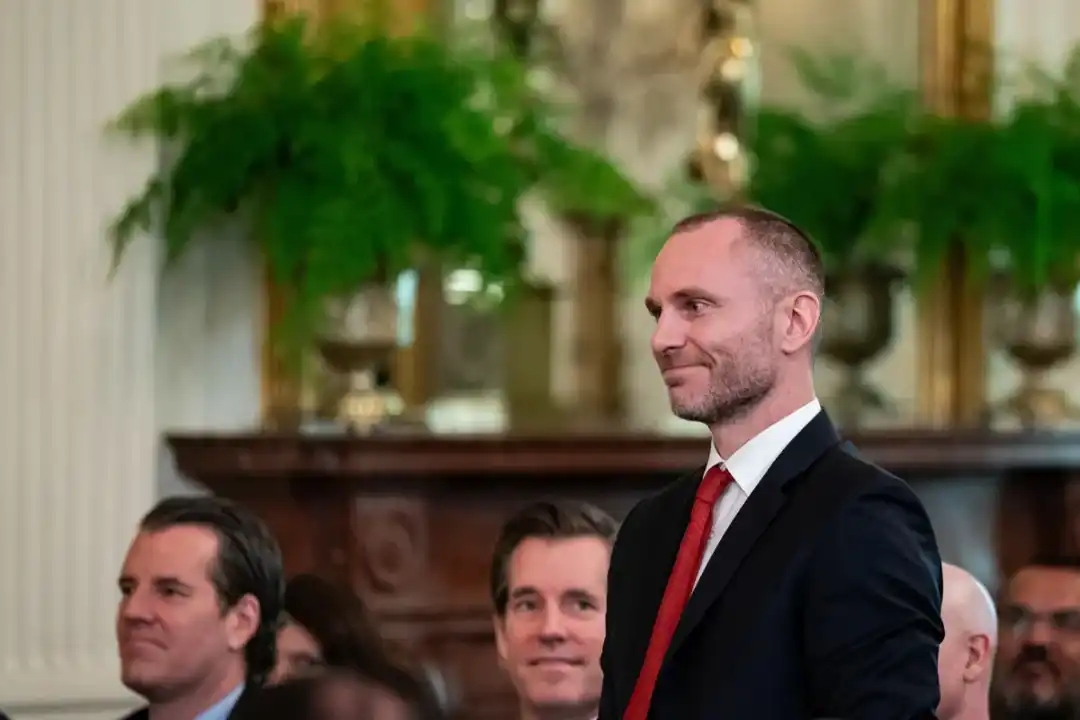
However, the second Trump administration has welcomed the cryptocurrency industry. Last year, Ardoino attended, along with several other executives, the ceremony where President Trump signed the stablecoin regulatory bill.
Even so, Tether's USDT continues to face scrutiny from regulators due to its widespread use by criminals.

On January 9, the U.S. Attorney's Office for the Eastern District of Virginia announced charges against a Venezuelan citizen for laundering $1 billion using USDT. A recent report by Elliptic showed that the Central Bank of Iran purchased over $500 million worth of USDT to alleviate its currency crisis and evade U.S. sanctions.

Turkish fugitive Sahin is accused of leading an organization that laundered money for illegal online gambling platforms. According to local media, Sahin was sentenced to 10 years in prison in 2017, released in 2023, and sentenced to another 21 years in prison month later. His current whereabouts are unknown, but the Turkish official news agency Anadolu Agency reported on January 30 that "the relevant authorities are advancing the legal process for his extradition back to Turkey."


Domande pertinenti

QWhat was the Turkish government's action against Veysel Sahin, and which company assisted in this operation?

AThe Turkish government froze assets worth over $500 million belonging to Veysel Sahin, who was accused of operating an illegal gambling platform and money laundering. The company that assisted in this operation was Tether Holdings SA, the issuer of the USDT stablecoin.

QHow has Tether's approach to compliance and law enforcement cooperation changed recently?

ATether has significantly increased its cooperation with global law enforcement agencies, actively assisting in combating cryptocurrency-related crimes such as money laundering, drug trafficking, and sanctions evasion. It has frozen assets in numerous cases and has a recognized reputation for its proactive stance.

QWhat is the total value of assets that Tether has frozen in connection with alleged illegal activities, according to its website?

AAccording to Tether's website, the company has assisted law enforcement in over 1,800 cases across 62 countries and frozen $3.4 billion worth of USDT related to suspected illegal activities.

QWhat significant legal and regulatory challenges has Tether faced in the past, particularly in the United States?

AIn 2018, Tether had conflicts with U.S. regulators, which led to its near-exit from the U.S. market. In 2021, it paid $41 million to settle charges that it misrepresented its reserves.

QWhat recent development marks Tether's return to the U.S. market, and who is its partner in this initiative?

ATether's return to the U.S. market is marked by the launch of its compliant dollar stablecoin, USAT, in late January. Its partner in issuing this stablecoin is Anchorage Digital Bank.

Letture associate

Analysis of the Latest Portfolio Adjustment by the "Top Player" in the U.S. Stock Market: $9 Billion Short on NVIDIA, Shifting Focus to Power and Memory Sectors

AI investor Leopold Aschenbrenner has made a significant portfolio shift, taking a $9 billion nominal short position against top AI infrastructure stocks like NVIDIA, ASML, and Oracle. Simultaneously, he is redirecting capital towards what he sees as the next critical bottlenecks in the AI boom: power, memory, and data center networking, alongside private investments in AI model companies like Anthropic. This move is interpreted not as a call that the AI bubble has burst, but as a rotation within the infrastructure stack. The analysis highlights NVIDIA's recent $25 billion bond issuance as a potential signal, questioning why a cash-rich company would seek external debt despite high profits and increased dividends/buybacks. The core investment thesis is that the initial, crowded "picks and shovels" trade in semiconductors is maturing. The next wave of capital is expected to flow into the physical and logistical constraints of AI expansion: electricity supply, memory chip capacity, data center construction, and enabling technologies like optical networking (fiber) for high-bandwidth communication, where copper remains crucial for short distances. Aschenbrenner's substantial (approx. 20% of fund) private stake in Anthropic is noted as a key part of his strategy—investing directly in the "mine" (AI models) rather than just the "shovels." The discussion concludes that while certain segments may be overvalued, the overarching AI infrastructure demand driven by real product usage remains robust. The most promising long-term investments are seen in essential, non-sexy infrastructure—particularly energy and power companies—whose demand is viewed as a global constant irrespective of AI's cyclicality.

marsbit20 min fa

Analysis of the Latest Portfolio Adjustment by the "Top Player" in the U.S. Stock Market: $9 Billion Short on NVIDIA, Shifting Focus to Power and Memory Sectors

marsbit20 min fa

BIT Research: Liquidity is Disappearing, Will Bitcoin Replay the Bottoming Pattern of 2022?

The crypto market is currently in an adjustment phase driven by policy expectations and liquidity shifts. Despite a brief rebound fueled by geopolitical easing and SpaceX's strong IPO performance, unexpectedly hawkish signals from new Fed Chair Kevin Warsh have removed anticipated easing support. Concurrently, stablecoin liquidity is shrinking, with insufficient new capital inflows, pushing the market into a typically quiet summer period. Pricing lacks catalysts for a sustained rally. Daily trading volume has significantly contracted, stablecoin growth has slowed markedly, and the supportive effect of Strategy's (formerly MicroStrategy) STRC preferred stock-financed Bitcoin purchases is fading. Amid policy uncertainty, seasonal weakness, and liquidity contraction, Bitcoin faces near-term downward pressure. Warsh's hawkish pivot and refusal to provide a clear policy outlook have increased risk premiums, historically unfavorable for Bitcoin. Technically, the trend remains bearish below $73,700, with $62,446 as critical support. A break below could accelerate declines, though a prolonged consolidation phase, similar to 2022's bottoming process, is possible. Liquidity is a core constraint. Current daily volume is around $500 billion, roughly 25% of the peak during the July-Oct 2025 rally. The 12-month growth rates for USDT and USDC have fallen to ~20%, with 6-month growth near zero, indicating weak new inflows. Bitcoin ETF and Strategy-driven inflows have also weakened, with a 30-day rolling net outflow. With inflation at 4.2% above the Fed's target, combined hawkish policy, seasonal factors, and liquidity shortages challenge Bitcoin's ability to hold above $60,000. However, this adjustment phase may be forming a cyclical low this summer, potentially setting the stage for the next bull cycle.

marsbit48 min fa

BIT Research: Liquidity is Disappearing, Will Bitcoin Replay the Bottoming Pattern of 2022?

marsbit48 min fa

Who Makes the Best Use of Claude Code? The Answer Might Not Be Programmers

Claude Code Usage Report Summary (Based on ~400k sessions) Core Finding: In agentic programming with Claude Code, a clear division of labor has emerged: humans primarily decide *what* to build (planning decisions), while Claude decides *how* to build it (execution decisions). Key Insights: 1. **Effectiveness is not limited to programmers.** In code-generation tasks, success rates for users in non-technical fields (law, finance, management, research) are nearing those of software engineers. What matters most is the user's domain expertise and understanding of the problem to be solved. 2. **Domain expertise drives success and efficiency.** Sessions where users exhibited "expert" proficiency in the task's domain saw verified success rates double compared to "novice" sessions. Experts also delegated more work per instruction, with Claude executing more actions and producing more output. 3. **AI is amplifying, not replacing, domain knowledge.** Claude Code lowers the *implementation* barrier, not the *judgment* barrier. The value of knowing the "what" and "why" is increasing relative to just knowing the "how" to code. 4. **Usage is evolving.** Over a 7-month period (Oct '25 - Apr '26), the share of sessions for debugging halved, while use for software operations, data analysis, and non-code writing roughly doubled. The estimated economic value of typical tasks increased by ~25%. Conclusion: The data suggests coding agents are making programming background less critical for completing technical tasks. However, they reward and amplify deep domain understanding. The ability to successfully direct an AI agent stems more from mastery of a specific field than from coding skill itself. The primary gains come from being competent in a domain; deep specialization adds only marginal additional advantage. This may signal a shift where software creation becomes integrated into various professions.

marsbit1 h fa

Who Makes the Best Use of Claude Code? The Answer Might Not Be Programmers

marsbit1 h fa

Trading

Spot
Futures
活动图片